


Quick Answer
The Springfield Armory SA-35 4-Inch Polished Blued takes one of the most recognizable service-pistol designs of the 20th century and packages it in a format aimed much more directly at today's carry market. Introduced in October 2026, the new model combines the shortened 4-inch SA-35 architecture Springfield launched earlier this year with the polished-blue treatment previously offered on the full-size pistol.
The result is a 9mm handgun with a forged carbon-steel frame and slide, cold-hammer-forged 4-inch barrel, checkered walnut grips, 15-round flush-fit magazine, factory-tuned trigger, improved feed-ramp geometry, and modernized iron sights. It measures approximately 7.1 inches long, 4.8 inches high, weighs 29.8 ounces, and carries an MSRP of $799.
The polished finish is what immediately separates this model visually, but it is not the most important part of the story. The more interesting question is whether shortening the SA-35 to a 4-inch barrel makes the classic Hi-Power concept meaningfully better suited to concealed carry.
Modern buyers have become accustomed to lightweight polymer frames, striker-fired actions, optics-ready slides, accessory rails, interchangeable grip systems, and compact pistols carrying 15 or more rounds. The SA-35 approaches the same general job from almost the opposite direction.
It remains a steel-framed, hammer-fired, single-action pistol with walnut grips and conventional iron sights. Its advantage is not that it follows every current handgun trend. Its appeal comes from combining the slim proportions and shooting characteristics of the Hi-Power pattern with enough thoughtful updates to remain useful rather than purely nostalgic.
For someone who wants the lightest or most configurable 15-round carry pistol, the SA-35 is not the obvious answer. For a shooter who prefers a traditional hammer-fired handgun and wants the Hi-Power format in a shorter package, the new 4-inch Polished Blued model makes a much stronger case.
Key Takeaways
- Springfield introduced the Polished Blued 4-inch SA-35 in October 2026, combining the shortened SA-35 architecture launched in April with a polished-blue finish and walnut grips.
- The pistol uses a forged carbon-steel frame and slide, cold-hammer-forged 4-inch barrel, single-action operating system, and 15-round flush-fit magazine.
- Springfield modernized the Hi-Power formula with improved feed-ramp geometry, a factory-tuned trigger, Tactical Rack rear sight, white-dot front sight, beveled magazine well, and increased magazine capacity compared with the original P-35 pattern.
- The shorter barrel and slide make the pistol more carry oriented, but its steel construction means it still competes very differently from lightweight polymer compact pistols.
- At $799 MSRP, the new SA-35 is best understood as a functional modern interpretation of a classic fighting pistol rather than an inexpensive alternative to today's striker-fired carry guns.
What Is the SA-35 4-Inch Polished Blued?
Springfield's newest SA-35 is easiest to understand as the combination of two developments rather than an entirely new handgun. The SA-35 itself is Springfield's modern interpretation of the Browning P-35, commonly known as the Hi-Power, retaining the recognizable steel-frame, hammer-fired, single-action layout while updating several areas for modern commercial use.
Springfield then shortened the platform in April 2026 with the release of the SA-35 4-inch. That pistol reduced barrel and slide length while retaining the full grip, 15-round magazine, walnut panels, modern sights, revised hammer geometry, and other SA-35 improvements.
The October 2026 release adds the polished-blue treatment to that existing compact architecture. It is therefore not a completely new mechanical generation of the SA-35. What is new is the combination of the carry-oriented dimensions with the more traditional polished exterior previously associated with Springfield's longer pistol.
That distinction keeps the new model in proper perspective. Springfield is not reinventing the Hi-Power again. It is expanding the ways buyers can approach its existing modernization of the design.
SA-35 4-Inch Polished Blued Specifications
| Specification | SA-35 4-Inch Polished Blued |
|---|---|
| Platform | Springfield Armory SA-35 |
| Model | HP9205 |
| Caliber | 9mm |
| Operating System | Recoil-operated, single action |
| Barrel Length | 4 inches |
| Overall Length | Approx. 7.1 inches |
| Height | Approx. 4.8 inches |
| Frame | Forged carbon steel |
| Slide | Forged carbon steel |
| Barrel | Cold-hammer-forged steel |
| Finish | Polished blue |
| Grips | Checkered walnut |
| Weight | 29.8 oz. |
| Standard Capacity | 15+1 |
| Front Sight | White dot |
| Rear Sight | Tactical Rack, serrated |
| Optics Ready | No |
| Accessory Rail | No |
| Country of Manufacture | United States |
| MSRP | $799 |
The specifications reveal why the SA-35 occupies an unusual place in today's handgun market. There is nothing radical about a roughly 4-inch 9mm holding 15 rounds in 2026 because numerous modern compact pistols meet or exceed those basic numbers.
What is unusual is achieving that capacity in a handgun retaining the construction, trigger system, proportions, and general handling character of the Hi-Power. The SA-35 reaches familiar modern service-pistol numbers without becoming another polymer striker-fired compact.
Why Four Inches Changes the SA-35
Reducing barrel length by less than an inch can sound like a minor specification change, particularly when Springfield leaves the grip and magazine capacity alone. On a carry pistol, however, barrel and slide length affect more than ballistic performance.
The shorter slide reduces the amount of pistol extending below the belt during inside-the-waistband carry. Depending on body type, holster position, and ride height, that can make the firearm more comfortable while seated and somewhat easier to work with in concealment-oriented setups.
Springfield itself positions the 4-inch version as the smaller and faster-handling member of the SA-35 family. Independent measurements put the pistol at approximately 7.1 inches overall compared with roughly 7.8 inches for the traditional full-size SA-35.
The important part is that Springfield did not shrink every dimension. This is not a micro-compact Hi-Power.
The grip remains large enough to provide a substantial firing hold and accommodate a flush-fitting 15-round magazine. That gives the pistol a configuration similar in philosophy to many modern compact service pistols: reduce length at the front while preserving enough grip for control and useful capacity.
For shooters who already like the SA-35, that may be a better compromise than shortening both the slide and grip so aggressively that the handgun begins to lose the handling characteristics that attracted them to the platform in the first place.
The Full-Size Grip Is Part of the Formula
The 4-inch SA-35 is compact because of its shortened upper, not because Springfield radically reduced the grip. That distinction matters when evaluating the pistol as a carry gun.
A shorter grip can improve concealment because the rear of the grip is often one of the first areas to print through clothing. Springfield accepted that tradeoff and retained the full-size Hi-Power-style grip instead.
The benefit is that the shooter keeps a complete firing hold and the standard 15-round flush-fit magazine. The grip also remains comparatively slender for its capacity, one of the characteristics that has helped the Hi-Power pattern remain comfortable for a broad range of hand sizes.
This places the SA-35 4-inch somewhere between a traditional full-size service pistol and the modern micro-compact idea. It is shorter where Springfield believed the reduction improved carry without completely transforming how the gun feels in the hand.
Steel Still Changes the Carry Equation
The SA-35's forged-steel construction is simultaneously one of its greatest attractions and one of its clearest disadvantages compared with contemporary carry pistols. Steel gives the pistol the substantial feel associated with traditional service handguns and adds mass that can influence how recoil is experienced.
That does not mean a heavier handgun automatically shoots better for every person. Grip geometry, ammunition, trigger characteristics, technique, and individual preference all influence shooting performance. What the additional mass unquestionably changes is the carry experience.
At 29.8 ounces unloaded, the 4-inch SA-35 is roughly two ounces lighter than the longer version, but it remains considerably heavier than many polymer-framed compact pistols offering similar or greater capacity. Someone carrying a handgun for ten or twelve hours at a time may value that weight difference differently from someone carrying for shorter periods.
A proper holster and belt therefore matter considerably. Springfield already supports the shortened SA-35 with holster options, and current aftermarket products also include designs that fit both full-size and compact SA-35 configurations.
The tradeoff is straightforward. The SA-35 gives its owner steel-frame characteristics in a more compact format, but it cannot make forged steel weigh the same as polymer. For some buyers, that is a drawback. For others, it is precisely why the handgun is interesting.
Springfield Modernized the Hi-Power Without Erasing It

The SA-35 works because Springfield did not approach the Hi-Power as though everything old needed to be removed. Instead, the company concentrated its changes in areas that affect how the pistol functions for a contemporary owner.
Magazine capacity is a good example. Traditional Hi-Power pistols are closely associated with 13-round magazines, while Springfield increased the SA-35's flush-fit capacity to 15 rounds without substantially changing the recognizable grip profile.
The sighting system received similar attention. Rather than reproducing small historical service sights, Springfield uses a white-dot front and a serrated Tactical Rack rear. The sight picture is much easier to use by modern standards while remaining completely conventional and avoiding the visual and structural changes required by an optics-cut slide.
The barrel and feeding system were also updated. Springfield describes an improved feed-ramp design intended to enhance reliability with contemporary defensive ammunition, while the company also changed extractor geometry when it originally developed the SA-35.
The trigger preserves the single-action operating system but receives factory tuning. Springfield also eliminated the traditional Hi-Power magazine disconnect, allowing magazines to drop freely and changing the trigger system from the historical design.
Taken together, those changes explain the SA-35's place in the market more effectively than the polished finish alone. Springfield is not selling a museum reproduction. It is selling a current-production handgun that deliberately retains the mechanical and ergonomic character of an older design.
The Recontoured Hammer Addresses an Old Hi-Power Complaint
Another small but practical update is the recontoured hammer. Historical Hi-Power designs developed a reputation among some shooters for pinching or striking the web of the firing hand, particularly when using a high grip.
Springfield reworked the hammer and surrounding ergonomics to reduce that problem while preserving the external-hammer, single-action design. It is a good example of the company's selective modernization strategy because the fix addresses an ownership complaint without changing the basic operating character of the pistol.
The extended thumb safety follows the same philosophy. It gives the shooter a more usable control for cocked-and-locked operation while retaining the manual-of-arms expected from a traditional single-action Hi-Power-style handgun.
The Polished Blue Finish Changes the Character, Not the Mission
The newest model's defining visual feature is its polished-blue treatment. Combined with checkered walnut grips, the finish pushes the 4-inch SA-35 firmly toward the traditional side of the handgun market.
In an era dominated by black polymer frames, matte protective finishes, optics cuts, and accessory rails, the pistol looks deliberately different. That appearance will inevitably be part of the buying decision because someone indifferent to polished blue and walnut can already purchase other SA-35 configurations.
A polished carry gun also asks something different of its owner. Regular carry exposes a handgun to holster contact, perspiration, moisture, fingerprints, clothing, and ordinary handling. A highly polished surface can develop visible wear through normal use, particularly compared with a utilitarian finish chosen primarily for abrasion resistance and low maintenance.
Traditional blued carbon steel also deserves appropriate care. Springfield's maintenance guidance for blued firearms emphasizes light lubrication to help protect metal surfaces, and owners should pay attention to moisture and storage conditions.
That does not make polished blue inappropriate for a carried handgun. It means a buyer should understand the ownership relationship. Someone choosing the pistol partly because of its traditional appearance should also be comfortable with the possibility that regular use will eventually leave visible evidence of that use.
Does Carry Wear Ruin the Point of the Polished Model?
That depends entirely on what the owner expects from the handgun. A buyer treating the polished SA-35 primarily as a collectible may want to minimize holster wear and preserve the finish, while someone purchasing it specifically as a carry pistol may eventually view that same wear as an unavoidable consequence of use.
The important part is entering ownership with realistic expectations. Polished blue and walnut provide an experience very different from a matte polymer service pistol, both aesthetically and in the amount of attention the exterior may receive.
Springfield has not hidden that traditional character behind a modern coating. The polished model exists specifically for buyers who want the wood-and-steel aesthetic, and normal finish care is part of that choice.
What the SA-35 Does Not Try to Modernize

Perhaps the most revealing parts of the new SA-35 are the features Springfield chose not to add. There is no factory optics cut, no accessory rail, no modular fire-control chassis, no interchangeable polymer grip module, and no striker-fired operating system.
Those omissions can be substantial disadvantages for a buyer whose idea of a contemporary defensive handgun includes a red-dot sight and weapon-mounted light. They matter much less to someone specifically seeking a Hi-Power-style carry pistol.
Adding every modern feature would eventually undermine the reason the SA-35 exists. A heavily machined optics-ready slide, full-length accessory rail, modular polymer grip structure, and radically altered controls could produce a more configurable firearm, but it would move further from the slim steel-and-wood handgun buyers expect when they see the Hi-Power silhouette.
Springfield instead modernized selectively. Capacity, feeding, sights, trigger characteristics, controls, and overall length address practical concerns while the underlying architecture remains traditional.
That gives buyers a clear decision. Someone who wants a pistol designed from the beginning around electronic optics, weapon lights, modular grip systems, and minimum carry weight has better choices, including elsewhere in Springfield's own catalog. Someone who wants the Hi-Power experience without being limited to an exact historical reproduction is the buyer the SA-35 is trying to reach.
Is the Hi-Power Carry Gun Making a Comeback?
The new 4-inch Polished Blued SA-35 does not prove that steel-framed single-action pistols are about to reclaim the concealed-carry market. Polymer pistols became dominant for practical reasons. They can be substantially lighter, resistant to everyday environmental exposure, relatively inexpensive to manufacture, and easily configured around modern accessories.
None of those advantages disappears because a polished steel handgun looks good. What has changed is that the commercial handgun market is broad enough that practicality does not require everyone to choose the same basic formula.
The 4-inch SA-35 represents that alternative. It provides 15+1 capacity, a shorter carry-oriented upper, contemporary sights, improved feeding geometry, and a tuned single-action trigger while preserving the steel frame, walnut grips, hammer-fired action, manual safety, and slim profile that define the Hi-Power experience.
That combination is unlikely to replace the modern polymer compact, and it does not need to. The more interesting development is that a Hi-Power-style pistol can compete for actual carry use without requiring the owner to treat it primarily as a historical curiosity.
Early Range Testing Is Encouraging
The polished 4-inch version is new enough that there is no meaningful long-term owner history yet, but at least one early production example has already seen more than cosmetic evaluation.
Guns.com reports firing just over 300 rounds through its test pistol directly out of the box without a failure. That included practical defensive-style range work rather than simply photographing the pistol or firing one magazine for a launch impression.
That is encouraging evidence, particularly because the SA-35's improved feeding geometry is one of Springfield's advertised updates to the traditional design. It is still only one handgun and a few hundred rounds, however.
Three hundred trouble-free rounds cannot establish long-term parts life, magazine durability, finish longevity, or reliability across every ammunition type an owner may choose. The result is best treated as a positive early datapoint rather than proof that every production pistol will perform identically.
4-Inch vs. Full-Size SA-35

The choice between the 4-inch SA-35 and the traditional full-size version comes down less to basic capability than intended use. Both preserve the characteristics that define Springfield's interpretation of the Hi-Power: forged-steel construction, single-action operation, 15-round capacity, walnut grips, and practical updates intended to make the platform more useful for contemporary shooters.
| Feature | SA-35 4-Inch | Full-Size SA-35 |
|---|---|---|
| Caliber | 9mm | 9mm |
| Barrel | 4 inches | 4.7 inches |
| Overall Length | Approx. 7.1 inches | Approx. 7.8 inches |
| Frame | Forged carbon steel | Forged carbon steel |
| Action | Single action | Single action |
| Capacity | 15+1 | 15+1 |
| Primary Advantage | Shorter carry-oriented package | Traditional SA-35 proportions |
| Best Fit | Carry and general-purpose use | Range use, traditionalists, and general ownership |
The full-size pistol retains the longer barrel, sight radius, and proportions more closely associated with the traditional Hi-Power. For someone primarily interested in range use, collecting, or simply experiencing the SA-35 in its more conventional form, there may be little reason to give up the additional barrel and slide length.
The 4-inch version makes the stronger argument when the handgun will actually be carried. Importantly, Springfield did not shorten it so aggressively that it became a different category of firearm. The shooter still gets the same substantial grip and 15-round capacity.
The change is more about making the existing platform easier to live with than transforming it into a micro-compact. That restraint may be one of the smarter decisions Springfield made with the shortened model.
Polished Blued or Matte Blue?
The polished and matte 4-inch SA-35 variants share the same underlying mechanical concept, so the decision between them is primarily about finish preference and intended use rather than basic performance.
The matte-blue version has the more understated and utilitarian appearance, while the Polished Blued model emphasizes the traditional wood-and-steel aesthetic. Both carry the same $799 MSRP according to current launch information.
A buyer planning heavy carry use may prefer the understated character of the matte version, while someone who values the visual qualities of a traditional blued pistol may see the polished model as the more compelling reason to choose an SA-35 at all.
Neither finish changes the central carry equation. Both are still 29.8-ounce steel-framed single-action pistols without a factory optics cut or accessory rail.
Does the Polished Blued Model Justify $799?
The $799 MSRP places the new pistol in an interesting part of the handgun market. Buyers can find capable polymer-framed 9mm pistols for substantially less money, often with optics-ready slides, accessory rails, interchangeable backstraps, and similar capacity.
Judged strictly by the number of modern features per dollar, the SA-35 will not win every comparison. That is not really the market in which it competes.
The buyer is getting a U.S.-made forged-steel, hammer-fired pistol with walnut grips and a polished-blue finish built around one of the most established service-pistol designs of the last century. Springfield adds 15-round capacity, contemporary sights, revised feeding geometry, an extended safety, improved hammer design, beveled magazine well, and a factory-tuned single-action trigger.
The value therefore depends heavily on whether those traditional characteristics are features the buyer actually wants. If polished blue, walnut, and single-action operation are irrelevant, another modern compact may provide more practical features for the money.
If those characteristics are part of the reason for choosing a Hi-Power-style handgun in the first place, the $799 price makes considerably more sense.
Who Is the 4-Inch Polished SA-35 Actually For?
The strongest buyer case is someone who already appreciates the Hi-Power pattern but wants something easier to carry than the conventional full-size format. The 4-inch model retains the grip, capacity, controls, single-action trigger, and overall character while reducing front-end length and a modest amount of weight.
It also makes sense for buyers who deliberately prefer hammer-fired pistols and manual safeties over striker-fired systems. For that shooter, those characteristics are not obsolete features waiting to be replaced. They are part of the desired manual of arms.
The weaker case is someone shopping strictly for the lightest, smallest, or most accessory-compatible 15-round carry pistol. Modern polymer compacts simply solve that problem more directly.
The SA-35 becomes compelling when the buyer's priorities include how the handgun feels, operates, and is constructed rather than specifications alone.
Final Thoughts
The Springfield Armory SA-35 4-Inch Polished Blued succeeds by resisting the idea that every carry pistol needs to follow the same modern formula. It is heavier than many polymer compacts, lacks an optics-ready slide and accessory rail, and requires more attention to finish care than a handgun designed primarily around utilitarian materials.
Those are legitimate considerations, particularly for someone choosing a defensive handgun around minimum weight, mounted electronics, or maximum adaptability. They are also central to the SA-35's identity.
Springfield has taken the Hi-Power concept and addressed several areas that matter to contemporary shooters without stripping away the characteristics that make the design distinctive. The 4-inch barrel and shortened slide improve its carry-oriented proportions, the 15-round magazine provides useful modern capacity, and updates to the sights, hammer, safety, trigger, magazine well, and feeding geometry make the pistol substantially more than a historical reproduction.
The polished-blue finish and walnut grips add another dimension. They make the pistol visually traditional at a time when most defensive handguns emphasize function over appearance. Buyers intending to carry one should simply understand that regular use may eventually produce visible finish wear and that blued carbon steel deserves appropriate maintenance.
At $799 MSRP, the SA-35 4-Inch Polished Blued is not the economical answer to the modern compact 9mm. It is an alternative for shooters who want a different kind of carry gun.
That may be the best way to understand renewed interest in the Hi-Power format. The design does not need to outperform every polymer pistol on weight, modularity, or accessory compatibility to remain relevant. It needs to offer a capable shooting and ownership experience that newer designs do not duplicate.
The 4-inch SA-35 does exactly that while making the classic platform easier to consider for everyday use.
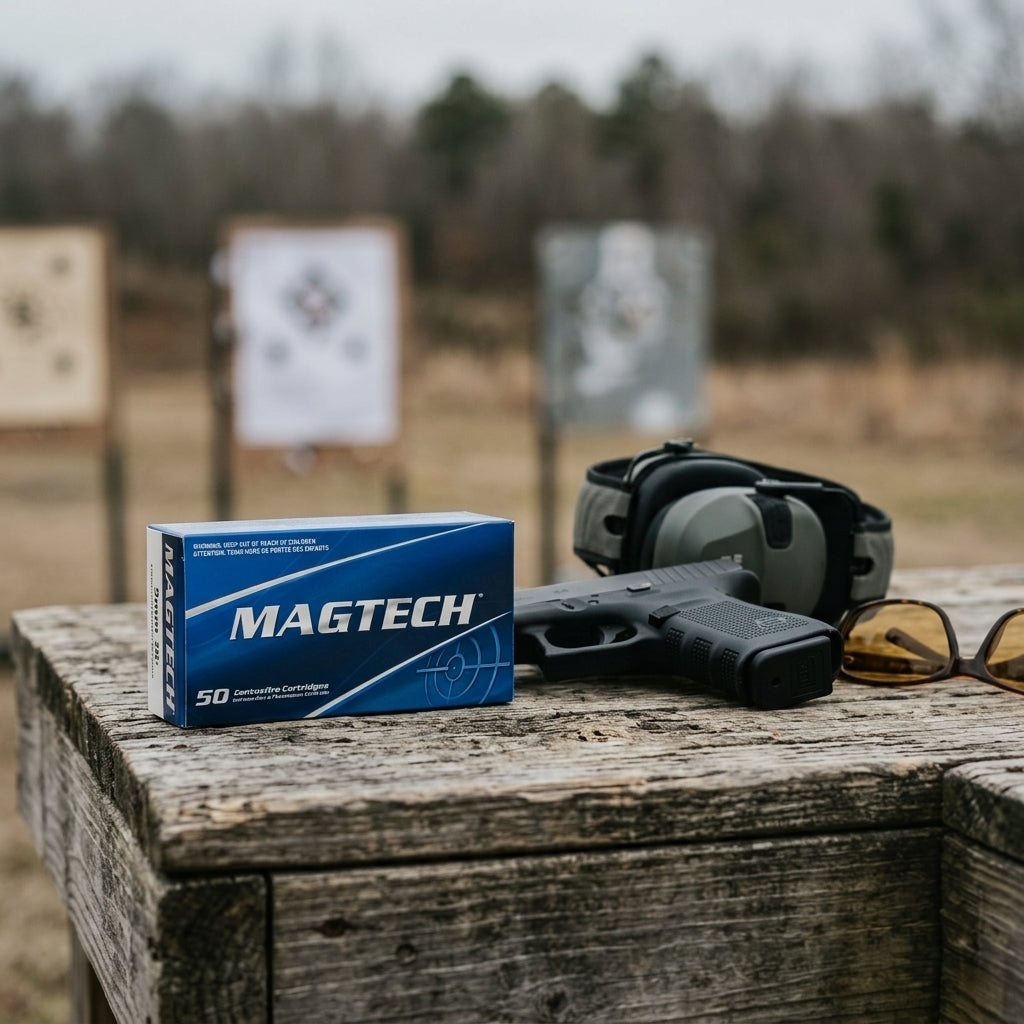
Magtech 9mm 115gr FMJ
$20.00
at Pro Armory
Prices accurate at time of writing
Frequently Asked Questions
When was the Springfield SA-35 4-Inch Polished Blued introduced?
The Polished Blued 4-inch SA-35 was introduced in October 2026. Springfield had already launched the underlying matte-blue 4-inch SA-35 on April 7, 2026, making the October pistol a new finish and furniture configuration of the existing shortened architecture rather than an entirely new mechanical design.
How long is the SA-35 4-Inch?
The pistol uses a 4-inch barrel and measures approximately 7.1 inches overall. Its height is approximately 4.8 inches.
How much does the SA-35 4-Inch weigh?
The 4-inch SA-35 weighs approximately 29.8 ounces unloaded. That makes it lighter than the traditional full-size version, although it remains heavier than many comparable polymer-framed carry pistols.
How many rounds does the 4-inch SA-35 hold?
The SA-35 uses a 15-round flush-fitting 9mm magazine, providing two additional rounds compared with the 13-round capacity traditionally associated with the original Hi-Power pattern. That gives the pistol a maximum standard configuration of 15+1 where permitted.
Is the SA-35 4-Inch optics ready?
No. The current SA-35 4-Inch Polished Blued uses conventional iron sights and does not come from Springfield with an optics-ready slide. Buyers who consider a red-dot sight essential to their carry setup should account for that before choosing the pistol.
Does the SA-35 have an accessory rail?
No. Springfield retains the traditional Hi-Power-style dust-cover profile without adding a factory accessory rail. Buyers who require a weapon-mounted light may therefore find a more contemporary pistol architecture better suited to their needs.
Is the 4-inch SA-35 better for concealed carry than the full-size model?
The shorter 4-inch barrel and slide reduce overall length and give the compact SA-35 a stronger carry-oriented argument than the full-size version. The grip remains full length and the pistol is still forged steel, so concealability and comfort depend on more than barrel length alone.
Is the polished-blue finish suitable for daily carry?
It can be carried, but owners should expect ordinary holster contact, moisture, and handling to affect the appearance over time. Traditional blued carbon steel also benefits from appropriate cleaning, lubrication, and protection from prolonged moisture exposure.
How much does the SA-35 4-Inch Polished Blued cost?
Springfield launched the Polished Blued model with a $799 MSRP, the same listed MSRP as the matte-blue 4-inch version. Actual dealer pricing and availability can vary.
Has the new Polished Blued SA-35 been tested yet?
Early independent testing is encouraging. Guns.com reports firing just over 300 rounds through its polished 4-inch test pistol without a failure. That is useful early information, but it remains one test gun and a relatively modest round count rather than a long-term endurance record.
About the Author
The ProArmory editorial team includes experienced hunters, competitive shooters, military veterans, firearms instructors, and firearms industry professionals committed to producing accurate, practical, and research-based content. Our articles draw on manufacturer specifications, current industry information, launch documentation, and real-world shooting experience to help readers make informed decisions about firearms, ammunition, optics, and related equipment.
Disclaimer
This article is for informational and educational purposes only. Product specifications, pricing, configurations, and availability may change after publication. Firearm ownership, concealed carry, magazine-capacity, and transportation laws vary by jurisdiction.
Prospective buyers should verify current federal, state, and local requirements, follow Springfield Armory's current manufacturer instructions, and always use established firearm-safety practices.


