










Quick Answer
The PSA Sabre AK 5.56 is one of Palmetto State Armory's newest attempts to combine traditional AK architecture with the upgraded components and accessory support modern American rifle buyers increasingly expect. PSA announced the rifle on September 21, 2026, with commercial availability beginning September 25, making it a genuinely new addition to the company's Sabre family rather than an older model receiving renewed attention.
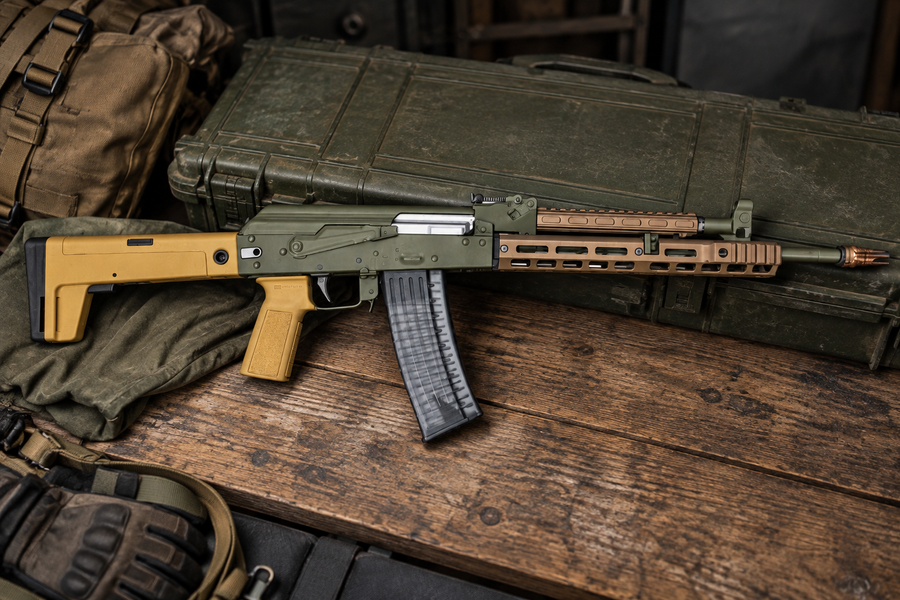
The rifle is built around a Polish WBP 5.56 parts kit incorporating the trunnion, bolt, carrier, rear-sight assembly, and dust cover. PSA pairs those components with a 16-inch in-house cold-hammer-forged, chrome-lined barrel, an ALG trigger, Soviet Arms M-LOK lower handguard and railed gas tube, B5 Systems furniture, a side-folding rear-trunnion arrangement, and a Plan B muzzle device.
The more interesting decision is the chambering. By choosing 5.56 NATO, PSA places the Sabre AK directly into the cartridge ecosystem most closely associated with the American AR-15 market. Owners gain access to an abundant and familiar rifle cartridge, but they do not automatically gain the magazine compatibility, parts standardization, controls, or enormous accessory ecosystem that make the AR-15 so convenient to own.
That creates the central question surrounding the Sabre AK 5.56: does combining AK construction, upgraded components, and familiar ammunition produce a meaningful alternative to a similarly priced AR-15, or does the rifle primarily make sense for buyers who already know they prefer the AK platform?
At a launch price reported at approximately $1,099.99, the Sabre is not positioned as a bargain-basement AK. It needs to justify its price through the quality of its components, practical factory configuration, and the ownership experience it provides.
Key Takeaways
- The PSA Sabre AK 5.56 was announced September 21, 2026, with commercial availability beginning September 25.
- The rifle combines core Polish WBP 5.56 parts with a PSA-manufactured 16-inch cold-hammer-forged, chrome-lined barrel.
- Factory equipment includes an ALG trigger, B5 Systems furniture, Soviet Arms M-LOK handguard and railed gas tube, and a Plan B muzzle device.
- Chambering an AK in 5.56 NATO gives owners ammunition commonality with AR-15s, but magazines, controls, replacement parts, and accessories remain AK-specific.
- PSA includes a WBP 5.56 magazine, but the company has not published a universal compatibility list for the broader 5.56 AK magazine market.
- The Sabre's value depends less on whether it can replace an AR-15 and more on whether a buyer specifically wants AK architecture with modern factory components and a familiar cartridge.
What Is the PSA Sabre AK 5.56?
Palmetto State Armory has offered AK-pattern rifles for years, ranging from relatively traditional configurations to models incorporating increasingly modern furniture and accessories. The Sabre name occupies a different position within that broader catalog.
Across PSA's rifle lineup, Sabre models generally emphasize upgraded components and more complete factory configurations rather than asking the owner to begin with a basic firearm and immediately replace the trigger, handguard, muzzle device, furniture, or other major components.
The new 5.56 AK follows that philosophy. Instead of presenting a conventional AK chambered for a different cartridge and leaving the modernization to the owner, PSA builds the rifle around Polish WBP core components and adds its own barrel along with contemporary furniture and accessory support.
The result remains unmistakably an AK. It uses a long-stroke gas-piston operating system, rotating bolt, stamped-receiver architecture, rock-and-lock magazine system, and the basic control arrangement associated with the platform. Chambering the rifle in 5.56 NATO changes the ammunition it fires, not the mechanical system underneath it.
That distinction is central to understanding the Sabre. Its appeal is partly about giving an American shooter a genuinely different rifle architecture without requiring that shooter to maintain an entirely separate primary ammunition supply.
PSA Sabre AK 5.56 Specifications
| Specification | PSA Sabre AK 5.56 |
|---|---|
| Platform | AK-pattern semiautomatic rifle |
| Chambering | 5.56x45mm NATO |
| Operating System | Long-stroke gas piston |
| Barrel Length | 16 inches |
| Barrel Construction | Cold-hammer-forged, chrome-lined |
| Reported Twist Rate | 1:7 |
| Barrel Manufacturer | Palmetto State Armory |
| WBP Components | Trunnion, bolt, carrier, rear-sight assembly, dust cover |
| Receiver | Dimpled stamped receiver with swell-neck rivets |
| Trigger | ALG |
| Lower Handguard | Soviet Arms M-LOK |
| Upper / Gas Tube | Soviet Arms railed gas tube |
| Stock / Grip | B5 Systems |
| Rear Trunnion | Side-folding configuration |
| Muzzle Device | Plan B |
| Magazine System | 5.56 AK-pattern |
| Included Magazine | WBP 5.56 magazine |
| Launch Price | Approx. $1,099.99 |
| Initial Release | September 2026 |
Several of these features are familiar individually. Chrome-lined barrels, enhanced triggers, M-LOK handguards, and suppressor-oriented muzzle devices are hardly new ideas in the modern rifle market.
The significance comes from receiving them together on a factory-built 5.56 AK. For a buyer who already knows these are the components they would likely add to a basic rifle, the Sabre provides a more complete starting point rather than turning the initial purchase into the first stage of a parts project.
What Exactly Comes From WBP?
The Polish WBP component sourcing is one of the most important details surrounding the new rifle, but it needs to be described accurately. PSA's own launch material identifies the Sabre as being built around a WBP 5.56 parts kit and specifically names the trunnion, bolt, carrier, rear-sight assembly, and dust cover as WBP components.
Those parts are meaningful because several of them sit at the mechanical core of the AK operating system. The bolt and trunnion are directly involved in locking the action, while the carrier is central to the long-stroke gas system that defines the platform.
PSA then combines those Polish parts with American components, including its own 16-inch barrel and the rest of the Sabre-specific furniture and accessory package. The result should therefore be understood as a PSA-built rifle using a WBP parts-kit foundation rather than a complete Polish rifle imported and merely refinished by PSA.
That distinction matters because country of origin alone cannot establish the quality of the finished firearm. The WBP components contribute to the rifle's premium positioning, but final assembly, headspacing, riveting, barrel installation, alignment, and quality control remain critical to how the complete Sabre performs.
Why Build a Modern AK Around 5.56 NATO?

The AK platform is historically associated with 7.62x39mm and 5.45x39mm. Those cartridges shaped the rifle's military development and remain closely tied to the platform's identity.
A 5.56 NATO AK changes that relationship by allowing the owner to use one of the most common centerfire rifle cartridges in the United States. For someone who already owns one or several AR-15s, that can make adopting an AK significantly easier from an ammunition standpoint.
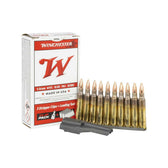
Owners gain access to a broad commercial 5.56 and .223 Remington market with numerous training, defensive, match, and specialty loads. They do not need to begin maintaining an entirely separate ammunition supply simply because they want to experience a different rifle platform.
That convenience should not be confused with complete ecosystem compatibility. A standard AR-15 magazine does not fit a conventional 5.56 AK, and AR bolts, barrels, receivers, handguards, controls, and many other components do not become interchangeable simply because both rifles fire the same cartridge.
The ammunition is shared. The mechanical ecosystem is not.
That tradeoff sits at the heart of the Sabre AK 5.56. It gives the owner familiar ammunition while preserving almost everything else that makes AK ownership different.
The 16-Inch CHF Chrome-Lined Barrel Fits the Rifle's Mission
PSA produces the Sabre's 16-inch barrel in house and identifies it as cold-hammer-forged and chrome-lined. Current SKU reporting also lists a 1:7 twist rate, a logical choice for a 5.56 rifle expected to handle a broad range of common projectile weights.
Cold hammer forging is a barrel-manufacturing process in which the blank is mechanically formed around a mandrel under considerable pressure. When executed properly, the process can provide consistent dimensions and is widely used for service-oriented rifle barrels.
Chrome lining adds a protective layer to the bore and chamber, traditionally valued for corrosion resistance and durability under sustained use. Those characteristics fit the general-purpose direction of an AK-pattern rifle better than a configuration designed exclusively around minimum weight or maximum benchrest accuracy.
Neither feature guarantees extraordinary accuracy or unlimited barrel life. Chamber quality, bore consistency, ammunition, heat, maintenance, assembly, and quality control all influence real-world performance.
The more useful conclusion is that PSA chose a barrel construction appropriate for a rifle intended to occupy the premium-equipped, general-purpose side of its AK lineup.
The ALG Trigger Gives the Sabre a Different Starting Point
The ALG trigger is another component that separates the Sabre from a basic military-style AK configuration. Factory AK triggers can vary substantially in weight, travel, reset, and overall feel, and trigger replacement is a common modification among owners trying to modernize the platform.
Including an ALG unit from the factory removes one of those immediate upgrade decisions. The buyer does not have to purchase a basic rifle, decide the trigger is one of its weakest ergonomic points, and then replace it separately.
That does not make trigger feel entirely objective. Some shooters prefer a lighter and cleaner break while others prioritize a more traditional service-rifle feel. The important point is that PSA is clearly positioning the Sabre toward buyers who want an enhanced configuration from the beginning.
The Soviet Arms Handguard Brings the AK Into the M-LOK Era
The rifle uses a Soviet Arms M-LOK lower handguard and a railed gas tube, giving the Sabre a far more contemporary accessory interface than a traditional wood or polymer AK handguard.
That matters because accessory mounting has historically been one of the areas where the AK required more platform-specific solutions than the AR-15. Modern handguards have changed that substantially by giving AK owners access to common lights, hand stops, sling hardware, and other M-LOK accessories.
The railed gas tube also creates an additional mounting surface, although optics placement on AK-pattern rifles can involve different tradeoffs than mounting to the rigid upper receiver of an AR-15. Buyers should follow the manufacturer's guidance for any optic or accessory installed on the system.
The broader point is that PSA is not asking buyers to accept traditional accessory limitations simply because the rifle uses traditional AK architecture.
The Plan B Muzzle Device Signals Suppressor-Oriented Thinking
PSA equips the rifle with a Plan B muzzle device rather than a basic military-style flash hider or brake. That gives the Sabre a factory starting point oriented toward compatible suppressor-mounting systems.
This is another example of PSA configuring the rifle around how some contemporary owners actually use their firearms. Suppressor ownership has become increasingly common, and buyers at the premium end of the market often evaluate a rifle partly by how easily it integrates into an existing mounting ecosystem.
The presence of the muzzle device does not mean every suppressor can be mounted directly or that every suppressor will affect the rifle's operating system identically. Owners should verify compatibility among the exact muzzle device, suppressor mount, suppressor, ammunition, and host rifle before use.
The 5.56 AK Magazine Question Is More Complicated
One of the most important ownership considerations surrounding any 5.56 AK is magazine compatibility. Unlike the AR-15 market, where the basic STANAG-pattern magazine architecture is supported across a huge portion of the industry, 5.56 AK magazines have never converged around one truly universal commercial standard.
Different national patterns and manufacturers can use magazines that look broadly similar while varying in feed geometry, locking surfaces, dimensions, reinforcement, follower design, and the way they interact with a particular magazine catch and trunnion.
PSA confirms that the Sabre ships with a WBP 5.56 magazine. What PSA has not published is a broad list guaranteeing compatibility with every other commonly available 5.56 AK magazine.
That means buyers should resist the temptation to order a large quantity of another magazine pattern simply because it is labeled for 5.56 AKs. The sensible starting point is the factory-supported WBP configuration, followed by individual testing of any alternative magazine before purchasing it in volume.
Early Magazine Reports Are Worth Watching, Not Overreacting To
The rifle has only been commercially available for a short period, but early owner discussions have already raised questions about fit with some alternative 5.56 AK magazines. Reports include examples of certain magazines fitting tightly or failing to fit particular rifles while others appear to work normally.
That information is worth monitoring because magazine fit is one of the known complexities of the 5.56 AK ecosystem. It is not yet sufficient to establish a widespread defect with the Sabre platform.
A handful of owner reports can identify something reviewers and future buyers should investigate, but they cannot determine production-wide dimensional consistency. More rifles, more magazine types, and more independent testing are needed before a broad conclusion would be justified.
For now, the practical takeaway is simply that magazine selection deserves more attention on this rifle than it would on a typical AR-15.
Why Magazine Standardization Matters
Magazine compatibility affects more than convenience. A rifle may use an abundant cartridge while still depending on magazines that are more expensive, harder to find, or less interchangeable than those used by competing platforms.
That difference becomes especially noticeable for owners who attend training courses, maintain several rifles, or prefer to keep a substantial reserve of proven magazines.
The AR-15 has a major advantage here. Its magazine ecosystem includes numerous manufacturers, materials, capacities, and price points, all centered around a broadly standardized pattern. Individual magazine quality can still vary, but basic interchangeability is one of the platform's strongest ownership advantages.
The 5.56 AK market is more fragmented. That does not make the Sabre unreliable or unsuitable for serious use, but it does mean owners should treat magazines as a rifle-specific compatibility question instead of assuming that shared ammunition automatically produces the same logistical convenience as an AR.
PSA Sabre AK 5.56 vs. AR-15

The most useful comparison for the Sabre may not be another AK chambered in 7.62x39mm. At approximately $1,100 and chambered in 5.56 NATO, its most obvious competition is a similarly priced AR-15.
That market is exceptionally competitive. Around the same price, buyers can find AR-platform rifles with quality barrels, free-float handguards, enhanced triggers, extensive optics support, standardized magazines, and mature replacement-parts ecosystems.
The decision therefore has less to do with whether either rifle can fire 5.56 and more to do with which platform the owner actually wants.
| Consideration | PSA Sabre AK 5.56 | Comparable AR-15 |
|---|---|---|
| Operating System | Long-stroke gas piston | Commonly direct gas |
| Chambering | 5.56 NATO | 5.56 NATO |
| Typical Barrel Length | 16 inches | Commonly 16 inches |
| Magazine Ecosystem | 5.56 AK-specific and less standardized | Broadly standardized AR/STANAG pattern |
| Accessory Support | Modernized but more platform specific | Extremely broad commercial ecosystem |
| Controls | Traditional AK arrangement | AR-15 arrangement |
| Parts Interchangeability | More manufacturer and pattern dependent | Generally much broader |
| Folding Stock Capability | Yes, depending on rear configuration | Less common with traditional buffer system |
| Main Attraction | AK architecture using familiar 5.56 ammunition | Standardization, flexibility, and ecosystem depth |
The AR-15's strongest advantage is its ecosystem. Owners can choose among an enormous range of stocks, grips, triggers, barrels, handguards, magazines, optics mounts, bolts, and replacement components. Gunsmith familiarity and training resources are similarly extensive.
The Sabre takes another path. Its attraction is the opportunity to own a modernized AK without abandoning 5.56 NATO ammunition. The operating system, receiver architecture, controls, magazine insertion, folding-stock potential, and overall handling remain recognizably AK even though the rifle incorporates equipment aimed at contemporary use.
Neither platform should automatically be declared more reliable based solely on operating-system mythology. Reliability depends on the finished firearm, its magazines, ammunition, assembly quality, maintenance, and manufacturing consistency.
Does the AK Operating System Still Offer Something Different?
For buyers accustomed almost entirely to AR-15s, the Sabre offers a genuinely different mechanical and ergonomic experience. The long-stroke piston and carrier assembly move as a large operating unit, the safety and charging handle occupy different positions, and the rock-and-lock magazine system changes reload technique.
The folding rear arrangement also takes advantage of one characteristic the traditional AR layout cannot replicate without substantially changing its recoil system. Because the AK does not require a conventional AR buffer tube behind the receiver, the stock can fold alongside the rifle.
Those differences are neither automatic advantages nor defects. They are reasons someone might deliberately choose an AK even after standardizing most of their ammunition around 5.56 NATO.
The Sabre makes the most sense when those differences are part of the attraction rather than inconveniences the buyer plans to tolerate solely for appearance.
Does the Sabre Offer Enough Value at $1,099.99?
The reported $1,099.99 launch price places the Sabre in a competitive segment. It is substantially more expensive than many entry-level AR-15s and basic AK-pattern rifles, but it also arrives with components owners frequently add separately to less expensive guns.
The WBP core parts, PSA cold-hammer-forged chrome-lined barrel, ALG trigger, modern Soviet Arms handguard, railed gas tube, B5 furniture, folding-capable rear configuration, and Plan B muzzle device all contribute to that higher-tier positioning.
A component list by itself does not establish value, however. The better question is whether those components support what the buyer actually intends to do with the rifle and whether PSA assembles them into a consistent finished product.
Someone who wants a traditional military-style AK with simple furniture and no interest in suppressor mounting or M-LOK accessories may gain relatively little from paying for the Sabre package. Someone who already knows they want a 5.56 AK with an enhanced trigger, modern rail system, upgraded furniture, and suppressor-oriented muzzle device may save time and money by buying those features together.
That is where the approximately $1,100 price becomes easiest to justify.
The Sabre Is Not Really Trying to Beat the AR at Being an AR

Evaluating the Sabre solely by asking whether it provides more features per dollar than an AR-15 misses the reason the rifle exists. An AK cannot realistically out-AR the AR when magazine standardization, parts interchangeability, modularity, optic mounting, and sheer aftermarket scale are the criteria.
The more useful question is whether the Sabre reduces enough of the traditional AK's friction points that a buyer can enjoy the platform without immediately rebuilding it.
The M-LOK handguard addresses accessory mounting. The ALG trigger addresses one common upgrade area. The B5 furniture gives the rifle familiar modern ergonomics. The Plan B device provides a suppressor-oriented starting point. The 5.56 chambering solves the ammunition-commonality problem for owners already heavily invested in that cartridge.
PSA is therefore not making the AK behave like an AR internally. It is making an AK easier to integrate into the equipment and ammunition habits of an American shooter who already lives in an AR-dominated market.
What About Accuracy?
The Sabre's 16-inch CHF chrome-lined barrel and reported 1:7 twist provide a promising specification foundation, but they do not establish a particular accuracy standard. A manufacturing method is not an accuracy guarantee.
Meaningful conclusions will require groups fired from multiple production rifles using several types of ammunition. Barrel quality, trunnion and barrel alignment, optic mounting, ammunition selection, trigger control, and the individual rifle all influence what the shooter ultimately sees on paper.
This is particularly important because the rifle's 5.56 chambering places it in comparison with an AR market where buyers have become accustomed to relatively inexpensive rifles producing respectable mechanical accuracy.
The Sabre does not necessarily need to become a precision rifle to justify itself, but its price means buyers are reasonable to expect consistent practical accuracy alongside reliability and durability.
What the Sabre AK 5.56 Still Needs to Prove
The Sabre's September 2026 introduction means the rifle has not yet accumulated a substantial independent ownership record. Several important questions therefore remain open.
Magazine compatibility is the first. The included WBP magazine establishes a factory-supported starting point, but owners will want to know which additional 5.56 AK magazines fit and function consistently without individual fitting.
Production consistency is another. A rifle can combine respected components and still depend heavily on correct barrel installation, headspacing, rivet work, sight alignment, magazine-catch geometry, and final quality control. As more examples reach customers, the market will gain a clearer picture of how consistently the complete rifle is assembled.
Accuracy and durability also need independent data. The barrel specification is appropriate for a service-oriented rifle, but only extended use will show how the complete gun performs as round counts increase.
Finally, buyers will want to see how the factory configuration survives regular use. Handguard retention, finish wear, folding hardware, trigger life, magazine fit, replacement-part availability, and warranty experience can all influence long-term ownership.
None of those questions are unusual for a firearm that has been commercially available for only a few weeks. They simply reinforce why the Sabre should currently be viewed as a promising new configuration rather than a fully established platform with years of field data behind it.
Who Is the PSA Sabre AK 5.56 Actually For?
The strongest buyer case is someone who specifically wants an AK but would rather standardize ammunition around 5.56 NATO. That buyer gets the manual of arms, operating system, receiver design, folding-stock potential, and overall character of an AK without adding another major rifle cartridge to the ammunition shelf.
The rifle also makes sense for an existing AK owner who wants a more complete modern configuration from the factory. Buying the ALG trigger, rail system, upgraded furniture, and suppressor-oriented muzzle hardware individually can narrow the price gap between a basic rifle and the Sabre surprisingly quickly.
The weaker case is someone choosing a first general-purpose 5.56 rifle with no particular attachment to the AK platform. A similarly priced AR-15 offers easier magazine logistics, dramatically broader parts support, more standardized mounting solutions, and simpler access to replacement components.
The Sabre becomes compelling when the buyer actively wants what makes an AK different rather than merely accepting those differences because the rifle looks interesting.
Final Thoughts
The PSA Sabre AK 5.56 brings an unusual combination to the American rifle market: traditional AK architecture, a Polish WBP mechanical foundation, contemporary factory components, and a cartridge already familiar to millions of AR-15 owners.
Its strongest selling point is not that it can outperform every similarly priced AR-15. The AR platform maintains enormous advantages in magazine standardization, replacement-part availability, accessory support, optic mounting, and configuration flexibility. Buyers who prioritize those characteristics have very good reasons to remain with the AR-15.
The Sabre offers something different. By combining WBP core components, a PSA-produced cold-hammer-forged chrome-lined barrel, ALG trigger, B5 furniture, Soviet Arms accessory mounting, and a Plan B muzzle device, PSA has created a 5.56 AK that requires fewer immediate upgrades than a basic traditional configuration.
The decision to chamber it in 5.56 NATO also solves a practical ownership problem. Shooters can maintain ammunition commonality with existing 5.56 rifles while experiencing a very different operating system and set of handling characteristics. They simply need to understand that shared ammunition does not mean shared magazines or interchangeable rifle components.
At approximately $1,100, the Sabre needs to deliver more than an attractive specification sheet. Its long-term value will depend on manufacturing consistency, reliable magazine support, practical accuracy, durability, and how well the complete package holds up as more rifles accumulate meaningful round counts.
Those questions remain open because the rifle was released only in September 2026. Early magazine-fit discussions are worth watching, but there is not yet enough evidence to turn individual owner experiences into a production-wide conclusion.
For someone looking for the simplest and most economical route into a general-purpose 5.56 rifle, an established AR-15 may still make more sense. For a shooter who specifically wants a modern AK without adopting another primary rifle cartridge, the Sabre presents a considerably more distinctive option.
Ultimately, the PSA Sabre AK 5.56 does not need to replace the AR-15 to justify its existence. It needs to prove that a thoughtfully equipped AK can be a worthwhile alternative for buyers who actively want the platform's different design and ownership experience.
The PSA Sabre AK in 5.56 represents more than another caliber option for the company's AK lineup. It reflects a broader reality in the modern rifle market: shooters can take advantage of established 5.56 NATO ammunition without committing to the AR-15 platform.
The Sabre retains its AK-pattern operating system and mechanical identity while incorporating features such as an upgraded trigger, modern furniture, and accessory mounting options. That places it within a growing conversation about the best 5.56 rifles outside the AR-15 platform, where the choice increasingly comes down to the rifle's design, ergonomics, compatibility, and intended role rather than the cartridge alone.

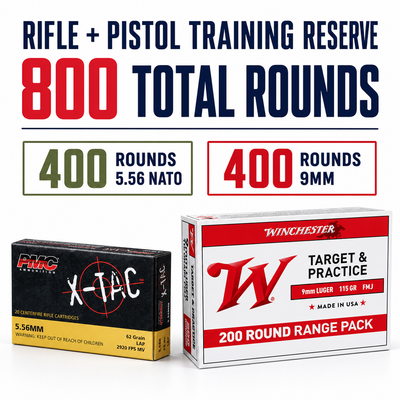
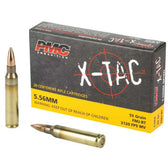
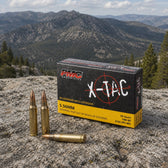
PMC X-tac 5.56x45mm 55 Grain FMJ
$18.00
at Pro Armory
Prices accurate at time of writing
Frequently Asked Questions
When was the PSA Sabre AK 5.56 released?
Palmetto State Armory announced the Sabre AK 5.56 on September 21, 2026, and scheduled commercial availability for September 25, 2026. It is a current addition to PSA's Sabre lineup rather than an older rifle being reintroduced.
What WBP parts are used in the PSA Sabre AK 5.56?
PSA's launch material specifically identifies the trunnion, bolt, carrier, rear-sight assembly, and dust cover as components from the WBP 5.56 parts kit. PSA pairs those parts with its own barrel and the remaining Sabre-specific furniture and accessories.
Does the PSA Sabre AK 5.56 use AR-15 magazines?
No. The Sabre uses 5.56 AK-pattern magazines and ships with a WBP 5.56 magazine. AR-15 magazines are not compatible with the conventional AK magazine system.
Will every 5.56 AK magazine fit the Sabre?
Buyers should not assume universal compatibility. The 5.56 AK market includes several magazine patterns and manufacturer-specific dimensional differences, and PSA has not published a broad compatibility list covering every available magazine. The included WBP magazine is the confirmed factory starting point.
What barrel does the PSA Sabre AK 5.56 use?
The rifle uses a 16-inch, PSA-manufactured, cold-hammer-forged and chrome-lined barrel chambered in 5.56 NATO. Current SKU reporting lists a 1:7 twist rate.
Does the PSA Sabre AK 5.56 have an ALG trigger?
Yes. PSA includes an ALG trigger as part of the factory Sabre configuration rather than leaving the owner to add one after purchase.
Is the PSA Sabre AK 5.56 suppressor ready?
The rifle ships with a Plan B muzzle device intended for use within compatible mounting systems. Suppressor owners should confirm compatibility among the exact suppressor, mount, muzzle device, ammunition, and rifle before use.
Is the PSA Sabre AK 5.56 better than an AR-15?
Neither platform is automatically better for every buyer. The Sabre offers AK architecture, folding-stock potential, upgraded factory components, and familiar 5.56 ammunition. The AR-15 generally offers much broader magazine standardization, replacement-part availability, accessory support, and parts interchangeability.
The better choice depends on whether the owner values the AK operating system and handling characteristics enough to accept its more specialized ecosystem.
How much does the PSA Sabre AK 5.56 cost?
The launch configuration has been listed at approximately $1,099.99. Pricing can change, and future furniture, finish, or muzzle-device configurations may be priced differently, so buyers should verify the exact SKU before purchasing.
Is the PSA Sabre AK 5.56 already proven?
No long-term conclusion is possible yet because the rifle only entered commercial distribution in September 2026. Its component list is promising, but magazine compatibility, production consistency, accuracy, durability, and long-term owner experience need more independent data.
About the Author
The ProArmory editorial team includes experienced hunters, competitive shooters, military veterans, firearms instructors, and firearms industry professionals committed to producing accurate, practical, and research-based content. Our articles draw on manufacturer specifications, current industry information, launch documentation, and real-world shooting experience to help readers make informed decisions about firearms, ammunition, optics, suppressors, and related equipment.
Disclaimer
This article is for informational and educational purposes only. Product specifications, pricing, magazine compatibility, component selection, and availability reflect information available at the time of writing and may change as the PSA Sabre AK 5.56 enters wider distribution.
Firearm ownership, configuration, suppressor, and magazine-capacity laws vary by jurisdiction. Prospective buyers should verify current federal, state, and local requirements, follow Palmetto State Armory's current manufacturer instructions, and always use established firearm-safety practices.


