


Quick Answer
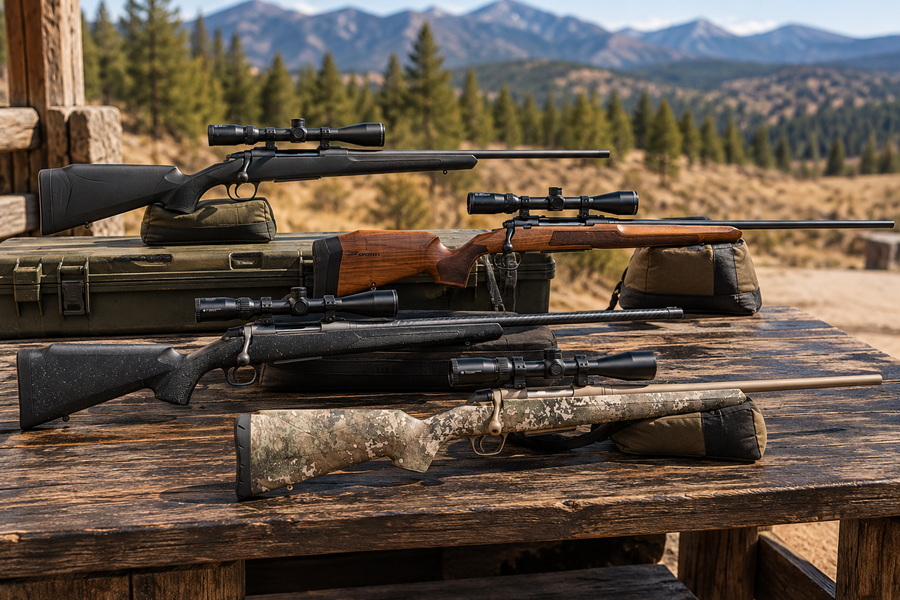
Factory hunting rifle packages can offer excellent value, particularly for first-time hunters and buyers who want a complete rifle-and-scope setup without selecting every component individually. The strongest packages combine a capable hunting rifle, a clearly identified riflescope, compatible mounting hardware, and a meaningful price advantage over buying comparable components separately.
The catch is that not every scoped rifle package provides the same level of value.
The rifle may be well suited to the buyer while the included optic is relatively basic. Another package may include a genuinely useful name-brand hunting scope but cost enough that buying the rifle and optic separately provides more flexibility for similar money.
The first question should therefore be whether the rifle itself is worth owning. The second is whether the included scope fits the intended hunting conditions. Only after answering both should the buyer calculate whether the package price actually represents savings.
Three recognizable examples illustrate the category well in 2026. Savage continues to offer its AXIS XP and AXIS 2 XP as factory-mounted, boresighted scoped rifles. Mossberg's Patriot scoped combinations pair selected rifles with a Vortex Crossfire II 3-9x40 using the Dead-Hold BDC reticle. Winchester's current XPR Hunter Scope Combo also uses a Vortex Crossfire II 3-9x40 BDC along with Weaver-style rings and bases.
These packages are not identical. Savage emphasizes maximum accessibility and a ready-mounted 3-9x40 optic, while the AXIS 2 XP adds the AccuTrigger and additional rifle features. Mossberg combines its Patriot action and LBA adjustable trigger with a specifically identified Vortex optic. Winchester's current XPR Hunter Scope Combo sits farther up the price ladder but includes a documented Crossfire II, mounting hardware, camouflage stock, Perma-Cote finish, M.O.A. Trigger System, and other XPR features.
For a buyer who would keep the included scope, a factory combo can be a smart purchase. For someone who already knows they want a different optic, reticle, magnification range, mounting height, or hunting-rifle configuration, buying separately often provides better long-term value.
Key Takeaways
- A factory rifle-and-scope package is most valuable when both the rifle and the included optic are components the buyer would willingly purchase on their own.
- Savage's current 2026 AXIS XP and AXIS 2 XP packages include factory-mounted, boresighted 3-9x40 scopes and now feature threaded barrels.
- Current Savage material does not consistently identify the scope brand on the newest AXIS package rifles, so buyers should verify the exact optic rather than relying on older Weaver or Bushnell package information.
- Mossberg continues to identify Vortex Crossfire II 3-9x40 optics with the Dead-Hold BDC reticle on its Patriot/Vortex package configurations.
- Winchester's current XPR Hunter Scope Combo includes a Vortex Crossfire II 3-9x40 BDC, Weaver-style rings and bases, and Vortex warranty coverage.
- A mounted or bore-sighted scope should never be assumed to have a confirmed live-fire zero for the owner's ammunition.
- Scope quality involves far more than magnification. Eye relief, field of view, reticle design, optical clarity, adjustment consistency, durability, and warranty support all matter.
- The real package discount should be calculated against equivalent rifle, optic, bases, and rings rather than against unrelated premium components.
- If the included scope will be replaced immediately, much of the package's apparent value disappears.
What Is a Factory Hunting Rifle Package?
A factory hunting rifle package combines a centerfire hunting rifle with a mounted riflescope and usually the hardware necessary to connect the two.
The concept is simple. Instead of selecting a rifle, scope bases, rings, and optic separately, the buyer receives a complete combination that has already been assembled to a useful starting configuration.
That convenience has made scoped packages especially popular in the affordable bolt-action hunting market.
The term factory package still requires some caution because not every combination is assembled in exactly the same way.
Some are manufacturer-defined SKUs with a specified rifle, optic, rings, and finish. Others are retailer-created bundles that combine a normal production rifle with whatever optic and mounting equipment the seller has selected.
Those two arrangements can look identical on a store shelf while providing very different levels of documentation and warranty clarity.
Manufacturer Package vs. Retailer Bundle
A true manufacturer-listed package is generally easier to evaluate because the configuration appears in the firearm manufacturer's catalog or product information.
The buyer can normally identify the rifle model, stock, barrel, chambering, optic, and other included equipment with less guesswork.
A retailer-created package can still offer excellent value. In some cases, a retailer may combine a desirable rifle with a better optic than the manufacturer normally includes.
The issue is documentation.
Buyers should determine who mounted the scope, exactly which optic is included, which rings and bases were used, and which company is responsible if one component develops a problem.
The phrase scoped package by itself does not answer any of those questions.
Why Factory Scoped Rifles Became So Popular
Putting together a hunting rifle can appear simple until a new owner begins comparing the individual components.
The rifle needs an appropriate chambering. The stock needs to fit. The optic needs suitable magnification and eye relief. The bases need to fit the receiver. Ring diameter needs to match the scope tube. Ring height needs to provide clearance without placing the optic unnecessarily high.
Then everything has to be mounted correctly.
An experienced hunter may find that process straightforward and even enjoyable.
A new buyer may simply want a dependable deer rifle they can learn to use without turning the purchase into an optics-engineering project.
Factory packages exist largely to remove that friction.
The Three Questions That Determine Whether a Package Is Worth Buying
The easiest way to evaluate any scoped hunting rifle is to separate the purchase into three questions.
First, would you buy the rifle without the scope?
Second, would you consider the included optic appropriate for the hunting you actually plan to do?
Third, is the complete package cheaper enough than comparable separately purchased components to justify giving up some freedom of choice?
If all three answers are yes, the package is probably a strong value.
If the answer to the first question is no, the scope should not rescue the purchase.
If the answer to the second question is no, the package discount needs to be large enough to make replacing the optic financially sensible.
Factory Package vs. Buying Separately
| Consideration | Factory Rifle-and-Scope Package | Rifle and Scope Purchased Separately |
|---|---|---|
| Initial convenience | Very high | Requires additional research |
| Scope selection | Limited to package configuration | Nearly unlimited |
| Mounting hardware | Usually included | Often purchased separately |
| Initial setup | Scope normally already mounted | Owner or gunsmith handles installation |
| Upfront cost | Can be lower | Depends on selected equipment |
| Optic flexibility | Low | High |
| Mounting-height control | Predetermined | Buyer selects ring height |
| Warranty structure | May involve rifle and optic manufacturers separately | Each component has clearly selected coverage |
| Best fit | Buyer wanting a straightforward complete setup | Buyer with specific rifle and optic preferences |
The 2026 Hunting-Rifle Package Market Has Changed
Package rifles used to be extremely predictable. A budget bolt-action received a basic 3-9x scope and was sold as a ready-to-hunt combination.
That category still exists, but the rifles themselves have improved considerably.
Savage has redesigned the AXIS stock and bolt handle and added threaded barrels across current 2026 package models. Adjustable trigger options and adaptable stocks are available farther up the AXIS family.
Mossberg continues to pair Patriot models with a documented Vortex optic rather than an unidentified generic scope.
Winchester's XPR Hunter Scope Combo combines a name-brand scope with features such as a free-floating barrel, M.O.A. trigger, detachable magazine, camo stock, protective metal finish, and included rings and bases.
The modern scoped package is therefore not necessarily an inexpensive rifle with a token optic attached to it.
Three Popular Factory Hunting Rifle Package Families
| Platform | Current Package Optic | Notable Rifle Features | General Position |
|---|---|---|---|
| Savage AXIS XP | Factory-mounted, boresighted 3-9x40 | Button-rifled barrel, redesigned stock and bolt handle, threaded barrel | Entry-level package |
| Savage AXIS 2 XP | Factory-mounted, boresighted 3-9x40 | AccuTrigger, adaptable stock, threaded barrel | Upgraded value package |
| Mossberg Patriot Vortex Combo | Vortex Crossfire II 3-9x40 Dead-Hold BDC | LBA adjustable trigger, fluted free-floating barrel, detachable magazine | Affordable named-optic package |
| Winchester XPR Hunter Scope Combo | Vortex Crossfire II 3-9x40 BDC | M.O.A. trigger, free-floating barrel, detachable magazine, camo stock, Perma-Cote finish | More fully equipped factory hunting package |
Exact chamberings, barrel lengths, stock colors, capacities, weights, and package contents vary by SKU. Buyers should use the exact model number rather than assuming every rifle carrying the family name is identical.
Savage AXIS XP: The Straightforward Entry Point

The AXIS XP is the simplest package in Savage's current hunting-rifle lineup.
The concept is intentionally uncomplicated. Savage combines the redesigned AXIS bolt-action rifle with a factory-mounted and boresighted 3-9x40 riflescope.
The rifle uses Savage's button-rifled barrel and thread-in headspacing system, detachable magazine, redesigned synthetic stock, and updated bolt handle.
For 2026, the AXIS XP also receives a threaded barrel.
That is an important change because it gives even the entry-level scoped rifle greater flexibility for compatible muzzle accessories where lawful and appropriate.
The Current AXIS XP Scope Should Be Evaluated by the Exact SKU
Older Savage package information makes it tempting to assume the newest AXIS XP includes a Weaver scope and the AXIS II XP automatically includes a Bushnell Banner.
That was true of previous package generations.
Savage's current 2026 information is more generic and identifies the new package optics primarily as 3-9x40 scopes.
That means buyers should not use an older article, forum post, or product photograph to identify the optic on a current rifle.
Check the actual box, SKU, manufacturer listing, or retailer specification.
Why the AXIS XP Makes Sense for a First Hunting Rifle
The strongest argument for the AXIS XP is simplicity.
A new hunter can select an appropriate chambering, purchase one complete rifle package, and begin learning the firearm without first choosing an optic ecosystem.
The familiar 3-9x magnification range is also suitable for many ordinary deer-hunting environments.
That does not mean the included optic is ideal for every hunting situation.
A western hunter expecting long shots in open terrain may eventually want a different scope. Someone frequently hunting near legal shooting-light boundaries may prioritize optical performance more heavily.
The package works best when the intended hunt matches the modest scope configuration.
Savage AXIS 2 XP: The More Interesting Savage Package

The AXIS 2 XP makes a stronger long-term argument because it adds features to the rifle itself rather than simply changing the optic.
The defining addition is Savage's user-adjustable AccuTrigger.
The current 2026 AXIS 2 family also incorporates an adaptable stock and threaded barrel.
The 2 XP then adds the factory-mounted and boresighted 3-9x40 optic.
This makes the AXIS 2 XP more attractive to the buyer who wants a package rifle but expects to keep the firearm for several seasons and possibly upgrade the optic later.
AXIS XP vs. AXIS 2 XP
| Feature | AXIS XP | AXIS 2 XP |
|---|---|---|
| Factory Scope | 3-9x40 | 3-9x40 |
| Factory Mounted | Yes | Yes |
| Boresighted | Yes | Yes |
| AccuTrigger | No | Yes |
| Threaded Barrel | Current 2026 models | Current 2026 models |
| Adaptable Stock | More basic configuration | Current 2026 configuration |
| Best Fit | Lowest-complexity entry package | Buyer wanting a better long-term rifle foundation |
The Rifle Matters More Than the Scope on the Savage Decision
If the buyer is deciding between the two Savage packages, the optic should not necessarily be the deciding factor because both are built around the same general 3-9x40 concept.
The more important difference is the rifle.
The AccuTrigger and stock features may provide value for years after the original scope has been replaced.
This illustrates one of the central rules for buying package rifles: permanent rifle features deserve more weight than inexpensive accessories.
Mossberg Patriot Vortex Scoped Combo

The Mossberg Patriot package is easier to evaluate from an optics perspective because Mossberg identifies the scope.
Current Patriot/Vortex package material specifies the Vortex Crossfire II 3-9x40 with Dead-Hold BDC reticle.
That matters because a buyer can independently research the exact optic rather than assigning an arbitrary value to a mystery 3-9x40.
The Patriot rifle underneath it uses a traditional hunting-rifle configuration with a fluted free-floating barrel, spiral-fluted bolt, detachable box magazine, recessed crown, Weaver-style bases, and Mossberg's LBA adjustable trigger system.
The Patriot's LBA Trigger Is a Meaningful Package Feature
Mossberg's LBA trigger is user adjustable within the manufacturer's specified range.
A package rifle therefore does not need to be evaluated as merely a budget action carrying a scope.
The trigger, stock, barrel, magazine system, and rifle fit still determine whether the complete firearm is worth owning after the novelty of getting everything in one box disappears.
The Vortex Crossfire II Makes the Mossberg Easier to Price
A named optic creates transparency.
The current standalone Crossfire II 3-9x40 carries its own published specifications and manufacturer price. It uses a one-inch tube, fully multi-coated lenses, capped adjustments, long eye relief, and hunting-oriented construction.
The Dead-Hold BDC version provides hash marks intended for holdover and wind-related references.
Whether that reticle is ideal for a particular hunter is a separate question.
The important point is that its value can actually be evaluated.
What the Crossfire II Does Well
The Crossfire II is positioned as an economical hunting optic rather than a premium low-light or long-range precision scope.
Its 3-9x40 format is familiar, relatively compact, and appropriate for many ordinary big-game hunting situations.
Capped turrets reduce the chance of unintentionally moving an adjustment while carrying the rifle.
The scope also receives Vortex's established warranty coverage.
What the Crossfire II Does Not Pretend to Be
It is not a high-end tactical optic with exposed elevation turrets, sophisticated zero-stop systems, premium glass, or extremely broad magnification.
That is not a criticism.
A hunting package intended to remain affordable does not necessarily benefit from a scope whose price exceeds the rifle.
The important question is whether the Crossfire II is sufficient for the owner's actual hunting conditions.
Winchester XPR Hunter Scope Combo

Winchester's current XPR Hunter Scope Combo is a useful contrast because it is more fully specified and considerably farther from the absolute entry level.
The current TrueTimber Strata configuration includes a Vortex Crossfire II 3-9x40 with BDC reticle, Weaver-style rings and bases, a composite camo stock, Perma-Cote metal finish, Inflex recoil pad, detachable box magazine, and Winchester's M.O.A. Trigger System.
The rifle uses a free-floating button-rifled steel barrel with a recessed crown and a machined steel receiver.
Winchester currently lists numerous chamberings in the package, with barrel length and overall weight changing according to cartridge.
The XPR Package Is Not Just an Optic Added to the Cheapest Rifle
This distinction matters when comparing package pricing.
The current Hunter Scope Combo includes a camo stock and protective finish in addition to the scope and mounts.
Comparing its price against the least expensive plain-black XPR and attributing the entire difference to the optic would therefore produce misleading math.
The complete trim needs to be matched as closely as possible.
Winchester Clearly Identifies the Mounting Hardware
The XPR package includes Weaver-style rings and bases.
That is useful information because mounts are part of the real cost of assembling a scoped rifle.
A buyer comparing a bare rifle and a $190 scope against a package can easily forget that rings and bases still need to be purchased.
The package has already accounted for that part of the system.
The Vortex Warranty Is Also Part of the XPR Package
Winchester specifically identifies the Crossfire II as retaining Vortex's VIP warranty coverage.
This is an example of why package documentation matters.
The scope does not become an anonymous accessory simply because Winchester mounted it to the rifle.
Rifle and optic warranty responsibilities remain identifiable.
How the Three Package Families Differ
Savage makes the strongest simplicity argument.
The AXIS packages are designed to put a scoped hunting rifle into the buyer's hands with minimal complication.
Mossberg makes a clearer optics-value argument because the Crossfire II is specifically identified.
Winchester delivers a more fully featured rifle package with a clearly documented Vortex optic, camo stock, protective finish, rings, bases, and a more premium overall configuration.
The difference is not merely which company makes the better rifle.
The companies are selling slightly different interpretations of the package concept.
Is a 3-9x40 Scope Still Enough for Hunting?

For many hunters, yes.
The 3-9x40 format became common because it covers a useful range of magnification without creating an excessively large or heavy scope.
At 3x, the hunter retains a reasonably broad field of view for closer opportunities.
At 9x, the optic provides enough image enlargement for many common big-game hunting distances.
That does not make 3-9x40 the perfect configuration for every hunter.
Dense Timber Changes the Optics Equation
A hunter working primarily in thick woods may value low-end magnification and field of view more than maximum power.
A scope that begins at 2x or a similar low setting may feel more natural at shorter distances.
The 3-9x package optic can still work, but the hunter should evaluate the environment rather than selecting magnification according to what is most common on store shelves.
Open Country Changes It Again
A hunter expecting longer shots across open terrain may want additional magnification, a more detailed reticle, exposed or locking elevation adjustments, or better optical performance at higher power.
That can make a basic package scope less attractive even when the rifle is excellent.
This is one of the clearest situations where buying the rifle and optic separately can make sense.
More Magnification Is Not Automatically Better
A 4-16x scope is not automatically superior to a 3-9x scope because sixteen is a larger number than nine.
Higher magnification can reduce field of view and create more demanding eye-position requirements.
Larger scopes also tend to add weight and bulk to a hunting rifle.
The right magnification is the one that fits the intended environment.
Objective Diameter Is Not a Complete Low-Light Rating
A 40mm objective is common on hunting scopes, but objective diameter alone does not tell the buyer how well a scope performs near dawn or dusk.
Optical design, glass quality, coatings, magnification, exit pupil, contrast, flare control, and the shooter's eye all contribute to the usable image.
Two scopes labeled 3-9x40 can perform very differently.
Why Package Scope Identity Matters
This is why the words 3-9x40 are insufficient for evaluating package value.
Those numbers describe magnification and objective size.
They do not describe optical quality, adjustment reliability, reticle, eye relief, warranty, durability, or manufacturing consistency.
A package listing that tells the buyer exactly which optic is installed provides substantially more useful information.
Reticle Design Deserves Attention
A simple duplex-style hunting reticle remains highly effective in many environments.
BDC-style reticles add additional visual references that can be used for holdovers when the shooter understands how those references correspond with the rifle, ammunition, distance, and magnification.
Those hash marks are not self-calibrating ballistic computers.
A hunter still needs to understand the actual trajectory of the selected ammunition.
A BDC Reticle Is Not Automatically a Long-Range Solution
BDC references are normally designed around generalized ballistic assumptions.
Actual point of impact changes with muzzle velocity, bullet ballistic characteristics, altitude, temperature, scope height, zero distance, and other variables.
A BDC reticle can be useful, but its marks should be verified rather than accepted blindly.
Eye Relief Is Especially Important on Hunting Rifles
Eye relief determines how far behind the ocular lens the shooter's eye can remain while seeing the intended image.
This becomes particularly important with cartridges producing substantial recoil.
The stock also needs to position the shooter naturally behind the optic.
A scope may be technically excellent and still feel uncomfortable if the mounting position and stock geometry do not fit the owner.
Factory Mounting Solves Compatibility, Not Personal Fit

This is one of the biggest limitations of the package concept.
A factory-mounted scope can be mechanically compatible with the rifle while still being positioned incorrectly for a particular owner's body dimensions.
Eye relief may need to be adjusted.
The scope may need to move slightly forward or backward within the rings.
A compact shooter and a tall shooter do not necessarily establish the same natural head position.
Ring Height Matters
Ideally, a scope should sit low enough to support a comfortable cheek weld while still clearing the barrel, receiver, bolt handle, and other components.
Package manufacturers select a mounting height that works mechanically with the rifle and included scope.
That does not guarantee every owner will consider the cheek position perfect.
A separately assembled rifle allows the buyer greater control over ring height.
Mounting Hardware Is Part of the Value Equation
When comparing a scoped package against a bare rifle, remember to include bases and rings.
The optic cannot be attached safely by good intentions.
Depending on the rifle and selected hardware, mounting components can add a meaningful amount to the complete cost.
Professional mounting or inspection can add additional expense.
Are Factory Rings Always Premium?
No.
Factory package rings are typically selected to provide a functional and affordable solution.
That does not mean they equal premium lightweight hunting rings or specialized precision mounting systems.
It also does not mean they need to be replaced automatically.
If the supplied hardware remains secure, fits correctly, and supports the intended scope, replacement may provide little practical benefit.
Does a Factory-Mounted Scope Come Zeroed?
Not necessarily.
This is one of the most important misconceptions surrounding scoped hunting packages.
A manufacturer may mount the scope and may bore-sight it.
Bore sighting is an alignment step intended to place the sighting system reasonably close to the barrel's line of bore.
It is not confirmation of live-fire point of impact with the owner's chosen ammunition.
Bore-Sighted Does Not Mean Hunting Ready
Savage specifically describes its package scopes as factory mounted and boresighted.
That is useful preparation.
It can reduce the amount of initial adjustment needed when the rifle reaches the range.
The rifle still needs to be appropriately confirmed with the ammunition the hunter intends to use before relying on it in the field.
Ammunition Changes Point of Impact

Two loads in the same chambering can produce different velocities and barrel behavior.
Different bullet weights, constructions, and manufacturers can therefore produce different points of impact.
A rifle being close with one factory test reference does not mean another hunting load will land in exactly the same place.
The Package Scope Should Be Inspected Before Use
Shipping, handling, and storage occur between factory assembly and the first hunting trip.
The complete system therefore deserves normal inspection according to the rifle and scope manufacturers' instructions.
If the owner is uncertain about the mounting hardware, a qualified professional can evaluate the installation.
How Much Money Can a Factory Package Actually Save?
There is no universal answer because package prices and dealer discounts change constantly.
The correct calculation is straightforward.
Start with the current purchase price of the exact package.
Then identify the closest equivalent standalone rifle, exact or comparable optic, necessary bases, necessary rings, and any mounting cost the buyer would otherwise pay.
Compare those totals.
Do Not Compare the Package Against Better Equipment
A common mistake is declaring a package a bargain because it costs less than the same rifle paired with a $500 scope.
If the package contains a roughly $190-class optic, the comparison should begin with an optic in that general category.
Otherwise, the package appears to save money only because the separately assembled system is substantially better equipped.
Do Not Compare Against the Wrong Rifle Trim Either
The same issue applies to the rifle.
Winchester's current XPR Hunter Scope Combo includes a TrueTimber Strata stock and Perma-Cote finish.
A bare black-stock XPR is not necessarily an equivalent comparison simply because both actions carry the XPR name.
Likewise, different Savage AXIS variants can have different triggers, stocks, barrel configurations, handedness, and included equipment.
A Better Package-Value Formula
| Component | What to Compare |
|---|---|
| Rifle | Closest equivalent standalone trim, not merely the cheapest model in the family |
| Scope | Exact included optic or truly comparable model |
| Bases | Correct hardware for the specific receiver |
| Rings | Correct tube diameter and suitable height |
| Installation | Include professional mounting if the buyer would otherwise pay for it |
| Finish / Stock | Account for camo, wood, coating, compact stock, or other package-specific upgrades |
| Total | Compare against the actual package purchase price |
Hypothetical Package Math
Consider a hypothetical rifle that costs $500 on its own.
A suitable scope costs $190. Bases and rings add another $75. If the buyer would pay $50 for mounting or inspection, the complete separately assembled system reaches $815.
If a factory package containing genuinely equivalent equipment sells for $650, the $165 difference represents real convenience and savings.
If the package sells for $780, the financial advantage is much smaller and the buyer may reasonably prefer to select the optic independently.
| Hypothetical Purchase | Cost |
|---|---|
| Standalone rifle | $500 |
| Comparable scope | $190 |
| Bases and rings | $75 |
| Optional professional mounting | $50 |
| Separate-system total | $815 |
| Example package price | $650 |
| Potential package advantage | $165 |
These figures are hypothetical and should not be treated as current retail pricing.
The Real Savings Can Be Convenience
Not every buyer evaluates value purely by dollars.
Researching bases, ring diameter, height, torque specifications, and mounting procedures takes time.
A package that eliminates those decisions can be worth something even if the component savings are modest.
This is particularly true for a first-time buyer who does not yet know which optical features deserve a premium.
When a Factory Package Offers Excellent Value
A package is strongest when the rifle is already the buyer's preferred model, the optic fits the intended hunting environment, the mounting hardware is suitable, and the complete price undercuts equivalent separate components.
In that situation, replacing the package with a custom-selected setup may provide more choice but not necessarily more practical performance.
The buyer can use the included system until experience reveals a specific limitation.
When the Package Is Mostly a False Bargain
The opposite situation occurs when the buyer selects the package because the scope appears to be free.
If the optic is replaced almost immediately, the original scope, rings, and mounting effort may provide very little lasting value.
A discounted package can become an expensive route to the bare rifle the buyer actually wanted.
The Replacement-Scope Problem
Imagine a buyer purchases a $650 package and then spends $500 on a preferred optic plus $100 on new mounting hardware.
The finished investment is now $1,250 before ammunition or other accessories.
If the desired standalone rifle could originally have been purchased for $500, the buyer effectively paid an extra $150 for a scope and mounts they no longer use.
This is why the included optic needs to be evaluated before purchase rather than treated as free merchandise.
Who Benefits Most From a Factory Hunting Package?
Several buyers make particularly strong candidates.
First-time hunters are the most obvious group because packages reduce setup complexity.
Hunters buying a secondary rifle may also benefit if they do not want to duplicate the cost of a premium primary setup.
Families purchasing a rifle for a new or growing hunter can benefit from compact or adaptable package configurations.
Budget-conscious hunters may appreciate preserving money for ammunition, hunting licenses, clothing, travel, and other actual hunting expenses.
First-Time Hunters
A first rifle purchase already involves enough decisions.
The buyer needs to select an appropriate chambering, stock size, rifle weight, action type, ammunition, storage method, and other basic equipment.
Reducing the optic decision to a competent factory package can be sensible.
The danger is allowing convenience to replace fit.
A new hunter still needs a rifle that shoulders naturally and can be operated comfortably.
Hunters Purchasing a Secondary Rifle
An experienced hunter may own a primary rifle with expensive optics and still want another rifle for a specific cartridge, hunting environment, or family member.
A package can provide a cost-controlled second system without repeating the investment of the primary setup.
In this situation, the hunter's experience can actually make package shopping easier because they already understand which compromises they are willing to accept.
Compact and Youth Hunting Rifles

Package rifles can be especially useful for younger or smaller-framed hunters because the buyer can concentrate on rifle fit instead of simultaneously solving optic compatibility.
Length of pull deserves particular attention.
A shorter stock that allows the shooter to obtain a comfortable firing position can matter more than purchasing a more expensive scope.
As the owner grows, the long-term flexibility of the stock becomes important.
Fixed-Budget Hunters
A hunting budget extends far beyond the rifle.
Ammunition, range time, licenses, tags, storage, clothing, boots, transportation, and other equipment all compete for the same money.
A $600 or $700 package that meets the hunter's needs may be far more useful than a $1,500 rifle-and-optic combination that eliminates the ammunition and practice budget.
The Cheapest Package Is Not Automatically the Best Budget Choice
Low purchase price is only valuable if the equipment remains useful.
A package that needs a replacement scope, replacement stock, and new rings during its first season can cost more in the long run than a slightly more expensive combination that works as purchased.
Budget should therefore be evaluated over several seasons rather than at the cash register alone.
Chambering Still Matters More Than the Scope Deal
A discounted rifle package in the wrong cartridge is not a bargain.
Hunters should choose chambering according to lawful hunting requirements, game, recoil tolerance, ammunition availability, rifle weight, and the conditions in which the firearm will be used.
The fact that one chambering is on sale should not override those considerations.
Ammunition Availability Is Part of Package Value
A common hunting chambering can make ownership considerably easier.
Rifles in cartridges such as .243 Winchester, .308 Winchester, 6.5 Creedmoor, .270 Winchester, .30-06 Springfield, and several other established hunting rounds benefit from broad commercial ammunition support.
Actual local availability can still vary.
A hunter should check ammunition supply before selecting a package simply because the cartridge appears attractive on paper.
Recoil Matters for New Hunters
Some factory package families are offered in everything from relatively mild cartridges to magnum chamberings.
The same stock and scope do not make those rifles equally comfortable.
A cartridge producing more recoil than the owner can manage comfortably may discourage practice and make consistent field shooting more difficult.
The correct rifle is the one the owner can train with effectively.
Package Weight Matters in the Field
The scope, rings, and bases add weight to the rifle.
A rifle advertised at a relatively low bare weight becomes heavier once the complete package is assembled.
Hunters walking long distances or climbing steep terrain may care considerably more about several additional ounces than someone hunting from a stationary blind.
The package should therefore be evaluated at its complete ready-to-carry weight whenever that information is available.
Stock Fit Matters More Than Camo
Camo finishes can be useful or attractive, but stock dimensions have greater influence on how the rifle actually handles.
Length of pull, comb shape, grip angle, recoil pad, and fore-end geometry affect the shooter's relationship with the rifle.
A stock that positions the eye naturally behind the included scope is particularly valuable in a package setup.
The Optic Needs to Match the Stock Too
A scope mounted high above a stock with a low comb can force the shooter to lift the head excessively.
That makes it harder to establish a repeatable cheek position.
Factory packages usually attempt to avoid extreme mismatch, but individual facial structure and body dimensions still vary.
Trying the rifle in person can reveal these issues immediately.
Warranty Coverage Deserves a Closer Look
Buying a complete package does not necessarily create one unified warranty.
The rifle manufacturer may cover the firearm while the optic manufacturer covers the scope.
Mounting hardware may have another manufacturer's warranty or may simply be considered part of the package assembly.
Buyers should understand who to contact before a problem occurs.
A Named Optic Makes Warranty Questions Easier
This is another advantage of the Mossberg and Winchester Vortex packages.
The optic manufacturer is clear and the scope has identifiable warranty support.
A package using an unnamed optic can be harder to evaluate because the buyer may not know who manufactured it or what coverage applies.
Retailer-Created Packages Need Extra Scrutiny
A retailer package may use excellent components, but the buyer should ask whether the firearm manufacturer recognizes the combination as one of its own SKUs.
If not, determine who installed the scope and who is responsible for mounting-related issues.
This is not a reason to reject retailer bundles.
It is simply part of evaluating them correctly.
Should You Immediately Upgrade a Factory Scope?
Not unless the optic has a specific limitation for the intended hunt.
Replacing equipment simply because it is described as entry level can become an expensive habit.
If the factory scope maintains its settings, provides a usable image, fits the rifle correctly, and offers the magnification needed for the hunt, keeping it may be the most sensible choice.
Upgrade When You Can Identify the Limitation
Maybe the reticle becomes difficult to see against dark timber.
Maybe the owner wants a lower bottom-end magnification.
Maybe low-light image quality is inadequate for the hunting environment.
Maybe the scope lacks the adjustment system required for longer-range shooting.
Those are concrete reasons to upgrade.
A more expensive price tag by itself is not.
Buying Separately Makes More Sense for Experienced Optics Buyers
Hunters who already know they prefer a particular reticle, tube diameter, magnification range, turret system, or optic manufacturer may find little benefit in accepting the package scope.
For them, the package can actually create extra work.
They may need to remove the existing optic, possibly replace the rings, remount another scope, and then decide what to do with the original equipment.
Buying Separately Also Makes Sense for Specialized Hunting
A package designed around general deer hunting may not match highly specialized applications.
Open-country western hunting, extreme low-light hunting where legal, mountain hunting where weight is critical, and specialized long-range applications can all justify more deliberate optic selection.
The more specialized the hunting requirement becomes, the less likely a generic factory package is to be the ideal answer.
Factory Packages Are Strongest in General-Purpose Hunting
This is where the familiar 3-9x40 combination makes the most sense.
A deer hunter using a common centerfire cartridge at ordinary field distances may need little more from an optic.
The buyer receives a rifle, scope, mounting system, and starting alignment without spending several evenings comparing ring heights and optical specifications.
Common Mistake: Buying the Scope Instead of the Rifle
A package carrying a recognizable optic brand can attract attention, but the rifle remains the primary long-term component.
A scope can be replaced relatively easily.
Changing an action, stock fit, chambering, or barrel is a much larger decision.
Start with the rifle.
Common Mistake: Treating the Scope as Free
It is included in the package price.
The manufacturer selected a configuration and priced the complete system accordingly.
The scope may represent excellent value, but it should still be evaluated as something the buyer is paying for.
Common Mistake: Assuming Factory Mounted Means Zeroed
Mounted means attached.
Bore-sighted means approximately aligned.
Neither means the rifle has a confirmed live-fire point of impact with the owner's ammunition.
Common Mistake: Evaluating an Optic Only by Magnification
Two scopes can both say 3-9x40 and provide very different user experiences.
Optical clarity, contrast, eye relief, field of view, reticle, adjustments, durability, and warranty matter.
Common Mistake: Ignoring the Rings and Bases
These components connect the optic to the firearm.
They deserve more attention than buyers often give them.
When comparing package cost against separate purchases, include them in the math.
Common Mistake: Assuming BDC Marks Are Automatically Correct
A BDC reticle is a reference system, not a guarantee that one hash mark corresponds perfectly with one exact distance from every rifle.
Ballistic performance changes with ammunition and environmental conditions.
The shooter needs to understand the actual rifle-and-load combination.
Common Mistake: Choosing the Package Before the Cartridge
The discount can disappear quickly if ammunition becomes expensive, difficult to find, or poorly suited to the hunter.
Choose the hunting role and chambering first.
Then compare package configurations within that requirement.
Common Mistake: Assuming a Premium Scope Fixes Poor Rifle Fit
A great optic does not correct excessive length of pull, uncomfortable stock geometry, excessive recoil, or an unsuitable rifle weight.
The owner still has to operate the firearm effectively.
How to Evaluate a Factory Package in the Store
Begin with the exact model number.
Identify the chambering, barrel length, stock, trigger system, magazine configuration, and total package weight.
Then identify the scope manufacturer and model.
Confirm the reticle and magnification range.
Look at the mounting hardware and make sure it is clearly documented.
Finally, compare the actual package price against equivalent separately purchased components.
Do Not Use the Product-Family Name Alone
The phrase Savage AXIS, Mossberg Patriot, or Winchester XPR covers multiple configurations.
Two rifles bearing the same family name may differ in chambering, stock, trigger, barrel length, handedness, scope, finish, and price.
The SKU is much more useful than the logo.
Online Listings Can Lag Behind Manufacturer Changes
This is especially important with package rifles because retailers may still have older production inventory.
A current 2026 manufacturer description may not match a rifle assembled two or three years earlier that remains on a dealer's shelf.
Neither product is necessarily defective.
They are simply different configurations.
The Savage Scope-Brand Issue Is a Good Example
Previous Savage AXIS generations were commonly identified by their Weaver or Bushnell package optics.
Current 2026 Savage material simply describes the relevant package optics as 3-9x40 scopes.
A buyer relying on an older review could therefore expect one optic and receive another package generation.
Verify the exact rifle being purchased.
Mossberg Is Easier to Identify
Mossberg's current Patriot/Vortex package information still specifically identifies the Crossfire II 3-9x40 Dead-Hold BDC.
That makes older and current information easier to reconcile when the package is explicitly identified as the Vortex combo.
The same caution still applies to non-Vortex Patriot packages and retailer-created bundles.
Winchester Is Similarly Clear on the Current XPR Hunter Combo
The current XPR Hunter Scope Combo specification identifies the Vortex Crossfire II, BDC reticle, Weaver-style rings and bases, and Vortex warranty coverage.
That level of documentation is exactly what buyers should want from a scoped package.
Which Package Is Best for a First-Time Hunter?
The answer depends on rifle fit and budget, but the Savage AXIS XP and AXIS 2 XP make particularly straightforward starting points.
The AXIS XP emphasizes simplicity and low complexity.
The AXIS 2 XP adds an adjustable trigger and stronger long-term rifle features while retaining the scoped-package approach.
If the buyer values a specifically identified optic, the Mossberg Patriot Vortex package and Winchester XPR combinations become attractive alternatives.
Which Package Is Best for Someone Who Cares Most About the Scope?
The packages that identify the optic clearly are easier to recommend to a scope-conscious buyer.
Mossberg and Winchester both provide current Crossfire II configurations.
The buyer can examine the optic's specifications independently and know what they are receiving.
A current Savage package may still be excellent, but the exact optic should be confirmed first.
Which Package Makes Sense for Long-Term Upgrading?
Prioritize the rifle foundation.
A Savage AXIS 2 XP may make more sense than the basic AXIS XP if the buyer values the AccuTrigger and adaptable stock.
The Mossberg Patriot provides its LBA adjustable trigger and conventional hunting-rifle architecture.
The Winchester XPR package provides another strong rifle foundation with the M.O.A. Trigger System, detachable magazine, and free-floating barrel.
The original scope can always be replaced later.
Which Package Makes Sense for the Buyer Who Never Wants to Upgrade?
The best choice is simply the one whose included optic already matches the intended hunt.
If a Crossfire II 3-9x40 provides everything the hunter expects to need, there is little reason to buy a package while mentally adding a future $600 scope to the plan.
A complete system that remains unchanged for ten hunting seasons can be outstanding value.
When Buying Separately Is Clearly Better
Buy separately when the desired scope is already known.
Buy separately when ring height needs to be tailored carefully to the shooter.
Buy separately when the hunting application demands optics significantly beyond the package scope.
Buy separately when the package premium is approximately equal to the cost of the optic and hardware the buyer actually wants.
Buy separately when the package optic will immediately be sold, stored, or replaced.
The Cheapest Initial Price Is Not the Goal
The objective is to buy the least expensive system that properly satisfies the hunting requirement without creating unnecessary replacement costs.
Sometimes that is a factory package.
Sometimes it is a rifle and scope purchased separately.
The answer changes according to the buyer rather than according to one universal ranking.
Final Thoughts
Factory rifle-and-scope packages remain one of the most practical ways to enter centerfire hunting, but the modern package market deserves more careful evaluation than simply asking whether a scope comes in the box.
The rifle should always come first.
A package is worthwhile only when the underlying firearm has the chambering, fit, weight, trigger system, stock, magazine arrangement, and manufacturer support the hunter actually wants.
The optic comes second.
A clearly identified scope has much more value than an anonymous 3-9x40 because the buyer can evaluate its optical specifications, reticle, warranty, current price, and reputation independently.
This is where the current Mossberg Patriot and Winchester XPR combinations make particularly clean cases. Both can be found with the Vortex Crossfire II 3-9x40, giving buyers a known reference point instead of an unspecified package scope.
Savage's 2026 AXIS lineup approaches the market differently.
The current AXIS XP and AXIS 2 XP continue to provide factory-mounted, boresighted 3-9x40 scopes, but the newest Savage material does not consistently identify the optic brand in the way older AXIS generations did.
That is not automatically a disadvantage.
It simply makes verifying the exact current SKU more important.
The 2026 AXIS updates also make the rifles themselves more interesting. Threaded barrels are now part of the current package lineup, while the AXIS 2 XP adds the AccuTrigger and adaptable-stock features that strengthen the rifle's long-term value beyond the included scope.
The Mossberg Patriot offers another sensible middle ground.
Its LBA adjustable trigger, free-floating fluted barrel, detachable magazine, and identified Vortex optic create a package that is easy to understand before purchase.
Winchester's current XPR Hunter Scope Combo is more elaborate. The Crossfire II, Weaver-style rings and bases, TrueTimber camo stock, Perma-Cote finish, M.O.A. trigger, free-floating barrel, and detachable magazine create a more complete package, but also move it farther from the lowest-cost end of the market.
That variety is useful because not every package buyer is simply looking for the cheapest deer rifle available.
Some want minimum complexity.
Some want a recognizable optic.
Some want a rifle they can keep for years while upgrading the scope later.
The value calculation should reflect that.
A factory-mounted scope also needs to be understood correctly. Mounted does not mean zeroed. Bore-sighted does not mean a confirmed point of impact. The rifle still needs to be properly evaluated with the hunting ammunition the owner plans to use.
Magnification deserves similar restraint.
A 3-9x40 remains a useful general-purpose hunting configuration, but the numbers do not tell the entire story. Eye relief, field of view, image quality, reticle, adjustment system, durability, and warranty can matter just as much.
Hunters working in dense timber, open western terrain, or demanding low-light conditions may reasonably want something different.
That is where buying separately begins making more sense.
The financial comparison should also be honest.
Compare the package against the same or closest equivalent rifle trim, an equivalent optic, suitable bases, suitable rings, and any installation expense that would otherwise be incurred.
Do not compare an entry-level package against a premium custom-selected optical system and call the difference package savings.
Most importantly, do not assign value to components you already know you will replace.
If the rifle and factory scope both fit the buyer's needs, a scoped hunting package can be one of the simplest and most economical ways to assemble a dependable hunting system.
If the rifle is right but the optic is wrong, buying the components separately may cost less over the life of the firearm.
The best factory package is therefore not necessarily the cheapest rifle with a free-looking scope attached.
It is the package whose rifle, optic, mounts, price, and intended hunting role all make sense together.
Budget rifle-and-scope packages can offer a practical entry point for hunters who want a straightforward setup without purchasing every component individually. Still, a factory-mounted optic doesn't automatically mean the rifle is ready for every hunting situation.
The quality of the scope, reliability of the mounting system, overall weight, and intended hunting environment all deserve consideration. Hunters planning longer trips or more demanding terrain can also benefit from our guide to planning a complete big-game hunting setup, which expands the discussion beyond the rifle and scope to the equipment needed for extended time in the field.

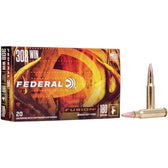
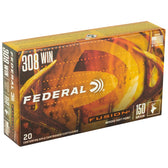
Federal Fusion .308 Winchester 180 Grain Bonded SP
$34.00
at Pro Armory
Prices accurate at time of writing
Frequently Asked Questions
Are factory hunting rifle packages worth buying?
They can be excellent values when the rifle and included optic both meet the buyer's requirements and the complete price is meaningfully lower than comparable components purchased separately. Their value falls quickly when the included scope will be replaced immediately.
What are some common factory hunting rifle packages?
Current examples include Savage AXIS XP and AXIS 2 XP configurations, Mossberg Patriot Vortex scoped combinations, and Winchester XPR Scope Combo models. Exact chamberings, stocks, scopes, and other specifications vary by SKU.
What scope comes on the current Savage AXIS XP?
Current 2026 Savage material identifies the AXIS XP package as using a factory-mounted and boresighted 3-9x40 scope. Buyers should verify the exact manufacturer and model on the individual SKU because older AXIS package generations used named Weaver and Bushnell optics that should not automatically be assumed on current production.
What is the difference between the Savage AXIS XP and AXIS 2 XP?
Both are current scoped package rifles, but the AXIS 2 XP adds Savage's AccuTrigger and additional rifle features. Current 2026 models also include threaded barrels, and the AXIS 2 family incorporates an adaptable-stock configuration.
What scope comes on the Mossberg Patriot Vortex package?
Mossberg identifies the Patriot/Vortex scoped combination with the Vortex Crossfire II 3-9x40 and Dead-Hold BDC reticle.
What scope comes on the Winchester XPR Hunter Scope Combo?
The current XPR Hunter Scope Combo uses a Vortex Crossfire II 3-9x40 with BDC reticle and includes Weaver-style rings and bases.
Is the Vortex Crossfire II a good hunting scope?
It is a general-purpose, value-oriented hunting scope with a familiar magnification range, capped turrets, fully multi-coated lenses, and established manufacturer warranty coverage. Whether it is sufficient depends on the hunter's environment and optical expectations.
Is a 3-9x40 scope enough for deer hunting?
For many common deer-hunting environments, yes. The 3-9x range covers a broad variety of ordinary hunting distances. Specialized dense-timber, open-country, low-light, or long-range applications may favor another configuration.
Does a larger objective lens always provide better low-light performance?
No. Objective diameter is only one variable. Lens quality, coatings, magnification, exit pupil, contrast, optical design, and the user's eye all influence usable low-light performance.
Does a factory-mounted scope come zeroed?
Not necessarily. Some packages are bore-sighted, which provides approximate initial alignment. Live-fire confirmation with the actual rifle and intended ammunition is still necessary before relying on the system for hunting.
What does bore-sighted mean?
Bore sighting approximately aligns the optic with the direction of the barrel. It is a starting point for sight adjustment rather than proof of actual point of impact with a specific cartridge.
Do I need to replace the scope rings on a factory package?
Not automatically. If the included hardware is compatible, secure, properly installed, and suitable for the intended use, replacement may provide little benefit. Upgrade when a specific limitation exists.
Are factory package scopes low quality?
Not necessarily. Some packages use clearly identified optics from established manufacturers such as Vortex. Others use more basic or less clearly documented scopes. The exact optic needs to be evaluated rather than the entire category dismissed.
Is it better to buy a rifle and scope separately?
Buying separately is generally better when the hunter already has strong preferences for magnification, reticle, optic manufacturer, mounting height, or other scope characteristics. A factory package is more attractive when the included equipment already matches those needs.
How do I calculate whether a rifle package saves money?
Compare the package's actual purchase price against the closest equivalent standalone rifle, equivalent scope, required bases, rings, and any mounting expense. Make sure stock finish, trigger system, barrel configuration, and other package-specific features are also equivalent.
Should I buy the package if I plan to replace the scope?
Only if the package discount is large enough that the rifle remains a better deal even after replacement. Otherwise, purchasing the rifle separately and putting the desired optic on it from the beginning usually provides better long-term value.
Are package rifles only for beginners?
No. Experienced hunters may use them as secondary rifles, loaner or family rifles, cartridge-specific hunting setups, or cost-controlled systems for environments where a premium optic is unnecessary.
What should I choose first, the rifle or the scope?
The rifle should generally come first. Select the appropriate chambering, stock fit, rifle weight, trigger, action, and other firearm features, then determine whether the package scope supports the intended use.
Should I choose a hunting package based on chambering availability?
Chambering should be selected according to lawful hunting use, game, recoil tolerance, ammunition availability, and the shooter's needs. A discounted package in an unsuitable cartridge is not good value.
What should I look for in a hunting package scope?
Evaluate the exact manufacturer and model, magnification, objective size, reticle, eye relief, field of view, adjustment system, weight, warranty, and suitability for the environment in which the rifle will be used.
Are BDC reticles automatically calibrated for my hunting ammunition?
No. BDC references are based on generalized ballistic assumptions. Actual trajectory depends on ammunition, muzzle velocity, zero distance, environmental conditions, and other factors. The user's specific system needs to be understood and verified.
Is a named scope brand important in a factory package?
It makes the package easier to evaluate because specifications, pricing, warranty, and independent information can be researched. An unidentified scope may still function adequately, but assigning it a realistic value is more difficult.
Can an inexpensive hunting package last for years?
Yes. A correctly selected rifle and suitable scope do not need to be expensive to remain useful. A package that continues meeting the owner's hunting requirements can provide excellent long-term value without constant upgrades.
What is the biggest mistake buyers make with factory rifle packages?
The most common mistake is treating the included scope as free and ignoring whether they actually want it. The best package is one in which both the rifle and optic are components the buyer intends to use.
About the Author
The ProArmory editorial team includes experienced hunters, competitive shooters, military veterans, firearms instructors, and firearms industry professionals committed to producing accurate, practical, and research-based content. Our articles draw on manufacturer specifications, current industry information, and real-world shooting experience to help readers make informed decisions about firearms, ammunition, optics, and related equipment.
Disclaimer
This article is intended for educational and informational purposes only. Product specifications, package contents, optics, mounting hardware, pricing, chamberings, availability, and warranty terms can change by manufacturer, SKU, retailer, and production year.
Always verify the exact firearm, optic, and mounting components included with a package before purchasing. A mounted or bore-sighted optic should not be assumed to have a confirmed live-fire point of impact with a particular ammunition load.
Follow the firearm and optic manufacturers' current instructions, use established firearm-safety practices, confirm equipment suitability before hunting, and comply with all applicable federal, state, and local firearm and hunting regulations.


