














Quick Answer
The Savage REVEL Tactical is a newly released rimfire lever-action rifle that takes the company's existing REVEL platform in a deliberately modern direction. Announced on October 8, 2026, it replaces traditional walnut furniture with an MDT-designed polymer stock and fore-end while adding adjustable ergonomics, M-LOK accessory mounting, a factory Picatinny optics rail, and an 18-inch threaded barrel.
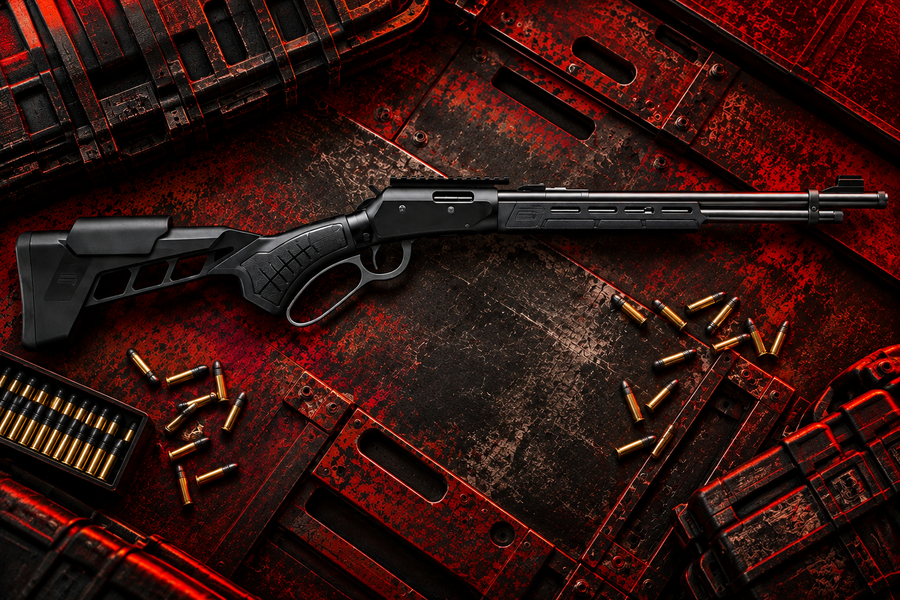
The .22 LR version carries a $629 MSRP, while the .22 WMR and .17 HMR models are priced at $659. All three retain the familiar manually operated lever action, tubular magazine, adjustable iron sights, exposed hammer, and quick-takedown system that define the broader REVEL family.
The Tactical therefore is not a completely new lever gun mechanically. Savage is taking an established rimfire action and changing the equipment surrounding it.
That distinction matters because the modern furniture provides actual functional differences rather than appearance alone. Length of pull can be adjusted with stock spacers, comb height can be changed with a clip-on cheek riser, the fore-end accepts M-LOK accessories, and the receiver comes from the factory with a one-piece Picatinny rail.
The .22 LR model uses an 18-inch medium-profile carbon-steel barrel threaded 1/2×28 and feeds from a 12-round tubular magazine. Current testing places its weight at roughly 5.9 to 6 pounds and overall length around 36.5 inches.
At $629, the REVEL Tactical is not an inexpensive entry-level .22 LR rifle. It costs considerably more than many semiautomatic and bolt-action rimfires, and it sits above the basic REVEL Classic.
The more revealing comparison is the REVEL DLX. Savage currently prices the .22 LR DLX at the same $629 MSRP, and both rifles offer threaded barrels and the same basic takedown action. The buyer is therefore choosing largely between traditional walnut styling and the Tactical's adjustable synthetic furniture, factory rail, and M-LOK capability rather than simply paying more to obtain the modern version.
For someone who wants a lever-action .22 with optics, adjustable fit, suppressor-ready threading, and contemporary accessory mounting from the factory, the REVEL Tactical makes considerable sense. For someone who wants the traditional look and simplicity that make lever guns appealing in the first place, the Classic or DLX may remain the better fit.
Key Takeaways
- Savage announced the REVEL Tactical on October 8, 2026 as the third major configuration in the current REVEL rimfire lever-action family.
- The .22 LR model uses an 18-inch medium-profile barrel, 1/2×28 muzzle threads, a 12-round tubular magazine, and approximately six-pound overall weight.
- The MDT-designed furniture provides spacer-adjustable length of pull, interchangeable comb height through a clip-on cheek riser, a redesigned pistol grip, and an M-LOK fore-end.
- A one-piece Picatinny rail is installed at the factory while adjustable iron sights and a hooded front sight remain standard equipment.
- The Tactical retains the existing REVEL quick-takedown action rather than introducing a new mechanical platform.
- The .22 WMR and .17 HMR versions use nine-round tubular magazines and carry $659 MSRPs.
- The REVEL Tactical and REVEL DLX occupy the same basic MSRP tier, making their comparison more about furniture, adjustability, and accessory support than price.
- Early independent testing has been encouraging, but ammunition preference and long-term production consistency still need broader evaluation.
What Is the Savage REVEL Tactical?
The REVEL Tactical is the newest member of Savage Arms' current rimfire lever-action family. Savage originally introduced the REVEL platform in September 2024 with the Classic and DLX, marking the company's return to a category closely associated with traditional recreational and small-game rifles.
Those first models combined a modern takedown action with walnut furniture and familiar lever-gun styling. The Tactical retains the same basic mechanical concept but changes how the shooter interacts with and configures the rifle.
Savage partnered with MDT to develop a black synthetic furniture package built around adjustability and accessory support. That creates a rifle that looks much closer to a contemporary sporting or precision rimfire than a traditional walnut-stocked lever gun.
The transformation is mostly outside the receiver. The lever-action mechanism, tubular magazine, exposed hammer, crossbolt safety, rimfire chamberings, and takedown concept remain recognizably REVEL.
That makes the Tactical an equipment evolution rather than a new action.
Savage REVEL Tactical Specifications
| Specification | .22 LR | .22 WMR | .17 HMR |
|---|---|---|---|
| Model | 46040 | 46140 | 46240 |
| Action | Lever-action rimfire | Lever-action rimfire | Lever-action rimfire |
| Barrel Length | 18 inches | 18 inches | 18 inches |
| Barrel Profile | Medium | Medium | Medium |
| Muzzle Threads | 1/2×28 | 1/2×28 | 1/2×28 |
| Magazine | Tubular | Tubular | Tubular |
| Published Magazine Capacity | 12 rounds | 9 rounds | 9 rounds |
| Stock | MDT-designed synthetic | MDT-designed synthetic | MDT-designed synthetic |
| Length of Pull | Spacer adjustable | Spacer adjustable | Spacer adjustable |
| Comb Height | Interchangeable clip-on riser | Interchangeable clip-on riser | Interchangeable clip-on riser |
| Fore-End | M-LOK synthetic | M-LOK synthetic | M-LOK synthetic |
| Optics Mount | Factory one-piece Picatinny rail | Factory one-piece Picatinny rail | Factory one-piece Picatinny rail |
| Iron Sights | Adjustable rear, hooded front | Adjustable rear, hooded front | Adjustable rear, hooded front |
| Takedown | Push-pin system | Push-pin system | Push-pin system |
| Approx. Weight | About 5.9–6 lb. | About 6 lb. | About 6 lb. |
| MSRP | $629 | $659 | $659 |
The shared specifications make the chambering decision relatively straightforward. Buyers receive essentially the same modern furniture and accessory package, while the cartridge determines magazine capacity, ammunition cost, trajectory, and field performance.
The MDT Furniture Is the Main Tactical Upgrade

The most visible change is the replacement of walnut with MDT-designed polymer furniture. Calling that change merely cosmetic undersells what Savage actually added.
The buttstock incorporates spacers that allow the shooter to alter length of pull, while removable or interchangeable cheek-riser components change comb height. Those two adjustments address different aspects of rifle fit.
Length of pull controls the distance between the trigger and the rear of the stock. Comb height influences where the shooter's eye naturally sits relative to the sights or optic.
Both become particularly important on a rifle expected to wear different optics. A low-mounted red dot and a conventional riflescope may require noticeably different cheek positions.
A fixed walnut stock may fit one shooter and optic combination perfectly while forcing another shooter to adapt. The Tactical makes the rifle itself more adaptable instead.
Spacer-Adjustable Length of Pull Has Real Practical Value
Spacer systems are hardly exotic, but they solve a common rifle-fit problem without adding complicated knobs or mechanical assemblies.
Removing or adding spacers changes where the buttpad sits relative to the trigger. This can make the rifle more comfortable for shooters of different body sizes and can also account for seasonal clothing changes.
A length of pull that feels natural in a T-shirt can feel unnecessarily long under heavy hunting layers. A rifle shared among family members can present the same problem.
The Tactical gives owners a factory way to address that instead of requiring a replacement stock.
The Clip-On Cheek Riser Matters Once an Optic Is Added

Comb height is particularly relevant because the Tactical comes ready for optics. Savage uses a clip-on cheek-riser arrangement that allows the shooter to alter the vertical relationship between the stock and eye.
That helps prevent the common problem of mounting an optic higher than the stock was originally designed around and then losing consistent cheek contact while trying to see through it.
The system is intentionally simple. It does not provide the continuously adjustable cheek mechanism found on expensive precision stocks, but the REVEL is not trying to become a precision chassis rifle.
For a $629 rimfire lever gun, interchangeable comb height is a useful middle ground between a completely fixed stock and a much heavier precision-style system.
The Pistol Grip Changes the Lever-Gun Feel
The MDT stock also uses a more pronounced pistol-grip shape than the straight or gently curved grip profiles associated with traditional lever guns. That changes wrist position and gives the Tactical a very different feel in the firing hand.
Whether that is an improvement will depend heavily on the shooter. Some buyers may find the more vertical grip natural when using an optic, particularly from supported positions.
Others may prefer the flowing geometry of traditional lever-gun furniture. That grip shape is part of the reason the REVEL Classic and DLX still have a clear place in the lineup.
The Tactical is not simply a more advanced REVEL. It is a differently configured one.
M-LOK Finally Gives the REVEL Modern Accessory Space
The polymer fore-end incorporates M-LOK slots, adding a standardized mounting interface that the walnut models do not provide from the factory.
That can support practical equipment such as sling hardware, a bipod, tripod interface, or other compatible accessories without attaching a full external rail along the entire fore-end.
This is one of the clearest distinctions between the Tactical and more traditional rimfire lever guns. Buyers no longer have to decide between enjoying a lever action and having a contemporary accessory interface.
That does not mean the rifle needs to be covered with accessories. An unused M-LOK slot weighs almost nothing conceptually or practically.
The advantage is having the interface available if the owner actually needs it.
One Practical Limitation: Sling Mounting
Early testing has identified one slightly odd omission. At least one review sample did not include conventional sling studs or dedicated QD cups, meaning a sling may require use of an M-LOK mounting point.
That is not a serious mechanical issue, but it is worth knowing for a rifle Savage explicitly positions for field use and small-game hunting.
The M-LOK fore-end provides a straightforward solution, but buyers planning to carry the rifle on a sling should account for the additional mounting hardware.
The Factory Picatinny Rail Is a Bigger Difference Than It Looks
The Tactical comes with a one-piece Picatinny rail already installed on top of the receiver. That is a meaningful distinction from the earlier REVEL models, which are drilled and tapped but generally leave the buyer to choose the mounting base.
A factory rail eliminates one step from setting up the rifle and greatly broadens the range of optics that can be mounted using common rings or Picatinny-compatible bases.
A small red dot keeps the rifle light and quick. A low-power rimfire scope may make more sense for small-game use. A higher-magnification optic can help determine how much accuracy the rifle and ammunition combination actually provide.
The rail does not dictate the answer. It simply makes those options easier.
Iron Sights Are Still Included
Despite the Tactical name and top rail, Savage did not turn the rifle into an optics-only platform. Adjustable iron sights remain standard, including a hooded front sight.
That preserves one of the qualities many shooters expect from a lever-action rimfire: the ability to take the rifle to the range and use it immediately without purchasing an optic.
It also gives the owner a backup sighting system after adding a compatible optic, depending on mounting height and configuration.
The Tactical therefore adds modern sighting capability without completely discarding the conventional lever-gun experience.
The Picatinny Rail Can Slightly Complicate the Iron-Sight Picture
One early test noted that the factory rail can make the iron sights somewhat harder to pick up visually because the shooter is looking through the rail area toward the rear sight.
That did not make the sights unusable, and the rail can be removed if the rifle will be run exclusively with irons.
This is a good example of the compromise involved in trying to support both traditional and modern configurations simultaneously. A dedicated iron-sight rifle can optimize around irons. An optics-ready rifle needs to make room for mounting hardware.
The 18-Inch Barrel Is Familiar REVEL Territory
The Tactical uses an 18-inch medium-profile carbon-steel barrel, keeping the same general proportions that made the original REVEL a manageable rimfire rifle.
For the .22 LR model, current specifications list a 1:16 twist rate, a long-established choice for common .22 LR ammunition.
The medium profile gives the barrel more substance than an extremely light sporter without turning the rifle into a heavy bench gun. That helps keep overall rifle weight around six pounds.
The barrel itself is therefore not a radical departure. The threaded muzzle is where the Tactical becomes more flexible.
1/2×28 Threading Makes Suppressor Setup Straightforward
Savage threads the muzzle 1/2×28, one of the most common direct-thread interfaces used on rimfire suppressors.
That gives the owner the ability to install an appropriately rated compatible device without replacing or machining the factory barrel.
The .22 LR version is the most obvious suppressor candidate because the market contains numerous compact rimfire silencers and subsonic ammunition options. Buyers considering .22 WMR or .17 HMR need to verify that the suppressor is specifically rated for the cartridge.
A .22 LR-rated suppressor is not automatically approved for every higher-pressure rimfire cartridge.
The Tubular Magazine Creates a Real Suppressor-Clearance Issue
The REVEL feeds through a tubular magazine mounted beneath the barrel. Loading involves manipulating the removable inner magazine assembly from the front of the tube.
That means suppressor diameter matters in a way it may not on a box-magazine rifle. Early testing found that the knurled end of the magazine follower rod may not clear some larger-diameter rimfire suppressors.
This is an important practical detail because matching 1/2×28 threads only proves that two components can attach mechanically at the muzzle. It does not guarantee that the rest of the rifle remains convenient to load.
Anyone planning a suppressed REVEL Tactical should confirm both suppressor rating and physical clearance around the magazine tube.
Why a Lever-Action .22 Can Be an Appealing Suppressor Host

A manually operated action behaves differently from a blowback semiautomatic when suppressed. The bolt remains closed until the shooter deliberately cycles the lever after the shot.
That means there is no automatic action movement occurring beside the shooter's face during firing. In a semiautomatic, mechanical cycling adds its own noise and opens the action as part of the firing sequence.
With suitable ammunition and a properly compatible suppressor, a manually operated .22 LR can therefore provide an especially subdued shooting experience.
The suppressor does not eliminate every source of noise. Mechanical movement, projectile impact, ammunition characteristics, and a supersonic ballistic crack can still be present.
The Tactical's appeal is simply that Savage combines a manually operated action with factory muzzle threading rather than requiring the owner to modify the rifle later.
The REVEL DLX Already Offers a Threaded Barrel
This point matters when comparing Savage's own lineup. The Tactical is not the only REVEL capable of accepting a compatible suppressor.
The REVEL DLX also comes with a 1/2×28 threaded barrel and occupies the same basic MSRP tier. Someone whose only priority is owning a suppressed rimfire lever gun therefore does not automatically need the Tactical.
The Tactical's argument is broader. It combines the threaded barrel with the factory optics rail, M-LOK fore-end, adjustable length of pull, and adjustable comb height.
Those additional features, rather than muzzle threading alone, are what separate it from the DLX.
The Quick-Takedown Action Remains One of the REVEL's Best Features
The Tactical carries forward the REVEL's push-pin takedown mechanism. Two captive pins allow the rifle to separate into major front and rear assemblies for cleaning, maintenance, or compact transport.
The receiver and barrel remain together on one side, while the stock, lever, and trigger group form the other major assembly.
This is especially useful on a rimfire platform because .22 LR ammunition can create substantial fouling over extended shooting sessions. Easier access to internal areas can simplify maintenance compared with lever guns that are more tedious to disassemble.
The takedown feature also reduces the rifle's storage length dramatically when separated.
It is important not to call this a Tactical-only advantage, however. The Classic and DLX use the same fundamental system.
The Takedown System Makes the Rifle More Packable

A 36.5-inch rifle is already fairly manageable, but the ability to break the gun into two sections makes it easier to store in shorter cases and transport in situations where a conventional full-length rifle is awkward.
That can be useful for camping, range transport, ranch use, or simply owners with limited storage space.
Buyers should follow Savage's procedure when assembling and disassembling the rifle and verify correct function after reassembly.
Convenient takedown does not remove the normal need for safe handling and mechanical inspection.
The Trigger Is Conventional, Not AccuTrigger
Savage is closely associated with its AccuTrigger system, but the REVEL does not use the familiar center-blade AccuTrigger architecture.
Instead, the rifle uses a conventional single-stage trigger. Independent measurements of current Tactical samples have placed trigger pull around 2.5 to 3 pounds, with reviewers describing the break favorably.
Those measurements apply to individual rifles rather than a guaranteed trigger weight for every production gun.
The more important point is that buyers should not assume every modern Savage rifle automatically includes AccuTrigger.
The Oversized Lever Still Feels Like a Lever Gun
Modernizing the stock did not remove the feature that makes the rifle enjoyable to many buyers in the first place: the manually operated lever.
The Tactical retains an enlarged loop that provides room for larger or gloved hands. Early evaluations consistently describe the action as smooth and easy to cycle.
That interaction is part of the value proposition. A semiautomatic .22 LR can fire faster and often costs less, but it does not provide the same shooting rhythm.
The Tactical exists for buyers who want the lever action itself, not merely a technically efficient way of firing rimfire ammunition.
Early Reliability Testing Is Encouraging
The rifle is new, but several prelaunch or early-production examples have already accumulated meaningful range use.
One On Target evaluation fired the .22 LR Tactical without a malfunction during its session and recorded a best five-shot group of 0.82 inch at 25 yards using Winchester 40-grain ammunition.
A separate Guns.com evaluation reported approximately 750 rounds through its loaner rifle with two problems. One cartridge failed to feed and showed unusual dimensional or rotational behavior, while another appeared to be a dud despite a visible rim strike.
The reviewer considered both potentially ammunition related.
That is encouraging launch evidence for a rimfire rifle, especially given the inherent variability of .22 LR ammunition. It remains too early to translate one or two review samples into a production-wide durability claim.
Accuracy Appears Highly Ammunition Dependent
Another early field test produced a best five-shot group of approximately 0.78 inch at 50 yards using Eley Match ammunition but reported much larger groups with some other loads.
That variation reinforces an important reality of rimfire rifles: ammunition preference can matter enormously.
A load that groups exceptionally well from one .22 barrel can perform much less impressively from another, and even the same rifle can show substantial changes between brands, bullet styles, velocities, and production lots.
A REVEL Tactical owner interested in small-game hunting or precision target use should test several loads rather than assuming one popular .22 LR cartridge will automatically be the best match.
The Tactical Is Still Primarily a Recreational and Small-Game Rifle
The modern appearance can make the rifle look more specialized than its actual mission. Underneath the MDT furniture is still a relatively light rimfire lever gun.
Savage positions it for range use, small-game hunting, and recreational shooting. Those roles fit the chamberings and six-pound weight naturally.
The Tactical name describes its furniture and accessory compatibility more than a radical change in intended use.
Someone expecting a rimfire precision chassis rifle or a centerfire-style tactical platform may be looking at the wrong product category.
REVEL Tactical vs. REVEL Classic

The REVEL Classic represents the opposite end of the design philosophy. It uses walnut furniture and a more traditional lever-gun presentation while retaining the same basic takedown concept.
At roughly $499 MSRP in .22 LR, it also offers a meaningful price advantage.
A buyer who intends to use iron sights, has no need for M-LOK, likes fixed traditional furniture, and does not require factory muzzle threading may find the Classic more appealing precisely because it is simpler.
The Tactical earns its additional cost through equipment rather than a fundamentally superior action.
REVEL Tactical vs. REVEL DLX

The DLX is the more important comparison because its pricing is essentially identical to the Tactical. In .22 LR, both carry a $629 MSRP, while the magnum rimfire variants occupy the same $659 tier.
The DLX retains premium traditional walnut furniture while adding features including a threaded 1/2×28 muzzle. It is aimed at buyers who want more equipment without giving up the visual character of a classic lever gun.
The Tactical redirects that money toward adaptability. It adds the MDT polymer stock, spacer-adjustable length of pull, interchangeable comb height, M-LOK fore-end, and factory-installed Picatinny rail.
That makes the decision refreshingly honest. At the same price, the buyer can choose traditional presentation or contemporary configurability.
REVEL Classic vs. DLX vs. Tactical
| Feature | REVEL Classic | REVEL DLX | REVEL Tactical |
|---|---|---|---|
| Basic Action | REVEL lever-action takedown | REVEL lever-action takedown | REVEL lever-action takedown |
| Furniture | Traditional walnut | Upgraded walnut | MDT synthetic |
| Stock Adjustment | Fixed | Fixed | LOP spacers and clip-on comb adjustment |
| M-LOK Fore-End | No | No | Yes |
| Factory Picatinny Rail | No, receiver drilled and tapped | No, receiver drilled and tapped | Yes |
| Threaded Muzzle | Generally no on standard Classic | Yes | Yes |
| Takedown | Yes | Yes | Yes |
| .22 LR MSRP | Approx. $499 | Approx. $629 | $629 |
This comparison makes the Tactical's role much clearer. It is not simply the most expensive REVEL and therefore the presumed best one.
Classic is the straightforward value model. DLX is the feature-rich traditional model. Tactical is the feature-rich modern model.
The .22 LR Version Is Probably the Most Natural Fit
The $629 .22 LR version is likely to attract the broadest audience because inexpensive ammunition and mild recoil fit the recreational personality of a lever gun exceptionally well.
The 12-round tubular magazine also offers the highest capacity of the three chamberings.
Regular rimfire shooting can involve hundreds of rounds in a single outing, which makes ammunition cost increasingly important. The purchase price of the rifle is paid once, while ammunition expense continues for the life of the firearm.
That economic advantage is one reason .22 LR remains difficult to beat for informal target shooting and suitable small-game use.
.22 WMR Changes the Hunting Equation
The .22 Winchester Magnum Rimfire version raises MSRP to $659 and reduces magazine capacity to nine rounds, but it provides substantially more ballistic performance than conventional .22 LR ammunition.
That makes the WMR model more relevant for hunters who want additional rimfire velocity and energy while retaining the same lever-action platform.
The tradeoff is ammunition expense. .22 WMR is generally considerably more expensive per round than .22 LR, reducing some of the low-cost recreational appeal.
For someone primarily shooting steel or paper at modest distances, that additional performance may not justify the ongoing cost.
.17 HMR Gives the REVEL a Different Personality
The .17 HMR model also uses a nine-round tube and $659 MSRP. Its appeal centers less on projectile mass and more on high velocity and relatively flat trajectory.
That makes it an interesting option for certain varmint and small-game applications where trajectory and precision at greater rimfire distances matter.
Wind still influences the cartridge's lightweight bullets, and ammunition cost again sits well above typical .22 LR.
The .17 HMR REVEL Tactical therefore makes the most sense for someone who specifically wants that cartridge rather than simply assuming it is the highest-performing choice in every category.
Which REVEL Tactical Chambering Makes Sense?
| Chambering | Capacity | MSRP | Strongest General Argument |
|---|---|---|---|
| .22 LR | 12 | $629 | Lowest ammunition cost and broad recreational versatility |
| .22 WMR | 9 | $659 | Additional rimfire energy for appropriate field use |
| .17 HMR | 9 | $659 | Higher velocity and flatter rimfire trajectory |
The furniture package remains largely the same, so cartridge choice should be based on what the rifle will actually be used for.
Does a Tactical Lever Gun Defeat the Point of a Lever Gun?
This is partly a philosophical question rather than a technical one. Much of the enduring appeal of lever actions comes from exposed hammers, wooden stocks, tubular magazines, and a visual connection with older sporting rifles.
The REVEL Tactical deliberately removes part of that aesthetic by replacing wood with polymer and adding interfaces normally associated with much newer firearms.
For some buyers, that is exactly the problem.
For others, the lever action itself is the experience they care about. They want to cycle the action manually but see no reason that doing so should prevent them from mounting a modern optic, adjusting stock fit, using a bipod, or threading on a compatible suppressor.
The Tactical exists for the second group.
The Modern Furniture May Make More Sense on Rimfire Than Centerfire
A .22 LR lever gun is often purchased for enjoyment rather than historical authenticity. That gives Savage considerable freedom to experiment with the format without displacing the company's traditional wood models.
The low recoil and relatively inexpensive ammunition encourage long range sessions. Adjustable stock fit can make the rifle easier to share among family members. A rail supports the inexpensive red dots and rimfire scopes many shooters already own.
M-LOK gives the rifle a way to accept a bipod or sling mount without permanent modification, and the threaded muzzle works naturally with the large rimfire suppressor market.
In that context, modernizing the lever gun is less strange than it first appears.
The Tactical Does Not Need to Compete With a Semiautomatic on Speed
A semiautomatic .22 LR such as a Ruger 10/22 or Savage A22 can cycle itself between shots and offers enormous aftermarket support. If maximum rate of fire or detachable-magazine convenience is the objective, a lever gun begins the comparison at a disadvantage.
That misses the reason to buy the REVEL.
The manual action creates engagement between shots and changes the shooting experience. It can also accommodate a broad range of ammunition without depending on the cartridge to generate enough energy to cycle a semiautomatic action.
The REVEL Tactical should therefore be judged as a modern lever gun, not as a slower substitute for a semiautomatic.
Ammunition Flexibility Is One of the Lever Action's Quiet Advantages
Because the shooter cycles the action manually, the rifle is less dependent on ammunition energy for operation than a blowback semiautomatic.
That can be useful with low-velocity and subsonic .22 LR ammunition that may not reliably cycle every semiautomatic firearm.
Magazine geometry and cartridge dimensions still matter, and not every unusual rimfire load is guaranteed to function. Owners should follow Savage's ammunition guidance.
The basic mechanical principle nevertheless makes a lever action naturally attractive to shooters who experiment with different rimfire loads.
Is the REVEL Tactical Worth $629?

It is much easier to justify if the buyer wants the features Savage actually added.
A person shopping solely for the least expensive way to fire .22 LR has countless cheaper choices. Even within Savage's own REVEL family, the Classic starts substantially lower.
The Tactical's extra value comes from receiving the adjustable MDT stock, M-LOK fore-end, factory Picatinny rail, threaded barrel, iron sights, and takedown system together.
Trying to transform a traditional lever gun into the same configuration later may require aftermarket components, fitting, and additional expense.
The factory package therefore has real value when it already resembles the finished rifle the buyer wants.
The Same Price as the DLX Makes the Decision More Interesting
The most important pricing detail is that the Tactical is not necessarily a financial step above the DLX. They occupy essentially the same factory MSRP tier.
That removes a common assumption from the comparison.
A buyer does not have to decide whether modern furniture is worth paying a large premium over Savage's premium walnut configuration. They can choose which style of equipment they value at roughly the same price.
Traditional walnut and a threaded muzzle point toward the DLX. Adjustable polymer, M-LOK, and the installed rail point toward the Tactical.
Who Should Consider the REVEL Tactical?
The strongest buyer is someone who already knows they want a lever action but does not feel obligated to preserve traditional lever-gun styling.
It makes particular sense for shooters who plan to install an optic, value adjustable stock fit, or intend to use compatible rimfire muzzle equipment.
The .22 LR model is especially appealing for high-volume recreational use, while the .22 WMR and .17 HMR versions offer additional field capability for appropriate applications.
It may also work well for households where more than one person will use the rifle because the stock can be adapted more easily than fixed walnut furniture.
Who Should Probably Buy the Classic or DLX?
The Classic remains the cleaner choice for someone who wants the traditional lever-action experience at a lower price and has little interest in optics, muzzle threading, or modern accessories.
The DLX makes the strongest argument for someone who wants the threaded muzzle and more refined traditional styling but still prefers walnut over synthetic furniture.
Because the DLX and Tactical share similar pricing, neither is automatically the higher-value model. The better purchase is the one whose factory configuration requires fewer changes after purchase.
What the REVEL Tactical Still Needs to Prove
The underlying REVEL action is no longer completely new, but the Tactical configuration has only just entered the market.
Broader ownership will establish how well the polymer furniture and cheek-riser system hold up after years of field use, how consistently the stock spacers remain secure, and whether the accessory interfaces maintain their fit through repeated installation and removal.
Accuracy across production rifles will also become clearer. Early examples have produced promising groups, but rimfire ammunition sensitivity makes a single accuracy number particularly dangerous to generalize.
The same is true of reliability. Current testing is encouraging, yet hundreds of rifles in normal owner hands will reveal production consistency much better than a handful of review samples can.
Early Testing Gives the Tactical a Good Start
The useful part of the initial reviews is that they have moved beyond simply photographing the rifle and repeating the specification sheet.
One early .22 LR evaluation reported trouble-free function and a 0.82-inch five-shot group at 25 yards. Another put roughly 750 rounds through the rifle with only two issues, both of which showed signs that ammunition may have been responsible.
A separate field evaluation recorded a sub-inch best group at 50 yards with match ammunition while also showing that some other loads grouped substantially worse.
Taken together, those reports suggest a rifle capable of useful accuracy and dependable operation while reinforcing the need to test ammunition rather than treating .22 LR as interchangeable.
Does a Modern Lever Gun Make Sense in .22 LR?
Yes, arguably more than in many other cartridges.
The low recoil and relatively low ammunition cost of .22 LR make it a natural recreational cartridge. That means shooters may spend long periods behind the rifle and may share it with newer or younger shooters, making adjustable ergonomics genuinely useful.
Rimfire optics are inexpensive and common, so the factory Picatinny rail is easy to take advantage of. Suppressors are also popular on .22 LR, giving factory muzzle threading a logical purpose.
The manual action remains fun and mechanically simple while avoiding the ammunition-energy requirements of a semiautomatic.
Modernizing the furniture therefore does not fight the basic strengths of the cartridge. In several ways, it makes those strengths easier to exploit.
Final Thoughts
The Savage REVEL Tactical is a convincing example of how a traditional firearm format can evolve without abandoning the feature that gives it character. The lever action remains the center of the experience, but the rifle surrounding it is far more adaptable than a conventional walnut-stocked rimfire.
The MDT-designed furniture is the most meaningful change. Spacer-adjustable length of pull and interchangeable comb height allow the rifle to accommodate different shooters and optic heights, while the M-LOK fore-end creates accessory options that traditional furniture does not provide easily.
The one-piece Picatinny rail makes optic installation straightforward, yet Savage retains adjustable iron sights and a hooded front sight for shooters who prefer the traditional approach.
The 18-inch medium-profile barrel and tubular magazine remain familiar rimfire-lever-gun features. Factory 1/2×28 threading gives the Tactical another modern capability, although owners planning to suppress the rifle need to consider both suppressor rating and physical clearance around the removable magazine tube.
The quick-takedown system is another important advantage, but it is not exclusive to the Tactical. That feature belongs to the underlying REVEL architecture and remains available on the more traditional models.
The most interesting value comparison is the REVEL DLX. Both occupy essentially the same MSRP tier, and both can provide a threaded-barrel rimfire lever gun. The difference is where Savage directs the equipment budget.
The DLX preserves the traditional wood-and-steel experience. The Tactical gives up that appearance in exchange for adjustable polymer furniture, M-LOK, and a factory optics rail.
Early testing provides a promising start. Current review rifles have shown smooth operation, useful accuracy, and relatively few reliability issues across hundreds of rounds. Those results should remain early evidence rather than a final endurance verdict.
For a buyer who simply wants an inexpensive .22 LR rifle, the REVEL Tactical is difficult to justify because less expensive options are everywhere.
For someone who specifically wants a lever gun, the equation changes considerably.
The Tactical removes several limitations traditionally associated with the category without trying to turn the rifle into something mechanically unrecognizable. The shooter still loads a tube, cocks an exposed hammer, works a lever between shots, and experiences the same deliberate rhythm that makes the platform appealing.
The difference is that they can now adjust the stock, mount an optic easily, attach M-LOK accessories, thread on compatible muzzle equipment, and break the rifle down for transport.
That is enough to make the modern-lever concept more than a styling exercise.
In .22 LR especially, it makes a surprising amount of sense.
The Savage REVEL Tactical reflects a larger shift in the rimfire rifle market, where manufacturers are increasingly combining traditional operating systems with features once associated primarily with modern sporting rifles. Its lever-action design preserves the mechanical character of a classic rimfire, while the adjustable stock features, optics mounting provisions, and accessory-ready fore-end broaden its appeal. But those additions also raise an important question: how does a modernized lever gun compare with the other rimfire platforms available today? Our comprehensive guide to the top .22 LR rifles examines the strengths of different action types and explains why the best choice often depends on intended use rather than features alone.

Federal .22 LR 36 Grain Copper Plated - Box of 525
$50.00
at Pro Armory
Prices accurate at time of writing
Frequently Asked Questions
When was the Savage REVEL Tactical released?
Savage Arms announced the REVEL Tactical on October 8, 2026. It joins the existing REVEL Classic and REVEL DLX rimfire lever-action rifles.
How much does the Savage REVEL Tactical cost?
The .22 LR version carries a $629 MSRP. The .22 WMR and .17 HMR versions are listed at $659. Actual retail pricing may vary as dealer distribution develops.
What calibers are available?
Savage offers the REVEL Tactical in .22 LR, .22 WMR, and .17 HMR.
How many rounds does the REVEL Tactical hold?
Savage lists the .22 LR tubular magazine at 12 rounds. The .22 WMR and .17 HMR versions are listed at nine rounds.
How long is the barrel?
All three announced versions use an 18-inch medium-profile barrel.
Is the barrel threaded?
Yes. Savage uses 1/2×28 muzzle threading on the REVEL Tactical. Owners should confirm the cartridge rating, mounting requirements, and physical magazine-tube clearance of any intended muzzle accessory.
Can the REVEL Tactical use a suppressor?
The factory 1/2×28 threading accommodates appropriately rated compatible rimfire suppressors. Buyers should verify that the suppressor is approved for the exact chambering, particularly with .22 WMR and .17 HMR.
Because the rifle uses an under-barrel tubular magazine with a removable inner assembly, larger-diameter suppressors can also interfere with access to the magazine tube even when the muzzle threads themselves are compatible.
Does the Savage REVEL Tactical have an adjustable stock?
Yes. Current production information and hands-on testing show spacer-adjustable length of pull along with interchangeable comb height using a clip-on cheek riser.
Does it have M-LOK?
Yes. The MDT-designed synthetic fore-end includes M-LOK mounting slots for compatible accessories.
Is the REVEL Tactical optics ready?
Yes. Savage installs a one-piece Picatinny optics rail at the factory. The rifle also retains adjustable iron sights with a hooded front sight.
Does the REVEL Tactical use Savage AccuTrigger?
No. The REVEL uses a conventional single-stage trigger rather than Savage's familiar AccuTrigger blade system. Early independent samples have measured around 2.5 to 3 pounds, but individual rifles can vary.
Is the REVEL Tactical a takedown rifle?
Yes. It retains the REVEL family's push-pin takedown design, allowing the rifle to separate into major front and rear assemblies for cleaning, maintenance, and more compact transport.
How much does the .22 LR REVEL Tactical weigh?
Current specifications and independent measurements put the .22 LR version at roughly 5.9 to 6 pounds unloaded.
What is the difference between the REVEL Tactical and REVEL DLX?
Both use the same basic REVEL lever-action takedown architecture and both offer threaded barrels. The DLX emphasizes traditional upgraded walnut furniture, while the Tactical substitutes adjustable MDT polymer furniture, an M-LOK fore-end, and a factory-installed Picatinny rail.
Is the Tactical more expensive than the DLX?
Not at current MSRP in comparable chamberings. Savage lists the .22 LR versions of both the REVEL Tactical and REVEL DLX around $629, making their comparison primarily about preferred furniture and factory features rather than price.
Is the REVEL Tactical better than the Classic?
Not universally. The Tactical provides substantially more adjustability and accessory compatibility, while the Classic offers the traditional walnut lever-gun experience at a lower price. The better choice depends on which features the owner intends to use.
Which REVEL Tactical chambering makes the most sense?
.22 LR offers the lowest ammunition cost, highest magazine capacity, and broadest recreational appeal. .22 WMR provides additional rimfire energy, while .17 HMR emphasizes higher velocity and flatter trajectory. The best choice depends on intended use, ammunition availability, and applicable hunting regulations.
Is the Savage REVEL Tactical reliable?
Long-term production-wide data is still developing, but early testing is encouraging. One evaluation reported no malfunctions during its range session, while another recorded only two issues across approximately 750 rounds, with both potentially attributable to ammunition. Broader owner experience is still needed before drawing a long-term conclusion.
About the Author
The ProArmory editorial team includes experienced hunters, competitive shooters, military veterans, firearms instructors, and firearms industry professionals committed to producing accurate, practical, and research-based content. Our articles draw on manufacturer specifications, current industry information, independent testing, and real-world shooting experience to help readers make informed decisions about firearms, ammunition, optics, suppressors, and related equipment.
Disclaimer
This article is intended for informational and educational purposes only. Product specifications, pricing, configurations, availability, and manufacturer claims reflect information available as of October 2026 and may change as the Savage REVEL Tactical reaches wider distribution.
Accuracy, reliability, and ammunition performance can vary among individual rifles and loads. Manufacturer claims and limited early testing should not be interpreted as universal performance guarantees.
Always follow Savage Arms' current manufacturer instructions and established firearm-safety practices. Verify applicable federal, state, and local laws and hunting regulations before purchasing, possessing, transporting, hunting with, or configuring a firearm or suppressor.


