










Quick Answer
The Colt Enhanced Patrol Rifle II Pro, commonly called the EPR II Pro, is a modernized 5.56 NATO AR-15 built around the company's established carbine architecture. Rather than replacing the familiar Colt operating system with a proprietary design, Colt has concentrated on giving the rifle many of the components owners historically added to a basic 6920 after purchase.
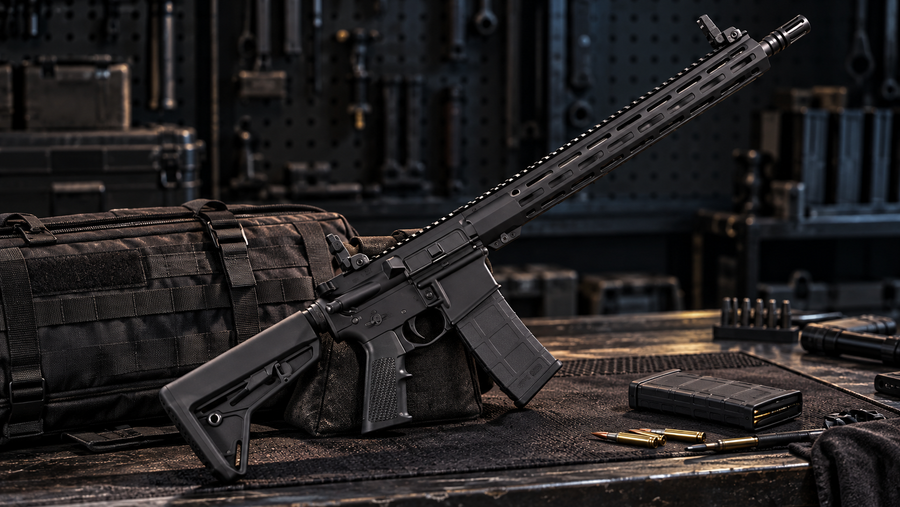
The 16.1-inch LE6920-EPRII-PRO carries a $1,699 MSRP and combines a chrome-lined 1:7-twist barrel, carbine-length gas system, 15-inch free-floating M-LOK handguard, forged 7075-T6 receivers, ambidextrous controls, Colt-branded Radian Raptor charging handle, Magpul furniture, and MBUS Pro steel folding sights.
That equipment makes the EPR II Pro substantially more complete than the traditional bare-bones Colt carbine many shooters remember. An owner no longer has to begin with basic furniture, a conventional charging handle, short handguard, and limited ambidextrous capability before building the rifle into a contemporary general-purpose configuration.
The EPR II Pro is not revolutionary underneath. It still uses a conventional direct-gas AR operating system, government-profile barrel, carbine-length gas arrangement, and single-stage trigger. That conservative mechanical foundation is intentional.
The value question therefore comes down to execution and equipment rather than novelty. A buyer looking for the least expensive functional AR-15 has many cheaper options. Someone prioritizing an extremely light rifle, match-grade trigger, adjustable gas system, or specialized precision barrel may also prefer another platform.
For a shooter who wants a well-equipped general-purpose Colt without immediately replacing half the rifle, however, the EPR II Pro makes a much stronger argument than older factory Colts did.
Key Takeaways
- The EPR II Pro modernizes Colt's established carbine architecture rather than introducing a new operating system.
- The 16.1-inch model uses a chrome-lined chrome-moly-vanadium barrel with a 1:7 twist and carbine-length gas system.
- Colt equips the rifle with a 15-inch free-float M-LOK handguard, forged 7075-T6 receivers, Magpul MOE SL stock, MOE-K2 grip, MBUS Pro steel sights, and Colt-branded Radian Raptor charging handle.
- The standard EPR II is already well equipped. The Pro primarily adds the ambidextrous magazine catch, Radian charging handle, K2 grip, steel MBUS Pro sights, and rear QD end plate.
- Colt says every bolt, barrel, and barrel extension in the EPR II family receives individual high-pressure testing and magnetic-particle inspection.
- The Pro retains a conventional single-stage trigger and carbine-length gas system, leaving room for competing rifles to differentiate themselves.
- Early independent testing of one rifle produced a 1.14-inch average across six five-shot groups at 100 yards with reliable function, which is encouraging but not a production-wide accuracy guarantee.
What Is the Colt EPR II Pro?
The EPR II Pro represents Colt's attempt to update one of the most familiar commercial AR formulas without discarding the characteristics that made the company's carbines recognizable in the first place.
For years, the Colt 6920 occupied an unusual place in the AR-15 market. It was respected for its relationship to Colt's military and law-enforcement manufacturing history, but civilian buyers frequently purchased the rifle as a starting point rather than a finished modern configuration.
A traditional 6920 might quickly receive another handguard, different stock, improved pistol grip, ambidextrous charging handle, folding sights, sling hardware, and additional controls. By the time those purchases were complete, the owner could have substantially more money invested than the original rifle price suggested.
The EPR II family changes that approach. Colt now provides a free-floating rail, modern furniture, folding sights, better sling provisions, and ambidextrous features directly from the factory.
The EPR II Pro goes one step farther with several recognizable premium components and additional bilateral controls.
The result feels less like Colt attempting to reinvent the AR-15 and more like Colt finally selling the version of its carbine many owners were already assembling themselves.
Colt EPR II Pro Specifications
| Specification | Colt EPR II Pro 16.1-Inch |
|---|---|
| Model | LE6920-EPRII-PRO |
| Platform | AR-15-style semiautomatic rifle |
| Chambering | 5.56×45mm NATO |
| Operating System | Direct gas |
| Barrel Length | 16.1 inches |
| Barrel Material | Chrome-moly-vanadium steel |
| Bore | Chrome lined |
| Twist Rate | 1:7 |
| Barrel Profile | Government profile with M203 step |
| Gas System | Carbine length |
| Muzzle Thread | 1/2×28 |
| Handguard | 15-inch Colt free-float M-LOK |
| Top Rail | Continuous MIL-STD-1913 Picatinny |
| Receivers | Forged 7075-T6 aluminum |
| Charging Handle | Colt-branded Radian Raptor, ambidextrous |
| Safety | Ambidextrous |
| Magazine Catch | Ambidextrous |
| Stock | Magpul MOE SL, six position |
| Pistol Grip | Magpul MOE-K2 |
| Sights | Magpul MBUS Pro steel folding sights |
| Trigger | Single stage |
| Included Magazine | One 30-round Magpul PMAG where permitted |
| Published Weight | Approx. 6.7 lb. |
| Published Length | Approx. 33 to 36.2 inches |
| MSRP | $1,699 |
The specification sheet paints a clear picture. The EPR II Pro is not a lightweight competition build or dedicated precision rifle. It is a conventionally constructed Colt carbine that has been brought much closer to current general-purpose AR expectations.
The 6920 Foundation Still Defines the Rifle
The EPR II Pro's relationship to the Colt 6920 is important because it explains many of the design decisions that might otherwise appear unusually conservative for a $1,699 rifle.
Colt retains the direct-gas system, carbine-length gas arrangement, government-profile barrel, conventional buffer system, and familiar forged-receiver architecture that have characterized its carbines for decades.
This means an owner is not buying into an unusual proprietary recoil system, piston design, or receiver architecture simply to obtain modern furniture and controls.
That conventionality can be an advantage for someone who values parts familiarity and an established maintenance model. The AR ecosystem contains an enormous amount of knowledge, training material, replacement components, and armorer experience surrounding this type of rifle.
It also means Colt cannot rely on mechanical novelty to justify the price. The company has to make the case through construction quality, inspection standards, component selection, and the completeness of the factory package.
Colt Heritage Matters, but It Should Not End the Comparison

Colt's history with the AR and M16 families gives the EPR II Pro context that newer brands cannot duplicate. The company has decades of experience producing rifles for military, law-enforcement, government, and commercial customers.
That history helps explain why Colt emphasizes TDP-derived components, MIL-SPEC materials and finishes, high-pressure testing, magnetic-particle inspection, and conservative operating-system choices.
Brand history does not make every individual rifle superior to every competitor, however.
The modern AR industry contains numerous manufacturers capable of producing forged receivers, chrome-lined barrels, properly assembled bolt-carrier groups, and durable free-floating handguards.
A Colt logo may be part of the purchasing appeal, but the EPR II Pro still has to earn its $1,699 price through what is actually installed on and inside the rifle.
The Chrome-Lined Barrel Keeps the Duty-Oriented Formula
The 16.1-inch barrel is constructed from chrome-moly-vanadium steel and uses a chrome-lined bore with a 1:7 twist rate.
Chrome lining has a long association with service-oriented rifles because it provides corrosion resistance and helps protect the chamber and bore during extended firing and harsh use.
That does not mean a chrome-lined barrel is automatically more accurate than a nitrided, stainless, or unlined alternative. Barrel performance depends on manufacturing consistency, chamber dimensions, rifling quality, ammunition, thermal behavior, and the complete rifle.
Colt is clearly emphasizing durability and general-purpose use rather than building the rifle around a heavy match barrel or stainless precision tube.
The Government Profile Is Another Conservative Choice
Under the modern handguard sits a government-profile barrel with the familiar M203 step in its contour. That profile is closely tied to traditional Colt and military-style carbines.
There are lighter, more modern barrel contours available that can reduce forward weight, and there are heavier profiles intended to provide greater thermal mass during sustained strings.
Colt chooses neither extreme.
The government profile reinforces the overall philosophy of the EPR II Pro: modernize the areas around the established carbine while leaving much of the underlying recipe intact.
A 1:7 Twist Gives the Rifle Broad 5.56 Flexibility
The 1:7 twist rate is well established in military-oriented 5.56 rifles and provides compatibility with a broad range of commonly used projectile weights.
That does not mean every bullet weight or load will shoot equally well from the individual rifle. Barrel harmonics, projectile construction, ammunition quality, and velocity all influence group performance.
Owners interested in maximizing accuracy should still test several loads rather than assuming twist rate alone determines what the rifle prefers.
Colt Individually HP/MPI Tests Critical Components
One of the EPR II family's more meaningful specification details is Colt's stated inspection process. The company says every bolt, barrel, and barrel extension undergoes individual high-pressure testing followed by magnetic-particle inspection.
High-pressure testing subjects the component or assembly to specified proof conditions. Magnetic-particle inspection can then identify certain surface and near-surface discontinuities in suitable ferromagnetic components.
These procedures do not guarantee that a part can never fail. They are quality-control processes intended to identify problems before the rifle reaches the customer.
That distinction is worth emphasizing because terms such as MPI are sometimes treated as marketing shorthand without considering whether the testing is performed individually or by lot sampling.
Colt specifically identifies individual inspection as part of the EPR II program.
The Bolt Carrier Group Stays Familiar
Colt describes the EPR II bolt-carrier group as built to meet or exceed MIL-SPEC requirements and highlights its proprietary bolt heat-treatment process.
This is not a lightweight carrier or an adjustable competition assembly. It remains consistent with the rifle's service-oriented design.
The advantage is familiarity and an established operating envelope rather than reduced reciprocating mass or a novel coating.
The 15-Inch Free-Float Rail Is One of the Biggest Improvements
The handguard is perhaps the clearest visual and functional break from an old 6920. Colt installs a 15-inch aluminum free-floating rail with M-LOK mounting positions and a continuous Picatinny top rail.
Older M4-style handguards surrounded a barrel-mounted front-sight base and gave the shooter relatively little forward gripping or accessory space. The EPR II layout is much closer to what buyers now expect from a modern general-purpose AR.
Free-floating the handguard also prevents normal pressure applied to the rail from acting directly on the barrel along its length. This can help maintain consistency when the shooter loads a sling, rests the rifle against support, or attaches accessories to the handguard.
Free-floating does not guarantee a specific group size, but it removes one variable that can influence point of impact.
Seven M-LOK Mounting Orientations Give the Rail Real Flexibility
Colt's handguard provides M-LOK mounting surfaces around most of its circumference rather than restricting accessory mounting to the sides and bottom.
That gives owners freedom to position lights, sling hardware, hand stops, bipods, cable-management hardware, and other compatible equipment where it best fits their use.
The continuous top rail remains available for optics, magnifiers, lasers, or other Picatinny-mounted equipment.
The point is not that every available mounting surface needs to be filled. The advantage is being able to add equipment without first replacing the factory handguard.
Integrated Steel QD Sockets Are a Small but Useful Detail
The handguard incorporates steel quick-detach sling sockets rather than asking the owner to consume M-LOK slots with separate QD adapters.
The Pro configuration adds a QD receiver end plate as well, creating additional rear sling-placement options alongside the attachment points available on the MOE SL stock.
Sling hardware rarely sells a rifle by itself, but these are exactly the details that determine whether a factory rifle feels complete or immediately creates another accessory shopping list.
Anti-Rotation Features Help Keep the Rail Where It Belongs
Colt also incorporates anti-rotation provisions into the free-float handguard. Their purpose is to resist unwanted rotational movement between the rail and receiver.
This becomes increasingly relevant when accessories are mounted to the handguard and the shooter expects them to maintain consistent alignment.
Again, the feature is not revolutionary. It is simply something a $1,699 factory rifle should reasonably include.
The Carbine-Length Gas System Will Be the Most Debated Specification
Colt retains a carbine-length gas system on the 16.1-inch EPR II Pro. That is perhaps the most obvious example of the company's conservative mechanical approach.
Mid-length gas systems have become extremely common on modern 16-inch AR-15s. Moving the gas port farther from the chamber can change dwell time, port pressure, action speed, and perceived recoil characteristics.
That does not create a universal rule that mid-length is automatically reliable and carbine length is automatically outdated. The behavior of an AR gas system depends on gas-port diameter, ammunition, buffer mass, spring rate, carrier characteristics, barrel length, muzzle devices, and other variables.
Colt knows the carbine-length system extraordinarily well and chose to retain it.
Why Would Colt Keep Carbine-Length Gas?
Continuity is likely part of the answer. The EPR II is explicitly built as an evolution of Colt's established carbine rather than a clean-sheet commercial AR.
Carbine gas is proven within that architecture and maintains commonality with the company's existing operating model.
For buyers who specifically prefer a modern 16-inch mid-length rifle, that choice can still be a reason to look elsewhere. Several premium competitors provide exactly that configuration.
For someone who cares more about how the finished rifle actually functions than where the gas port sits, independent reliability data is more useful than the label alone.
Early Suppressed Testing Has Been Positive
One independent EPR II Pro evaluation removed the factory muzzle device and used a direct-thread suppressor during testing. The carbine-length gas system reportedly continued functioning reliably with loads ranging from 55-grain ammunition through 77-grain target loads.
That is useful evidence for the individual test rifle but should not be interpreted as a guarantee that every suppressor and ammunition combination will behave identically.
Adding a suppressor can change backpressure and action behavior. Owners should evaluate the exact suppressor, ammunition, buffer system, and host configuration they intend to use.
The Radian Raptor Is Exactly the Kind of Upgrade Owners Used to Add

The Colt-branded Radian Raptor charging handle is one of the easiest Pro features to understand. It provides enlarged ambidextrous latches that can be operated conveniently from either side of the receiver.
That becomes particularly helpful once an optic occupies space above the upper receiver and makes a narrow conventional charging handle less comfortable to grasp.
The Raptor is already a well-established aftermarket product, so buyers are not being asked to gamble on an unfamiliar proprietary Colt design.
Historically, this is precisely the type of component a Colt owner might have replaced immediately after purchasing a basic 6920. On the Pro, it arrives already installed.
The Ambidextrous Magazine Catch Is a Real Pro Upgrade
The standard EPR II already receives an ambidextrous safety selector. The Pro adds an ambidextrous magazine catch, giving the shooter another control that can be reached from either side of the rifle.
This is particularly relevant for left-handed shooters, but bilateral controls are not exclusively a left-handed feature. Right-handed owners may also use support-side controls when changing shoulders, working around cover, or solving manipulations from unusual positions.
The important point is that the Pro's ambidextrous advantage needs to be described precisely. The base EPR II is not a completely right-handed rifle. The Pro simply pushes bilateral operation farther.
The EPR II Pro Is Not Fully Ambidextrous in the M5 Sense
Buyers should also distinguish the EPR II Pro from rifles built around a fully redesigned ambidextrous lower receiver.
Colt's own M5 architecture includes ambidextrous magazine and bolt controls integrated more comprehensively into the receiver design. The EPR II Pro remains rooted in conventional 6920-style receiver architecture.
Its added controls improve access without turning the rifle into a completely new lower-receiver system.
That approach maintains greater continuity with the traditional AR platform but may matter to a buyer specifically shopping for full bilateral bolt-catch and release functionality.
Magpul MOE SL Furniture Keeps the Rifle Familiar

The six-position Magpul MOE SL stock is standard across the EPR II family. It provides adjustable length of pull and multiple sling-attachment options in a widely supported commercial design.
Using Magpul furniture is a sensible move because replacement parts are easy to understand and the components are familiar to a large portion of the AR market.
The Pro is not dependent on a proprietary stock system that becomes difficult to replace if the owner's preferences change.
The MOE-K2 Grip Is Another Small Pro-Specific Change
Standard EPR II rifles use a more basic A2-style grip, while the Pro receives Magpul's MOE-K2.
The K2 uses a more vertical grip angle than the traditional A2 pattern. That geometry has become popular on contemporary carbines, particularly rifles commonly fired with the stock in shorter positions.
Grip preference is extremely personal, and changing an AR pistol grip is simple. Still, including a modern grip from the factory removes one more small modification many buyers would otherwise make immediately.
MBUS Pro Steel Sights Add Real Factory Value
The EPR II Pro ships with Magpul MBUS Pro folding sights rather than leaving the rifle without a sighting system. Their steel construction distinguishes them from the polymer MBUS 3 sights included with the standard EPR II.
Both systems fold out of the optical path when the rifle is equipped with a red dot, magnified optic, or other primary sight.
This inclusion matters because many premium ARs arrive without backup sights at all. That may be perfectly acceptable to buyers who already know exactly which irons they want, but it also means another immediate expense before the rifle has a complete secondary sighting system.
The Colt arrives with usable steel folding sights already installed.
The Trigger Is the Most Obvious Place Colt Leaves Room for Improvement
Despite the Pro name and $1,699 MSRP, Colt does not install a specialized two-stage or match trigger. The rifle uses a conventional single-stage unit.
One independent test sample settled into a pull slightly above six pounds after some use. The reviewer found it perfectly serviceable for a general-purpose carbine but identified it as the component an enthusiast might be most tempted to replace.
That assessment fits the rifle's overall design. Colt is prioritizing a conventional duty-style trigger rather than minimizing pull weight or maximizing precision feel.
For some buyers, that is exactly what they want. For others, the absence of a premium trigger on a $1,699 rifle will be one of the strongest arguments for considering a competing model.
A Match Trigger Is Not Automatically Better for Every Role
Trigger quality should not be reduced entirely to pull weight. A very light competition trigger and a predictable service-style trigger are optimized around different priorities.
The EPR II Pro's trigger is intended to be familiar, durable, and broadly useful rather than specialized for tiny groups from a bench.
The important point is that buyers understand what they are receiving. The Pro designation applies to the overall equipment package, not to every component individually being the most expensive or performance-oriented option available.
At 6.7 Pounds, the EPR II Pro Is Reasonably Light for Its Equipment
Colt lists the 16.1-inch rifle at approximately 6.7 pounds before an optic and most accessories are installed.
That is notable because the rifle includes a full-length aluminum handguard, steel folding sights, ambidextrous hardware, and conventional government-profile barrel rather than pursuing an extreme lightweight build.
An LPVO, weapon light, sling, loaded magazine, and other accessories can quickly move any AR well above its bare-rifle specification, so starting weight still matters.
The EPR II Pro is not an ultralight carbine, but neither is Colt forcing the owner to begin with a particularly heavy foundation.
The 15-Inch Rail Changes the Handling Compared With an Old 6920
A traditional carbine handguard concentrates the support hand relatively close to the receiver. The 15-inch EPR II rail gives shooters considerably more room to select hand position or brace the rifle against external support.
That can make the rifle feel more natural to shooters who use a modern extended support-arm technique and also creates more separation between lights, switches, lasers, and sling hardware.
The longer rail is therefore not just about aesthetics. It changes how much of the rifle the shooter can actually use.
Early Accuracy Results Are Better Than the Rifle Needs to Be Useful

The EPR II Pro is not marketed as a specialized precision rifle, but at least one early independent example produced impressive results.
American Rifleman fired six five-shot groups at 100 yards using Black Hills Match and Hornady American Gunner ammunition. The overall average across those groups was 1.14 inches, with several clusters near the one-inch mark.
That is strong performance from one lightweight general-purpose carbine using a conventional single-stage trigger.
It should not be converted into a claim that every EPR II Pro is a guaranteed one-MOA rifle. Different production rifles, ammunition lots, optics, environmental conditions, and shooters can produce different results.
The useful conclusion is narrower: the standard barrel and carbine architecture are capable of respectable practical accuracy when the complete rifle and ammunition work well together.
Early Reliability Testing Is Also Encouraging
The same evaluation reported reliable operation with the included PMAG and several other magazine types while using multiple sighting systems.
A separate Guns & Ammo test fired several hundred rounds with ammunition spanning 55-grain FMJ, varmint loads, and 77-grain target ammunition and reported reliable function, including during suppressor use.
Again, these are individual review rifles rather than fleet-wide endurance trials.
They are still more useful than assuming reliability simply because the receiver says Colt.
EPR II vs. EPR II Pro: What Does the Extra Money Actually Buy?
The standard EPR II is much more important to the buying decision than the draft specification sheet initially suggests because it already includes many of the modernization features that define the new family.
| Feature | Colt EPR II | Colt EPR II Pro |
|---|---|---|
| 16.1-Inch Chrome-Lined Barrel | Yes | Yes |
| Carbine-Length Gas | Yes | Yes |
| 15-Inch Free-Float M-LOK Rail | Yes | Yes |
| Magpul MOE SL Stock | Yes | Yes |
| Ambidextrous Safety | Yes | Yes |
| Magazine Catch | Conventional | Ambidextrous |
| Charging Handle | MIL-SPEC configuration | Colt-branded Radian Raptor |
| Pistol Grip | A2-style | Magpul MOE-K2 |
| Folding Sights | Magpul MBUS 3 | Magpul MBUS Pro steel |
| Receiver End Plate | Standard configuration | QD socket |
| Approx. MSRP | $1,449 | $1,699 |
That $250 MSRP difference is much easier to evaluate once the comparison is this specific.
The Pro does not buy another barrel, a different gas system, or a completely different handguard. It buys several user-interface and accessory upgrades around the same core rifle.
Is the Pro Upgrade Worth Roughly $250?

For a buyer who already intends to install an ambidextrous Radian charging handle, upgraded grip, steel backup sights, ambidextrous magazine control, and additional rear sling attachment, the factory package can make considerable financial sense.
Purchasing those components individually at retail and installing them on the base rifle can narrow or erase the MSRP difference quickly.
The calculation changes for someone who already owns preferred parts or intends to use completely different equipment.
If the owner would replace the Raptor, remove the MBUS Pro sights, install another grip, or change the control layout anyway, the standard EPR II provides a more logical starting point.
Factory Upgrades Only Save Money When You Want Them
This principle applies well beyond Colt. A factory-equipped rifle can look like an enormous value when the included parts match the buyer's own intended build.
The same rifle can become poor value when half of those components go into a spare-parts bin immediately after purchase.
The EPR II Pro is unusually easy to evaluate because most of its upgrades are recognizable standalone products. Buyers already know what a Radian Raptor, MOE-K2 grip, and MBUS Pro sight set are and can decide whether they would have bought those parts anyway.
How Does the EPR II Pro Compare With a Traditional 6920?
This comparison reveals how much Colt's commercial carbine has changed.
The traditional 6920 formula emphasized a shorter two-piece handguard, fixed front-sight base, basic charging handle, conventional right-handed controls, standard furniture, and relatively few factory accessories.
The EPR II Pro retains the basic operating heritage but changes nearly everything the shooter touches.
The free-float rail extends farther forward. The grip angle changes. The stock improves. The charging handle becomes easier to access from either side. The magazine catch and safety offer greater bilateral operation. Steel folding sights replace the fixed-front-sight relationship.
The rifle feels modern even though the mechanical core remains conservative.
The EPR II Pro Solves the Old Colt Upgrade Problem
This may be the strongest argument for the rifle. The old 6920 often made sense as a reliable foundation, but buying one could be the beginning of an expensive accessory project.
A rail, stock, grip, charging handle, sights, sling hardware, and control upgrades added one by one could move the actual finished-rifle cost much higher than the shelf price.
The EPR II Pro effectively acknowledges that reality.
Colt is now performing much of that modernization before the firearm leaves the factory.
What About Premium Competitors?
At $1,699, the EPR II Pro enters one of the most competitive parts of the AR-15 market. Buyers can reasonably cross-shop rifles from BCM, Daniel Defense, FN, and other established manufacturers.
Some competitors use mid-length gas systems on 16-inch barrels. Others provide different barrel profiles, two-stage triggers, proprietary ambidextrous receiver controls, different handguards, or lighter overall weights.
The Colt's answer is not to beat every competitor on every individual specification.
Its value proposition comes from combining traditional Colt construction, documented inspection procedures, familiar operating architecture, quality third-party furniture, steel sights, and modern bilateral controls in one package.
Premium AR Value Is About the Complete Rifle
Once rifles move beyond entry-level pricing, comparisons based on one specification become increasingly misleading.
A rifle with a better trigger may ship without sights. Another may use a mid-length gas system but have fewer ambidextrous controls. Another may have a lighter barrel but use furniture the buyer intends to replace.
The useful comparison is the firearm the owner expects to have after the first year, not simply the rifle in the box on purchase day.
The EPR II Pro is strongest when the rifle in the box already closely resembles that finished configuration.
Does the Carbine Gas System Hurt Its Premium Value?
For some buyers, yes. There are shooters who strongly prefer mid-length gas on a 16-inch AR and may consider carbine gas an unnecessary holdover from the M4 lineage.
That preference is reasonable, particularly when competing rifles make mid-length systems readily available at similar prices.
For another buyer, Colt's established carbine configuration may be part of the attraction. The company has enormous experience with the layout, and the EPR II's mission is continuity rather than redesign for its own sake.
The correct conclusion is not that Colt's choice is outdated or superior. It is one of the meaningful differences buyers should deliberately consider at this price.
Does the Basic Trigger Hurt Its Premium Value?
This may be the stronger criticism. A $1,699 rifle with premium sights, charging handle, furniture, and ambidextrous controls still arrives with a conventional single-stage trigger.
That can feel inconsistent to a buyer who expects every major user-interface component on a Pro rifle to receive an upgrade.
On the other hand, replacing an AR trigger is straightforward for owners who specifically want another system, and many general-purpose users prefer a conventional trigger with familiar characteristics.
The absence of a match unit does not prevent the rifle from shooting well, as the early 100-yard testing demonstrates.
Suppressor Buyers Should Evaluate the Complete System
The muzzle uses common 1/2×28 threading, giving owners broad access to compatible 5.56 muzzle devices and suppressor mounts.
The factory Colt muzzle device may therefore remain in place for some buyers and be one of the first components changed by others.
Because the rifle uses fixed carbine-length gas rather than an adjustable gas block, suppressor behavior will depend on the suppressor, ammunition, buffer system, and gas characteristics of the individual rifle.
Early suppressed testing has been positive, but the EPR II Pro is not specifically built around user-adjustable gas tuning.
The Rifle Is Ready for an Optic Without Requiring One
The continuous top Picatinny rail provides ample room for red dots, magnifiers, LPVOs, thermal optics, and other compatible sighting systems.
Meanwhile, the MBUS Pro sights mean the rifle is still functional as delivered without immediately purchasing glass.
That makes the EPR II Pro unusually complete for a modern factory AR. Many otherwise excellent rifles arrive with no sights at all.
Who Should Consider the Colt EPR II Pro?
The strongest buyer is someone who wants a general-purpose 16-inch AR, values Colt's conventional carbine architecture, and already likes the specific equipment selected for the Pro.
It is particularly easy to justify for someone who would otherwise install a Radian Raptor, Magpul K2 grip, steel folding sights, additional ambidextrous controls, and QD sling hardware on the standard rifle.
Buyers who value documented component inspection and a traditional chrome-lined service-style barrel may also find the rifle appealing.
Who Should Probably Choose the Standard EPR II?
The standard rifle is the better starting point for someone who wants Colt's barrel, free-float rail, stock, sights, and core architecture but intends to personalize the remaining controls.
Because the base EPR II is already substantially modernized, buyers do not sacrifice the entire contemporary equipment package simply by skipping the Pro.
The standard model is especially logical if the owner already has a preferred charging handle, grip, backup sights, or sling arrangement.
Who Might Be Better Served by Another AR?
A shooter prioritizing a mid-length gas system, a premium two-stage trigger, full receiver-level ambidextrous bolt controls, specialized precision barrel, adjustable gas block, or extremely low weight can find rifles more directly optimized around those goals.
That is not a failure of the Colt. It reflects how broad the premium AR market has become.
The EPR II Pro is designed as a balanced general-purpose carbine rather than an answer to every possible AR specialization.
Does a Factory-Upgraded AR Still Offer Good Value?
Yes, when the factory configuration closely matches what the owner would have built anyway.
The modern AR aftermarket is so enormous that buyers sometimes assume starting with the cheapest acceptable rifle and upgrading it will always produce better value. That is not necessarily true.
Small upgrades accumulate quickly. A quality charging handle, steel folding sights, grip, stock, controls, rail, and sling hardware can turn a supposedly inexpensive base rifle into a much more expensive finished project.
There is also value in receiving the rifle as one factory configuration instead of troubleshooting interactions among several independently purchased components.
The advantage disappears when the factory chooses parts the owner does not want.
That makes the EPR II Pro a remarkably straightforward proposition. If the component list reads like the buyer's own build sheet, $1,699 makes considerably more sense. If it does not, the standard EPR II or another rifle is likely the better starting point.
What the EPR II Pro Still Needs to Prove
The underlying Colt architecture has an enormous historical record, but the EPR II Pro is a specific modern configuration and should still be evaluated on its own production consistency.
Early accuracy results are promising. Early reliability reports are positive. The rifle also uses a large number of components with well-established independent histories.
Long-term ownership will still reveal handguard durability, finish wear, small-parts consistency, accuracy across larger production samples, and how the complete rifle behaves through substantially higher round counts.
Those are normal questions for any current-production rifle regardless of the name engraved on the receiver.
Final Thoughts
The Colt EPR II Pro demonstrates how much the AR market has changed. There was a time when buying a Colt 6920 frequently meant purchasing a respected mechanical foundation and then spending additional money to bring the furniture, handguard, controls, and sighting system up to the owner's preferences.
The EPR II Pro turns that process around.
Colt keeps the conservative parts of the carbine recognizable: a 16.1-inch chrome-lined government-profile barrel, 1:7 twist, carbine-length gas system, forged receivers, conventional direct-gas operation, and single-stage trigger.
Everything surrounding that foundation is considerably more current.
The 15-inch free-float M-LOK rail provides modern accessory space. The MOE SL stock and K2 grip improve factory ergonomics. The Radian Raptor gives the rifle an established ambidextrous charging handle. The ambidextrous magazine catch and safety expand control access. MBUS Pro steel sights and integrated QD points make the rifle more complete before an optic or sling is added.
Colt's stated individual HP/MPI inspection of every bolt, barrel, and barrel extension also gives buyers a documented quality-control process to evaluate rather than relying solely on the company's historical reputation.
There are legitimate reasons not to choose the Pro. The carbine-length gas system will feel conservative to buyers who prefer mid-length 16-inch rifles. The standard single-stage trigger is arguably the most obvious component left untouched by the premium equipment package.
The standard EPR II is also better equipped than a superficial comparison might suggest. It already includes the free-float rail, MOE SL stock, folding sights, and ambidextrous safety, making the Pro's roughly $250 premium a more focused collection of upgrades rather than a completely different rifle.
That actually strengthens the buying decision. Someone who wants the Radian, K2 grip, steel MBUS Pro sights, ambidextrous magazine catch, and rear QD hardware can choose the Pro. Someone who intends to select those components individually can save money with the standard EPR II.
Early testing gives the Pro a promising start. One independent rifle averaged 1.14 inches across six five-shot groups at 100 yards, while several current evaluations have reported reliable function across multiple ammunition and magazine types.
Those results should remain evidence from individual rifles rather than a universal guarantee, but they demonstrate that Colt's conventional barrel and gas-system choices do not prevent the rifle from delivering useful practical precision.
At $1,699, the EPR II Pro is unquestionably premium-priced. Buyers should expect a well-assembled rifle, consistent quality control, dependable performance, and equipment they will actually keep.
That last point determines the value more than anything else.
If the EPR II Pro looks almost exactly like the Colt a buyer would have assembled after purchasing a basic rifle, the factory-upgraded approach works remarkably well.
If half the component list is destined for replacement, the advantage evaporates.
The EPR II Pro's strongest argument is therefore not innovation. It is that Colt finally delivers a 6920-style carbine that arrives much closer to finished.
The Colt EPR II Pro demonstrates that the factory-built AR-15 still has a place in a market defined by nearly unlimited customization. Its upgraded controls, furniture, and handguard offer a modern configuration without requiring buyers to assemble the same collection of components independently.
However, the value of that approach depends on personal preferences, intended use, and whether the factory package includes features the owner would have selected anyway. Readers interested in that larger debate can explore factory-built versus customized AR-15s for a closer look at how integrated designs compare with rifles built around individual component choices.

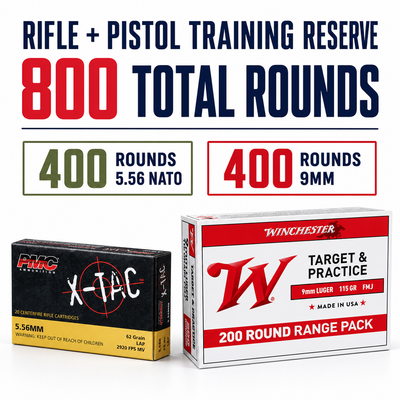
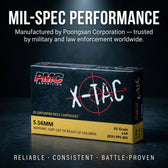
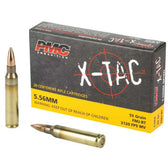
PMC X-Tac 5.56x45mm 55 Grain FMJ
$18.00
at Pro Armory
Prices accurate at time of writing
Frequently Asked Questions
What is the Colt EPR II Pro?
The Colt Enhanced Patrol Rifle II Pro is a modernized 5.56 NATO AR-pattern rifle built around Colt's established carbine architecture. It combines a chrome-lined 16.1-inch barrel and conventional carbine-length gas system with a free-floating M-LOK rail, ambidextrous controls, upgraded Magpul furniture, Radian Raptor charging handle, and MBUS Pro sights.
How much does the Colt EPR II Pro cost?
The 16.1-inch LE6920-EPRII-PRO carries a published MSRP of $1,699. Actual dealer pricing can vary.
What barrel does the Colt EPR II Pro use?
The rifle uses a 16.1-inch chrome-moly-vanadium steel barrel with chrome lining and a 1:7 twist. Independent inspection of current rifles also identifies the familiar government-profile contour with M203 step.
Does the EPR II Pro use a mid-length gas system?
No. Colt retains a carbine-length gas system on the 16.1-inch rifle. That continues the operating architecture associated with the company's traditional 6920-style carbines.
Does the Colt EPR II Pro have an adjustable gas block?
No. The rifle uses a conventional fixed-gas arrangement rather than a user-adjustable gas block.
Is the Colt EPR II Pro ambidextrous?
It includes an ambidextrous safety selector, ambidextrous magazine catch, and ambidextrous Colt-branded Radian Raptor charging handle. It should not be confused with receiver architectures offering complete mirrored bolt-catch and release controls.
What charging handle comes on the EPR II Pro?
The Pro includes a Colt-branded version of the Radian Raptor ambidextrous charging handle.
What sights come with the Colt EPR II Pro?
The rifle ships with Magpul MBUS Pro folding sights constructed from steel. The standard EPR II uses Magpul MBUS 3 sights instead.
What is the difference between the EPR II and EPR II Pro?
Both models share the same core architecture, chrome-lined barrel, free-float M-LOK handguard, MOE SL stock, and ambidextrous safety. The Pro adds an ambidextrous magazine catch, Colt-branded Radian Raptor charging handle, Magpul MOE-K2 grip, MBUS Pro steel sights, and QD receiver end plate.
How much more does the Pro cost?
Published pricing places the standard 16-inch EPR II around $1,449 and the EPR II Pro at $1,699, creating an MSRP difference of roughly $250.
Does the EPR II Pro have a match trigger?
No. The rifle uses a conventional single-stage trigger rather than a specialized match or two-stage unit. One independent example settled slightly above six pounds after break-in.
How accurate is the Colt EPR II Pro?
Accuracy varies by rifle, ammunition, optic, conditions, and shooter. One independent sample averaged 1.14 inches across six five-shot groups fired at 100 yards using Black Hills Match and Hornady American Gunner ammunition. That is encouraging evidence from one rifle rather than a factory accuracy guarantee.
How much does the EPR II Pro weigh?
Colt lists the 16.1-inch rifle at approximately 6.7 pounds before an optic and most additional accessories are installed.
Does Colt HP/MPI test the EPR II Pro?
Colt states that every EPR II bolt, barrel, and barrel extension undergoes individual high-pressure testing and magnetic-particle inspection as part of the company's quality-control process.
Is the EPR II Pro suppressor compatible?
The 16.1-inch barrel uses 1/2×28 muzzle threading, allowing installation of appropriately compatible 5.56 muzzle devices and suppressor mounts. Suppressor compatibility and operating behavior should be verified for the exact suppressor, mount, ammunition, and rifle configuration.
Does the EPR II Pro come with a magazine?
Current product information lists one 30-round Magpul PMAG with the rifle where that capacity is legally permitted.
Is the Colt EPR II Pro worth $1,699?
It makes the strongest value argument for buyers who already want its Radian charging handle, MBUS Pro sights, Magpul furniture, ambidextrous controls, free-float rail, and traditional Colt barrel and operating architecture.
Buyers who plan to replace several of those components, prefer a mid-length gas system, or want a premium trigger may find stronger value in the standard EPR II or another competing AR.
About the Author
The ProArmory editorial team includes experienced hunters, competitive shooters, military veterans, firearms instructors, and firearms industry professionals committed to producing accurate, practical, and research-based content. Our articles draw on manufacturer specifications, current industry information, independent testing, and real-world shooting experience to help readers make informed decisions about firearms, ammunition, optics, and related equipment.
Disclaimer
This article is intended for informational and educational purposes only. Product specifications, pricing, configurations, magazine capacity, and availability reflect information available as of October 2026 and may change.
Manufacturer durability, inspection, and performance claims should not be interpreted as guarantees that every individual rifle will produce identical results. Independent accuracy and reliability data cited in this article reflects specific test samples and should not be generalized to every production firearm.
Always follow Colt's current manufacturer instructions and established firearm-safety practices. Verify applicable federal, state, and local laws before purchasing, possessing, transporting, configuring, or using a firearm.


