



Quick Answer
A mini action rifle is a bolt-action rifle built around a receiver and bolt system specifically sized for relatively short centerfire cartridges. Instead of using a conventional short-action receiver designed around cartridges in the .308 Winchester family, a true mini action reduces receiver and bolt dimensions to better match smaller cartridges such as .223 Remington, 6.5 Grendel, 7.62×39mm, and other compact centerfire rounds supported by the manufacturer.
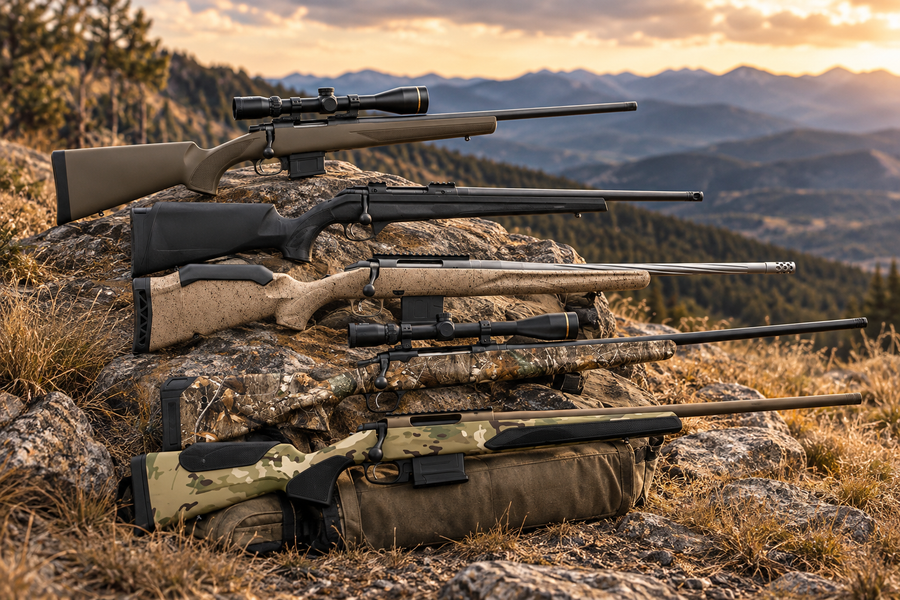
The Howa Mini Action is one of the clearest modern examples. Howa developed a dedicated receiver architecture rather than simply chambering a conventional short-action rifle for a small cartridge. Howa has published dimensions showing its Mini Action is approximately 12 percent shorter than the company's own short-action design, illustrating the type of physical reduction that separates a purpose-built mini action from a rifle that is merely compact overall.
Short actions typically accommodate cartridges in the general .308 Winchester length class, including .243 Winchester, .308 Winchester, and 6.5 Creedmoor. Long actions traditionally support longer cartridges such as .270 Winchester, .30-06 Springfield, and .25-06 Remington. These categories are useful, but they are not universal dimensional standards, and two manufacturers can approach the same cartridge family with different receiver lengths, magazines, bolt stops, and mechanical designs.
The practical buying question is therefore not whether a mini action is inherently better than a short or long action. Buyers should begin with the cartridge and intended use, then compare complete rifle weight, barrel configuration, stock dimensions, magazine availability, accessory support, handedness, and manufacturer support. Action length is important, but it is only one part of the complete rifle.
Key Takeaways
- A true mini action uses a purpose-built compact receiver and bolt system rather than simply combining a short barrel or small cartridge with a conventional action.
- The Howa Mini Action is one of the clearest current examples and is physically shorter than Howa's own conventional short-action design.
- Short actions commonly support cartridges such as .243 Winchester, .308 Winchester, and 6.5 Creedmoor.
- Long actions commonly support cartridges such as .270 Winchester, .30-06 Springfield, and .25-06 Remington.
- Mini, short, and long action are useful industry categories, but there is no single universal receiver dimension shared by every manufacturer.
- Compact rifle does not automatically mean mini action. A rifle can use a short barrel or reduced-length stock while retaining a conventional receiver architecture.
- Action length can influence receiver weight, bolt travel, magazine design, and cartridge compatibility, but it does not independently determine accuracy.
- Magazine, stock, chassis, scope-base, and replacement-part compatibility should always be checked against the exact manufacturer and model.
What Does Rifle Action Length Mean?
In a bolt-action rifle, the action is the central mechanical assembly that includes the receiver and bolt and provides the structural relationship between the cartridge, barrel, firing mechanism, magazine, and stock. When shooters refer to action length, they are generally discussing how much receiver and bolt travel are required to accommodate a particular family of cartridges.
Cartridge overall length is one of the major factors influencing this architecture. A .223 Remington cartridge occupies much less longitudinal space than a .30-06 Springfield cartridge, so a manufacturer can theoretically build a smaller receiver and shorter bolt around the .223-size family. Whether the manufacturer actually chooses to do that is an engineering and manufacturing decision rather than a requirement imposed by the cartridge alone.
Some companies produce several action lengths to closely match different cartridge families. Others use one general receiver size across a broader range of chamberings and control cartridge compatibility through magazines, bolt stops, bolt faces, feed geometry, and other components. This is why the terms mini, short, and long action should be treated as useful categories rather than exact universal measurements.
Cartridge Length Helps Explain Why Different Actions Exist
The physical difference between cartridge families becomes much easier to understand when their loaded lengths are compared. SAAMI lists a maximum cartridge overall length of approximately 2.260 inches for .223 Remington and 6.5 Grendel, while 6.5 Creedmoor extends to approximately 2.825 inches. The .30-06 Springfield can reach approximately 3.340 inches.
Those differences affect magazine dimensions and the amount of space necessary for a cartridge to move through the action. A receiver optimized around cartridges near 2.260 inches can therefore be substantially shorter than one designed to accommodate cartridges approaching 3.340 inches.
Cartridge length still does not dictate one exact receiver dimension. Engineers must also account for locking-lug geometry, bolt construction, feed ramps, magazine placement, safety features, extraction and ejection, trigger placement, receiver strength, and manufacturing strategy. Two rifles chambered for the same cartridge can consequently have noticeably different action dimensions.
Mini Action vs. Short Action vs. Long Action
| Action Category | Common Cartridge Examples | General Design Approach | Typical Uses |
|---|---|---|---|
| Mini action | .223 Remington, 6.5 Grendel, 7.62×39mm, selected ARC-family cartridges | Purpose-built compact receiver for shorter centerfire cartridges | Varmint hunting, predator hunting, compact sporting rifles, recreational shooting |
| Short action | .243 Winchester, .308 Winchester, 6.5 Creedmoor, 7mm-08 Remington | Receiver commonly sized around the .308 Winchester cartridge family | Hunting, target shooting, precision rifle competition |
| Long action | .270 Winchester, .30-06 Springfield, .25-06 Remington | Longer receiver for traditional full-length rifle cartridges | Big-game hunting, general sporting rifles |
| Magnum or specialized action | Cartridge dependent | Receiver, bolt face, magazine, and length vary according to design | Magnum hunting, specialized sporting and precision applications |
This table provides a useful starting point, but it should not be used as a compatibility chart. A cartridge fitting within the general length associated with an action does not mean every rifle in that action category can chamber it. Bolt-face diameter, chamber dimensions, magazine geometry, feed-ramp design, barrel specifications, and manufacturer engineering determine actual compatibility.
What Is a Mini Action Rifle?
A mini action rifle uses a receiver specifically reduced in size around relatively short centerfire cartridges. The design goal is to avoid carrying receiver and bolt length that the intended cartridge family does not require. When the concept is executed well, the result can reduce action weight and bolt travel while giving the rifle compact proportions.
This differs from placing a .223 Remington barrel on a receiver originally sized for .308 Winchester-length cartridges. That conventional short-action approach can function perfectly well, but the receiver remains larger than a purpose-built mini action.
The distinction matters most to buyers interested in lightweight hunting rifles, compact centerfire platforms, or cartridge families that do not require conventional short-action dimensions. It becomes less important when the rifle's barrel, stock, optic, or accessories dominate the final weight and overall length.
The Howa Mini Action Is the Clearest Modern Example

Howa introduced its M1500 Mini Action in 2015 specifically to scale the bolt-action platform around smaller centerfire cartridges. Rather than using the company's standard short-action receiver, Howa shortened the receiver and bolt assembly and paired the platform with a dedicated detachable-magazine system.
Howa has published an illustrative comparison listing the Mini Action at approximately 6.0 inches and 10.2 ounces, the company's short action at approximately 6.9 inches and 13.1 ounces, and its long action at approximately 7.4 inches and 15.2 ounces. Howa characterized the Mini as roughly 12 percent shorter than its short action. Those numbers are useful because they show what a true receiver-size reduction looks like, but they describe Howa's architecture and should not be treated as universal mini-action dimensions.
Current Howa resources continue to identify Mini-action chamberings and twist-rate data for cartridges including .223 Remington, 6mm ARC, 6.5 Grendel, and 7.62×39mm, while the 2025 Howa catalog added 22 ARC Mini Action models. Chambering availability can change between product years, so buyers should verify the exact current rifle rather than relying on an older chambering list.
Howa Mini Action vs. Howa Short Action
| Characteristic | Howa Mini Action | Howa Short Action |
|---|---|---|
| General Cartridge Class | Compact centerfire cartridges | .308 Winchester-length cartridge family |
| Published Action Length Comparison | Approx. 6.0 in. | Approx. 6.9 in. |
| Published Action Weight Comparison | Approx. 10.2 oz. | Approx. 13.1 oz. |
| Magazine System | Mini-action-specific detachable magazine | Short-action magazine arrangement varies by rifle |
| Receiver Purpose | Scaled around shorter cartridges | Scaled around larger short-action cartridge family |
The roughly three-ounce receiver-and-bolt difference will not transform every finished rifle into an ultralight firearm. It does show why the mini-action concept exists. When a manufacturer can remove receiver length that the cartridge does not need, some weight and bulk can disappear before stock and barrel decisions are even considered.
What Does the Shorter Bolt Travel Feel Like?
A shorter receiver generally permits shorter bolt travel because the bolt does not need to move far enough rearward to clear a longer cartridge. In the Howa example, the company specifically designed the Mini around reduced bolt length and travel compared with its standard short action.
The practical difference can make the rifle feel quick and compact when cycling the bolt. That does not automatically translate into faster or more effective shooting because smoothness, bolt lift, extraction, feeding, stock fit, and shooter technique matter at least as much.
A shorter bolt stroke is therefore best viewed as an ergonomic characteristic rather than a performance guarantee. Some shooters will immediately appreciate the compact movement, while others may barely notice it once the rifle is being used in the field.
Mini Actions Can Reduce Weight, but Do Not Assume Too Much
A smaller receiver and bolt can remove weight, but action size is only one contributor to the complete firearm. Barrel contour and length can move the scale much more dramatically, while stock material, bottom metal, magazines, muzzle devices, optics, rings, and suppressors can erase a receiver-weight advantage quickly.
A heavy-barreled mini-action varmint rifle can easily weigh more than a lightweight short-action mountain rifle. Likewise, a carefully designed long-action hunting rifle with a thin barrel and lightweight stock can weigh less than a chassis-equipped 6.5 Creedmoor target rifle.
This is why published complete-rifle weight is more useful than assuming the smallest receiver produces the lightest gun. Buyers should also check whether a listed weight includes a magazine, scope base, optic, or other equipment.
Mini Action Does Not Mean Short Barrel
Action length and barrel length are independent specifications. A mini-action rifle can use a 20-inch, 22-inch, or longer barrel, while a long-action hunting rifle can be built with a comparatively short barrel.
The action determines the central receiver architecture. The barrel determines another portion of the firearm's overall length, ballistic performance, balance, and weight. Stock length creates another separate variable.
This distinction matters because product photographs can make a rifle look compact even when its receiver is conventional. A short barrel and reduced-length stock do not turn a short action into a mini action.
Mini Action Does Not Mean Compact Stock
The word compact is frequently used in rifle names to describe stock dimensions, especially length of pull. A compact hunting rifle may be designed for smaller-framed shooters or easier handling and still use the manufacturer's normal receiver.
Ruger's historical American Rifle Compact provides a clear example. Ruger described the Compact model primarily through its reduced stock length and shorter barrel rather than by introducing a completely separate mini-action receiver.
Savage provides an even more current illustration. The 2026 Model 334 Compact lineup includes chamberings ranging from .223 Remington and .350 Legend through .243 Winchester, 6.5 Creedmoor, and .308 Winchester. Because those rifles span cartridge families normally associated with different action-length discussions, the word Compact clearly describes the complete rifle configuration rather than one universal mini receiver.
Mini Action Rifle vs. Compact Rifle
| Term | What It Describes | What It Does Not Automatically Tell You |
|---|---|---|
| Mini action | Receiver and bolt architecture scaled for shorter cartridges | Barrel length, stock length, or complete rifle weight |
| Compact rifle | Reduced overall dimensions, often through stock or barrel changes | That the receiver is a purpose-built mini action |
| Short barrel | Barrel length | Receiver length |
| Short length of pull | Distance between trigger and butt | Receiver or cartridge family |
What Happened to the CZ 527?
The CZ 527 is another important historical example of a purpose-built compact centerfire action. It was based on a small Mauser-style architecture and became particularly well known in chamberings such as .223 Remington, 7.62×39mm, and 6.5 Grendel.
CZ discontinued the remaining 527 configurations in 2021. That means buyers evaluating one today are generally shopping the used market rather than comparing current factory production.
The discontinued status also creates ownership questions that did not matter when the rifle was actively produced. Replacement magazines, stocks, bottom metal, and other model-specific components can become harder to source over time, so a used 527's value should be judged partly according to parts availability and condition.
The CZ 600 Is Not Simply a New CZ 527

CZ's current 600 family represents a different generation of centerfire bolt-action design. It uses different receiver architecture, magazines, safety systems, and overall engineering and should not be treated as a direct mechanical continuation of the CZ 527 merely because some chamberings overlap.
This distinction is important whenever a discontinued compact action is replaced in a manufacturer's catalog by a newer rifle family. The new product may fill a similar hunting or sporting role without sharing receiver dimensions or accessory compatibility.
Buyers moving from a CZ 527 to a CZ 600 should therefore approach the newer rifle as its own platform rather than expecting magazines, stocks, mounts, or other components to transfer.
Are Ruger American Ranch Rifles Mini Actions?

Ruger's American Rifle family includes several short and compact configurations chambered for cartridges commonly associated with small actions. Current American Rifle Gen II Ranch offerings include cartridges such as 5.56 NATO, 7.62×39mm, .300 Blackout, and .350 Legend in compact 16.1-inch-barreled rifles.
That does not make Ranch synonymous with mini action. Ruger markets the rifle according to its complete Gen II architecture and Ranch configuration rather than claiming a Howa-style Mini Action receiver category.
The better comparison is therefore practical. A buyer interested in a short-cartridge bolt rifle can compare the complete Ruger Ranch with a Howa Mini Action according to weight, magazine type, stock fit, barrel length, chambering, price, and accessory support without forcing both rifles into the same receiver label.
Are Savage Compact Rifles Mini Actions?

Not automatically. Savage produces compact rifle configurations, but the label can describe stock length and barrel configuration rather than a dedicated mini receiver.
The current Model 334 Compact family makes this especially clear because Savage offers compact versions in .223 Remington, .243 Winchester, 6.5 Creedmoor, .308 Winchester, and .350 Legend. A rifle family spanning those chamberings cannot be understood merely by assuming Compact means one short-cartridge mini action.
The exact action architecture should therefore be verified according to model. This same principle applies when shopping aftermarket stocks or magazines, where the marketing term Compact provides far less useful information than the actual model and receiver pattern.
What About Tikka T3x Rifles?

Tikka's T3x family is another good reason not to assume cartridge length and receiver classification are interchangeable concepts. The T3x product family spans a wide range of chamberings, and Tikka's own support information shows that magazine designs and compatibility vary between different T3x configurations.
Tikka does not market a .223-chambered T3x as the mechanical equivalent of a Howa Mini Action simply because the cartridge is short. The T3x belongs to its own receiver family and needs to be evaluated according to Tikka's specifications.
This becomes particularly important when discussing aftermarket components. The fact that two rifles are both chambered in .223 Remington does not mean their magazines, stocks, action screws, recoil lugs, scope mounts, or chassis systems share any compatibility.
What Is a Short-Action Rifle?

A short-action rifle uses a receiver generally associated with cartridges in the .308 Winchester overall-length class. Common examples include .243 Winchester, .308 Winchester, 6.5 Creedmoor, and 7mm-08 Remington.
This category is enormously popular because those cartridges cover hunting, recreational shooting, long-range target shooting, and precision competition. The resulting market support is correspondingly large, with numerous rifle manufacturers building complete platforms around short-action cartridge families.
The broad support can also make short actions attractive to buyers who expect to modify a rifle later. Stocks, chassis systems, magazines, scope bases, barrels, and other components are widely available, although compatibility still depends on the exact manufacturer and receiver pattern.
Common Short-Action Cartridges
| Cartridge | Common Uses | General Action Category |
|---|---|---|
| .243 Winchester | Varmint hunting, deer hunting, recreational shooting | Short action |
| .308 Winchester | Hunting, target shooting, precision applications | Short action |
| 6.5 Creedmoor | Hunting, long-range shooting, precision competition | Short action |
| 7mm-08 Remington | Hunting and general sporting use | Short action |
The category is broad enough that the term short action alone reveals little about the final rifle. A lightweight .308 hunting rifle and a 20-pound 6.5 Creedmoor competition rifle can both use short actions while feeling completely unrelated in actual use.
Why Short Actions Became So Popular
Short actions sit in a useful middle ground. They can accommodate cartridges powerful enough for a wide range of hunting applications while remaining compact enough for modern precision rifles and sporting platforms.
The popularity of .308 Winchester created an enormous ecosystem around the action length, and 6.5 Creedmoor expanded that market even further. Manufacturers consequently have strong economic reasons to support short-action rifles with several barrels, stocks, magazines, and price levels.
That flexibility is one of the category's biggest advantages over a specialized mini action. A mini action may be lighter and more compact for a specific cartridge family, while a conventional short action can provide substantially broader chambering and aftermarket choices.
What Is a Long-Action Rifle?

A long-action rifle uses a receiver designed to accommodate cartridges longer than the conventional .308 Winchester family. Traditional American examples include .270 Winchester, .30-06 Springfield, and .25-06 Remington.
The .30-06 Springfield remains the easiest reference point because many long-action sporting rifles were designed around cartridges with approximately the same overall-length envelope. Modern manufacturers continue supporting these chamberings because they remain deeply established in the hunting market.
A long action does not necessarily mean a magnum rifle. Standard .30-06-length cartridges and larger magnum cartridges can both appear in long or manufacturer-specific action families, with bolt-face diameter and magazine design creating additional distinctions.
Common Long-Action Cartridges
| Cartridge | Common Uses | General Action Category |
|---|---|---|
| .270 Winchester | Big-game hunting and general sporting use | Long action |
| .30-06 Springfield | Big-game hunting, sporting use, historical target applications | Long action |
| .25-06 Remington | Varmint, predator, and big-game hunting depending on load and regulations | Long action |
Long Action Does Not Automatically Mean Heavy Rifle
The receiver may be longer, but action weight is only one small portion of the final firearm. A manufacturer can combine a long action with a thin sporter barrel, lightweight stock, compact bottom metal, and a modest optic to produce a very light hunting rifle.
By comparison, a short-action competition rifle may use a thick steel barrel, aluminum chassis, internal weights, large optic, heavy mount, bipod, and other equipment that dramatically increase total mass.
This is another reason complete-rifle specifications matter more than action category when portability is the actual buying concern.
What About Magnum Actions?
Magnum complicates the simple mini-short-long comparison because cartridge length is not the only issue. Magnum cartridges may require a larger bolt face, different magazine dimensions, longer receivers, stronger component geometry, or manufacturer-specific architecture.
Some magnum cartridges fit within conventional long-action length ranges while others require extended or specialized actions. Short magnums demonstrate the opposite possibility by combining a relatively short cartridge with a larger case diameter and bolt face.
The useful lesson is that action length does not describe every dimension that matters. Cartridge diameter, pressure, bolt face, feed geometry, case taper, and magazine architecture are equally important to the engineering of a rifle.
Are Action Sizes Universal Standards?
No. Terms such as short action and long action are broadly understood across the industry, but there is no rule requiring every manufacturer to use one exact receiver length, action-screw spacing, ejection-port size, or magazine pattern within each category.
Remington, Savage, Tikka, Howa, Ruger, Bergara, CZ, Weatherby, and other manufacturers have developed their own receiver architectures. Some are deliberately similar to popular established footprints, while others are much more proprietary.
This is why a stock advertised for one short action is not automatically compatible with another manufacturer's short action. The category tells you the general cartridge family, not the mechanical interface.
Does a Shorter Action Improve Accuracy?
Action length alone does not determine mechanical accuracy. A shorter receiver can theoretically change stiffness and mass, but actual rifle accuracy depends on a much larger system involving barrel quality, chamber dimensions, bedding, ammunition, crown geometry, bolt lockup, trigger consistency, optic mounting, and manufacturing quality.
A well-designed long-action rifle can easily outperform a poorly manufactured short or mini action. Likewise, a quality mini-action rifle can shoot extremely well without the compact receiver being the sole reason for the result.
Buyers should therefore look for actual manufacturer accuracy guarantees, independent testing, and real performance from the complete rifle rather than relying on claims that shorter automatically means stiffer and therefore more accurate.
Receiver Rigidity Is Only One Variable
Manufacturers often discuss receiver rigidity because the action forms the structural center of the rifle. Rigidity matters, but engineering does not stop at receiver length.
Wall thickness, receiver diameter, ejection-port geometry, material, heat treatment, recoil-lug design, bedding surface, barrel attachment, and stock interface all affect structural behavior. A longer but more robustly designed receiver can be extremely rigid, while a shorter receiver can still contain geometry that reduces stiffness.
This is why action length should not become a shortcut for predicting accuracy.
Does a Mini Action Cycle Faster?
A shorter bolt stroke can reduce the amount of hand movement needed to cycle the action. Howa specifically promotes this characteristic as one advantage of its Mini Action compared with the company's longer receiver families.
That does not mean every shooter will produce meaningfully faster follow-up shots. Bolt lift, handle position, extraction force, magazine feed, stock design, recoil recovery, and technique all contribute to the cycling process.
The shorter travel is best understood as one ergonomic benefit of a scaled receiver. It can make the action feel quick without turning the rifle into a fundamentally different operating system.
Does Action Length Affect Overall Rifle Length?
Yes, but usually less dramatically than barrel and stock dimensions. Removing approximately an inch from a receiver can reduce overall length, yet changing from a 24-inch barrel to a 16-inch barrel obviously produces a much larger difference.
The same applies to stock length. A rifle with a shorter length of pull or folding stock can become dramatically easier to transport even if its receiver remains conventional.
Buyers interested primarily in a short rifle should therefore compare published overall length rather than using action length as a proxy.
Does Action Length Affect Balance?
It can, because changing receiver and bolt mass shifts part of the rifle's weight distribution. The effect may be subtle compared with moving several inches of barrel steel forward or installing a heavy optic above the receiver.
A mini-action hunting rifle with a lightweight barrel can feel notably handy, while the same action paired with a heavy varmint barrel may feel much more muzzle heavy. Neither balance characteristic can be predicted from the word mini alone.
Handling is therefore something worth evaluating at the complete-rifle level whenever possible.
Magazine Design Is One of the Biggest Practical Differences

A purpose-built mini action normally requires a magazine designed around its own receiver and cartridge dimensions. Howa's Mini Action uses dedicated magazines rather than magazines intended for the company's larger action families.
This specialization can improve packaging efficiency, but it also means the owner is dependent on the availability of that specific magazine system. If the manufacturer changes the platform or discontinues a magazine, long-term replacement availability can become more important.
Short-action rifles often benefit from broader magazine ecosystems, especially in precision-rifle configurations using AICS-pattern magazines. Even there, compatibility should never be assumed because cartridges, feed lips, bottom metal, chassis systems, and action geometry still create variations.
Magazine Capacity Is Not Determined by Action Length Alone
A mini action can use a relatively high-capacity detachable magazine, while another compact hunting rifle may use a small flush magazine. A long-action hunting rifle can likewise use a low-capacity internal magazine even though the receiver is physically larger.
Magazine capacity is a design and legal question separate from receiver length. Buyers should check the exact model, magazine availability, and applicable regulations rather than using action size to predict capacity.
This is particularly relevant in hunting jurisdictions where magazine limits can apply independently from the firearm's mechanical capability.
Stock and Chassis Compatibility Requires Exact Model Information
Stocks and chassis systems are typically machined around specific receiver contours, action-screw spacing, recoil lugs, trigger arrangements, and bottom-metal interfaces. The term short action is not specific enough to guarantee fit.
Mini actions can make this even more important because fewer manufacturers may produce dedicated aftermarket stocks compared with the enormous Remington 700 short-action ecosystem. Howa Mini owners, for example, need stocks and chassis systems specifically compatible with the Mini receiver rather than ordinary Howa short-action products.
A buyer intending to keep the rifle in factory configuration may care very little about this difference. Someone planning a long-term build should investigate aftermarket support before purchasing the action.
Scope Bases Can Be Action Specific Too
Even something as simple as an optic base can vary between receiver families. Hole spacing, receiver contour, port length, screw size, and manufacturer design determine compatibility.
A rail advertised for one manufacturer's short action may not fit its mini action, and a long-action rail may use different spacing from the short-action version. The optic itself may be universal, but the interface between optic and receiver often is not.
This is another area where buyers should shop by exact model rather than by broad action-length category.
Bolt Face Matters as Much as Action Length

Cartridges with similar overall lengths can use different case-head diameters. The bolt face must match the cartridge case appropriately for safe and reliable function.
This means a receiver having enough physical length for a cartridge does not establish compatibility. A manufacturer may use different bolts or bolt heads within one action family to accommodate different cartridge cases.
Magazine feed geometry and extractor design add further variables. Action length is therefore only the beginning of cartridge compatibility rather than the complete answer.
Why the Same Cartridge Can Appear in Different Action Designs
Manufacturers make different decisions about production efficiency. One company may build a dedicated mini receiver for .223 Remington, while another may chamber .223 in the same general receiver family used for larger short-action cartridges.
Both approaches can work well. The dedicated mini action may reduce weight and bolt travel, while the larger shared receiver may simplify manufacturing and expand compatibility with existing stocks, magazines, and accessories.
The correct design depends on what the manufacturer is trying to accomplish and what the buyer values.
Mini Action vs. Short Action for Hunting
Both can be excellent hunting choices, but cartridge suitability should come before receiver size. Mini actions are commonly associated with cartridges used for varmints, predators, small game where lawful, and selected deer or other hunting applications depending on cartridge, projectile, range, and local regulations.
Short actions support a much broader group of established hunting cartridges. A hunter considering .243 Winchester, 7mm-08 Remington, .308 Winchester, or 6.5 Creedmoor will find an enormous selection of short-action rifles at different weights and price points.
The best process is to determine the game species and hunting conditions, identify suitable and lawful cartridges, and then compare rifles chambered for those cartridges. Choosing the action category before choosing the hunting requirement reverses that logic.
Mini Actions Can Be Excellent Walking Rifles
The weight reduction and compact proportions of a true mini action can make sense for hunters covering substantial ground. When paired with a lightweight stock and appropriate barrel, the receiver contributes to a rifle that is easy to carry without requiring a micro-length barrel.
This can be particularly attractive for predator and varmint hunters who want a centerfire bolt action chambered for smaller cartridges but do not need the receiver volume associated with .308 Winchester-length ammunition.
The advantage becomes much smaller if the finished rifle is equipped with a heavy barrel, large optic, bipod, and other equipment. Once again, the complete setup determines whether the mini-action concept actually produces a lightweight field rifle.
Short Actions Offer More General-Purpose Flexibility
A conventional short action provides access to some of the most widely supported hunting and target cartridges available. That can make it easier for a buyer to find ammunition, replacement barrels, magazines, rifles, and aftermarket stocks across several manufacturers.
This broader ecosystem can also protect long-term ownership value. A specialized mini action may be perfect for its original cartridge, while a short-action platform can provide more pathways if the owner later wants to rebarrel or change the rifle's role.
That flexibility is not always necessary, but it belongs in the value calculation.
Long Actions Still Matter for Traditional Hunting Cartridges
Interest in compact rifles and short-action cartridges has not made long actions obsolete. Cartridges such as .270 Winchester and .30-06 Springfield continue to support an enormous hunting market and remain available in modern lightweight rifles.
Many hunters prefer those cartridges because of ammunition availability, long experience with their terminal performance, existing rifles, or family tradition. None of those advantages disappears because a shorter receiver can save a small amount of weight.
Action length should serve cartridge choice rather than dictate it.
Mini Actions for Target and Recreational Shooting
Mini-action rifles can also make enjoyable target platforms, particularly in cartridges with modest recoil. A .223 Remington or 6.5 Grendel bolt gun can be used for recreational shooting while offering a different experience from a semiautomatic rifle chambered for the same cartridge.
Small cartridges also reduce ammunition bulk and can make long shooting sessions comfortable. The exact advantage depends heavily on ammunition price and availability, which can change considerably between common and specialized chamberings.
Someone building a dedicated precision rifle may still prefer a short-action platform because the competition ecosystem, chassis availability, magazines, barrels, and triggers can be much broader.
Mini Actions and Newer Small-Cartridge Families
The development of cartridges such as 6mm ARC and 22 ARC has renewed interest in compact bolt-action platforms. These cartridges were designed around relatively short overall lengths, making them natural candidates for rifles whose receivers do not need to accommodate .308 Winchester-length ammunition.
Howa's willingness to add newer ARC-family chamberings to the Mini Action demonstrates that the category is not limited to older cartridges such as .223 Remington and 7.62×39mm. The action can serve as a platform for modern small-case cartridges when the manufacturer designs the barrel, bolt face, and magazine system accordingly.
Buyers should still verify current production because new chamberings can appear or disappear quickly depending on demand.
What Are the Downsides of a Mini Action?
The greatest limitation is specialization. A smaller receiver cannot accommodate cartridges that exceed its intended dimensional range, so chambering flexibility is inherently narrower than with a larger action.
Aftermarket support can also be smaller. Stocks, magazines, chassis systems, bases, and other components may exist, but the selection will rarely match the enormous ecosystems surrounding major short-action patterns.
Handedness can be another consideration. Howa currently states that it does not produce a left-handed action, which may immediately remove the Mini Action from consideration for buyers who strongly prefer a true left-hand bolt configuration.
Specialized Magazines Can Increase Ownership Cost
A proprietary magazine system can work perfectly well, but it ties the rifle to a smaller accessory ecosystem. Replacement magazines may cost more or be stocked by fewer retailers than common AICS-pattern or widely distributed factory magazines.
A hunter who needs only one or two magazines may never consider this a meaningful disadvantage. A recreational or competitive shooter who wants six or eight spares may care much more.
This is why long-term ownership cost should include magazines and accessories rather than stopping at rifle MSRP.
Are Mini Actions Better for Smaller Shooters?
Not necessarily. Receiver size and stock fit address different dimensions of the firearm.
A smaller-framed shooter may benefit much more from appropriate length of pull, comb height, grip reach, rifle weight, and optic placement than from a shorter receiver. A mini action can contribute to lower overall weight, but it does not guarantee that the stock fits the shooter.
Parents or smaller adults shopping for a compact rifle should therefore evaluate stock dimensions and complete weight directly rather than assuming Mini Action means youth-sized.
Is a Mini Action Better for Suppressor Use?
Action size itself does not create suppressor compatibility. Muzzle threading, barrel diameter, cartridge choice, suppressor rating, and the firearm manufacturer's guidance determine whether a particular combination is appropriate.
A lightweight compact action can help offset some of the added mass of a suppressor, which may improve the balance of the finished rifle compared with beginning from a heavier receiver. The barrel and suppressor still account for much more of the forward weight.
Buyers should therefore treat receiver size as one small part of a suppressed-rifle weight budget rather than as a suppressor-specific feature.
Is a Mini Action Better for a Truck or Ranch Rifle?
Compact proportions can make a mini-action rifle attractive where portability is important, but the action designation alone should not decide the purchase. A Ruger American Ranch with a conventional manufacturer-specific action and 16.1-inch barrel may be physically shorter than a Howa Mini Action using a longer barrel.
This comparison demonstrates why complete dimensions matter more than terminology. The rifle that is easiest to carry or store is the one with the appropriate overall length and weight, regardless of which receiver category produced those numbers.
Magazine capacity, chambering, weather resistance, stock durability, and optic setup may also matter more in practical field use.
How Different Manufacturers Approach Action Length
There is no single correct manufacturing strategy. Howa deliberately uses distinct Mini, Short, and Long Action families. CZ historically offered the compact 527 but moved to the mechanically different CZ 600 family. Ruger and Savage use product lines where compact overall configurations can appear without the rifle being marketed as a dedicated mini action.
Tikka follows another approach through its broad T3x family, with cartridge-specific magazines and components supporting numerous chamberings. These differences show why action-length discussions become confusing when shooters assume every company copies one reference design.
The manufacturer-specific architecture should always take priority over a generic label.
Manufacturer Approach Comparison
| Manufacturer / Platform | General Approach | Important Buyer Note |
|---|---|---|
| Howa Mini Action | Dedicated compact receiver for smaller centerfire cartridges | True manufacturer-defined mini action with dedicated magazines and accessories |
| CZ 527 | Historical compact centerfire action | Discontinued; used-market parts and magazines deserve consideration |
| CZ 600 | Current modular centerfire rifle family | Not mechanically equivalent to the discontinued 527 |
| Ruger American Ranch | Compact complete-rifle configuration | Short overall rifle does not automatically equal dedicated mini action |
| Savage 334 Compact | Compact stock/barrel configurations across several cartridges | Compact describes the rifle configuration rather than one universal action class |
| Tikka T3x | Broad receiver family supporting numerous cartridge groups | Verify magazines and components by exact model and chambering |
How Action Length Affects Aftermarket Support
Aftermarket companies need enough customers to justify producing stocks, chassis systems, rails, magazines, and bottom metal. Common short-action patterns consequently attract more development than specialized receivers produced in smaller numbers.
This does not mean mini-action owners lack options. It means the buyer should investigate them before purchasing if customization is important.
A hunter planning to leave the rifle factory stock may not care about chassis availability at all. A shooter envisioning several future rebuilds may consider aftermarket depth one of the most important specifications.
Used Rifles Make Action Knowledge More Important
The used market mixes several generations of rifles and discontinued action types. A listing may simply call a rifle short action or compact without identifying the exact receiver generation.
This can create expensive mistakes when replacement magazines or stocks are purchased later. A CZ 527 magazine, for example, should not be expected to work with a CZ 600 simply because the rifles may share a cartridge.
Used-rifle buyers should identify the exact model, generation, and chambering before buying accessories.
Does Action Length Affect Reloading?
The action can influence the maximum cartridge length the magazine and receiver will physically accommodate, but ammunition should always be loaded within safe published data and according to the firearm's chamber and magazine restrictions.
Precision shooters sometimes discuss magazine length because long bullets may be seated to dimensions that approach the available internal magazine space. That is a specialized ammunition-development issue rather than a general reason to prefer one action category.
Factory-ammunition users usually need to care only that the ammunition matches the exact chambering marked on the rifle and functions correctly in the manufacturer's magazine system.
Does a Shorter Action Mean a Stronger Action?
Not automatically. Receiver strength depends on material, geometry, heat treatment, locking-lug design, barrel interface, and engineering standards rather than length alone.
A shorter tube can be more rigid than a longer identical tube in a purely theoretical comparison, but real rifle actions are not identical tubes with only their length changed. Different manufacturers alter dimensions, materials, ports, lugs, and other features.
Strength and pressure compatibility should therefore come from the manufacturer and chambering, not an assumption based on action category.
Should You Choose the Action First or the Cartridge First?
For most buyers, the cartridge should come first. Determine what the rifle needs to accomplish, identify cartridges suitable for that application, and then compare the rifles built around those cartridges.
A predator hunter interested in .223 Remington may reasonably compare both a Howa Mini Action and a conventional-action Ruger Ranch. A deer hunter wanting 6.5 Creedmoor will find far more short-action options, while someone committed to .30-06 Springfield will naturally shop long actions.
Beginning with the action can unnecessarily restrict the cartridge and rifle choices before the actual use has been defined.
Choosing the Right Action for Hunting
Start with the game and local hunting regulations. Then evaluate appropriate bullet and cartridge options, expected range, rifle weight, terrain, recoil tolerance, and ammunition availability.
Once the cartridge is established, action length becomes easier to evaluate. A mini action may offer an elegant lightweight solution when the selected cartridge fits the category, while a short or long action may provide substantially more rifle choices for other chamberings.
The receiver should support the hunting requirement rather than become the requirement itself.
Choosing the Right Action for Target Shooting
Target shooters may place more emphasis on stock or chassis compatibility, magazine systems, trigger support, barrel replacement, scope mounting, and competition rules. This often favors common short-action patterns because the precision-rifle ecosystem is extremely mature.
A mini action can still be an excellent recreational or specialized target platform, particularly with cartridges such as .223 Remington or 6mm ARC. The smaller receiver simply may not provide the same depth of aftermarket support as a mainstream short action.
The right choice depends on whether the rifle will remain a factory recreational gun or become the foundation for a long-term competition build.
Choosing the Right Action for a Lightweight Rifle
A mini action deserves serious consideration when the desired cartridge is available and the complete rifle is genuinely light. Removing unnecessary receiver and bolt mass is a logical place to save weight.
It should still be compared against lightweight short and long actions because barrel and stock technology can create surprising results. A carbon-fiber stock and thin barrel may save more weight than moving between receiver categories.
The scale is the final judge.
Action Choice by Buyer Priority
| Buyer Priority | Action Worth Considering | Main Question |
|---|---|---|
| Purpose-built small-cartridge bolt rifle | Mini action | Does the manufacturer support the desired cartridge and magazines? |
| Broad hunting versatility | Short action | Which chambering best fits the intended game and terrain? |
| Traditional .30-06-length cartridge | Long action | Does the rifle meet weight and handling goals? |
| Lightweight rifle | Any appropriate action | What is the complete rifle weight? |
| Compact overall rifle | Any appropriate action | What are barrel length, stock length, and overall length? |
| Maximum aftermarket support | Common short-action pattern | Are stocks, chassis systems, magazines, and barrels readily available? |
| Long-term factory ownership | Any well-supported platform | Are magazines, parts, and service likely to remain available? |
Are Mini Action Rifles Worth Buying?
They can be, especially when the buyer already wants one of the cartridges the action is designed to support. A true mini action can reduce receiver size, bolt travel, and weight without changing the basic advantages of a centerfire bolt-action rifle.
The strongest value appears when the entire rifle takes advantage of that architecture. A lightweight stock and appropriate barrel can produce a compact field rifle that feels noticeably different from a conventional short-action platform.
The value becomes less obvious when the rifle is heavily accessorized or when the buyer wants cartridges and aftermarket components outside the mini-action ecosystem. In those situations, a mainstream short action may provide more flexibility for very little practical penalty.
Who Should Consider a Howa Mini Action?
A buyer specifically interested in a small centerfire cartridge and compact bolt-action platform should put the Howa high on the comparison list. Its dedicated receiver provides a clear example of the concept rather than relying on vague marketing language.
The platform also benefits from a long production history and multiple factory configurations. Current and recent Howa offerings demonstrate continued development of the Mini Action around newer chamberings as well as established cartridges.
Potential buyers should still examine magazine cost, stock options, right-hand-only action availability, barrel configuration, and current chambering selection before assuming the Mini is automatically the best fit.
Who May Be Better Served by a Short Action?
A hunter or target shooter who values broad chambering choice and aftermarket support may receive more value from a conventional short action. Rifles chambered in .243 Winchester, .308 Winchester, 6.5 Creedmoor, and 7mm-08 Remington are available from numerous manufacturers and at almost every price level.
Short actions are also the center of a massive precision-rifle ecosystem. Shooters interested in chassis systems, detachable magazines, pre-fit barrels, competition triggers, and other modular upgrades often have far more options.
The additional receiver length is frequently a small tradeoff for that flexibility.
Who Needs a Long Action?
Someone who specifically wants a traditional long cartridge such as .270 Winchester or .30-06 Springfield should select a rifle engineered around that cartridge rather than trying to avoid the action length on principle.
Modern long-action hunting rifles can still be extremely light and easy to carry. Receiver length alone does not condemn a rifle to being heavy or cumbersome.
The cartridge and complete firearm should remain the focus.
Common Mistake: Calling Every .223 Bolt Rifle a Mini Action
A cartridge being short enough for a mini action does not prove that the rifle uses one. Manufacturers may choose to chamber .223 Remington in a larger receiver for production, compatibility, or design reasons.
The only reliable approach is to check the manufacturer's receiver architecture. If the company does not identify a dedicated mini action, avoid inventing the classification based solely on cartridge length.
This distinction is particularly important when buying stocks, rails, or magazines.
Common Mistake: Confusing Compact With Mini
Compact often describes the complete rifle's dimensions rather than the receiver. Short barrels and reduced-length stocks can make a rifle dramatically smaller without changing the underlying action.
Current Savage and Ruger rifles make this distinction especially clear. Both companies offer compact or Ranch-style rifles in several cartridge families without using the Howa-style Mini Action terminology.
Always separate the receiver specification from the complete-rifle dimensions.
Common Mistake: Assuming Mini Means Lightweight
The action can save several ounces, but a heavy barrel and stock can add pounds. Published complete weight is therefore more valuable than the action label when carry weight is the objective.
This also applies after purchase. A large scope, steel rings, bipod, suppressor, and loaded magazine can substantially change the finished rifle.
Plan around the complete field configuration rather than the bare action.
Common Mistake: Assuming Mini Means More Accurate
There is no automatic accuracy advantage. Receiver size is only one part of the structure, and barrel manufacturing, ammunition, chamber geometry, bedding, and quality control remain far more significant to most shooters.
Howa offers an accuracy guarantee for its rifles, but that performance should be understood as a product of the complete Howa system rather than proof that the Mini's shorter receiver is inherently superior.
Judge the rifle, not the label.
Common Mistake: Assuming Short Action Means Universal Compatibility
Two short actions can use completely different stock inlets, magazines, action screws, rails, recoil lugs, and trigger systems. The phrase identifies a general cartridge-length category rather than a universal mechanical standard.
Compatibility should always be confirmed by manufacturer, model, generation, and chambering. This becomes even more important with proprietary modern actions.
The same rule applies to long and mini actions.
Common Mistake: Buying Around Future Cartridge Changes Without Checking the Action
A buyer may assume that any cartridge fitting within the nominal action length can be installed later through a simple barrel change. That is not necessarily true.
Changing cartridge families can involve a different bolt face, magazine, feed geometry, ejector arrangement, barrel interface, and other components. Some manufacturers support conversions while others do not.
If future rebarreling is a major goal, research the exact action before purchase rather than relying on generic length categories.
Final Thoughts
Mini, short, and long actions are useful ways to understand bolt-action rifle architecture, but they are not universal specifications that every manufacturer interprets identically. Their purpose is fundamentally straightforward: give the receiver and bolt enough room to operate with the cartridge family the rifle was designed to use.
The Howa Mini Action provides one of the clearest examples of what a true mini action means. Howa deliberately shortened the receiver and bolt compared with its own short action, creating a platform scaled around compact centerfire cartridges. That physical difference separates the Mini from a conventional rifle that simply happens to be chambered in .223 Remington.
The historical CZ 527 illustrates another dedicated compact-action approach, although the platform is now discontinued. Current rifles such as the CZ 600, Ruger American Gen II Ranch, Savage 334 Compact, and Tikka T3x demonstrate why small chamberings and compact external dimensions should not automatically be interpreted as the same receiver architecture.
Short actions remain the broad middle ground of the bolt-action market. They support widely used cartridges including .243 Winchester, .308 Winchester, 6.5 Creedmoor, and 7mm-08 Remington and benefit from extensive factory and aftermarket support.
Long actions remain equally relevant for shooters who want traditional cartridges such as .270 Winchester, .30-06 Springfield, and .25-06 Remington. Modern materials and stock designs allow manufacturers to build remarkably light long-action rifles, so the additional receiver length should not be treated as an automatic disadvantage.
The most important lesson is that action size does not determine rifle quality. It does not independently guarantee accuracy, reliability, portability, or faster shooting. Those characteristics come from the complete relationship among the receiver, barrel, bolt, stock, magazine, trigger, ammunition, and manufacturer quality control.
For buyers, the best process begins with intended use. Choose a suitable cartridge, identify rifles chambered for it, and then compare action design, complete weight, magazine availability, stock fit, accessory support, and manufacturer service.
If a purpose-built mini action provides the cartridge and handling characteristics you want, the reduced receiver can be a genuine advantage. If broader chambering choice and aftermarket support matter more, a conventional short action may be the stronger long-term platform. If the cartridge requires a traditional long action, the correct answer is simply to buy a well-designed long-action rifle.
The best action is not the shortest one.
It is the one that lets the complete rifle do its intended job without adding unnecessary compromises.

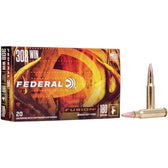
Federal Fusion .308 Winchester 150 Grain Bonded SP
$33.99
at Pro Armory
Prices accurate at time of writing
Frequently Asked Questions
What is a mini action rifle?
A mini action rifle uses a purpose-built compact receiver and bolt system designed around relatively short centerfire cartridges. The receiver is physically smaller than a conventional short action from the same manufacturer when the company truly uses a dedicated mini-action architecture.
What is the difference between a mini action and a short action?
A mini action is scaled around shorter cartridges such as .223 Remington and 6.5 Grendel, while conventional short actions generally accommodate cartridges in the .308 Winchester and 6.5 Creedmoor length class. Exact receiver dimensions vary by manufacturer.
What is the difference between a short action and a long action?
Short actions are generally built around cartridges similar in overall length to .308 Winchester, while long actions accommodate longer cartridges such as .270 Winchester and .30-06 Springfield. The exact dimensions and mechanical interfaces vary among manufacturers.
Is the Howa Mini Action really smaller than a short action?
Yes. Howa has published a manufacturer-specific comparison describing its Mini Action at approximately 6.0 inches compared with approximately 6.9 inches for its short action and 7.4 inches for its long action. Howa characterizes the Mini as roughly 12 percent shorter than its short action.
What cartridges does the Howa Mini Action use?
Howa has offered the Mini Action in several compact centerfire cartridges. Current and recent Howa resources include chamberings such as .223 Remington, 6mm ARC, 6.5 Grendel, 7.62×39mm, and 22 ARC depending on model year and configuration. Buyers should verify the current catalog before purchasing.
Is .223 Remington always a mini-action cartridge?
The cartridge is short enough to work well in a mini action, but a rifle chambered in .223 Remington does not automatically use one. Some manufacturers use conventional receiver families for .223 rifles.
Is 6.5 Grendel a mini-action cartridge?
It can be. Howa offers 6.5 Grendel in its Mini Action platform, but other manufacturers may use different receiver architectures for rifles chambered in the same cartridge.
Is 6.5 Creedmoor a mini action?
No in the conventional classification. 6.5 Creedmoor is generally treated as a short-action cartridge and is commonly chambered in receivers designed around the .308 Winchester length class.
Is .308 Winchester a short action?
Yes. .308 Winchester is one of the primary reference cartridges used when describing conventional short-action rifle dimensions.
Is .30-06 Springfield a long action?
Yes. .30-06 Springfield is one of the classic reference cartridges for conventional long-action rifles.
Is a mini action more accurate?
Not inherently. Barrel quality, chamber dimensions, ammunition, bedding, crown, bolt lockup, optic mounting, and overall manufacturing quality matter more than action length by itself.
Is a mini action lighter?
The receiver and bolt can be lighter because less material is required, but the complete rifle is not automatically lighter. Barrel contour, stock material, optic, magazine, and accessories can have a greater effect on final weight.
Does a mini action have a shorter bolt throw?
A purpose-built mini action generally can use less bolt travel than a larger action because it only needs to clear shorter cartridges. Howa specifically uses reduced bolt travel as part of its Mini Action design.
Does a short-action rifle cycle faster than a long action?
The shorter bolt travel can reduce the amount of movement required, but practical cycling speed also depends on bolt lift, handle geometry, feeding, extraction, stock fit, and shooter technique.
Is a compact rifle the same as a mini-action rifle?
No. Compact generally describes the overall firearm and may result from a shorter barrel or reduced stock length. Mini action specifically refers to receiver and bolt architecture.
Is the Ruger American Ranch a mini action?
Ruger markets the American Rifle Gen II Ranch according to its own receiver architecture rather than as a Howa-style Mini Action. Its short barrel and compact handling should not be confused with a universal mini-action classification.
Is the Savage 334 Compact a mini action?
The Compact designation refers to the rifle configuration rather than one universal mini-action receiver. Current Model 334 Compact rifles are available in cartridges ranging from .223 Remington to .308 Winchester and 6.5 Creedmoor.
Is the CZ 527 a mini action?
The discontinued CZ 527 is reasonably described as a purpose-built compact centerfire action and is often compared with modern mini-action rifles. Its architecture is mechanically distinct from the Howa Mini Action and from the newer CZ 600 family.
Is the CZ 600 the replacement for the CZ 527?
The CZ 600 occupies CZ's current centerfire bolt-action lineup, but it should not be treated as a direct mechanical continuation of the 527. The receivers, magazines, controls, and accessory interfaces differ.
Does Tikka use a mini action?
Tikka's T3x rifles belong to the manufacturer's broader T3x action family rather than being marketed as Howa-style Mini Actions. Magazine and component compatibility varies by specific T3x model and chambering.
Are short-action stocks universally compatible?
No. Action-screw spacing, receiver contour, recoil-lug design, bottom metal, magazine interface, and trigger geometry can all differ. Stocks and chassis systems need to be matched to the exact receiver.
Are mini-action magazines universal?
No. Mini-action magazines are generally platform specific. A magazine designed for a Howa Mini Action should not be assumed compatible with another manufacturer's compact rifle.
Should I choose a mini action for hunting?
It can be an excellent choice when the desired cartridge is suitable and lawful for the intended game and the complete rifle meets the hunter's weight and handling goals. Cartridge suitability should come before receiver size.
Are long-action rifles outdated?
No. Long actions remain necessary and useful for established cartridges such as .270 Winchester and .30-06 Springfield. Modern manufacturers continue to produce lightweight and highly capable long-action hunting rifles.
Which action length is best?
There is no universally best action length. The correct choice is the receiver architecture that supports the desired cartridge, complete rifle configuration, accessory needs, and intended use with the fewest unnecessary compromises.
About the Author
The ProArmory editorial team includes experienced hunters, competitive shooters, military veterans, firearms instructors, and firearms industry professionals committed to producing accurate, practical, and research-based content. Our articles draw on manufacturer specifications, current industry information, and real-world shooting experience to help readers make informed decisions about firearms, ammunition, optics, and related equipment.
Disclaimer
This article is intended for educational and informational purposes only. Rifle specifications, chambering availability, magazine compatibility, receiver configurations, product offerings, and manufacturer terminology can change over time.
The terms mini action, short action, long action, compact, and magnum are not universal compatibility standards across all manufacturers. Always verify the exact model, receiver pattern, chambering, ammunition requirements, and accessory compatibility through current manufacturer documentation before purchasing or modifying a firearm.
Hunting cartridge requirements and firearm regulations vary by jurisdiction and game species. Follow established firearm-safety practices, use only ammunition approved for the exact firearm, and comply with applicable federal, state, and local firearm and hunting laws.


