


Quick Answer
You don't need the most expensive rifle, premium camouflage, or a backpack full of electronics to hunt responsibly. Most hunters are better served by dependable essentials: the required licenses and permits, appropriate legal hunting equipment, weather-suitable clothing and footwear, navigation resources, and basic emergency supplies.
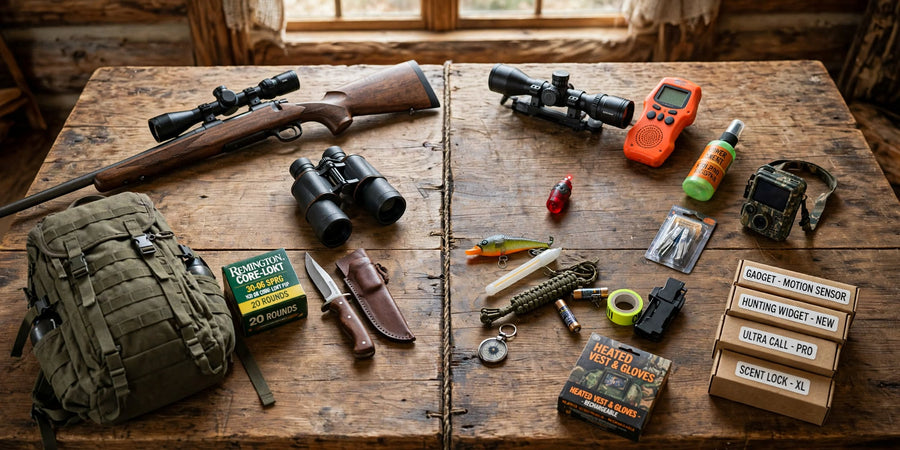
What counts as essential depends on the species, terrain, weather, trip duration, and hunting regulations. A hunter spending a morning on familiar private property has different equipment needs than someone traveling several miles into remote mountain terrain. The smartest approach is to prepare for the actual hunt and purchase specialized gear only when it serves a clear purpose.
Key Takeaways
- Essential hunting gear depends on the species, season, terrain, weather, and applicable regulations.
- Appropriate clothing, reliable footwear, navigation, and emergency supplies often deserve priority over expensive accessories.
- A premium rifle or optic is not a requirement for responsible hunting.
- Rangefinders, trail cameras, electronic calls, and other specialized equipment can be useful but are not universally necessary.
- Some inexpensive safety items provide more practical value than high-priced upgrades.
- Beginners should avoid purchasing specialized gear before understanding their actual hunting needs.
- The smartest hunting budget prioritizes safety, legal compliance, and dependable equipment.
Why Hunters Spend Too Much Money on Gear
Hunting equipment has become a substantial consumer market, offering everything from traditional rifles and basic field clothing to advanced optics, satellite communication devices, heated garments, and specialized backpacks. Many of these products serve legitimate purposes, but advertising can make optional equipment appear necessary for every hunter.
A first-time whitetail hunter may see an experienced backcountry hunter carrying thousands of dollars in equipment and assume that a similar setup is required for a morning on familiar private property. In reality, those situations demand very different levels of preparation. Terrain, weather, distance from assistance, hunting method, and trip duration should influence the equipment list far more than marketing claims.
The goal is not to avoid spending money on hunting gear. It is to spend money where it improves preparedness, comfort, safety, or practical usefulness. Understanding the difference between essential equipment and optional conveniences helps hunters avoid expensive purchases that add little value to their particular hunting experience.
Your Hunting License and Required Documents

Before discussing rifles, optics, boots, or backpacks, start with the legal requirements.
A hunting license or permit is among the most important items to address before entering the field.
Depending on the location and activity, hunters may also need species-specific tags, stamps, proof of hunter education, or landowner permission.
Why This Is Essential
Hunting regulations establish who may hunt, what species may be harvested, when hunting is permitted, and which methods and equipment are lawful.
Requirements can vary substantially between jurisdictions and seasons.
A hunter who has purchased excellent equipment but failed to obtain the appropriate authorization is not prepared for a lawful hunt.
What You Actually Need
Review the current regulations published by the relevant state wildlife agency.
Confirm license and permit requirements, legal seasons, bag limits, equipment restrictions, and reporting obligations.
Some jurisdictions allow digital documentation, while others impose additional requirements. Follow the rules applicable to your hunt.
Verdict: Essential.
A Suitable Hunting Firearm or Other Legal Hunting Equipment

For firearm hunters, an appropriate and properly functioning firearm is a central part of the equipment list.
However, that doesn't mean the firearm needs to be expensive.
A well-maintained hunting rifle or shotgun that meets legal requirements may be entirely suitable without premium finishes or elaborate accessories.
What Matters More Than Price
Important considerations include:
- Compliance with the hunting regulations for the intended species.
- Appropriate manufacturer-specified ammunition compatibility.
- Safe mechanical condition.
- Comfortable fit and manageable weight.
- Clear operating instructions and available manufacturer support.
- Proper transportation and secure storage arrangements.
A high retail price does not automatically establish superior suitability.
What You Probably Don't Need
Most hunters do not need to purchase a new firearm simply because a newer model offers different cosmetic features, premium materials, or additional customization options.
If existing equipment is lawful, safe, and appropriate for the intended activity, replacing it may offer little practical value.
Never use a firearm with suspected mechanical problems. Have it evaluated by a qualified gunsmith or the manufacturer.
Verdict: Appropriate legal hunting equipment is essential; premium upgrades are optional.
Proper Hunting Clothing

Clothing is one of the most underestimated parts of hunting preparation.
A hunter may spend considerable money on optics while overlooking the importance of staying dry, warm, and comfortable.
Weather exposure can become a serious concern, especially during long outings.
What You Actually Need
Choose clothing suitable for the expected temperature, precipitation, wind, and terrain.
Layering can provide flexibility when conditions change.
Depending on the hunt, useful clothing may include moisture-managing base layers, insulating garments, weather-resistant outerwear, gloves, and head protection.
Is Expensive Camouflage Necessary?
Not always.
Camouflage can be useful in certain hunting situations, but a premium pattern or brand is not a universal requirement.
Some hunters may be adequately equipped with ordinary outdoor clothing in appropriate colors and materials.
Visibility requirements take priority over camouflage preferences.
Many jurisdictions require fluorescent orange or pink clothing for particular hunting seasons or activities.
Always verify current rules.
For many hunters, the quality of a garment's weather protection matters more than the camouflage pattern printed on it. A dependable waterproof outer layer, suitable insulation, and clothing that allows comfortable movement may provide more practical value than an expensive camouflage system that offers little protection from cold, wind, or rain. The priority should be staying adequately protected in the expected conditions while meeting any legally required visibility standards.
Verdict: Weather-appropriate clothing is essential; premium camouflage is optional.
Dependable Hunting Boots

Footwear can make or break an outdoor experience.
Wet feet, poor traction, inadequate support, and uncomfortable boots can turn a manageable hunt into a difficult one.
Why Boots Matter
Hunting often involves uneven ground, mud, vegetation, rocks, and changing temperatures.
Footwear should suit the terrain and expected conditions.
A lightweight boot that works well on dry trails may be unsuitable for deep mud or prolonged cold-weather exposure.
Do You Need Premium Hunting Boots?
Not necessarily.
A comfortable, properly fitted boot with appropriate traction and weather protection can be more valuable than an expensive model selected for its brand name.
The best choice depends on how far you expect to travel and the conditions you'll encounter.
Verdict: Suitable footwear is essential; premium branding is optional.
Basic Navigation Equipment

Navigation is important even when hunting familiar land.
Changing weather, darkness, dense vegetation, and unexpected detours can make familiar surroundings difficult to recognize.
What You Actually Need
Depending on the location, useful navigation resources may include a map, compass, GPS device, or offline mapping application.
Electronic navigation can be convenient, but battery life, device damage, and signal limitations should be considered.
Remote hunts may justify additional backup navigation tools.
Is an Expensive GPS Necessary?
Not for every hunter.
A short outing on familiar, clearly marked property may not require the same navigation equipment as a multiday wilderness hunt.
However, relying exclusively on a phone without considering battery life or connectivity is a poor preparation strategy.
Verdict: Reliable navigation capability is essential; an expensive dedicated GPS is situational.
A First Aid Kit and Emergency Supplies

Safety equipment rarely receives the same attention as rifles, optics, and accessories.
Yet it may be among the most important items carried into the field.
What You Actually Need
A basic emergency kit should reflect the environment, trip duration, and the hunter's training.
Common considerations include:
- First aid supplies appropriate to your training.
- Personal medications.
- Drinking water and suitable food.
- A flashlight or headlamp.
- Emergency communication options.
- Weather protection.
- A whistle or other signaling device.
- Emergency contact information.
For remote outings, additional survival supplies and communication equipment may be warranted.
Hunters traveling alone or entering unfamiliar terrain should also consider leaving a trip plan with a trusted person. Sharing the general hunting location, expected return time, and an emergency contact arrangement can provide an additional layer of preparedness when communication becomes difficult.
Why Training Matters
Owning emergency equipment is not the same as knowing how to use it.
A recognized first aid course and appropriate outdoor safety education can provide more value than purchasing unfamiliar equipment.
Verdict: Essential, with contents matched to the hunt.
Binoculars: Useful, but Not Always Necessary

Binoculars are one of the more practical accessories available to hunters.
They can help with wildlife observation and identification without requiring the hunter to point a firearm at something simply to see it more clearly.
When Binoculars Make Sense
They can be especially useful in open terrain, when observing distant wildlife, or during hunts where identifying specific characteristics is important.
Optical quality, durability, weight, and weather resistance can influence price.
Do You Need Expensive Binoculars?
Not necessarily. Higher-priced binoculars may offer improved optical coatings, construction quality, weather resistance, or warranty support, but those differences are not equally valuable in every hunting environment. A dependable mid-priced pair may meet the needs of many recreational hunters without the expense of premium glass.
A basic, dependable pair may satisfy the needs of many recreational hunters.
Never use a firearm-mounted optic as a substitute for safe wildlife observation.
Verdict: Highly useful for many hunts; premium models are optional.
Rangefinders: Helpful Technology, Not a Universal Requirement

Rangefinders can provide distance information and are common accessories among hunters.
However, they are not necessary for every type of hunt.
When a Rangefinder May Be Useful
Hunters working in open terrain or participating in activities where distance assessment is important may appreciate the convenience.
Some devices also include additional environmental or calculation features.
When You Can Skip It
A rangefinder may offer limited value during certain short-distance or observation-focused outings.
Owning one also does not remove the need to understand personal limitations or evaluate whether a shot is safe and ethical.
Verdict: Situational accessory, not a universal essential.
Trail Cameras: Convenient but Optional

Trail cameras are popular among deer hunters and property managers.
They can provide information about wildlife activity when installed and used lawfully.
Why Hunters Buy Them
Trail cameras may help with general wildlife observation, habitat monitoring, and understanding activity on a property.
Some models offer cellular connectivity, remote notifications, or additional features.
Why You Might Not Need One
A trail camera does not guarantee a successful hunt.
It may also create ongoing costs for batteries, data plans, storage, or maintenance.
Certain jurisdictions restrict or regulate trail camera use, including cellular models, during particular hunting activities.
Check local wildlife regulations and property permissions before installing one.
Verdict: Optional convenience.
Hunting Backpacks: Buy for the Trip, Not the Marketing

A hunting backpack can be valuable, but the appropriate size and design depend on the outing.
A short hunt may require only a modest amount of equipment.
A remote, multiday trip may demand considerably more carrying capacity.
What Actually Matters
Look for a comfortable fit, suitable capacity, weather resistance, and practical organization.
Weight distribution becomes increasingly important when carrying supplies for extended periods.
What You Probably Don't Need
An oversized expedition pack is unnecessary for many short outings.
Extra compartments and specialized attachments may add cost and weight without providing useful benefits.
Verdict: A suitable way to carry essential supplies is important; a specialized premium pack is optional.
Essential vs. Optional Hunting Gear: Comparison Table
| Hunting Gear | Essential or Optional? | Main Consideration |
|---|---|---|
| Hunting license and required permits | Essential | Legal compliance |
| Appropriate legal hunting equipment | Essential for the chosen hunting method | Safe condition and suitability |
| Manufacturer-approved ammunition | Essential for firearm hunting | Correct cartridge and compatibility |
| Weather-appropriate clothing | Essential | Environmental protection |
| Suitable footwear | Essential | Comfort, traction, and terrain |
| Required visibility clothing | Essential where mandated | Current hunting regulations |
| Navigation capability | Essential | Avoiding disorientation |
| First aid and emergency supplies | Essential | Safety and preparedness |
| Water and food | Essential as conditions require | Hydration and energy |
| Binoculars | Useful; often recommended | Wildlife observation |
| Rangefinder | Optional or situational | Distance information |
| Trail camera | Optional | Wildlife monitoring |
| Specialized hunting backpack | Optional or situational | Trip length and carrying needs |
| Premium camouflage | Optional | Cost versus actual utility |
| Electronic game calls | Species- and regulation-dependent | Legality and intended use |
| Expensive rifle upgrades | Optional | Actual need and compatibility |
What Hunting Gear Is Worth Spending More Money On?
When hunting budgets are limited, the smartest purchases are not always the most exciting ones. Equipment that protects against cold, rain, difficult terrain, or unexpected emergencies can provide greater practical value than another electronic accessory or cosmetic upgrade.
The best places to spend more depend on the hunt, but dependable footwear, weather protection, suitable hunting equipment, and emergency preparedness are often more important than premium branding. The following comparison highlights where additional spending may be worthwhile and where hunters can often save without sacrificing essential functionality.
| Spending Priority | Why It May Be Worth the Investment | Where You Can Often Save |
|---|---|---|
| Footwear | Comfort and protection in demanding terrain | Avoid unnecessary premium branding |
| Weather protection | Helps manage cold, rain, and wind | Use versatile layers |
| Safety equipment | Supports emergency preparedness | Buy appropriate basics rather than elaborate kits |
| Navigation and communication | Important in unfamiliar or remote areas | Match equipment to actual remoteness |
| Appropriate hunting equipment | Safe, lawful, dependable use | Avoid cosmetic upgrades |
| Optics | Can support wildlife observation | Skip advanced features you don't need |
| Backpacks | Useful for carrying supplies comfortably | Choose capacity based on trip length |
These priorities can change significantly for remote, cold-weather, or specialized hunts.
How Hunting Gear Needs Change by Hunting Style
A useful hunting gear list should account for the activity rather than treating every hunt the same.
| Hunting Style | Common Priorities | Potentially Useful Extras |
|---|---|---|
| Whitetail deer hunting | Legal equipment, weather protection, visibility requirements, safety supplies | Binoculars, trail cameras |
| Upland bird hunting | Suitable footwear, field clothing, navigation, hydration | Specialized vest, game bag |
| Waterfowl hunting | Weather protection, legal equipment, wet-environment safety | Waders, decoys, calls |
| Backcountry big-game hunting | Navigation, communication, emergency supplies, appropriate carrying capacity | Satellite communicator, specialized pack |
| Small-game hunting | Legal equipment, comfortable clothing, basic outdoor supplies | Compact binoculars, lightweight bag |
Some items listed as extras may become essential for a particular method, terrain, or trip. Always evaluate the actual circumstances.
A Practical Hunting Gear Checklist
Use this checklist as a starting point, then adjust it for the species, terrain, weather, trip duration, and legal requirements.
Essential Preparation
- Current hunting license, permits, and required documentation
- Land-access permission where applicable
- Appropriate legal hunting equipment
- Correct manufacturer-approved ammunition, if firearm hunting
- Suitable footwear
- Weather-appropriate clothing
- Required high-visibility clothing
- Navigation resources
- Water and appropriate food
- First aid and emergency supplies
- Flashlight or headlamp
- Communication and emergency contact plan
- Secure firearm transportation and storage arrangements
Optional Equipment
- Binoculars
- Rangefinder
- Trail camera
- Specialized backpack
- Additional camouflage
- Electronic accessories permitted for the hunt
- Premium optics
- Specialized game-handling equipment appropriate to the activity
An item listed as optional may become necessary for particular hunting circumstances.
Final Thoughts
The hunting gear you actually need is usually less complicated than the hunting industry makes it seem.
A responsible hunter needs lawful and suitable equipment, appropriate clothing, dependable footwear, navigation, and basic emergency preparedness.
Everything beyond those essentials should be evaluated according to the actual hunt.
Premium optics, advanced electronics, specialized backpacks, and expensive camouflage can offer benefits, but they are not universal requirements.
For beginners, buying too much gear too early can waste money and create unnecessary complexity.
Experienced hunters can make the same mistake when purchasing accessories that solve problems they don't actually have.
The better strategy is to build a dependable foundation, understand your environment, and upgrade equipment only when a genuine need becomes clear.
Good hunting preparation isn't about owning the most gear. It's about having the right equipment, knowing its limitations, and being ready for the conditions you'll encounter.
Building a dependable hunting setup doesn't require purchasing every new accessory or upgrading equipment that already performs its intended job. The better approach is to prioritize safety, comfort, reliability, and the demands of your particular hunting environment.
Reviewing your equipment after each season can help identify genuine weaknesses without encouraging unnecessary spending. For a practical approach to maintaining your existing setup and preparing for future hunts, our guide on what to do after hunting season outlines the maintenance and evaluation tasks worth completing before putting everything away.

Sellier & Bellot .270 WIN 150gr SP
$24.99
at Pro Armory
Prices accurate at time of writing
Frequently Asked Questions
What Hunting Gear Do Beginners Actually Need?
Beginners generally need the appropriate licenses and permits, legal hunting equipment, weather-appropriate clothing, suitable footwear, navigation resources, and emergency supplies.
Additional requirements depend on the species, location, and hunting method.
Do You Need Expensive Gear to Hunt?
No. Many hunters participate responsibly with basic, dependable equipment.
Higher-priced products may offer additional features or materials, but cost alone does not determine suitability.
Is Expensive Camouflage Worth It?
That depends on the hunt.
Premium camouflage may offer useful construction or weather-related features, but many hunters can meet their needs with simpler clothing.
Always follow applicable visibility requirements.
Are Binoculars Necessary for Hunting?
Binoculars are highly useful for many types of hunting because they support wildlife observation without pointing a firearm at an unidentified object.
However, their necessity depends on the environment and hunting activity.
Do You Need a Rangefinder for Deer Hunting?
Not every deer hunter needs a rangefinder.
Its usefulness depends on terrain, the hunting method, and the circumstances.
A rangefinder does not replace sound judgment about safe and ethical shot selection.
Are Trail Cameras Worth Buying?
Trail cameras can be useful for wildlife monitoring and property observation.
However, they are optional for many hunters and may involve ongoing costs or regulatory restrictions.
What Should You Spend the Most Money on for Hunting?
Prioritize equipment that supports safety, legal compliance, weather protection, and dependable use.
Footwear, appropriate clothing, emergency supplies, and suitable hunting equipment often deserve attention before optional electronics or cosmetic upgrades.
Does Hunting Gear Need to Be Different for Every Species?
Often, yes.
Different species and hunting methods may require different equipment, clothing, accessories, and legal considerations.
Always consult current wildlife regulations and evaluate the conditions of the intended hunt.
About the Author
The ProArmory Editorial Team creates practical, research-informed content for firearm owners, ammunition shoppers, hunters, and shooting enthusiasts. Our articles focus on product education, buying considerations, firearm safety, and responsible ownership.
Our goal is to help readers understand their equipment options, recognize important safety considerations, and make informed purchasing decisions without exaggerated performance claims or unnecessary hype.
Disclaimer
This article is intended for general educational and informational purposes only. Hunting regulations, equipment requirements, licensing rules, and permitted hunting methods vary by jurisdiction, species, and season and may change over time.
Always consult current wildlife agency regulations, follow manufacturer instructions, obtain necessary permissions, and comply with applicable federal, state, and local laws. Use appropriate safety equipment and seek qualified instruction when necessary.
ProArmory does not guarantee the performance, safety, or suitability of any hunting product discussed in this article. Individual equipment needs depend on the intended activity, environmental conditions, and the user's experience.


