



Quick Answer
Some of the strongest current competition-pistol platforms come from CZ, Glock, Smith & Wesson, Walther, Canik, and manufacturers of double-stack 1911-style pistols. They approach competition from very different directions, using polymer, aluminum, and steel frames along with striker-fired, double-action/single-action, and single-action-only trigger systems.
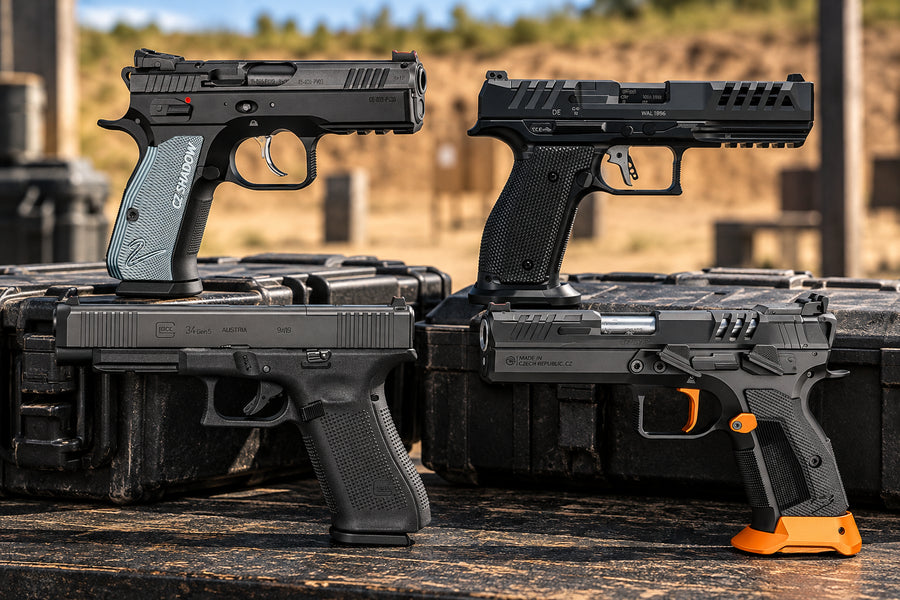
For shooters entering organized practical-pistol competition, the Glock 34 Gen5 MOS, Smith & Wesson Performance Center M&P9 M2.0 Competitor, Walther PDP Match, and Canik SFx Rival provide established factory starting points without immediately requiring a highly specialized race gun.
The CZ Shadow 2 moves into the heavier steel-frame DA/SA category and remains one of the most important benchmarks for practical shooting. At the more specialized end, the CZ TS 3 Orange and Staccato XL provide single-action-only platforms aimed much more directly at divisions such as USPSA Limited Optics and other competition formats that permit their configurations.
The most important buying decision, however, should happen before comparing brands.
Choose the competition organization and division first.
USPSA, IPSC, Steel Challenge, IDPA, and other organizations do not use identical equipment rules. Even divisions with similar names can have different barrel-length restrictions, approved-gun lists, trigger requirements, magazine limits, optic requirements, magwell rules, and firearm-size standards.
A pistol can therefore be an excellent competition gun and still be the wrong gun for the division a shooter intends to enter.
For a new competitor, the best value often comes from an established factory platform with available magazines, compatible holsters, manufacturer support, and enough remaining budget for ammunition and match experience. More specialized pistols become easier to justify once the shooter understands exactly which trigger system, weight, balance, optic arrangement, and control geometry they prefer.
Key Takeaways
- Select the competition division before selecting the pistol.
- USPSA Carry Optics and Limited Optics are currently the organization's two most active handgun divisions, making slide-mounted optics especially relevant to the modern market.
- The CZ Shadow 2 remains an important steel-frame DA/SA benchmark for Production- and optics-oriented practical competition.
- The Glock 34 Gen5 MOS provides a lighter polymer-frame option with an exceptionally mature magazine, holster, parts, and service ecosystem.
- The Smith & Wesson M&P9 M2.0 Competitor combines an aluminum frame, 5-inch barrel, Performance Center components, and factory optics capability at substantially less weight than the heavy steel platforms.
- The Walther PDP Match Steel Frame provides a 5-inch steel-frame striker-fired alternative weighing roughly 41 ounces.
- The polymer Canik SFx Rival remains one of the more accessible factory competition packages, while the Rival-S offers a heavier steel-frame variation for shooters who prefer additional mass.
- The CZ TS 3 Orange and Staccato XL are more specialized SAO platforms and make the strongest sense when the shooter deliberately wants divisions that permit their configuration.
- External magwells, optics, compensators, magazine length, trigger system, and other equipment can change division eligibility even when the underlying pistol is approved.
- Ammunition, magazines, optic, holster, belt, match fees, maintenance, and practice rounds should be included in the budget before spending heavily on the pistol itself.
Start With the Division, Not the Pistol
Competition-pistol shopping becomes much easier when the process starts with the rulebook.
Modern practical shooting contains numerous equipment divisions designed to group broadly similar firearms together. The divisions influence whether the pistol can use an optic, whether the optic must be mounted to the slide, whether a magwell is permitted, how long magazines can be, whether compensators or barrel ports are allowed, and which trigger systems qualify.
Those distinctions have become particularly important as factory competition pistols grow more specialized.
A heavy steel-frame striker-fired pistol with an external magwell may need one component removed before entering a restrictive division. A single-action-only pistol may be completely excluded from another. A compensated pistol that looks nearly identical to an uncompensated model can land in an entirely different category.
The first question should therefore be, “Where am I going to shoot this?”
USPSA's Current Competition Landscape
USPSA's current participation numbers show how significantly the sport has moved toward optics-equipped handguns.
Division activity used for planning the 2026 Nationals placed Carry Optics at approximately 37 percent of activity and Limited Optics at 28 percent. Open followed at 13 percent, while traditional Limited and Production were each around 5 percent.
That means nearly two-thirds of reported USPSA handgun activity between Carry Optics and Limited Optics alone centered on divisions requiring slide-mounted electronic sights.
This shift helps explain why nearly every major handgun manufacturer now offers competition-oriented optics-ready models.
USPSA Carry Optics
Carry Optics is one of the most important divisions for buyers considering striker-fired pistols such as the Glock 34 Gen5 MOS, M&P9 M2.0 Competitor, Walther PDP Match, and Canik SFx Rival.
Current rules require the optic to be attached directly to the slide between the rear of the slide and the ejection port rather than mounted to the frame.
Carry Optics currently uses a 141.25 mm maximum magazine length and a 59-ounce maximum handgun weight with the optic and empty magazine inserted.
Compensators and barrel ports are prohibited, although slide cuts are allowed under the current rules.
External magwells are also prohibited.
That last rule matters because several competition-oriented factory pistols include removable magwells. The firearm may be approved for Carry Optics while requiring the magwell to be removed.
USPSA Carry Optics Also Restricts Operating Systems
USPSA Carry Optics is not simply a catch-all division for every pistol equipped with a red dot.
Current rules permit double-action, double-action/single-action, and approved striker-fired or Safe Action-style pistols. Single-action-only pistols do not belong in Carry Optics.
This creates an important dividing line between pistols such as the Shadow 2, Glock 34, PDP Match, M&P Competitor, and SFx Rival on one side and pistols such as the TS 3 Orange or Staccato XL on the other.
USPSA Limited Optics
Limited Optics provides a much more natural home for modern single-action-only double-stack pistols fitted with slide-mounted red dots.
The division permits configurations that would not qualify for Carry Optics, including SAO platforms and external magwells, while still separating them from compensated Open guns.
The optic remains slide mounted, and compensators and barrel ports remain prohibited under the current rules.
This division has become particularly significant because it allows high-capacity 2011-style pistols and other specialized SAO designs to compete without automatically being pushed into Open solely because they use an optic.
The Staccato XL and CZ TS 3 Orange therefore make considerably more sense when viewed through Limited Optics than when compared directly with an ordinary Production pistol.
USPSA Production
Production remains relevant for shooters who prefer iron sights and firearms that appear on the USPSA approved Production handgun list.
Several pistols discussed in this guide are represented on that list, including the CZ Shadow 2 family, Glock 34, M&P9 M2.0 Competitor, Canik SFx Rival, and Walther PDP Steel Frame variants.
Approval does not mean every factory accessory can remain installed.
For example, current USPSA listings specifically identify several models as legal only without their removable magwells. Other dimensional, magazine, and configuration requirements continue to apply.
The approved-list entry is therefore the beginning of the eligibility check rather than the end.
IPSC Rules Are Different
International Practical Shooting Confederation divisions should not be treated as interchangeable with similarly named USPSA categories.
IPSC Production Optics currently requires an approved Production handgun fitted with a slide-mounted electronic sight. Single-action-only pistols are specifically prohibited.
The division also limits barrel length to 127 mm, or 5 inches, and magazines may not contain more than 15 rounds at the start signal.
External-hammer pistols begin with the hammer fully down, requiring the first attempted shot to be double action under normal loaded-start conditions.
Those rules create equipment differences that can surprise an American shooter accustomed to USPSA.
The Glock 34 Shows Why Rules Need to Be Checked
The Glock 34 Gen5 MOS provides a perfect example.
USPSA's current approved list includes the G34 Gen5 MOS for Production-based eligibility, subject to the applicable division rules.
The pistol's barrel is 135 mm, or 5.31 inches, however.
That exceeds IPSC Production Optics' current 127 mm barrel-length ceiling.
The same pistol can therefore be a familiar USPSA competition option while failing a basic dimensional requirement in an IPSC division with a similar sporting purpose.
IPSC Optics Is Different From Production Optics
IPSC's newer Optics division creates another route for specialized slide-optic pistols.
Optics division has no minimum trigger-pull requirement and no maximum handgun-size limit. It requires one optical or electronic sight mounted to the upper rear of the slide.
Compensators and barrel ports remain prohibited.
This ruleset helps explain the design of the CZ TS 3 Orange. CZ developed the pistol specifically with modern optics-oriented practical shooting in mind, and its SAO trigger, heavy steel construction, direct-mount optic system, and competition controls align much more naturally with Optics than with Production Optics.
Do Not Buy Based on the Division Name Alone
Carry Optics, Production Optics, Limited Optics, and Optics sound similar enough to create confusion.
They are not the same thing.
A buyer should identify the organization, exact division, current rulebook version, and firearm configuration before making a purchase specifically for competition.
What Makes a Good Competition Pistol?
A good competition pistol needs more than a long barrel and a lighter trigger.
Reliable function comes first. The pistol needs to feed, fire, extract, and cycle consistently with the ammunition the shooter plans to use.
Ergonomics matter because the shooter will repeat the same draw, grip, transitions, reloads, and manipulations hundreds or thousands of times during practice and matches.
The trigger needs to provide predictable operation appropriate to both the division and the shooter.
Sights or optics need to remain mechanically secure and easily serviceable.
Magazine availability matters because competition consumes magazines as working equipment rather than treating them as occasional accessories.
Finally, parts and manufacturer support become increasingly important as round counts rise.
Mechanical Accuracy Is Only Part of Competition Performance
Competition pistols need sufficient accuracy, but practical shooting does not occur from a machine rest.
A pistol that produces exceptionally small groups can still be difficult to shoot quickly if the controls do not fit the owner's hands or the weight distribution feels awkward during transitions.
Conversely, a platform that produces modestly larger bench groups may still deliver stronger match performance because the shooter can operate it faster and more consistently.
The complete shooting system matters more than one accuracy number.
Popular Competition Pistol Platforms Compared
| Platform | Trigger / Action | Barrel | Approx. Weight | Standard Capacity |
|---|---|---|---|---|
| CZ Shadow 2 | DA/SA, hammer fired | Approx. 4.9 in. | Approx. 47 oz. | Configuration dependent, commonly 17–19 rounds |
| Glock 34 Gen5 MOS | Safe Action / striker fired | 5.31 in. | 26.21 oz. with empty magazine | 17 rounds |
| S&W Performance Center M&P9 M2.0 Competitor | Striker fired | 5 in. | Approx. 29.3 oz. without magwell | 17 rounds |
| Walther PDP Match Steel Frame | Striker fired | 5 in. | Approx. 41 oz. | 18 / 20 rounds |
| Canik SFx Rival | Striker fired | 5 in. | 29.5 oz. | 18 rounds |
| CZ TS 3 Orange | SAO, hammer fired | Approx. 5.24 in. | Approx. 51.1 oz. | 20+1 |
| Staccato XL | SAO, hammer fired | 5.4 in. | Approx. 38 oz. | Magazine dependent, commonly 17 / 20 rounds |
These figures are useful for understanding the platforms but should not be used as a substitute for checking the exact SKU. Optics, magazine base pads, magwells, different generations, and jurisdictional restrictions can alter the finished configuration.
CZ Shadow 2: The Steel-Frame DA/SA Benchmark

The CZ Shadow 2 remains one of the most recognizable practical-shooting pistols in the world.
Its full-size steel frame places considerable mass low in the pistol, while the traditional CZ slide-inside-frame architecture creates a distinctly different handling experience from a lighter polymer striker-fired pistol.
The approximately 4.9-inch barrel, long dust cover, competition-oriented sights, aggressively textured frame surfaces, and DA/SA trigger system were developed around practical shooting rather than concealed carry.
USPSA currently lists the Shadow 2 family, including several variants, among approved Production firearms when configured according to the applicable rules.
The DA/SA Trigger Changes the Shooting Experience
The Shadow 2's trigger is fundamentally different from the Glock, Walther, Smith & Wesson, and Canik striker-fired systems.
Under divisions requiring a hammer-down start, the first shot is fired double action, followed by lighter single-action pulls after the slide cycles.
That creates two trigger conditions the shooter needs to understand and practice.
Some competitors value the extremely clean single-action phase enough to accept the more demanding first pull. Others prefer the identical trigger behavior of a striker-fired system on every shot.
Weight Is One of the Shadow 2's Defining Characteristics
At roughly 47 ounces depending on configuration and measurement convention, the Shadow 2 is dramatically heavier than a Glock 34 or polymer Canik Rival.
The additional mass can make recoil movement feel different and can contribute to a stable sight picture for shooters who prefer heavy pistols.
That same mass must also be accelerated and stopped during transitions among targets.
Heavy is therefore a handling characteristic, not an automatic performance upgrade.
Shadow 2 Optics Configurations
CZ has expanded the Shadow 2 family with optics-ready versions, allowing the platform to participate in divisions built around slide-mounted electronic sights when the exact firearm and configuration comply with the rules.
Buyers should distinguish a factory optics-ready Shadow 2 from an iron-sight model rather than assuming every pistol in the family includes the same slide interface.
Glock 34 Gen5 MOS: The Familiar Lightweight Option

The Glock 34 Gen5 MOS takes almost the opposite approach.
It uses a polymer frame and extended slide around Glock's familiar striker-fired Safe Action system. Current factory specifications list a 5.31-inch barrel, 17-round standard magazine, and weight of approximately 26.21 ounces with an empty magazine.
That makes the G34 substantially lighter than the Shadow 2, PDP Match Steel Frame, or TS 3 Orange.
The Glock Ecosystem Is a Major Competitive Advantage
The G34's most important feature may be the enormous market surrounding it.
Factory and aftermarket magazines, sights, replacement parts, holsters, springs, optics hardware, and gunsmithing knowledge are widely available.
A competitor who travels to matches is unlikely to discover that basic replacement parts for the platform are obscure.
That logistical simplicity has real value over several seasons.
The Gen5 Marksman Barrel and MOS System
The current Gen5 model uses Glock's Marksman Barrel and MOS optics interface.
The longer slide also provides a longer iron-sight radius when the pistol is used without an optic.
The MOS system gives the shooter factory optics capability without requiring the slide to be custom milled, although the exact mounting plate or interface still needs to match the chosen optic.
The G34 Is Light Compared With Modern Steel Competition Pistols
A shooter moving from a Shadow 2 or PDP Match Steel Frame to a G34 will notice the mass difference immediately.
Some competitors appreciate the lighter pistol during aggressive transitions. Others prefer the sensation of a heavier frame during recoil.
This is one area where handling the pistols can be far more informative than comparing specification tables.
Smith & Wesson M&P9 M2.0 Competitor: The Middleweight Metal Option

The Performance Center M&P9 M2.0 Competitor occupies an interesting middle ground.
Its frame is aluminum rather than polymer or steel. That gives it the rigid feel and appearance of a metal-frame pistol without pushing its weight into Shadow 2 territory.
The 5-inch barrel, lightened slide, flat-faced Performance Center trigger, oversized magazine release, flared magwell, and C.O.R.E. optics interface make it a true factory competition configuration rather than simply a standard M&P with a longer barrel.
Do Not Confuse Metal With Heavy
The Competitor weighs approximately 29.3 ounces in the USPSA-listed configuration without the magwell.
That is only a few ounces heavier than the Glock 34 and considerably lighter than the Walther PDP Match Steel Frame.
This makes the M&P especially interesting for a shooter who wants metal-frame rigidity without a pistol weighing nearly three pounds.
The Magwell Creates an Important Rules Lesson
Smith & Wesson equips the Competitor with a factory magwell because it is useful in competition formats that permit one.
USPSA's current approved list specifically identifies the M&P9 M2.0 Competitor as approved for Production-based use without the magwell.
The pistol itself is not the entire rules question. Its installed configuration determines eligibility.
C.O.R.E. Optics Compatibility
The factory C.O.R.E. system allows compatible electronic sights to be installed using the manufacturer's plate architecture.
As with every plate-based system, the owner should use the correct hardware and verify mounting according to Smith & Wesson and optic-manufacturer specifications.
Walther PDP Match Steel Frame: Heavy Striker-Fired Alternative

The Walther PDP Match Steel Frame combines a striker-fired operating system with a heavy precision-machined steel frame.
That combination places it in a relatively unusual category.
Current Walther specifications list a 5-inch barrel, approximately 41-ounce empty weight, Dynamic Performance Trigger, and compatibility with 18- and 20-round magazines depending on configuration.
The factory package also includes competition-oriented features such as a removable magwell, optics-ready slide, lightening cuts, and aggressive grip treatment.
It Handles Nothing Like the Polymer PDP
Walther also offers lighter polymer PDP Match configurations.
The steel-frame gun adds roughly a pound of frame mass compared with the polymer version.
That dramatically changes how the pistol balances and moves.
Buyers interested in the PDP Match name should therefore decide which frame material they actually want before comparing prices.
The Dynamic Performance Trigger
Walther's Dynamic Performance Trigger uses a flat aluminum trigger shoe and a short competition-oriented action.
Published pull weight is not unusually light compared with some dedicated hammer-fired race guns, but trigger quality involves more than the scale reading alone.
Travel, break characteristics, reset, trigger geometry, and consistency all influence how the system feels in use.
Production and Carry Optics Configuration
USPSA currently lists PDP Steel Frame variants as approved while specifically noting that the magwell must be removed for applicable Production-based configurations.
That is another reason buyers should avoid assuming the pistol must remain exactly as it came from the box in every division.
Canik SFx Rival: Strong Feature Value

The polymer-frame Canik SFx Rival remains one of the easiest factory competition pistols to understand from a value perspective.
It was designed around competition features from the beginning and includes a 5-inch barrel, approximately 29.5-ounce weight, 18-round magazines, adjustable sights, optics mounting hardware, a flat aluminum trigger, interchangeable backstraps, and a removable magwell.
Many of those features would be separate purchases on a more basic service pistol.
The Rival Makes a Strong First-Pistol Argument
A new competitor can acquire a complete optics-capable sporting configuration without immediately spending steel-frame or 2011 money.
That can leave significantly more budget available for magazines, ammunition, match fees, a belt, holster, and optic.
Those expenses often have more influence on how frequently someone actually competes than the difference between two pistol frames.
The Rival-S Changes the Equation
Canik later expanded the family with the Rival-S, which replaces the polymer frame with steel and increases empty weight into the low-40-ounce range.
The two pistols therefore serve different preferences despite sharing the Rival name.
The original polymer model appeals to shooters who want lower cost and lighter handling, while the Rival-S competes much more directly with steel-frame pistols such as the Walther and CZ.
Current USPSA Approval
The SFx Rival and Rival-S are both represented on USPSA's current approved Production handgun list.
External magwell and configuration rules still need to be followed according to the division.
CZ TS 3 Orange: A Dedicated SAO Competition Tool

The CZ TS 3 Orange moves beyond the broadly accessible competition-pistol category into specialized sporting equipment.
Introduced in 2026, the pistol uses a large steel frame, heavy cold-hammer-forged bull barrel, single-action-only trigger, competition magwell, adjustable controls, and direct-mount optics architecture.
CZ lists the pistol at roughly 51 ounces with a 20+1 standard capacity and an approximately 1.3-pound competition trigger.
Its U.S. MSRP of $3,549 reinforces the point: this is not a slightly upgraded general-purpose CZ.
The Direct-Mount Optic System Is a Major Change
The TS 3 Orange supports several major red-dot footprints directly through CZ's factory mounting architecture, including RMR, RMSc, DeltaPoint Pro, and Holosun K patterns.
The design eliminates a conventional adapter plate for supported optics and places optics integration at the center of the platform rather than treating it as an afterthought.
The Trigger Defines the Role
An approximately 1.3-pound single-action trigger is far outside the normal specification range of general-purpose striker-fired service pistols.
That makes perfect sense on specialized sporting equipment operated by experienced competitors under structured match conditions.
It also explains why comparing the TS 3 directly with a Glock 34 solely on price or trigger weight misses the point.
Limited Optics and IPSC Optics Make More Sense Than Carry Optics
The TS 3 Orange's single-action-only operation excludes it from USPSA Carry Optics and IPSC Production Optics.
Its natural environment is a division that permits its SAO operating system and specialized controls, such as USPSA Limited Optics or IPSC Optics when configured in compliance with the applicable rules.
CZ has already demonstrated the pistol at high-level competition, including 2026 IPSC Optics victories with Eric Grauffel.
Staccato XL: The Factory 2011 Route

The Staccato XL approaches premium competition from the double-stack 1911 side of the market.
It uses a single-action hammer-fired operating system, long 5.4-inch bull barrel, large magwell, ambidextrous thumb safeties, high-capacity magazines, and a competition-oriented trigger.
Published specifications place the pistol around 38 ounces, while commonly used Staccato magazines provide 17- and 20-round capacities.
The 2011-Style Trigger Is a Major Part of the Appeal
The short-travel single-action trigger remains one of the defining characteristics of the 1911-derived architecture.
Staccato has historically specified the XL around a roughly 2.5-pound competition trigger.
That gives it a completely different trigger feel from a striker-fired Glock, M&P, Canik, or PDP.
Shooters considering the XL should therefore decide whether the SAO 2011 operating system is actually something they want rather than buying the pistol simply because it occupies a premium category.
Optics Require the Correct Staccato Mounting System
Optics-ready Staccato XL configurations use the company's Dawson Precision optic mounting architecture.
Different optic footprints can require different mounting kits.
Current Staccato accessory listings continue to identify the XL as compatible with several DPO mounting systems, including RMR/SRO and DeltaPoint Pro arrangements.
The XL Is a Natural Limited Optics Candidate
An uncompensated XL with a slide-mounted optic fits the general concept that made USPSA Limited Optics attractive to 2011 shooters.
The shooter still needs to verify magazine length, optic placement, and final configuration against the current rules.
Adding a compensator or making another major configuration change can alter the division entirely.
Competition Platform Comparison by Design Philosophy
| Platform | Frame | Trigger System | General Character |
|---|---|---|---|
| CZ Shadow 2 | Steel | DA/SA | Heavy traditional practical-shooting platform |
| Glock 34 Gen5 MOS | Polymer | Striker / Safe Action | Light, simple, highly supported |
| S&W M&P9 M2.0 Competitor | Aluminum | Striker fired | Middleweight metal-frame option |
| Walther PDP Match Steel Frame | Steel | Striker fired | Heavy striker-fired competition pistol |
| Canik SFx Rival | Polymer | Striker fired | Feature-rich value platform |
| CZ TS 3 Orange | Steel | SAO | Specialized factory race-oriented pistol |
| Staccato XL | 2011-style modular frame/grip architecture | SAO | Premium double-stack 1911-style competition platform |
Steel Frame vs. Polymer Frame
Frame material influences weight and balance, but it should not be treated as an automatic quality hierarchy.
Steel pistols such as the Shadow 2, PDP Match Steel Frame, and TS 3 Orange place substantial mass beneath the slide. Some shooters find that the heavier platform remains visually calmer during recoil and feels more settled during rapid strings.
Polymer pistols such as the Glock 34 and standard SFx Rival are much lighter.
The reduced weight can make them easier to start and stop during wide transitions and easier to carry through a long day of stages.
The shooter ultimately needs to decide which behavior they prefer.
Aluminum Is a Legitimate Middle Ground
The M&P Competitor demonstrates why metal-frame should not be treated as synonymous with heavyweight.
Aluminum provides more rigidity than a conventional polymer grip frame while keeping total pistol weight much lower than a steel Shadow 2 or TS 3 Orange.
For shooters who dislike both extremes, that can be an attractive compromise.
Weight Distribution Matters More Than Total Weight Alone
Two 40-ounce pistols can feel completely different.
A heavy frame places mass below the bore. A long bull barrel adds mass farther forward. A large optic adds weight above the slide. Magazine extensions move weight into the grip.
The location of the mass influences transition behavior and recoil sensation.
This is why catalog weight is useful for narrowing choices but cannot tell the shooter how the pistol actually balances.
Striker-Fired vs. DA/SA vs. SAO
Trigger-system choice influences both the shooting experience and division eligibility.
Striker-fired pistols provide a broadly consistent trigger cycle from shot to shot. The Glock, M&P, Walther, and Canik examples all use variations of this concept.
The CZ Shadow 2 uses DA/SA, creating a heavier first pull under hammer-down start conditions followed by lighter single-action pulls.
The TS 3 Orange and Staccato XL use single-action-only triggers and are carried or staged according to the applicable safety and match rules.
None is universally superior.
A Lighter Trigger Is Not Automatically a Faster Trigger
Trigger weight receives disproportionate attention in competition-pistol discussions.
A light trigger can reduce the force required to fire the shot, but the shooter still needs to manage take-up, break, overtravel, reset, finger placement, and grip consistency.
A heavier trigger with exceptionally predictable characteristics may produce better results for one shooter than a lighter trigger they do not control well.
Division rules may also determine whether an extremely light SAO system is even eligible.
Optics-Ready No Longer Means One Thing
The current competition market contains several different approaches to mounting red-dot sights.
Glock uses MOS. Smith & Wesson uses C.O.R.E. Walther uses its PDP mounting architecture. Canik supplies a selection of interface plates. Staccato uses its Dawson Precision optic system. CZ's TS 3 Orange takes a direct-mount multi-footprint approach.
Each solution has different hardware, mounting height, screw requirements, and optic compatibility.
The words optics ready only mean the manufacturer designed a route to mounting an optic.
They do not mean every optic bolts directly to every slide.
Direct Mount vs. Adapter Plate
A direct-mount design can reduce the number of components between the optic and slide and may allow the sight to sit lower.
A plate system can provide broader flexibility if the manufacturer supports numerous footprints.
Neither system automatically guarantees better zero retention.
Machining quality, hardware, screw engagement, correct torque, thread condition, and optic construction all contribute to mounting reliability.
Iron Sights Are Still Relevant
Optics divisions may dominate current USPSA participation, but iron-sight divisions have not disappeared.
Some shooters simply prefer irons. Others use Production, Limited, Steel Challenge, IDPA, or another format where traditional sights remain relevant.
A red dot should therefore be chosen because it aligns with the intended division and shooter preference rather than because the market has declared irons obsolete.
Magazines Are Part of the Competition Platform
Competition pistols consume magazines as working equipment.
A shooter may need several for a match and additional magazines for practice or backup.
Cost, reliability, replacement springs, followers, base pads, and availability should therefore be considered before purchasing the pistol.
A platform with inexpensive and widely available magazines can save substantial money over several seasons.
Magazine Capacity Is Not the Same as Match Capacity
A pistol may ship with a 20-round magazine while the division limits how many rounds can be loaded at the start or how long the magazine can be.
IPSC Production Optics currently provides a clear example by limiting accessible magazines to 15 rounds at the start signal.
USPSA Carry Optics instead uses a maximum magazine-length measurement without a general ammunition-capacity ceiling.
Two nearly identical pistols can therefore carry different practical stage capacities depending on the organization.
Magazine Length Needs to Be Measured, Not Guessed
Extended base pads are common in practical shooting, but an extension advertised with a particular round count is not automatically legal.
Division rules measure the physical magazine.
The competitor is responsible for making sure the actual equipment remains within the current dimensional standard.
Ammunition Cost Should Influence the Pistol Budget
Practical competition rewards repetition.
A shooter who purchases a $3,500 pistol but can only afford a few hundred rounds of practice may progress more slowly than someone using a $700 pistol and training consistently.
The correct equipment budget therefore includes ammunition for practice as well as match use.
For most of the platforms discussed here, 9mm keeps ammunition cost and recoil relatively manageable compared with larger centerfire handgun cartridges.
Power Factor Still Matters
Practical-shooting organizations use power factor in various divisions to classify ammunition performance and scoring.
The exact formula and minimums should be checked in the current rulebook.
Most of the 9mm pistols in this guide are naturally associated with Minor-scored or Minor-only configurations rather than being purchased specifically to chase traditional Major scoring.
The cartridge therefore needs to function reliably and meet the applicable match requirement rather than simply feel soft in casual testing.
Factory Ammunition Can Be Perfectly Suitable
Competitors do not need to handload simply to participate.
Reliable commercial 9mm that meets the organization's requirements can be completely appropriate for local and major matches.
Handloading becomes attractive to some advanced shooters because it provides additional control over power factor, projectile choice, recoil characteristics, and cost.
It is another layer of equipment management rather than a prerequisite for beginning the sport.
Holster Compatibility Is Easy to Overlook
The pistol needs a legal holster appropriate to the division.
Optics, thumb rests, frame dimensions, slide length, weapon lights, and large magwells can all affect compatibility.
A holster designed for a standard Shadow 2 may not necessarily accommodate another CZ competition model. A long Staccato XL may require equipment different from a shorter 2011-style pistol.
Holster cost and availability should be checked before the gun arrives.
Competition Belts and Magazine Pouches Add More Cost
A complete practical-shooting setup can include a rigid belt system, holster, several magazine pouches, magazines, optic, batteries, ammunition, eye and ear protection, range bag, and maintenance supplies.
Those purchases can easily add hundreds of dollars beyond the firearm.
This is another reason new competitors should avoid spending the full budget on the pistol alone.
How Much Should a New Competitor Spend?
There is no minimum price required to begin competing effectively.
If a reliable pistol the shooter already owns meets the division rules, using it for several matches can be more educational than immediately purchasing a dedicated competition gun.
The shooter will quickly learn whether they prefer optics, iron sights, heavy guns, lighter guns, DA/SA triggers, striker triggers, or SAO systems.
That knowledge makes the eventual purchase much more informed.
The $600-to-$1,200 Range Can Cover a Lot of Ground
Platforms such as the Glock 34 and Canik SFx Rival demonstrate how much competition capability is available without entering premium pricing.
Depending on current dealer pricing, various M&P and polymer-frame PDP competition models can also occupy this general territory.
Money saved compared with a premium pistol can fund several magazines, a quality optic, holster, belt, ammunition, and multiple match entries.
The $1,000-to-$2,000 Range Adds More Factory Specialization
Steel-frame Walthers, higher-specification CZ models, and other premium factory competition pistols begin introducing more mass, specialized triggers, higher-cost machining, and more elaborate factory configurations.
These products can make sense when the shooter already knows those features match their preferences.
The $3,000-Plus Category Is Specialized Equipment
The TS 3 Orange and Staccato XL belong in a very different purchasing discussion from an entry-level competition pistol.
The buyer is paying for specialized construction, trigger systems, fitting, machining, and competition-specific architecture.
That premium can be rational for someone who would otherwise spend similar money customizing another platform.
For someone attending their first local match, it is rarely necessary.
Factory Competition Pistol vs. Modified Service Pistol
A factory competition pistol offers the advantage of receiving major components as one manufacturer-supported package.
The trigger, barrel, sights, optic system, controls, and slide configuration were selected together.
Warranty responsibility is generally clearer, and division eligibility can be easier to research when the firearm exists as a documented model.
A standard service pistol can provide a cheaper starting point and may already qualify for the intended division.
Modification Can Become Expensive Quickly
A shooter can begin with an inexpensive handgun and gradually add a trigger, optic cut, sights, grip work, magwell, springs, controls, and other components.
By the end of the project, the finished pistol may cost as much as a purpose-built factory model.
That does not make modification a mistake. It simply means the starting price should not be confused with the final system cost.
Modification Can Also Change Division Eligibility
Competition divisions often distinguish between permitted and prohibited modifications.
An aftermarket component that improves the pistol mechanically may simultaneously make it illegal for the division the shooter intended to enter.
Read the rulebook before installing competition-specific modifications, not afterward.
Reliability Should Come Before Modification
A factory pistol that runs consistently should not be modified simply because competition shooters are expected to modify things.
Every change introduces another variable.
New competitors often benefit from shooting the firearm enough to identify a genuine limitation before replacing components.
Which Pistol Makes the Most Sense for a Beginner?
The Glock 34 and Canik SFx Rival make especially easy first-match arguments because they offer competition-oriented dimensions without premium steel-frame pricing.
The M&P Competitor is attractive to someone who specifically wants an aluminum-frame striker-fired pistol, while the PDP Match family gives buyers a choice between lighter polymer and much heavier steel configurations.
An existing division-legal full-size pistol may be an even better starting point.
Which Pistol Makes Sense for a Heavy-Gun Shooter?
The CZ Shadow 2 and Walther PDP Match Steel Frame are the obvious comparison.
The Shadow provides DA/SA operation and CZ's long-established competition geometry.
The Walther provides a striker-fired trigger and a very heavy steel frame.
The TS 3 Orange moves beyond both into a dedicated single-action specialty platform.
Which Pistol Makes Sense for a Lightweight-Gun Shooter?
The Glock 34 and polymer Canik SFx Rival remain significantly lighter than the major steel-frame options.
The M&P Competitor sits between the two camps and may appeal to shooters who want a metal frame without carrying more than 40 ounces of unloaded pistol.
Which Pistol Makes Sense for Carry Optics?
The Glock 34 Gen5 MOS, Shadow 2 optics-ready configurations, M&P Competitor, PDP Match or PDP Steel Frame variants, and Canik Rival family all deserve consideration when properly configured and currently approved.
The exact firearm needs to satisfy the USPSA approved list and Carry Optics equipment rules.
External magwells and other prohibited components need to be removed where required.
Which Pistol Makes Sense for Limited Optics?
The Staccato XL and CZ TS 3 Orange represent the more specialized side of the category.
Both use single-action-only triggers, high-capacity magazines, factory magwells, and optics-capable configurations.
The CZ offers an extremely heavy steel chassis and an unusually light trigger. The Staccato offers the familiar 2011-style trigger and grip architecture.
Neither needs to be the first pistol someone buys to enter Limited Optics.
Which Pistol Makes Sense for IPSC Production or Production Optics?
The answer requires more caution because IPSC uses an approved Production handgun list and additional dimensional and trigger requirements.
The Shadow 2 is historically and currently closely associated with these divisions.
Other pistols can qualify when approved and properly configured, but barrel length alone excludes certain models that Americans commonly associate with Production shooting.
The 5.31-inch Glock 34 is the obvious example of why the exact IPSC rules need to be checked.
Common Mistake: Buying the Gun Before Reading the Rules
This is the most expensive mistake in competition-pistol shopping.
A shooter sees a competition model, assumes it qualifies for the intended division, and discovers after the purchase that the trigger system, barrel length, magwell, compensator, or optic arrangement pushes it somewhere else.
Ten minutes with the current rulebook can prevent a four-figure mistake.
Common Mistake: Assuming “Competition” Means Every Division
Competition is a market category, not a rulebook classification.
A manufacturer can accurately describe a pistol as a competition firearm even when it is legal in only some divisions.
The TS 3 Orange is unquestionably a competition pistol but is not a Carry Optics or Production Optics pistol.
Common Mistake: Shopping Only by Trigger Weight
A 1.3-pound SAO trigger may sound automatically superior to a five-pound striker trigger.
That conclusion ignores division eligibility, shooter preference, safety architecture, trigger travel, reset, grip, and the rest of the firearm.
The most useful trigger is the one the shooter can operate predictably and legally in the intended sport.
Common Mistake: Assuming Steel Is Always Better
Steel adds mass.
Some shooters perform extremely well with heavy steel pistols. Others prefer lighter polymer guns because they transition differently and resemble the platforms they already use.
Neither preference is wrong.
Common Mistake: Ignoring Magazine Cost
One inexpensive pistol paired with several expensive magazines can close the price gap with another platform quickly.
Competition also places far more wear on magazines than casual ownership does.
Include replacements, springs, followers, and base pads in the long-term budget.
Common Mistake: Spending Everything on the Gun
The gun does not pay match fees.
It does not buy ammunition.
It does not provide a holster, belt, optic, magazines, eye protection, hearing protection, or practice.
A balanced competition budget usually produces more useful experience than maximizing pistol price.
Common Mistake: Changing Equipment Constantly
Competition makes equipment experimentation tempting.
One shooter changes recoil springs every few weeks, another buys a new optic, and another switches platforms because a top competitor won with something different.
Constantly changing equipment can make it difficult to separate skill problems from equipment problems.
Familiarity has competitive value.
Competition Success Still Comes From the Shooter
A premium pistol can provide excellent ergonomics, a better trigger, lower optic mounting, greater mass, or highly refined manufacturing.
It cannot provide stage planning, visual processing, transitions, movement, grip consistency, or match experience.
A skilled shooter with a basic division-legal pistol can outperform an inexperienced shooter carrying far more expensive equipment.
The pistol should support skill development rather than become a substitute for it.
Buyer Profile Comparison
| Buyer | Platforms Worth Comparing | Main Question |
|---|---|---|
| New practical-shooting competitor | Glock 34, Canik SFx Rival, existing eligible service pistol | Can I enter the sport without consuming the entire budget? |
| Carry Optics shooter | Glock 34 MOS, Shadow 2 OR, M&P Competitor, PDP Match, SFx Rival | Does the exact configuration meet current Carry Optics rules? |
| Heavy steel-frame buyer | CZ Shadow 2, Walther PDP Match Steel Frame | Do I prefer DA/SA or striker-fired operation? |
| Metal-frame buyer wanting less weight | M&P9 M2.0 Competitor | Do I want aluminum rather than steel? |
| Value-focused competition buyer | Canik SFx Rival | Can the factory package cover most equipment needs without immediate upgrades? |
| Dedicated SAO optics competitor | CZ TS 3 Orange, Staccato XL | Do I actually want the specialized Limited Optics / Optics-style platform? |
| Cross-discipline shooter | Established broadly supported factory platform | Which pistol qualifies in the largest number of events I actually plan to shoot? |
What Features Are Actually Worth Paying For?
Features deserve extra money when they solve a problem the shooter already understands.
A better optic interface is valuable when the shooter competes with a red dot.
A more ergonomic magazine release is valuable when the factory control prevents efficient operation.
A heavy steel frame is valuable when the shooter knows they prefer a heavy pistol.
A premium SAO trigger is valuable when the chosen division permits it and the shooter prefers that system.
The feature becomes poor value when it exists primarily because the specification sounds impressive.
Factory Optics Capability Is Increasingly Worth Paying For
With Carry Optics and Limited Optics representing such a large share of current USPSA participation, a factory optics-ready pistol provides more practical flexibility than it did several years ago.
A shooter can still choose irons, but purchasing a slide already designed around an approved mounting system can avoid later machining if optics competition becomes the goal.
Good Ergonomics Are Worth More Than Cosmetic Machining
Competition requires thousands of repeated interactions with the same grip and controls.
The shape of the frame, trigger reach, grip texture, slide-stop position, safety placement, and magazine-release access can therefore matter more than decorative slide windows or unusual finishes.
Manufacturer Support Is Worth Paying For
High round counts eventually expose wear components.
A platform backed by available magazines, springs, extractors, recoil assemblies, sights, optic hardware, and service support is easier to keep competing over several seasons.
That may be worth more than a small theoretical performance advantage from a difficult-to-support platform.
Final Thoughts
The modern competition-pistol market is broad enough that asking for the single best pistol no longer produces a useful answer.
The better question is which platform fits the competition division, shooter, and budget.
The Glock 34 Gen5 MOS remains one of the simplest starting points. It is relatively light, widely supported, optics capable, and familiar to an enormous number of shooters.
The Canik SFx Rival offers a similarly accessible route with a more competition-focused factory equipment package and a notably aggressive value proposition.
The Smith & Wesson M&P9 M2.0 Competitor provides a useful middle ground by combining a metal frame with a weight much closer to a polymer pistol than a Shadow 2.
The Walther PDP Match Steel Frame moves heavily in the other direction, pairing a striker-fired trigger with roughly 41 ounces of steel-frame mass.
The CZ Shadow 2 remains the DA/SA benchmark. Its success in practical shooting, heavy steel construction, mature support ecosystem, and current division approval keep it highly relevant even as the market shifts toward optics.
The TS 3 Orange and Staccato XL belong to a different tier of specialization.
Both are premium single-action-only competition pistols. The TS 3 Orange uses an all-steel Tactical Sports architecture with direct-mount optics and an extremely light factory trigger. The Staccato XL approaches the problem through the double-stack 1911-style 2011 system with its own distinctive trigger and grip geometry.
Those pistols can be outstanding choices when the shooter has already decided that their operating system and division fit are desirable.
They are not prerequisites for becoming competitive.
The current USPSA landscape makes optics capability especially important. Carry Optics and Limited Optics now represent the two largest participation categories, so red-dot compatibility deserves serious consideration even for someone buying their first dedicated competition pistol.
At the same time, the rules demonstrate why optics ready is not enough information.
Carry Optics restricts operating systems and external magwells. Limited Optics opens the door to SAO pistols but still prohibits compensators and barrel ports. IPSC Production Optics adds its own approved-list, trigger, capacity, and barrel-length requirements. IPSC Optics uses another set of standards.
The pistol has to fit the rulebook before it can fit the shooter.
After that, ergonomics should take over.
Some competitors prefer a 26-ounce Glock. Others want a 47-ounce Shadow 2 or 51-ounce TS 3 Orange. Some want the same striker pull every shot. Others prefer DA/SA or the short break of a dedicated SAO platform.
Those choices cannot be settled from a specification table.
Finally, the handgun is only one part of the competition budget.
Magazines, optic, holster, belt, ammunition, match fees, travel, maintenance, and practice can exceed the price difference between several of these platforms surprisingly quickly.
For a new competitor, that is why an established factory pistol and a large ammunition budget can be a better investment than a premium race gun.
Shoot several matches. Learn the rules. Determine which division is enjoyable. Pay attention to what equipment actually limits performance.
Then buy specialization with a reason behind it.
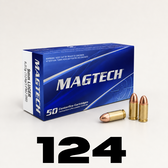
Magtech 9mm 115gr FMJ
$20.00
at Pro Armory
Prices accurate at time of writing
Frequently Asked Questions
What is the best competition pistol for a beginner?
There is no universal best model, but the Glock 34 Gen5 MOS and Canik SFx Rival are especially approachable because they combine competition-oriented dimensions with comparatively accessible pricing and strong manufacturer support. An existing reliable pistol that qualifies for the intended division can be an even better starting point.
What is the most important thing to decide before buying a competition pistol?
Choose the organization and division first. Equipment rules determine whether the pistol, trigger system, optic, magwell, magazine, compensator, and other features are permitted.
What are the most popular USPSA divisions?
USPSA activity figures used for planning the 2026 Nationals showed Carry Optics at approximately 37 percent and Limited Optics at 28 percent, making them the two largest divisions in that dataset.
Is the Glock 34 Gen5 MOS good for competition?
Yes. It uses a 5.31-inch barrel, 17-round standard magazine, approximately 26.21-ounce weight with an empty magazine, and Glock's MOS optic system. USPSA currently lists the G34 Gen5 MOS among approved Production-family pistols.
Can the Glock 34 be used in IPSC Production Optics?
Current IPSC Production Optics rules impose a 127 mm maximum barrel length. The Glock 34 Gen5 MOS uses a 135 mm barrel, so shooters should not assume its USPSA eligibility transfers to IPSC Production Optics.
Is the CZ Shadow 2 still a good competition pistol?
Yes. It remains one of the major steel-frame DA/SA practical-shooting platforms and is represented on current USPSA Production approval lists. Exact configuration and division rules still need to be checked.
Is the Shadow 2 optics ready?
Optics-ready Shadow 2 variants exist, but not every Shadow 2 uses the same slide configuration. Buyers should confirm the exact model rather than assume the entire family is identical.
What is different about the M&P9 M2.0 Competitor?
The Performance Center Competitor combines a 5-inch barrel, aluminum frame, lightened slide, Performance Center trigger components, enlarged controls, removable magwell, and Smith & Wesson's C.O.R.E. optics system.
How heavy is the M&P Competitor?
USPSA currently lists the M&P9 M2.0 Metal / Performance Center Competitor at approximately 29.3 ounces without the magwell in the approved Production configuration.
Is the Walther PDP Match Steel Frame heavy?
Yes. Walther lists the 5-inch PDP Match Steel Frame at approximately 41 ounces. That makes it substantially heavier than polymer competition pistols such as the Glock 34 and standard Canik SFx Rival.
Does the PDP Match Steel Frame have a magwell?
The factory Match configuration includes a competition magwell, but USPSA approval for restrictive Production-based divisions requires compliant configuration, including removal of the magwell where applicable.
Is the Canik SFx Rival good for a first competition pistol?
It is worth serious consideration. The standard polymer Rival combines a 5-inch barrel, 18-round magazines, optics hardware, adjustable sights, competition-oriented trigger, interchangeable backstraps, and removable magwell at a relatively accessible price point.
What is the difference between the Canik Rival and Rival-S?
The standard SFx Rival uses a polymer frame and weighs approximately 29.5 ounces. The Rival-S uses a steel frame and weighs more than 40 ounces. The additional mass creates a substantially different handling experience.
Is the CZ TS 3 Orange a Carry Optics pistol?
No. The TS 3 Orange is single-action-only, which excludes it from USPSA Carry Optics and IPSC Production Optics. It is better aligned with divisions such as USPSA Limited Optics and IPSC Optics when configured according to current rules.
How much does the TS 3 Orange weigh?
CZ publishes a weight of roughly 51 ounces. The pistol uses an all-steel frame and heavy bull barrel, making it one of the heaviest platforms in this comparison.
How light is the TS 3 Orange trigger?
CZ rates the single-action-only competition trigger at approximately 1.3 pounds, with adjustable take-up and overtravel.
Is the Staccato XL a competition pistol?
Yes. The XL uses a 5.4-inch bull barrel, SAO 2011-style trigger system, large magwell, high-capacity magazines, and available optics mounting. It is a natural platform to evaluate for divisions such as USPSA Limited Optics when properly configured.
Is a steel-frame pistol better for competition?
Not universally. Steel adds weight and changes balance and recoil characteristics. Some competitors prefer that behavior, while others perform better with lighter polymer or aluminum-frame pistols.
Is a striker-fired pistol worse than a hammer-fired competition pistol?
No. All three major systems represented here, striker fired, DA/SA, and SAO, are used successfully in competition. Division eligibility, ergonomics, trigger preference, and shooter familiarity matter more than a universal ranking.
Do I need a red-dot optic for competition?
No. Iron-sight divisions remain available. However, optics divisions now represent a large portion of modern practical-pistol participation, so factory optics capability can add useful flexibility.
What is the difference between Carry Optics and Limited Optics?
Both currently use slide-mounted electronic sights in USPSA, but Carry Optics is built around approved DA, DA/SA, and striker-fired pistols and restricts features such as external magwells. Limited Optics accommodates SAO competition pistols and broader equipment configurations while still prohibiting compensators and barrel ports.
Is IPSC Production Optics the same as USPSA Carry Optics?
No. IPSC Production Optics has its own approved-gun list and current requirements including a 127 mm maximum barrel length, SAO prohibition, trigger standards, and a 15-round loading limit at the start signal. The rules should be checked independently.
How many magazines do I need for competition?
The ideal quantity depends on the division, stage design, magazine capacity, and whether the shooter wants backups. Competitors commonly own several known-reliable magazines, but the exact number should be based on the sport and match rather than a universal rule.
Should I modify my competition pistol immediately?
Usually not. Shoot the pistol enough to identify an actual limitation first. Modifications can add expense, change reliability, affect warranty coverage, and alter division eligibility.
How much should I spend on my first competition pistol?
Spend enough to obtain a reliable and division-appropriate firearm while preserving budget for ammunition, magazines, holster, belt, optic if applicable, safety equipment, and match fees. The most expensive pistol is rarely necessary for a first season.
Can I compete with a handgun I already own?
Often, yes. If the firearm is safe, reliable, and eligible for a division, using an existing pistol can be one of the best ways to learn the sport before buying specialized competition equipment.
What matters more than pistol price?
Division eligibility, reliability, ergonomics, magazine support, ammunition availability, optic and holster compatibility, manufacturer service, and the shooter's familiarity with the platform usually matter more than price alone.
About the Author
The ProArmory editorial team includes experienced hunters, competitive shooters, military veterans, firearms instructors, and firearms industry professionals committed to producing accurate, practical, and research-based content. Our articles draw on manufacturer specifications, current competition rules, industry information, and real-world shooting experience to help readers make informed decisions about firearms, ammunition, optics, and related equipment.
Disclaimer
This article is intended for educational and informational purposes only. Product specifications, magazine capacities, pricing, availability, approved-firearm lists, division rules, and competition eligibility can change.
USPSA, IPSC, Steel Challenge, IDPA, and other sporting organizations maintain their own equipment rules. Similar division names do not necessarily indicate identical requirements. Always review the current official rulebook, approved-firearm list, and match information before purchasing or modifying equipment specifically for competition.
Published firearm weights, trigger specifications, capacities, and other performance information can vary by exact model, configuration, magazine, optic, and measurement method. Verify current specifications with the manufacturer.
Follow manufacturer instructions, established firearm-safety practices, range rules, and applicable federal, state, and local laws whenever handling or using firearms.


