




Quick Answer
A heavy barrel rifle uses a thicker barrel contour than a comparable lightweight sporting rifle. The additional material increases barrel mass and can change the rifle's stiffness, thermal behavior, balance, and overall weight. Heavy profiles are common on varmint rifles, target rifles, precision-oriented bolt guns, and other firearms where the manufacturer is willing to accept additional weight in exchange for characteristics that may be useful during repeated shooting.
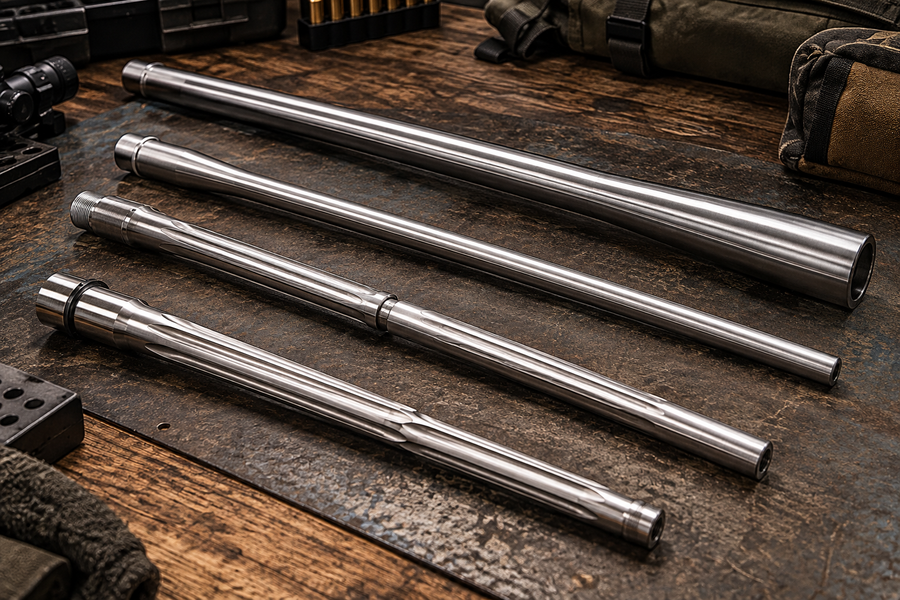
Sporter, varmint, and bull are three of the most familiar barrel-profile descriptions, but they are not universal dimensional standards. Sporter barrels generally use slimmer tapered contours intended to reduce weight for hunting and field use. Varmint barrels typically retain more material and occupy the middle ground between light hunting barrels and very heavy target profiles, while bull barrels generally maintain substantial diameter through much of their length.
A heavy barrel does not automatically make a rifle more accurate. Bore quality, chamber dimensions, crown geometry, rifling, ammunition consistency, barrel installation, stock or chassis design, and manufacturing quality all influence mechanical accuracy. A well-made sporter barrel can easily outperform a poorly manufactured heavy barrel.
Where additional barrel mass can help is during repeated firing. A heavier steel barrel generally requires more thermal energy to raise its average temperature by the same amount as a lighter barrel of similar material, so it can heat more slowly during a comparable firing string. Greater diameter can also increase stiffness, although stiffness depends on barrel length and complete geometry rather than weight alone.
For a hunter who carries a rifle for hours and fires relatively few shots, the weight savings of a sporter contour may be more valuable than additional barrel mass. A recreational target shooter or precision-rifle owner who spends most of the session firing from supported positions may find a medium-heavy, varmint, or bull-style barrel more attractive.
The best choice is therefore not the thickest barrel available. It is the barrel profile that matches how the complete rifle will actually be used.
Key Takeaways
- Sporter barrels generally prioritize low weight and portability, while varmint and bull profiles retain progressively more barrel mass.
- There is no universal industry dimension that automatically makes a barrel sporter, varmint, heavy, or bull contour.
- A heavier barrel can increase stiffness and thermal mass, but neither characteristic automatically guarantees greater accuracy.
- Heavy barrels generally warm more slowly under comparable firing conditions, but greater mass should not be confused with automatically faster cooling.
- Barrel length, material, fluting, bore diameter, taper, and muzzle diameter all affect the behavior of a barrel in addition to the profile name.
- A well-made sporter barrel can be extremely accurate, particularly for the shorter firing strings common in hunting.
- Modern medium-heavy and hybrid profiles often provide a more useful compromise than either an extremely light sporter or a full bull barrel.
- Current factory rifles demonstrate that manufacturers combine barrel profile with stock design, balance, magazine system, and intended use rather than treating contour as an isolated feature.
What Is a Rifle Barrel Profile?
Barrel profile, also called barrel contour, describes the external shape and diameter of the barrel from the chamber area toward the muzzle. The bore may be the same diameter between two rifles chambered for the same cartridge while the amount of steel surrounding that bore differs substantially. This can make two barrels of similar length behave very differently in terms of weight, balance, stiffness, and temperature change.
A contour may taper gradually from a thick chamber section toward a relatively small muzzle diameter, maintain substantial thickness for most of the barrel, or use several stepped diameters. Manufacturers can also add fluting, larger threaded muzzle sections, or other external features that further complicate simple profile categories.
The profile is therefore an external-dimensional characteristic, not a statement about rifling quality, chamber quality, or barrel material. Two barrels can both be described as varmint profiles while using different steels, rifling methods, lengths, muzzle diameters, and production standards.
Barrel Contour and Barrel Length Are Different Specifications
Barrel length describes how far the barrel extends from the applicable breech or bolt-face reference point to the muzzle. Contour describes the amount and distribution of material surrounding the bore along that length. The two specifications influence one another, but they are not interchangeable.
A short barrel can be extremely heavy if it retains a large diameter from chamber to muzzle. Conversely, a relatively long hunting barrel can remain surprisingly light when it uses an aggressive sporter taper. This is why a 20-inch heavy target barrel can weigh more than a 24-inch lightweight hunting barrel.
Buyers interested in rifle weight should therefore avoid assuming that shorter automatically means lighter. Complete-rifle weight and balance are much more useful specifications than barrel length by itself.
Sporter vs. Varmint vs. Bull Barrel
| Characteristic | Sporter | Varmint | Bull |
|---|---|---|---|
| General Contour | Slim with noticeable taper | Medium-heavy to heavy | Very thick with limited taper in many designs |
| Main Design Priority | Portability | Balance between field and target use | Maximum barrel mass within the design |
| Typical Weight Contribution | Lower | Moderate to high | High |
| Thermal Mass | Lower | Higher | Generally highest |
| Typical Balance | More carry oriented | Often more forward weighted | Frequently substantially forward weighted |
| Common Use | Hunting and field rifles | Varmint, range, hybrid hunting/target rifles | Target and specialized precision rifles |
| Accuracy Guarantee | None based on contour | None based on contour | None based on contour |
This table describes broad tendencies rather than exact engineering specifications. A heavy sporter from one manufacturer may overlap another company's light varmint contour, and some barrels marketed as bull profiles still incorporate a measurable taper.
There Is No Universal Barrel-Contour Standard
One of the biggest mistakes buyers make is assuming that profile names function like standardized cartridge dimensions. They do not. There is no universal muzzle diameter or weight threshold that all manufacturers must reach before using terms such as sporter, varmint, medium-heavy, or bull.
Barrel makers may use numbered contours, proprietary profile names, muzzle-diameter specifications, or simple descriptive terms. Even numbered contour systems should not automatically be compared between unrelated manufacturers because the dimensions behind the number can differ.
The best way to compare two barrels is through actual dimensions and complete-rifle specifications. Barrel length, muzzle diameter, taper, material, fluting, and total firearm weight provide considerably more information than the profile name alone.
What Is a Sporter Barrel?

A sporter barrel is a relatively lightweight contour commonly associated with traditional hunting rifles. The barrel generally begins with substantial diameter around the chamber and then tapers toward a slimmer muzzle, removing material from the portion of the rifle that extends farthest in front of the shooter.
This design reduces total weight and can improve portability, particularly when the rifle is carried for hours across steep terrain, through woods, or during spot-and-stalk hunting. Because barrel weight sits forward of the action, removing only a few ounces from the barrel can also noticeably change how the rifle feels in the hands.
Sporter barrels are not inherently crude or inaccurate. Numerous high-quality hunting rifles use relatively slim barrels and are capable of excellent mechanical precision. Their primary tradeoff appears during longer firing strings, where the smaller amount of material normally changes temperature more quickly than a substantially heavier barrel made from similar material.
Why Hunting Rifles Commonly Use Sporter Profiles
Most hunting rifles spend much more time being carried than fired. A hunter may walk several miles, climb into a stand, cross broken terrain, or carry the rifle for an entire day before firing a single shot. Under those conditions, shaving unnecessary forward weight can be far more valuable than designing the rifle around ten- or twenty-shot strings.
A well-designed sporter profile also keeps the complete rifle manageable after a scope, rings, sling, loaded magazine, and possibly a suppressor or other muzzle device are added. A bare rifle that already weighs ten pounds can become surprisingly burdensome once field equipment is installed.
This is why evaluating a hunting rifle solely according to benchrest characteristics can produce the wrong purchasing decision. The best field rifle is not necessarily the rifle that is easiest to shoot from a fixed bench.
What Is a Heavy Sporter Barrel?
Heavy sporter is a useful example of how blurry barrel terminology becomes. It generally describes a barrel that retains more material than a conventional lightweight hunting contour while remaining slimmer than many dedicated varmint or target barrels.
This type of profile can work well for hunters who want a little more barrel mass without turning the rifle into a bench-oriented platform. It may also appeal to someone who shoots recreationally from supported positions but still expects to carry the rifle in the field.
Because heavy sporter is not a standardized dimension, buyers should look for published muzzle diameter, complete-rifle weight, and actual manufacturer specifications rather than attempting to compare labels across brands.
What Is a Varmint Barrel?

A varmint barrel generally retains more material than a conventional sporter barrel. The category developed around rifles intended for varmint and predator shooting, where a shooter might fire repeated shots from a relatively fixed or supported position rather than carry an extremely lightweight rifle for long distances.
Additional barrel mass can slow the average temperature increase during repeated firing and can increase resistance to bending compared with a similarly constructed slimmer barrel. The heavier profile also shifts more weight toward the front of the rifle, which some shooters find helpful when firing from bags, bipods, or other stable support.
Modern varmint rifles are not limited to literal varmint hunting. Similar profiles are widely used on recreational target rifles, long-range sporting rifles, and hybrid hunting/target designs where the manufacturer wants more barrel mass without committing to a full bull profile.
Why Varmint Profiles Are a Popular Middle Ground
A varmint contour can provide enough additional mass to change how the rifle behaves during repeated shooting without making the barrel as extreme as a traditional straight or near-straight bull profile. This gives manufacturers room to create rifles that remain field capable while feeling more stable from supported positions.
The compromise is weight. A varmint rifle fitted with a substantial stock, large optic, bipod, and muzzle device can become heavy quickly. That may be perfectly acceptable for prairie-dog shooting or a range rifle and far less appealing during a mountain hunt.
The usefulness of the contour therefore depends on where the rifle spends most of its time. A profile that feels reassuringly stable on the bench can feel very different after several hours on a sling.
What Is a Bull Barrel?

A bull barrel generally uses a very thick contour that retains substantial external diameter through much of the barrel. Many bull barrels use relatively little taper compared with sporter designs, although the exact shape depends on the manufacturer.
The large amount of material gives the barrel considerable mass and can produce high stiffness for a given material and length. Bull profiles are therefore common in target rifles, specialized rimfire rifles, and other firearms where portability is less important than stability during supported shooting.
There is still nothing inherently match grade about the term. A thick barrel can be poorly chambered, poorly rifled, or inconsistently manufactured just as a lighter barrel can. Profile changes the physical structure of the barrel, not the quality of the machining inside it.
Does a Bull Barrel Have to Be Completely Straight?
No. Some shooters use bull barrel to describe a nearly straight external profile with little taper, but manufacturers do not apply the terminology identically. A barrel may retain a very large muzzle diameter and still taper enough that calling it completely straight would be inaccurate.
This is another reason actual dimensions matter more than labels. If two rifles are being compared for weight and handling, knowing the complete barrel length and approximate muzzle diameter tells the buyer more than the word bull by itself.
Does a Heavy Barrel Make a Rifle More Accurate?
Not automatically. A heavy contour changes several physical characteristics that can support consistent shooting, but none of them substitutes for a properly manufactured bore, chamber, crown, receiver interface, or suitable ammunition.
A thicker barrel is generally more resistant to bending than a thinner barrel of the same material and similar length. That greater stiffness can reduce the magnitude of certain barrel movements and can make the structure less sensitive to external forces. It does not guarantee that the bore was drilled concentrically, that the chamber was cut correctly, or that the rifle prefers the ammunition being used.
A quality sporter barrel can therefore outperform a mediocre bull barrel. The correct conclusion is that profile can influence the conditions under which accuracy is maintained, while manufacturing quality determines whether the barrel had strong accuracy potential in the first place.
Barrel Stiffness: Why Diameter Matters
Increasing barrel diameter can increase resistance to bending dramatically because stiffness is influenced strongly by the cross-sectional geometry of the barrel. This is one reason precision-oriented designs often retain more material, particularly toward the muzzle where very light contours can become relatively flexible.
Length matters as well. A long barrel of a given diameter generally behaves differently from a shorter barrel using the same material and contour. A short heavy barrel can therefore be extremely rigid even if its total weight is not dramatically greater than that of a longer, thinner barrel.
The practical takeaway is that barrel stiffness should not be inferred from weight alone. Diameter distribution and length are just as important.
Stiffer Does Not Automatically Mean More Precise
A rifle barrel vibrates as the firearm is fired, and the complete vibration pattern is influenced by barrel geometry, material, barrel attachment, projectile travel, and numerous other factors. Increasing stiffness changes those dynamics, but there is no rule that simply adding steel always shrinks the group.
Manufacturers can produce accurate rifles using several different profiles by controlling the complete system. Hunters regularly obtain excellent first-shot and short-string performance from slim barrels, while precision-rifle manufacturers often select heavier contours to support longer strings and specific balance requirements.
Stiffness is therefore a design variable, not an accuracy grade.
Barrel Harmonics and Profile
The term barrel harmonics is often used loosely to describe the vibration of the barrel during firing. The barrel behaves as a dynamic structure rather than remaining perfectly motionless while pressure builds, the projectile travels forward, and the firearm recoils.
Changing contour changes mass and stiffness, which in turn changes the barrel's vibrational characteristics. Ammunition also affects the timing of projectile exit, which helps explain why two loads can produce different group sizes through the same barrel even when both are high-quality products.
It is tempting to assume that a heavier barrel simply has less vibration and therefore must shoot better. The actual relationship is more complicated, and repeatable manufacturing plus ammunition compatibility matter more than chasing one theoretical harmonic advantage.
How a Heavy Barrel Handles Heat
Firing transfers thermal energy into the barrel. A heavier steel barrel contains more material than a lighter barrel of similar length, so more energy is generally required to raise the average temperature of that heavier structure by the same amount.
This is why heavy barrels are often described as heating more slowly. During a comparable firing string, the additional thermal mass can result in a smaller average temperature rise than a much slimmer profile made from similar material.
That does not make the heavy barrel immune to heat. Enough firing can make any barrel extremely hot, and heat continues to affect barrel life, throat erosion, surface temperatures, ammunition behavior, and other aspects of the firearm.
Heavy Barrels Do Not Necessarily Cool Faster
This point deserves special attention because it is frequently misstated. A barrel with more mass can absorb more energy before reaching the same average temperature, but once hot it also contains more stored thermal energy that needs to be transferred into the surrounding environment.
Cooling depends on exposed surface area, airflow, temperature difference, material, barrel geometry, and surrounding conditions. A heavier barrel may therefore warm more slowly during firing and still require significant time to return fully to ambient temperature afterward.
Greater heat capacity and faster cooling are not the same characteristic. Buyers should be skeptical of simplified claims that heavy barrels automatically solve both problems.
Why Temperature Can Affect Point of Impact
As a barrel heats, the material expands and its mechanical state changes. Manufacturing stresses, asymmetric heating, contact with the stock or handguard, suppressor weight, and other factors can contribute to changes in how the barrel behaves during a long firing string.
A properly manufactured and stress-relieved barrel may maintain its point of impact extremely well, while another barrel may show more noticeable movement as temperature rises. A heavier profile can reduce how quickly temperature changes, but it does not guarantee that the point of impact will remain perfectly fixed.
This is another area where the quality of the finished barrel matters more than one specification.
Does a Sporter Barrel “Walk” as It Heats?
Some lightweight rifles do show group movement as a barrel warms, but the phenomenon should not be treated as an unavoidable property of every sporter profile. A well-made slim barrel can remain remarkably consistent, particularly over the three- or five-shot strings commonly relevant to hunting and ordinary zero confirmation.
If a rifle begins shifting point of impact after repeated shots, the barrel contour is only one possible factor. Bedding, stock contact, action torque, optic mounting, ammunition, suppressor attachment, and barrel manufacturing can all contribute.
Diagnosing the problem requires looking at the entire rifle rather than assuming the cure is simply a thicker barrel.
Heavy Barrels and Repeated Firing
The strongest practical argument for a heavy barrel appears when the firing schedule is long enough for thermal behavior and rifle stability to matter repeatedly. A target shooter firing multiple groups in one session places different demands on the rifle than a hunter firing one cold-bore shot.
Additional barrel mass can keep temperature change more gradual and can make the rifle feel more planted on a support. That combination is valuable in certain range and competition applications even when the heavy barrel does not increase the inherent mechanical precision of the bore.
This is why the correct profile is tied so closely to intended use.
Barrel Profile and Rifle Balance
Barrel weight sits forward of the receiver, so increasing contour can move the rifle's balance point toward the muzzle. Two rifles with identical total weight can therefore feel very different if one carries more of that mass in the barrel and the other carries it closer to the shooter.
A forward-balanced rifle can feel stable on a rest or barricade, while a lighter muzzle may feel quicker and easier to carry or move. Neither sensation is automatically better. The desired balance depends on shooting position, support method, physical size, and what the rifle needs to accomplish.
This is why handling the complete rifle can reveal more than reading a barrel-profile description online.
Heavy Barrels and Recoil Movement
A heavier barrel contributes to greater total firearm mass. With the cartridge and other conditions held constant, additional rifle mass can reduce how abruptly the firearm accelerates during recoil, although stock design, muzzle device, shooting position, and cartridge remain major factors.
This can help explain why heavy precision rifles often feel more settled during repeated firing than lightweight hunting rifles chambered for the same cartridge. The effect comes from the complete rifle mass and balance rather than the barrel being heavy in isolation.
A hunter may reasonably accept greater recoil movement in exchange for carrying several fewer pounds all day. A target shooter working from a supported position may make the opposite choice.
Does a Heavy Barrel Reduce Muzzle Rise?
Additional forward mass can change how the rifle rotates and moves during recoil, but barrel contour is only part of that behavior. Stock geometry, bore height, muzzle devices, suppressors, bipod setup, shooting position, and recoil management all influence what the shooter sees through the optic.
A heavier muzzle can make some rifles feel more stable, particularly from supported positions. It should not be treated as a substitute for proper rifle fit or shooting technique.
Fluting Changes the Simple Heavy-vs.-Light Comparison

Fluting removes material from the exterior of a barrel while retaining larger diameters in the portions between the flutes. Manufacturers use several flute patterns, depths, and lengths, which means the effects vary substantially among designs.
The obvious result is reduced weight compared with an otherwise similar solid barrel of the same maximum outer diameter. Fluting also increases external surface area, although real-world thermal behavior still depends on total mass, flute geometry, airflow, firing schedule, and starting temperature.
A fluted heavy barrel should therefore not automatically be categorized with either a conventional solid bull barrel or a lightweight sporter. It occupies another part of the design spectrum.
Does Fluting Make a Barrel Stiffer?
This question requires a reference point. Removing material from an existing solid barrel does not make that same barrel stiffer. However, a fluted barrel can retain a larger maximum outside diameter than a lighter smooth barrel of the same approximate weight, which can change the stiffness-to-weight relationship between two different designs.
This is why blanket statements such as fluting increases stiffness are incomplete. Buyers need to know what the fluted barrel is being compared against.
Carbon-Wrapped Barrels Add Another Variable
Modern carbon-fiber-wrapped barrels make the traditional sporter-versus-bull discussion even less complete. These designs generally use a steel barrel core surrounded by a composite structure intended to provide different weight, stiffness, and thermal characteristics from a conventional all-steel barrel.
The resulting barrel may have a very large external diameter while weighing far less than an all-steel bull barrel of similar size. That means visual thickness no longer provides a reliable estimate of barrel mass.
Carbon barrels also differ substantially by manufacturer. Buyers should evaluate the complete product rather than assuming all carbon-wrapped barrels share identical construction or thermal behavior.
Barrel Material and Barrel Profile Are Separate Choices
A heavy barrel can be made from chrome-moly steel, stainless steel, or another manufacturer-selected barrel material. The contour tells buyers how the material is shaped externally, while the alloy and treatment describe what the barrel is made from and how its surfaces are finished.
This is the same distinction that matters when comparing chrome-lined, nitrided, and stainless barrels. Material, rifling process, surface treatment, and contour are separate specifications that interact but should not be collapsed into one quality ranking.
A stainless bull barrel is not automatically more accurate than a nitrided medium contour, and a chrome-moly sporter is not automatically less durable than either. The complete manufacturing process matters.
Free-Floating and Heavy Barrels Are Not the Same Thing
Free-floating describes the relationship between the barrel and stock or handguard, not the thickness of the barrel. A free-floated barrel is designed so the surrounding stock or fore-end does not normally press against it along the free portion of the barrel.
Manufacturers use free-floating designs with sporter, varmint, and heavy profiles. A lightweight hunting rifle can therefore have a completely free-floated barrel just as a heavy precision rifle can.
The two specifications may appear together frequently on precision-oriented rifles, but one does not require the other.
Short Heavy Barrels vs. Long Heavy Barrels
Length changes barrel behavior just as contour does. A shorter barrel of a given diameter generally offers greater structural stiffness than a much longer barrel with otherwise similar construction, while a longer barrel provides additional bore length that may affect velocity depending on the cartridge and ammunition.
This is why some modern precision rifles use relatively short but very thick barrels. Manufacturers can create a compact, rigid configuration without relying on a long traditional target tube.
The best barrel length and contour therefore need to be considered together rather than selected independently.
Sporter Barrels for Hunting
A sporter profile remains the logical starting point for many general-purpose hunting rifles. The reduced forward weight can make the firearm easier to carry, quicker to shoulder, and less tiring during long periods away from a bench or vehicle.
Most hunting situations also do not require extended rapid-fire strings. A rifle that places its first several shots consistently may satisfy the real-world requirement even if a heavy range rifle behaves more predictably after a much longer string.
This is why a slim barrel should not be dismissed simply because another rifle looks more precision oriented.
Varmint Barrels for Predator and Varmint Shooting
Varmint shooting can involve a very different firing schedule from big-game hunting. A shooter may remain in one location for an extended period and engage multiple targets, making additional barrel mass more valuable than it would be on a rifle carried through the mountains.
A medium-heavy or varmint contour can provide a useful compromise between repeated-fire characteristics and field portability. Modern predator rifles also increasingly combine medium contours with fluting to control total weight while retaining a substantial barrel diameter.
The correct balance depends on whether the rifle is carried continuously, used from a vehicle, fired from a tripod, or operated mainly from a fixed position.
Heavy Barrels for Recreational Target Shooting
Range shooting is one of the easiest places to justify additional barrel mass because portability often matters far less. The rifle may move only from a case to a bench, bipod, bag, or firing line before the shooting session begins.
A heavier rifle can feel stable and comfortable from supported positions while the barrel's greater thermal mass becomes more useful during repeated groups. Those advantages can be enjoyed even if the shooter never participates in organized competition.
The main drawback is that the same rifle may feel unnecessarily cumbersome if the owner later tries to use it for a very mobile hunting application.
Heavy Barrels in Precision Rifle Competition
Many precision-rifle competition platforms use substantial barrel contours, but the reason is not simply that thicker barrels are inherently more accurate. Competitive rifles are often designed to manage recoil, maintain a stable sight picture, and sustain repeated strings while balancing well on barricades and other supports.
The barrel is only one part of that weight strategy. Chassis weights, heavy stocks, muzzle devices, optics, bipods, and other components can all contribute to the finished rifle's mass and balance.
This is why some competition rifles use medium-heavy contours rather than the thickest possible barrel. The designer is balancing thermal behavior, rigidity, total mass, and handling rather than chasing diameter alone.
A Bull Barrel Is Not Required for a Precision Rifle
Modern precision rifles demonstrate clearly that excellent performance does not require a classic full bull profile. Many successful factory and custom rifles use medium Palma, heavy Palma, competition, sendero-style, or manufacturer-specific contours that taper more than a traditional bull barrel.
The goal is usually to retain material where the designer wants it while controlling overall weight and balance. An extremely heavy straight barrel may provide more mass than the rifle actually needs and may place too much of that weight forward.
Precision rifle should therefore describe the complete platform, not merely the appearance of the barrel.
Heavy Barrels and Suppressors
A suppressor adds mass at the muzzle and introduces another source of heat into the system. This can change rifle balance considerably, especially on a long or already-heavy barrel.
Hunters who plan to use a suppressor may deliberately choose a shorter or lighter barrel so the finished rifle remains manageable. Precision shooters may be more willing to accept the additional front weight if the rifle is used primarily from supported positions.
Suppressor use is therefore another reason to evaluate the finished configuration rather than choosing barrel contour in isolation.
Current Factory Example: Tikka T3x Lite vs. T3x Varmint

Tikka provides one of the clearest factory examples because its current T3x family still includes models positioned at opposite ends of the sporting spectrum. The T3x Lite is built around low weight and hunting portability, while the T3x Varmint is positioned for varmint and longer-range shooting.
The two rifles share the broader T3x action family, making the comparison especially useful. Instead of assuming that the heavier rifle is simply a better version of the lighter one, buyers can see how Tikka changes the complete configuration according to intended use.
The Lite makes more sense when carrying weight is a major concern. The Varmint makes more sense when the owner expects to spend more time firing from stable positions and values additional barrel mass over minimum carry weight.
The Tikka Comparison Shows Why “Better” Is the Wrong Question
A T3x Varmint is not automatically a better hunting rifle because it has more barrel mass, and the Lite is not automatically an inferior precision tool because it weighs less. Each rifle emphasizes a different set of compromises.
This is exactly how buyers should approach barrel contour. The question should be whether the profile supports the intended application rather than whether one contains more steel.
Current Factory Example: Bergara B-14 Hunter vs. B-14 HMR

Bergara's B-14 family provides another useful comparison. The B-14 Hunter uses a conventional hunting-oriented synthetic stock and is intended around field use, while the B-14 HMR, short for Hunting and Match Rifle, combines a heavier precision-oriented configuration with an integrated mini-chassis stock system and free-floated barrel.
The HMR demonstrates that a heavier barrel is usually only one piece of a hybrid precision design. The stock is more substantial, the bedding architecture is different, the magazine system is oriented toward precision-rifle use, and the complete firearm is correspondingly heavier.
This is why comparing only barrel diameter can miss the larger purchasing decision. Moving from a Hunter-style rifle to an HMR-style platform changes much more than the barrel.
Current Factory Example: Savage Model 110 Core Family

Savage substantially refreshed the Model 110 family for 2026, making the current lineup a useful example of how manufacturers now tailor barrel and stock configurations to different applications. The Core Hunter remains the general hunting-oriented foundation, while the Core Predator and Core Tactical move toward heavier-use sporting and precision roles.
The current Core Predator and Core Tactical use medium-contour straight-fluted carbon-steel barrels, along with broad beavertail fore-ends that incorporate ARCA and M-LOK interfaces. Savage combines that barrel choice with different magazine systems, rails, stock geometry, and other equipment to create rifles intended for supported shooting.
The lesson is important: modern target-oriented factory rifles do not necessarily require a traditional straight bull barrel. A medium contour can provide enough barrel mass for the intended role while helping the manufacturer control total rifle weight and balance.
Factory Rifle Comparison
| Factory Example | General Barrel Approach | Primary Design Priority | Main Tradeoff |
|---|---|---|---|
| Tikka T3x Lite | Light hunting-oriented contour | Portability and field use | Less barrel mass |
| Tikka T3x Varmint | Heavier varmint configuration | Varmint and long-range use | Additional weight |
| Bergara B-14 Hunter | Hunting-oriented sporter configuration | Traditional field rifle | Less target-oriented mass and stock architecture |
| Bergara B-14 HMR | Heavier hybrid precision configuration | Hunting and target versatility | Greater complete-rifle weight |
| Savage 110 Core Hunter | Hunting-oriented factory profile | General sporting use | Less specialized for supported precision work |
| Savage 110 Core Predator | Medium-contour fluted barrel | Predator and supported field shooting | More weight than lightweight hunting variants |
| Savage 110 Core Tactical | Medium-contour fluted barrel | Precision and long-range use | Less carry oriented |
These examples are useful because they show that barrel contour is part of a larger design strategy. Stock dimensions, magazine type, accessory interfaces, optics mounting, total rifle weight, and ergonomics change along with the barrel.
Does a Heavy Barrel Increase Rifle Cost?
Additional material can contribute to manufacturing cost, but barrel contour alone does not explain the price difference between hunting and precision rifles. Heavier models often include more expensive stocks or chassis, detachable magazine systems, adjustable cheek pieces, accessory rails, improved triggers, muzzle threading, brakes, or other features.
A premium heavy-barrel rifle may therefore cost much more than a sporter model even though the extra steel in the barrel represents only part of the difference. Buyers should compare complete feature sets rather than assuming the price increase is payment for barrel thickness alone.
Does a Heavy Barrel Last Longer?
There is no universal barrel-life advantage that can be predicted from contour alone. A heavy barrel can reduce the rate at which average temperature rises during a firing string, and firing temperature can influence throat erosion. However, chambering, pressure, powder charge, bore diameter, firing schedule, barrel material, surface treatment, and ammunition all play major roles in useful service life.
A heavy barrel that is repeatedly fired until extremely hot can still wear rapidly. A lighter barrel that is fired slowly and allowed to cool may deliver a very long useful life.
Round count should therefore not be predicted simply from barrel diameter.
Barrel Profile Does Not Determine Cartridge Performance
A thick barrel does not increase a cartridge's inherent ballistic capability merely because there is more steel around the bore. Muzzle velocity is affected primarily by barrel length, chamber and bore dimensions, ammunition, pressure, and other internal-ballistic factors.
Two barrels of equal length chambered for the same cartridge can produce slightly different velocities because individual barrels vary, but a bull contour does not inherently add velocity compared with a sporter profile.
Does a Heavy Barrel Change Rifle Handling?
Yes, and this may be more noticeable to many owners than any change in group size. More barrel mass moves weight forward, which can make a rifle feel steadier from a rest and more cumbersome during unsupported carry.
A shooter who spends most of the day moving through timber may notice every additional ounce. Someone firing from a bench or prone position may barely care once the rifle is set down.
The handling difference is therefore a feature or disadvantage depending entirely on application.
Who Should Choose a Sporter Barrel?
A sporter profile is usually the strongest choice for hunters who prioritize portability, general-purpose field use, and manageable overall rifle weight. It is especially sensible when the typical firing sequence consists of one cold-bore shot followed by only a few additional rounds.
Sporter profiles also work well for buyers who simply want a conventional rifle that is comfortable to carry and use from several positions. A quality sporter barrel is fully capable of excellent practical accuracy and should not be viewed as a budget substitute for a heavier barrel.
Who Should Choose a Varmint or Medium-Heavy Barrel?
A varmint or medium-heavy contour makes sense for buyers who expect more sustained shooting than a traditional hunter but still want a rifle that remains reasonably transportable. Predator hunters, recreational long-range shooters, and people looking for one rifle that divides time between field and range use often fall into this category.
This is arguably the most flexible part of the profile spectrum because the manufacturer can tune weight and taper without committing to either extreme. Modern factory rifles increasingly use these profiles for exactly that reason.
Who Should Choose a Bull Barrel?
A full bull barrel makes the most sense when portability ranks low and substantial barrel mass is specifically desired. Dedicated bench rifles, target rifles, some rimfire precision platforms, and specialized sporting firearms are the clearest examples.
Someone primarily interested in carrying a rifle through the field may find the same characteristics unnecessary. The additional steel provides no benefit while the rifle is hanging from a sling unless the later firing application actually takes advantage of it.
Choosing a Barrel Profile by Intended Use
| Primary Use | Profile Worth Considering | Main Reason |
|---|---|---|
| Mountain or backcountry hunting | Light sporter | Minimum carry weight |
| General big-game hunting | Sporter or heavy sporter | Balanced field handling |
| Predator hunting | Heavy sporter or varmint | Compromise between carry weight and repeated-fire characteristics |
| Varmint shooting from fixed positions | Varmint or heavy | Additional thermal mass and supported stability |
| Recreational target shooting | Medium-heavy, varmint, or bull | Weight is less important than repeated-fire behavior |
| Precision rifle competition | Competition-specific medium-heavy or heavy contour | Balance, recoil management, and sustained shooting |
| Dedicated bench rifle | Heavy or bull | Portability is a minor concern |
| One rifle for hunting and range use | Heavy sporter or medium-heavy | Useful compromise between portability and mass |
Common Mistake: Assuming Heavy Means Accurate
This is the biggest misconception surrounding barrel profile. Heavy barrels are common on accurate rifles because their physical characteristics work well with certain precision-oriented applications, but correlation is not the same thing as causation.
The rifle still needs a well-made bore, chamber, crown, action interface, suitable ammunition, dependable optic, and consistent shooter input. The barrel's external diameter cannot compensate for poor manufacturing elsewhere.
Common Mistake: Assuming Lightweight Means Inaccurate
Modern lightweight hunting rifles can deliver impressive mechanical accuracy. Their slimmer barrels may respond differently during long strings, but many hunting applications never demand that type of firing schedule.
If the first cold-bore shot and several follow-up shots land exactly where the hunter needs them, the rifle may be doing its job perfectly. Judging it according to a twenty-shot bench session can place an artificial requirement on a firearm designed around portability.
Common Mistake: Assuming Bull Barrel Is a Precision Certification
Bull describes a general physical profile, not a manufacturing grade. The word tells buyers very little about bore quality, chamber concentricity, rifling method, steel, heat treatment, crown quality, or accuracy testing.
A product listing that emphasizes bull barrel without providing meaningful manufacturing information deserves the same scrutiny as any other specification-driven marketing claim.
Common Mistake: Assuming Heavy Barrels Cool Faster
A heavy barrel often warms more slowly because it contains more material capable of absorbing thermal energy. Once heated, however, that same mass stores additional thermal energy that must eventually be released.
Cooling rate depends on much more than weight, including surface area, airflow, geometry, temperature difference, and environmental conditions. The more accurate statement is that heavy barrels have greater thermal mass, not that they universally cool faster.
Common Mistake: Ignoring the Finished Rifle Weight
A heavy barrel may be only one part of an already-heavy rifle. Add a substantial stock or chassis, large optic, steel rings, bipod, loaded magazine, suppressor, and accessories, and the finished firearm can weigh several pounds more than the bare catalog number suggests.
This matters particularly for buyers trying to create one rifle for both hunting and range use. The rifle that feels pleasantly stable at the gun counter may become a very different companion after a full day in the field.
Common Mistake: Buying for the Bench When the Rifle Will Be Carried
Benches make heavy rifles look extremely attractive because the shooter receives nearly all of the stability benefits while paying almost none of the carrying penalty. Real field use changes the equation quickly.
Buyers should evaluate where the rifle will spend most of its time rather than where it will be zeroed. A few hours of bench shooting each year may not justify carrying unnecessary weight during every hunt.
Common Mistake: Buying Ultralight When the Rifle Is Mostly a Range Gun
The opposite mistake is equally common. An extremely lightweight rifle can be excellent in the mountains and less comfortable during a long afternoon of repeated supported shooting, especially in a cartridge with substantial recoil.
If portability has little practical value to the owner, accepting more barrel and rifle mass can make the shooting experience more pleasant and stable.
How to Compare Barrel Profiles When Shopping
Begin with complete-rifle weight rather than the profile name. Then examine barrel length, muzzle diameter when published, whether the barrel is fluted, the material, muzzle threading, and how the weight is distributed through the stock or chassis.
Next, consider the intended shooting schedule. A hunter firing two or three rounds before the rifle cools has different needs from a range shooter firing fifty or more rounds during one session.
Finally, look at manufacturer reputation, accuracy testing, stock design, barrel clearance, magazine system, and support. Barrel contour is important, but it should never become the only specification driving the purchase.
Does Barrel Diameter Matter More Than the Profile Name?
Often, yes. Actual dimensions give the buyer a more objective way to compare barrels, particularly when manufacturers use different terminology.
Muzzle diameter is useful but still does not describe the entire contour because two barrels can reach the same muzzle diameter through very different tapers. The most complete comparison considers dimensions along the barrel rather than one measurement alone.
Should You Replace a Sporter Barrel With a Heavy Barrel?
Only when the existing rifle is failing to meet a real requirement that the replacement is likely to address. Rebarreling can also alter stock clearance, total weight, balance, magazine or chassis compatibility, and the way the rifle handles.
A heavy replacement barrel may require opening the stock's barrel channel or changing the stock entirely. That can turn a simple barrel project into a much larger rifle rebuild.
Before replacing an otherwise accurate hunting barrel, the owner should be clear about what problem is being solved.
Is a Medium-Heavy Barrel the Best All-Around Choice?
For many shooters trying to combine field and range use, it can be. A medium-heavy profile can provide more thermal mass than a lightweight sporter without producing the extreme forward weight of a full bull barrel.
That does not make it universally best. A mountain hunter may still find it unnecessarily heavy, while a dedicated target shooter may prefer even more mass.
The value of the middle ground is flexibility rather than superiority.
Are Heavy Barrel Rifles Worth the Extra Weight?
They are when the extra mass supports the way the rifle is actually used. A shooter firing repeated groups from a bench, working from a bipod, or competing with a precision rifle can benefit from the stability, balance, stiffness, and thermal characteristics associated with heavier contours.
The same weight can become pure liability during long-distance hunting where the rifle may be carried for ten hours and fired once. Barrel profile is one of the clearest examples of why a feature can be an advantage in one application and a disadvantage in another.
Final Thoughts
Heavy barrel rifles are often associated with accuracy, but barrel thickness is better understood as a design choice than a quality rating. Sporter, varmint, medium-heavy, and bull profiles distribute barrel material differently to meet different priorities involving portability, stiffness, thermal mass, balance, and handling.
Sporter barrels remain highly relevant because hunting rifles are carried far more than they are fired. Removing unnecessary forward weight can make an enormous difference during a full day in the field, and a properly manufactured sporter barrel can still provide excellent practical accuracy.
Varmint and medium-heavy profiles occupy a useful middle ground. They retain more barrel mass for shooters who expect longer firing sessions while avoiding some of the weight associated with the thickest target barrels. This is why modern predator, hybrid, and precision-oriented factory rifles increasingly use medium contours rather than relying exclusively on traditional bull profiles.
Bull barrels make the most sense when portability matters very little. Their substantial diameter can provide high stiffness and thermal mass, which fits dedicated target rifles and other supported shooting applications. Those characteristics still do not guarantee superior accuracy on their own.
Heat is another area where the terminology needs precision. A heavier barrel generally heats more slowly under comparable conditions because there is more material absorbing the thermal energy. That does not mean it automatically cools more quickly once hot. Cooling depends on surface area, airflow, geometry, surrounding temperature, and how much heat the barrel contains.
Modern factory rifles demonstrate how these principles are applied in practice. Tikka uses the T3x Lite and T3x Varmint to serve very different sporting priorities within the same broader rifle family. Bergara separates the field-oriented B-14 Hunter from the heavier Hunting and Match Rifle concept, while Savage's refreshed 2026 Model 110 family now uses medium-contour fluted barrels in the Core Predator and Core Tactical rather than assuming precision requires the thickest barrel possible.
Those examples point toward the most important buying lesson: evaluate the whole rifle.
Barrel profile should be considered alongside barrel length, rifle weight, stock or chassis design, optic, magazine system, muzzle equipment, carrying requirements, firing schedule, and intended cartridge. A barrel does not exist independently from the firearm surrounding it.
If the rifle will spend its life being carried through the woods, a quality sporter may be exactly right. If it will spend most weekends resting on bags at the range, the extra mass of a varmint or heavy profile may be worthwhile. If it needs to perform both jobs, a heavy sporter or medium contour may provide the most sensible compromise.
The best barrel is not the thickest one. It is the barrel whose dimensions support the rifle's actual job.
Choosing between a sporter, varmint, or bull barrel comes down to matching the rifle's characteristics to its intended application. A lightweight hunting rifle may benefit more from portability than additional barrel mass, while a dedicated target rifle can justify the weight of a heavier profile.
Fortunately, buyers have more options than ever across different price ranges. Our breakdown of how entry-level bolt-action rifles are evolving provides additional perspective on why overall rifle quality, configuration, and intended use matter more than price or barrel thickness alone.

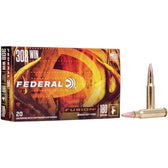
Federal Fusion .308 Winchester 180 Grain Bonded SP
$34.00
at Pro Armory
Prices accurate at time of writing
Frequently Asked Questions
What is a heavy barrel rifle?
A heavy barrel rifle uses a barrel contour that retains more material than a comparable lightweight sporting profile. The additional mass can increase stiffness, change thermal behavior, shift rifle balance, and increase the complete firearm's weight.
What is the difference between a sporter and heavy barrel?
A sporter barrel generally tapers more aggressively to reduce weight, while a heavy barrel retains greater diameter along more of its length. The terms are descriptive rather than universally standardized.
What is a varmint barrel?
A varmint barrel is generally heavier than a traditional sporter contour and is commonly used on varmint, predator, recreational target, and hybrid precision rifles. Exact dimensions vary by manufacturer.
What is a bull barrel?
A bull barrel is a very thick barrel profile that usually maintains substantial external diameter through much of its length. Some are nearly straight while others retain a measurable taper.
Is a bull barrel more accurate?
Not automatically. A bull barrel can provide substantial stiffness and thermal mass, but mechanical accuracy still depends on bore quality, chamber dimensions, crown geometry, ammunition, barrel installation, and the complete firearm.
Does a heavy barrel make a rifle more accurate?
Not by itself. Greater diameter can increase stiffness and the additional mass can influence temperature change during repeated firing, but a quality sporter barrel can easily outperform a poorly manufactured heavy barrel.
Why do precision rifles use heavy barrels?
Precision-oriented rifles often use heavier profiles because additional barrel mass can support the rifle's balance, stiffness, thermal characteristics, and repeated-fire role. The barrel is normally only one part of a heavier complete rifle designed around supported shooting.
Why do hunting rifles use sporter barrels?
Hunting rifles are frequently carried for hours and fired only a few times, making reduced weight valuable. A properly manufactured sporter barrel can still provide excellent accuracy for typical hunting firing schedules.
Do heavy barrels heat more slowly?
Generally, a heavier steel barrel has more thermal mass and therefore requires more energy to produce the same average temperature increase as a lighter barrel of similar material. Actual temperature behavior still depends on firing schedule, barrel dimensions, cartridge, and surrounding conditions.
Do heavy barrels cool faster?
Not necessarily. A heavier barrel can absorb more heat before reaching the same temperature, but once hot it also contains more thermal energy. Cooling depends on surface area, airflow, geometry, temperature difference, and other environmental factors.
Does fluting make a barrel cool faster?
Fluting increases external surface area and removes mass, but real cooling behavior depends on the entire design and conditions. It should not be assumed that every fluted barrel will cool faster than every smooth barrel.
Does fluting make a barrel stiffer?
Removing material from an existing solid barrel does not make that same barrel stiffer. However, a fluted design may retain a larger maximum outside diameter than a lighter smooth barrel of similar overall weight, which can change the stiffness-to-weight relationship between two different barrels.
What is a heavy sporter barrel?
A heavy sporter is generally a hunting-oriented contour that retains more material than a conventional sporter while remaining lighter than many dedicated varmint or target barrels. Because the term is not standardized, actual dimensions need to be verified.
Is a varmint barrel the same as a bull barrel?
No universal rule separates them, but varmint barrels generally use some taper and occupy a medium-heavy to heavy category, while bull barrels commonly retain greater diameter through much of their length. Manufacturers use the terms differently.
Does a shorter barrel weigh less?
Not always. A short bull barrel can weigh more than a longer sporter barrel because contour and material determine how much mass remains around the bore.
Does barrel profile affect muzzle velocity?
Profile by itself does not provide a predictable velocity advantage. Barrel length, bore and chamber dimensions, ammunition, pressure, and individual barrel characteristics are more directly related to muzzle velocity.
Does a heavy barrel last longer?
Not automatically. Heavy barrels may heat more slowly during comparable firing strings, but barrel life also depends on cartridge intensity, firing schedule, barrel material, treatment, ammunition, and the level of accuracy the owner requires.
Is a heavy barrel better for a suppressor?
Not universally. A suppressor adds additional muzzle weight and heat to the system. Some precision shooters may accept that on a heavy barrel, while hunters may deliberately select a shorter or lighter barrel to keep the suppressed rifle manageable.
Are carbon-fiber barrels considered heavy barrels?
Not necessarily. Carbon-wrapped barrels can have a large external diameter while weighing much less than an all-steel barrel of similar size. Visual thickness therefore does not reliably indicate barrel weight.
What barrel profile is best for hunting?
A sporter or similar lightweight contour is often the strongest general recommendation because portability matters during field use. A heavy sporter or medium contour may be attractive when the hunter wants more barrel mass and accepts the additional weight.
What barrel profile is best for target shooting?
Medium-heavy, varmint, and bull profiles are all common choices because target rifles are often fired from supported positions and may experience longer firing strings. The ideal profile depends on the complete rifle and type of target shooting.
What barrel profile is best for both hunting and range use?
A heavy sporter or medium-heavy profile often provides a useful compromise. It can retain more barrel mass than an ultralight hunting contour without making the rifle as cumbersome as some full target or bull-barrel configurations.
Is barrel contour standardized?
No. Terms such as sporter, varmint, medium-heavy, sendero, Palma, and bull are not governed by one universal dimensional system across manufacturers. Buyers should compare actual barrel dimensions and complete-rifle specifications.
Should I buy the heaviest barrel I can afford?
No. Buy the profile that matches the rifle's intended use. Additional barrel mass is valuable only when the benefits are more important than the corresponding increase in weight and changes in handling.
About the Author
The ProArmory editorial team includes experienced hunters, competitive shooters, military veterans, firearms instructors, and firearms industry professionals committed to producing accurate, practical, and research-based content. Our articles draw on manufacturer specifications, current industry information, and real-world shooting experience to help readers make informed decisions about firearms, ammunition, optics, and related equipment.
Disclaimer
This article is intended for educational and informational purposes only. Rifle specifications, barrel profiles, dimensions, product configurations, pricing, and manufacturer offerings may change.
Descriptions such as sporter, varmint, heavy, medium-heavy, and bull are not universal dimensional standards. Always verify the specifications of the exact firearm or barrel being considered rather than assuming products from different manufacturers use identical profile definitions.
Accuracy, barrel life, thermal behavior, and firearm performance vary according to barrel construction, ammunition, firing schedule, environmental conditions, maintenance, and the complete firearm system. Follow manufacturer instructions, established firearm-safety practices, and applicable federal, state, local, and hunting regulations.


