




Quick Answer
Stainless steel generally offers better corrosion resistance than traditionally blued carbon steel, making it appealing for firearms regularly exposed to moisture, humidity, and changing outdoor conditions. However, stainless steel is not rustproof and still requires cleaning, lubrication, and proper storage.
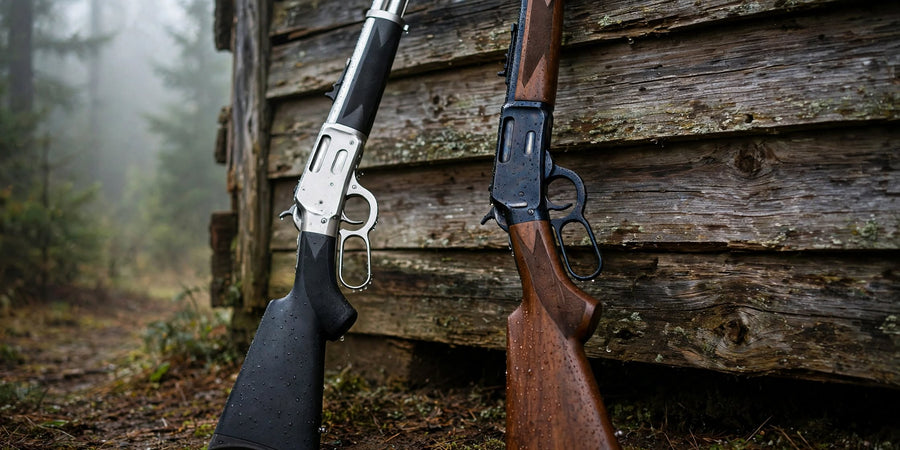
Blued carbon steel offers a classic appearance, is widely used in traditional firearm designs, and can be an excellent long-term choice when properly maintained. Its protective finish is generally less resistant to corrosion than stainless steel, particularly when exposed to moisture, perspiration, or damaged surface areas.
Neither option is automatically more accurate, reliable, or durable in every application. The quality of the underlying steel, heat treatment, manufacturing process, and overall firearm design matter more than appearance alone.
Key Takeaways
- Stainless steel is a corrosion-resistant alloy, while bluing is a chemical surface treatment commonly applied to carbon steel.
- Stainless steel generally tolerates moisture and humidity better than traditional blued steel, but it can still corrode.
- Blued steel requires consistent maintenance to protect against rust and finish deterioration.
- Stainless firearms are not always lighter, stronger, or more accurate than blued firearms.
- Both materials can last for decades when properly manufactured, maintained, and stored.
- A stainless firearm may cost more than a comparable blued model, but pricing depends on the manufacturer and configuration.
- For buyers who prioritize traditional appearance, blued steel remains an appealing option.
- For frequent outdoor exposure, stainless steel often provides a practical maintenance advantage.
When comparing firearms, buyers often focus on caliber, barrel length, capacity, and price while overlooking the materials and finishes that influence long-term ownership. Stainless steel and traditionally blued carbon steel are two familiar options, particularly among revolvers, hunting rifles, and sporting shotguns.
Although these finishes are often compared directly, they are not technically equivalent. Stainless steel describes a corrosion-resistant metal alloy, while bluing is a chemical surface treatment commonly applied to carbon steel. That distinction affects how each firearm responds to moisture, wear, maintenance, and environmental exposure.
Understanding the differences can help buyers make a more informed decision, whether they are comparing two versions of the same revolver or choosing a hunting rifle for wet outdoor conditions. The better option depends less on appearance alone and more on how the firearm will be used and maintained.
Stainless Steel vs. Blued Steel: What's the Difference?
The most important distinction is that stainless steel and blued steel describe different things. Stainless steel is an alloy containing chromium, which contributes to the formation of a protective oxide layer on the metal's surface. This layer improves resistance to corrosion under many conditions.
Bluing, by contrast, is a surface treatment. Most traditionally blued firearms are made from carbon steel that has undergone a controlled chemical conversion process to create a dark protective finish. Bluing changes the surface appearance and provides some corrosion protection, particularly when maintained with appropriate protective oil.
This means a stainless firearm has corrosion resistance associated with its underlying alloy, while a blued carbon-steel firearm relies more heavily on its surface treatment and ongoing maintenance.
The distinction also explains why neither category can be judged solely by color. Stainless steel may be polished, brushed, bead-blasted, or coated, while carbon steel may receive bluing, Parkerizing, nitriding, paint-like coatings, or other finishes. A black firearm is not necessarily blued, and a silver-colored firearm is not necessarily stainless steel.
Stainless Steel vs. Blued Steel Comparison Chart
| Feature | Stainless Steel | Traditionally Blued Carbon Steel |
|---|---|---|
| Material or treatment | Corrosion-resistant steel alloy | Carbon steel with chemical surface treatment |
| Typical appearance | Silver, gray, matte, or polished | Deep blue-black to black |
| Corrosion resistance | Generally higher | Generally lower |
| Moisture tolerance | Better under many conditions | Requires more consistent protection |
| Routine maintenance | Still necessary | Especially important for finish preservation |
| Scratch appearance | Depends on finish and surface texture | May expose lighter metal beneath dark finish |
| Long-term durability | Depends on alloy, design, and care | Depends on steel, finish, design, and care |
| Weight | Depends on dimensions and alloy | Depends on dimensions and alloy |
| Accuracy | No inherent advantage | No inherent advantage |
| Typical appeal | Practical outdoor use and contemporary styling | Traditional appearance and classic firearms |
| Price | Sometimes higher | Sometimes lower |
| Restoration considerations | Refinishing options depend on surface finish | Traditional bluing can sometimes be professionally restored |
The comparison favors stainless steel in corrosion resistance, but that advantage should not be exaggerated. A poorly maintained stainless firearm can still develop corrosion, while a carefully maintained blued firearm can remain in excellent condition for generations.
What Is Stainless Steel in Firearms?

Stainless steel is a family of iron-based alloys containing enough chromium to form a protective surface layer that helps resist corrosion. Different stainless-steel grades have different combinations of hardness, strength, machinability, and corrosion resistance.
Firearm manufacturers select materials based on the requirements of individual components. Barrels, cylinders, slides, receivers, and small parts do not necessarily use identical alloys, even when a firearm is marketed as stainless steel.
This is particularly important because the word "stainless" can create unrealistic expectations. It does not mean a firearm can be exposed indefinitely to rain, saltwater, sweat, or condensation without maintenance. Surface contamination and unfavorable environmental conditions can still lead to staining, pitting, or other forms of corrosion.
Stainless firearms are therefore better described as corrosion-resistant rather than corrosion-proof.
Advantages of Stainless Steel Firearms
The most recognizable benefit of stainless steel is its resistance to rust under many common conditions. This can be useful for hunters who spend time in wet environments, firearm owners living in humid climates, and buyers who prefer a finish that is relatively forgiving of occasional environmental exposure.
Stainless steel can also offer a practical advantage when minor surface marks occur. Depending on the finish, some superficial cosmetic wear may be less visually noticeable than a scratch through a dark surface treatment. However, polished and bead-blasted stainless finishes behave differently, and restoring a uniform appearance may require professional work.
Another advantage is the variety of available finishes. Stainless firearms can range from bright polished revolvers to subdued matte-finished rifles, so buyers do not have to choose a reflective appearance simply because they prefer stainless construction.
Disadvantages of Stainless Steel Firearms
Stainless steel's biggest disadvantage may be the assumption that it requires little or no maintenance. Even corrosion-resistant alloys benefit from proper cleaning, protective lubrication where specified, and controlled storage conditions.
Some stainless alloys are also susceptible to galling, a form of adhesive wear that can occur between sliding metal surfaces under certain conditions. Firearm manufacturers account for material compatibility and lubrication requirements during design, so this is not a reason to assume stainless firearms are inherently unreliable.
Price can be another consideration. Some stainless versions cost more than comparable carbon-steel models, although that difference may reflect additional manufacturing requirements, finish quality, or configuration rather than material alone.
What Is Blued Steel in Firearms?

Bluing is a traditional metal-finishing process used on many carbon-steel firearms. In common hot-bluing processes, the surface of the steel is chemically converted to a dark oxide layer. This produces the characteristic blue-black appearance associated with classic revolvers, hunting rifles, and sporting shotguns.
The finish provides a degree of surface protection, but it is not equivalent to the corrosion resistance of stainless steel. Protective oil remains an important part of maintaining traditionally blued firearms.
Bluing has remained popular because it offers an appearance that many firearm enthusiasts consider timeless. A deeply polished blued revolver or rifle can have a distinctive visual quality that is difficult to reproduce with modern matte coatings.
Not all bluing looks the same, however. Surface preparation, polishing, manufacturing methods, and the particular bluing process can produce finishes ranging from highly reflective blue-black to subdued matte black.
Advantages of Blued Steel Firearms
Traditional appearance is the primary reason many buyers prefer blued steel. On a classic revolver or walnut-stocked hunting rifle, a deep blue-black finish can complement the firearm's design in a way that modern coatings may not.
Blued carbon-steel firearms can also provide excellent mechanical durability. The underlying steel, component design, and heat treatment determine whether a firearm is suitable for its intended operating stresses. A blued firearm should not be considered mechanically inferior simply because its finish offers less corrosion resistance.
Another benefit is the availability of traditional restoration services. Professional gunsmiths and firearm restoration specialists may be able to refinish worn blued surfaces, although refinishing can affect originality and collector value.
Disadvantages of Blued Steel Firearms
The primary drawback is greater vulnerability to corrosion when moisture reaches the steel. Perspiration, fingerprints, condensation, and prolonged exposure to damp conditions can damage the finish or contribute to rust.
Bluing can also show visible wear where the firearm repeatedly contacts other surfaces. Holster wear, handling marks, and scratches may gradually reveal lighter underlying metal, particularly on edges and frequently handled areas.
For some owners, these changes are part of the character of a well-used firearm. For others, they are undesirable cosmetic deterioration. The difference is largely personal, but the maintenance implications are real.
Which Is More Rust-Resistant: Stainless or Blued Steel?

Under comparable conditions, stainless steel generally offers better resistance to corrosion than traditionally blued carbon steel. This is the clearest practical advantage in the stainless-versus-blued comparison.
The chromium-containing surface layer on stainless steel helps protect the underlying metal. Bluing offers a thinner protective conversion layer and depends more heavily on supplemental oil or other corrosion-prevention products.
However, environmental conditions can narrow or complicate the difference. Salt exposure, trapped moisture, chemical contamination, and long periods of improper storage can damage stainless steel. Different stainless alloys also vary in their resistance to particular forms of corrosion.
For firearm owners in coastal regions, humid climates, or areas with frequent rain, stainless steel is often a sensible choice. It provides an additional margin of corrosion resistance, although it does not eliminate the need for maintenance. Blued steel can still perform well in those environments when properly cared for, but owners may need to be more attentive to moisture removal, surface protection, and storage conditions.
Which Finish Holds Up Better to Scratches and Wear?

Scratch resistance is more complicated than corrosion resistance because stainless steel and bluing are not directly equivalent material properties. A blued firearm can show scratches prominently when the dark finish is disrupted and lighter metal becomes visible, while repeated handling may gradually wear the finish at contact points.
Stainless firearms do not have a traditional dark blued layer to wear through, but they can still scratch, scuff, or develop polished contact areas. Matte and bead-blasted finishes may show shiny marks where the surface texture changes, while polished stainless steel can reveal fine scratches under certain lighting.
The hardness of the underlying material, surface treatment, and nature of the contact all influence wear. It would therefore be inaccurate to claim that stainless steel is universally more scratch-resistant than blued carbon steel. Buyers who care about cosmetic appearance should inspect the specific finish rather than relying on a general material label, since two stainless firearms from different manufacturers can show wear very differently.
Is Stainless Steel Stronger Than Blued Steel?
Not necessarily. Stainless steel is not automatically stronger than carbon steel, and bluing does not determine the mechanical strength of a firearm. Different steel alloys are selected for different combinations of strength, toughness, hardness, corrosion resistance, and manufacturing requirements, while heat treatment and component geometry also have major effects on mechanical performance.
A properly engineered carbon-steel firearm can be extremely strong and durable. Likewise, a properly engineered stainless firearm can provide excellent service life. Neither conclusion depends simply on whether the exterior is silver or blue-black.
This is why buyers should avoid treating finish choice as a substitute for evaluating manufacturer quality, design, materials, and intended operating specifications.
Does Stainless Steel Make a Firearm More Accurate?
There is no inherent accuracy advantage associated with stainless steel over blued carbon steel. A firearm's accuracy depends on factors such as barrel quality, chamber dimensions, manufacturing consistency, ammunition, sights, and the overall design.
Some premium rifle barrels are made from stainless steel, but that does not mean the stainless alloy alone produces better accuracy. Manufacturers may choose particular stainless grades because of their machining characteristics, corrosion resistance, or suitability for specific barrel-making processes.
Similarly, many carbon-steel barrels have demonstrated excellent accuracy in sporting, hunting, and competition applications. When comparing two firearms, the quality of the individual barrel and complete system matters more than the broad distinction between stainless and blued steel.
Stainless Steel vs. Blued Steel for Hunting Rifles

Hunting is one area where corrosion resistance can have a meaningful influence on buying decisions. Rifles may be exposed to rain, snow, temperature changes, damp vegetation, and condensation during transport or storage.
A stainless-steel hunting rifle can offer greater tolerance for those conditions, which is especially useful for buyers who frequently hunt in wet climates or spend extended periods outdoors. Blued hunting rifles remain popular because of their traditional appearance and long-established performance, with many hunters preferring the combination of blued steel and walnut furniture on classic bolt-action and lever-action designs.
The best choice depends on the environment and the owner's willingness to maintain the firearm. A stainless rifle may offer a practical advantage in consistently wet conditions, while a blued rifle can be an excellent option when properly protected.
Buyers should also remember that a stainless barrel does not necessarily mean every other component is stainless. Springs, screws, internal parts, and attached accessories may require different corrosion-prevention measures.
Stainless Steel vs. Blued Steel Revolvers

Revolvers are among the firearm categories where the visual difference between stainless and blued steel is especially noticeable. Manufacturers have offered many popular designs in both finishes, allowing buyers to compare similar configurations.
A stainless revolver may appeal to owners who want additional corrosion resistance and a finish that tolerates frequent handling. This can be relevant for recreational shooting and other lawful ownership applications where the firearm may encounter perspiration or environmental moisture.
Blued revolvers often appeal to collectors and enthusiasts who appreciate traditional Smith & Wesson, Colt, and other classic designs. A high-quality blued finish can be an important part of a revolver's visual character and collector appeal.
Neither finish automatically indicates better trigger quality, mechanical reliability, or service life. Those characteristics depend on the specific revolver's design and manufacturing quality. For buyers comparing otherwise similar revolvers, the decision may come down to maintenance expectations, intended environment, appearance, and price.
What About Modern Coatings and Other Finishes?
Stainless steel and traditional bluing are only two of the options available on modern firearms. Many manufacturers use alternative treatments designed to improve corrosion resistance, surface hardness, wear characteristics, or appearance.
Examples include nitriding, Parkerizing, Cerakote, and various proprietary finishes. Nitriding is a surface-hardening treatment that can improve certain wear and corrosion characteristics of suitable steel components. Parkerizing creates a phosphate conversion coating commonly associated with military-style firearms, while Cerakote is a ceramic-based coating system applied to a prepared surface.
These treatments should not be treated as interchangeable. Their performance depends on material compatibility, application quality, surface preparation, and environmental conditions.
A well-finished carbon-steel firearm may provide excellent corrosion resistance, potentially narrowing the practical difference between it and an uncoated stainless model. For that reason, buyers should compare the actual manufacturer-specified finish rather than assuming every black firearm is traditionally blued.
How Much Maintenance Does Each Require?
Both stainless and traditionally blued firearms require routine cleaning, appropriate lubrication, and proper storage. The difference is primarily how much corrosion resistance the materials provide when exposed to moisture and environmental contamination.
Blued carbon steel generally requires more consistent surface protection, particularly after exposure to rain, perspiration, fingerprints, or condensation. Stainless steel is more forgiving under many conditions, but it can still corrode, and internal components may use materials that require different maintenance practices.
Owners should follow the firearm manufacturer's instructions and use cleaning products compatible with the specific finish. Proper storage conditions are important for both materials, especially in environments where humidity or temperature changes can contribute to condensation.
Does Stainless or Blued Steel Hold Its Value Better?
Neither finish automatically guarantees better resale or collector value. Condition, rarity, manufacturer reputation, production history, originality, and buyer demand usually have greater influence.
For some modern production firearms, a stainless configuration may command a higher original price. That does not necessarily mean it will retain a greater percentage of its value over time.
For collectible firearms, the opposite can sometimes be true. An original factory-blued revolver in exceptional condition may be more desirable than a refinished example, even if the refinished firearm has a cleaner appearance. Professional refinishing can improve cosmetic condition, but it may reduce collector interest when originality is an important part of the firearm's value.
Buyers interested in long-term collectibility should research the specific model and production variation rather than making decisions based solely on stainless-versus-blued construction.
Which Should You Buy: Stainless Steel or Blued Steel?
For buyers who frequently use firearms outdoors, live in humid climates, or prioritize corrosion resistance, stainless steel is often the more practical choice. Its underlying alloy generally provides better protection against moisture than traditional blued carbon steel.
For buyers who value classic appearance, historical styling, or the aesthetics of traditional firearms, blued steel remains an excellent option. With proper maintenance, a quality blued firearm can provide decades of service.
Budget also matters. If two otherwise similar firearms differ significantly in price, buyers should determine whether the stainless version's corrosion-resistance advantage is relevant to their actual ownership conditions.
The most useful approach is to evaluate the entire firearm rather than treating the finish as the deciding factor. A well-made, properly maintained firearm with the right features for its intended purpose is generally a better purchase than one chosen solely because of its exterior appearance.
Final Thoughts
The choice between stainless steel and traditionally blued carbon steel comes down primarily to corrosion resistance, maintenance expectations, appearance, and intended ownership conditions. Stainless steel generally provides greater resistance to moisture and environmental exposure, making it a practical option for hunters and firearm owners who frequently encounter wet or humid conditions. That advantage does not make stainless steel maintenance-free or immune to corrosion.
Blued carbon steel remains an excellent choice for buyers who appreciate traditional firearm styling, particularly on classic revolvers, hunting rifles, and sporting shotguns. Although the finish generally requires more consistent surface protection, a well-manufactured and properly maintained blued firearm can provide many years of reliable service.
Neither material automatically guarantees greater accuracy, mechanical strength, or overall firearm quality. Those characteristics depend on the specific design, manufacturing process, and maintenance. Buyers should evaluate the complete firearm rather than treating stainless construction or a blued finish as the deciding factor.
Frequently Asked Questions
Is Stainless Steel Better Than Blued Steel for Firearms?
Stainless steel generally offers better corrosion resistance, especially in humid or wet environments. However, blued carbon steel can provide excellent durability and long service life when properly maintained. The better choice depends on environmental exposure, appearance preferences, and maintenance expectations.
Can Stainless Steel Firearms Rust?
Yes. Stainless steel is corrosion-resistant, not rustproof. Salt, trapped moisture, contamination, and improper storage can still cause staining, pitting, or other corrosion.
Does Blued Steel Rust Easily?
Traditionally blued carbon steel is more vulnerable to corrosion than stainless steel, particularly when protective oil is removed or moisture remains on the surface. Proper cleaning, lubrication, and storage can significantly reduce the risk.
Is Stainless Steel Stronger Than Blued Steel?
Not necessarily. Strength depends on the underlying steel alloy, heat treatment, component design, and manufacturing quality. Bluing is a surface treatment and does not determine the mechanical strength of a firearm.
Are Stainless Steel Firearms More Accurate?
No inherent accuracy advantage exists simply because a firearm uses stainless steel. Barrel quality, ammunition, manufacturing consistency, and the complete firearm design are more important.
Which Is Better for Hunting: Stainless or Blued Steel?
Stainless steel is often advantageous in wet or humid hunting environments because of its corrosion resistance. Blued steel remains a viable option when properly maintained and protected.
Can a Blued Firearm Be Refinished?
Yes. Qualified professionals can refinish many blued firearms, but the process may affect markings, appearance, and collector value. Owners of historically significant firearms should seek expert advice before refinishing.
Which Finish Is Better for Collectors?
Neither is universally better. Collector value depends on the specific firearm, rarity, originality, condition, and market demand. Original factory finishes are often important when evaluating collectible firearms.
About the Author
The ProArmory Editorial Team creates practical, research-informed content for firearm owners, ammunition shoppers, hunters, and shooting enthusiasts. Our articles focus on product education, firearm specifications, buying considerations, safety, and responsible ownership.
Our goal is to help readers understand their equipment options and make informed purchasing decisions without exaggerated performance claims or unnecessary hype.
Disclaimer
This article is intended for general educational and informational purposes only. Firearm materials, finishes, specifications, maintenance requirements, and manufacturer recommendations vary by model. The information presented is general educational guidance and does not replace the instructions supplied by a firearm manufacturer.
Always follow manufacturer maintenance instructions, use compatible cleaning products, practice established firearm safety procedures, and maintain appropriate secure storage. Consult a qualified gunsmith or manufacturer when evaluating finish damage, corrosion, or mechanical concerns.
Firearm ownership and use are subject to applicable federal, state, and local laws. ProArmory does not guarantee the performance, durability, or suitability of any firearm or finish discussed in this article.


