



Quick Answer
A practical tactical firearms training loadout starts with the course requirements, not with a shopping cart full of accessories. Most structured handgun, rifle, and shotgun classes require some combination of an instructor-approved firearm, compatible ammunition, eye and hearing protection, secure carrying or retention equipment, suitable clothing, hydration, and enough magazines or ammunition carriers to complete the exercises scheduled by the instructor.

The exact equipment can vary dramatically between schools. One handgun program may require three magazines and an outside-the-waistband holster, while another may specify four magazines, a duty rig, or a particular holster-retention standard. A carbine course may require a two-point sling and several magazines, while another may place restrictions on ammunition, muzzle devices, suppressors, or optics.
That makes the first rule simple: read the current equipment list for the exact class before buying anything specifically for it.
For handgun training, three established 9mm platforms worth comparing are the Glock 19 Gen5, Walther PDP Full Size 4.5, and Smith & Wesson M&P9 M2.0 Full Size. They represent three different approaches to ergonomics, grip size, factory optics capability, magazine capacity, and aftermarket support.
For AR-15 training, the Daniel Defense DDM4 V7, BCM RECCE-16, and Smith & Wesson M&P15 Sport III provide three sensible factory-rifle reference points across different price levels. All three use familiar AR-pattern architecture, but the component packages and purchase prices differ substantially.
For shotgun courses, the Mossberg 590, Remington 870, and Beretta 1301 Tactical represent two established pump-action families and one premium gas-operated semiautomatic platform.
None is automatically the correct choice merely because it costs more or looks more specialized. The best training firearm is the one that is safe, dependable, compatible with the class, familiar to the student, and supported by equipment the student has already verified before arriving.
Key Takeaways
- Always start with the instructor's current equipment list because magazine minimums, holster rules, sling requirements, ammunition restrictions, and firearm configurations vary by class.
- A reliable factory firearm that the student already understands is generally more useful than an unfamiliar premium firearm purchased immediately before the course.
- The Glock 19 Gen5, Walther PDP Full Size 4.5, and Smith & Wesson M&P9 M2.0 Full Size are three established 9mm handgun options with different size and ergonomic characteristics.
- The Daniel Defense DDM4 V7, BCM RECCE-16, and Smith & Wesson M&P15 Sport III provide three modern AR-15 reference points spanning premium and more accessible factory-rifle categories.
- The current M&P15 Sport III is substantially more modern than earlier Sport rifles, with a free-float handguard and mid-length gas system.
- The Mossberg 590 and Remington 870 families offer pump-action simplicity, while the Beretta 1301 Tactical Mod. 2 provides a premium gas-operated semiautomatic alternative.
- Holster fit, sling attachment, eye and ear protection, magazines, ammunition compatibility, clothing, footwear, and hydration deserve as much planning as the firearm itself.
- Accessory quantity should be driven by a documented training requirement rather than by appearance.
What Is a Typical Tactical Training Class Loadout?
The phrase tactical training covers an enormous range of organized firearms instruction. Some courses are introductory programs centered on safe firearm handling and basic manipulation. Others assume substantial previous experience and add more demanding positional work, movement, low-light instruction, or multiple firearm platforms.
Those differences make a universal loadout impossible.
A first-time handgun class may require little more than an approved pistol, several magazines, a compliant belt-mounted holster, eye and ear protection, and weather-appropriate clothing. A multi-day carbine class may add a sling, additional magazines, ammunition carriers, spare optic batteries, knee pads, or other equipment specifically identified by the training provider.
The mistake is assuming that the word tactical automatically means chest rigs, plate carriers, helmets, leg rigs, or a rifle covered with accessories.
Many respected training programs do not require those items for ordinary introductory classes. Some advanced courses do, but the requirement comes from the syllabus rather than the image people associate with tactical equipment.
Let the Course Requirements Build the Loadout
Professional training organizations regularly publish detailed equipment lists. Those lists can differ enough that buying gear before registering for the course can create unnecessary expense.
For example, some SIG SAUER Academy pistol courses require at least three magazines, a belt-mounted holster that completely covers the trigger guard, magazine pouches, eye protection, hearing protection, appropriate footwear, and weather-capable clothing.
Gunsite programs may specify different magazine quantities, ammunition counts, sling types, or support equipment depending on the class.
Neither approach is the universal standard. Each is the standard for that course.
The student's responsibility is to review the current syllabus, prerequisites, ammunition restrictions, equipment requirements, and facility rules before arriving.
Typical Equipment Categories
| Equipment | Handgun Class | AR-15 Class | Shotgun Class |
|---|---|---|---|
| Instructor-approved firearm | Required | Required | Required |
| Approved ammunition | Required | Required | Required |
| Eye protection | Required | Required | Required |
| Hearing protection | Required | Required | Required |
| Secure belt-mounted holster | Common | Usually not applicable | Usually not applicable |
| Suitable sling | Usually not applicable | Common | Course dependent |
| Spare magazines or carriers | Course dependent | Course dependent | Different loading equipment may apply |
| Weather-appropriate clothing | Recommended | Recommended | Recommended |
| Closed-toe supportive footwear | Commonly required or strongly recommended | Commonly required or strongly recommended | Commonly required or strongly recommended |
| Hydration | Recommended | Recommended | Recommended |
| Spare batteries or small maintenance items | Useful when applicable | Useful when applicable | Useful when applicable |
This table should be treated as a planning guide, not an authoritative packing list. The training provider's current written requirements always take priority.
The Firearm Should Already Be Familiar
A training class is generally a poor place to discover that a new firearm does not fit the student's hands, that the optic has not been confirmed, or that the magazines do not function reliably.
Whenever possible, the student should arrive with equipment that has already been inspected, used, and understood under normal range conditions.
That does not mean someone needs years of experience before taking professional instruction. It means the class is more productive when avoidable equipment problems have been addressed beforehand.
A dependable mid-priced firearm the student knows well can be much more useful than an expensive unfamiliar one.
Handgun Training: Three Popular Platforms
Modern 9mm striker-fired pistols dominate many civilian and professional training environments because manufacturers offer them in numerous sizes, magazines are widely supported, and compatible holsters and sights are easy to source.
The Glock 19 Gen5, Walther PDP Full Size 4.5, and Smith & Wesson M&P9 M2.0 Full Size provide three strong examples.
They are not identical competitors in size. The Glock is the most compact of the group, while the Walther and Smith & Wesson provide larger grips and higher standard capacities.
1. Glock 19 Gen5

The Glock 19 Gen5 remains one of the most recognizable compact 9mm pistols in the United States. Its combination of moderate overall size, 15-round standard magazine, simple striker-fired operating system, and extremely mature support market keeps it relevant for structured training.
Current Glock specifications list a 4.02-inch barrel and a weight of approximately 23.63 ounces with an empty magazine. Standard magazine capacity is 15 rounds, with other factory magazine capacities available depending on model and jurisdiction.
The Gen5 configuration adds Glock's Marksman Barrel, ambidextrous slide-stop lever, reversible magazine catch, front slide serrations, and interchangeable backstraps.
For a training student, the Glock's biggest advantage may not be any one mechanical feature. It is the enormous ecosystem surrounding the platform.
Factory magazines, replacement parts, training holsters, duty holsters, optics configurations, sights, and manufacturer information are widely available.
Why the Glock 19 Works Well as a Training Reference
The Glock 19 sits between traditional full-size and smaller concealed-carry pistols.
That allows one firearm to remain relevant to students interested in ordinary range instruction, carry-oriented education, and more advanced handgun programs.
The tradeoff is grip size. A shooter with large hands may prefer the additional surface area of a full-size pistol, particularly during a long training day.
Personal fit should therefore remain part of the decision rather than assuming the Glock is correct because it is common.
2. Walther PDP Full Size 4.5

The Walther PDP Full Size 4.5 offers a distinctly different approach. It uses a full-size polymer grip, an 18-round standard magazine in unrestricted configurations, interchangeable backstraps, aggressive factory grip texture, and Walther's Performance Duty Trigger.
The 4.5-inch model uses a longer barrel and a larger overall frame than the Glock 19, giving the shooter's hands more gripping surface.
Current standard PDP models are optics ready, but optics installation depends on the specific slide generation, plate system, and optic. A student should verify the complete mounting arrangement rather than assuming optics ready means every sight attaches directly to the slide.
The PDP also demonstrates why ergonomics are personal. Some shooters strongly prefer its grip contour and trigger reach. Others prefer the simpler geometry of another platform.
The PDP's Size Can Be an Advantage in Class
A full-size pistol does not need to compromise around concealment as heavily as a compact firearm.
For a class centered on range use, the larger grip may provide a more comfortable platform during extended firing sessions, particularly for shooters with larger hands.
The same size can be less convenient if the owner also wants the pistol for daily concealed carry.
The proper choice therefore depends on the firearm's role outside the training course as well.
3. Smith & Wesson M&P9 M2.0 Full Size

The Smith & Wesson M&P9 M2.0 is another established full-size striker-fired 9mm platform. The familiar full-size configuration uses a 4.25-inch barrel and 17-round magazines in unrestricted form.
Modern M&P9 M2.0 configurations are available with optics-ready slides, and the current family includes both manual-safety and non-manual-safety models.
The pistol's four interchangeable palmswell inserts allow the owner to change grip fit more extensively than with some fixed-frame designs.
Published weight for the conventional full-size polymer M&P9 M2.0 with 4.25-inch barrel is roughly 24.7 ounces, placing it closer to the Glock and polymer PDP than the heavier metal-frame competition-oriented versions.
The M&P's Grip System Is a Meaningful Advantage
The interchangeable inserts alter more than cosmetic appearance.
They change the relationship between the shooter's hand, trigger reach, and grip circumference.
A firearm that fits the hand properly can be easier to manage over a full day of instruction than one chosen primarily from a specification table.
This is one area where trying the pistol in person can provide more useful information than reading another dozen online reviews.
Handgun Platform Comparison
| Platform | Barrel | Approx. Unloaded Weight | Standard Capacity | General Character |
|---|---|---|---|---|
| Glock 19 Gen5 | 4.02 in. | 23.63 oz. with empty magazine | 15 rounds | Compact, mature support ecosystem |
| Walther PDP Full Size 4.5 | 4.5 in. | Approx. 25.4 oz. | 18 rounds | Full-size grip, optics-ready emphasis |
| S&W M&P9 M2.0 Full Size | 4.25 in. | Approx. 24.7 oz. | 17 rounds | Full-size modular grip system |
Magazine capacities may be reduced in restricted jurisdictions, and exact specifications depend on SKU and generation.
Which of the Three Is Best?
There is no universal winner.
The Glock has the deepest accessory ecosystem and a compact format that crosses into carry use easily.
The Walther provides a larger 18-round grip and a factory trigger system many shooters prefer.
The M&P combines a full-size 17-round format with a highly adaptable palmswell system and broad manufacturer support.
For training, the most important question is which platform the student can operate safely, comfortably, and consistently.
Holster Selection Matters More Than Brand Prestige
A safe training holster needs to fit the exact handgun configuration.
That includes the slide, optic, weapon-mounted light when applicable, and any other feature that changes external dimensions.
Many professional programs require the holster to support the pistol securely, remain open when the pistol is removed, attach properly to the belt, and completely cover the trigger guard.
Some programs specifically prohibit retention systems that are released by pressing a button with the trigger finger.
The safest approach is to use a quality holster that meets the written course requirements and confirm approval before arrival when there is any doubt.
Universal Holsters Are Usually a Poor Training-Class Shortcut
Generic holsters can create retention or trigger-guard coverage problems because they are designed around several firearm shapes rather than one exact pistol.
A training class places much more handling demand on the holster than casual storage.
Model-specific equipment is generally the better approach when a class involves repeated holstering.
Magazine Requirements Are Class Specific
Some courses require three magazines. Others require four or more.
Single-stack pistols may require additional magazines because each magazine holds fewer rounds.
There is little value in guessing before reading the syllabus.
Students should bring at least the required quantity of known-compatible magazines and should identify them in a way that allows a problematic magazine to be removed from use if necessary.
Do You Need a Red Dot for Handgun Training?
Not unless the course requires one or the student has deliberately chosen an optics-equipped pistol.
Dedicated pistol-optics classes naturally require compatible electronic sights. General handgun courses may accept either irons or optics.
A red dot adds capability but also adds another battery, mounting system, zero, and piece of electronic equipment that needs to be confirmed before class.
A student should not install a new optic the night before training simply because other attendees may be using one.
Handgun Ammunition Requirements Can Vary
Training providers can impose restrictions based on the range, steel targets, ventilation, or environmental rules.
Some facilities permit ordinary jacketed ball ammunition. Others require frangible or lead-free products for particular portions of a course.
Armor-piercing, tracer, incendiary, steel-core, or certain bi-metal projectiles may be prohibited.
The course provider's ammunition policy should be confirmed before buying a large quantity.
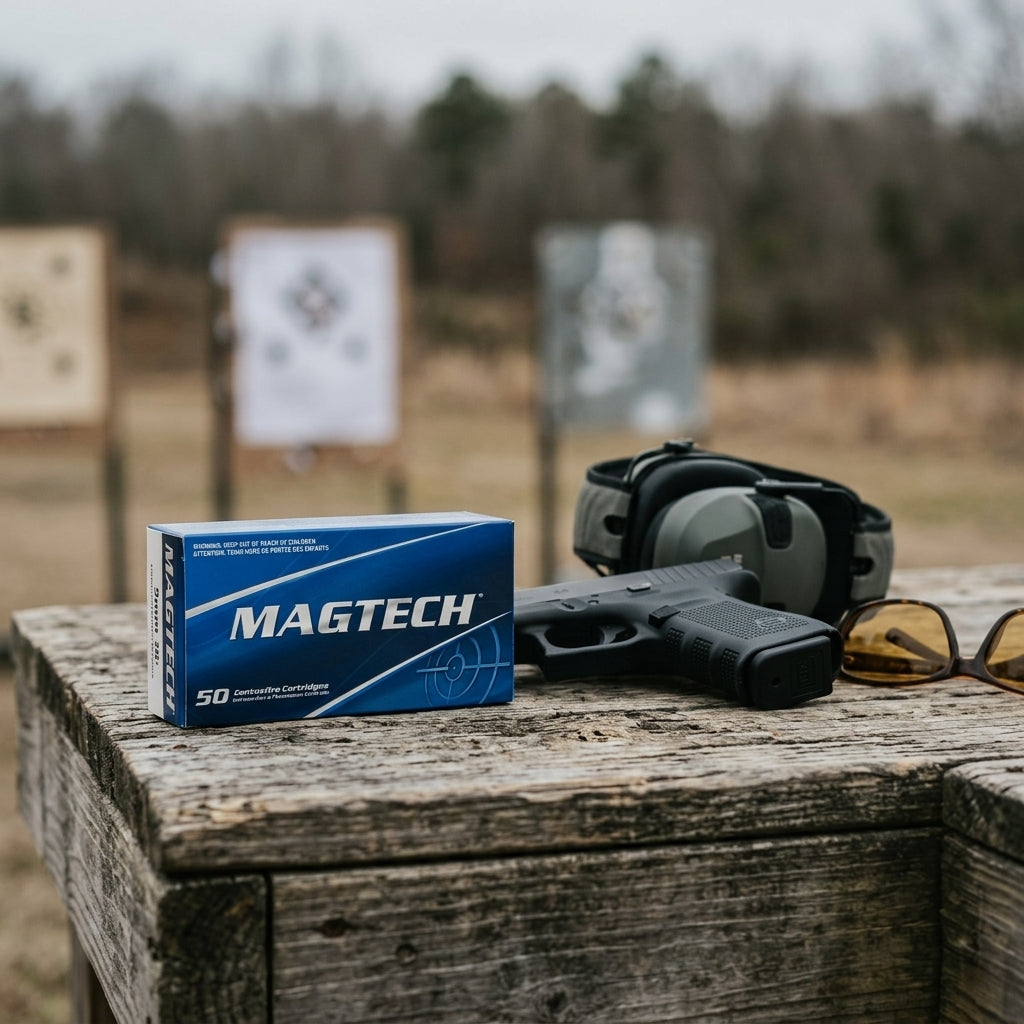
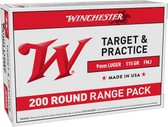
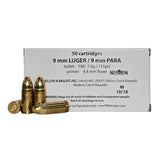
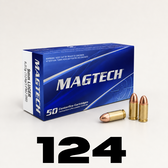
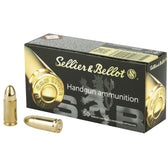
Magtech 9mm 115gr FMJ
$20.00
at Pro Armory
Prices accurate at time of writing
AR-15 Training: Three Popular Factory Rifles
A rifle class introduces another set of purchasing decisions because the firearm now interacts with an optic, sling, stock adjustment, magazines, and a much larger accessory market.
The temptation to overbuild the rifle before training is strong.
The more useful approach is to begin with a dependable rifle, a reliable sighting system, a suitable sling if required, functioning magazines, and enough ammunition to complete the course.
The Daniel Defense DDM4 V7, BCM RECCE-16, and Smith & Wesson M&P15 Sport III provide three strong factory examples.
1. Daniel Defense DDM4 V7

The DDM4 V7 is one of Daniel Defense's best-known 16-inch AR-pattern rifles.
Its current configuration uses a 16-inch barrel, mid-length gas system, and a 15-inch MFR free-floating M-LOK handguard. Daniel Defense lists the rifle around 6.2 pounds before accessories.
The platform sits firmly in the premium factory-rifle category.
That premium provides the buyer with a complete system from one manufacturer rather than requiring an upper, lower, handguard, barrel, furniture, and controls to be selected separately.
What the DDM4 V7 Offers a Training Student
The V7 arrives with a long free-floating handguard, ample M-LOK space, a full-length upper rail, adjustable stock, and factory sling-attachment options.
That means most students can add the sighting system and sling required by the class without rebuilding the rifle.
The important question is whether that convenience and component package justify the purchase price for the individual buyer.
A training class does not require a premium brand merely because the rifle will be fired extensively.
2. BCM RECCE-16

Bravo Company Manufacturing's RECCE-16 family occupies a similar professional-grade factory-rifle category while providing several configurations.
BCM's current RECCE rifles use an optimized mid-length gas system on 16-inch models and are commonly paired with the company's free-floating MCMR handguard.
The exact barrel profile and equipment can vary among RECCE-16 versions, so buyers should verify the SKU rather than treating the product-family name as one fixed rifle.
BCM also emphasizes high-pressure testing and magnetic-particle inspection on its chrome-lined barrels, along with its long-established 5.56 carbine component ecosystem.
The BCM's Biggest Strength Is the Complete Platform
The appeal of a BCM is not one decorative feature.
It is the combination of a proven AR-pattern layout, well-established components, broad parts support, and a factory configuration developed around serious use.
For a student who wants one rifle for repeated training over several years, that can be more valuable than the cheapest initial purchase.
For a new shooter whose budget would be exhausted by the rifle itself, the premium may be less sensible.
3. Smith & Wesson M&P15 Sport III

The M&P15 Sport III deserves a more serious look than the older Sport rifles often received.
Smith & Wesson updated the current generation with a free-floating handguard and mid-length gas system, bringing its layout much closer to contemporary general-purpose AR expectations.
The 16-inch barrel uses 1:8-twist 5R rifling and an Armornite-treated 4140 steel construction in the current specification.
The rifle remains positioned below premium Daniel Defense and BCM offerings, which can leave substantially more room in the budget for an optic, sling, magazines, ammunition, and tuition.
The Sport III Demonstrates the Training-Budget Question
A student with a fixed total budget does not benefit from buying a rifle so expensive that there is no money left for instruction or ammunition.
The Sport III's value lies in providing a modern factory layout without requiring the owner to start with older handguards or an outdated accessory arrangement.
That does not automatically make it equal to every premium rifle in materials, barrel construction, or inspection processes.
It makes it a much more credible lower-cost training platform than its predecessors were sometimes assumed to be.
AR-15 Platform Comparison
| Platform | Barrel | Gas System | Handguard | General Position |
|---|---|---|---|---|
| Daniel Defense DDM4 V7 | 16 in. | Mid length | 15 in. free-float M-LOK | Premium factory rifle |
| BCM RECCE-16 | 16 in., configuration dependent | Mid length | MCMR free-float on common versions | Premium professional-grade factory rifle |
| S&W M&P15 Sport III | 16 in. | Mid length | Free-float handguard | More accessible factory rifle |
Do You Need a Premium AR for Training?
No.
A premium rifle can provide excellent materials, assembly, barrel construction, and manufacturer support, but those characteristics do not turn tuition into knowledge automatically.
For someone new to rifle instruction, a dependable and properly configured mid-priced rifle may be the better overall purchase if the savings fund several classes and thousands of rounds of future practice.
Premium equipment begins making more financial sense when the buyer knows what they value and expects to use the rifle heavily over time.
The Sling Is Part of the Rifle System
Many carbine courses require a sling.
A two-point sling is commonly accepted because it provides a simple way to retain the rifle while allowing the student to adjust how the firearm sits against the body.
The exact sling type, attachment positions, and allowable hardware depend on the course.
A student should confirm that the factory rifle has compatible sling sockets or install manufacturer-approved attachment hardware before arriving.
A Sling Should Be Verified Before Class
A sling that constantly loosens, twists, disconnects, or interferes with other equipment can turn an expensive range day into an equipment troubleshooting session.
Students should familiarize themselves with adjustment and attachment before training without assuming the instructor will spend class time fixing newly purchased equipment.
What Optic Should Go on a Training Rifle?
That depends on the course.
A conventional red dot keeps the system simple and lightweight. A prism optic can provide a fixed etched reticle. A low-power variable optic adds magnification but also adds weight and greater setup complexity.
Some classes are designed specifically around magnified carbines and may recommend or require a certain optic capability.
General carbine instruction may not.
The correct optic is the one that meets the syllabus, is properly mounted, and has been confirmed on the rifle beforehand.
Backup Sights Are Course and User Dependent
Mechanical backup sights can provide another sighting option, but they also cost money and consume rail space.
Some students value them. Others run durable electronic or etched optics without them.
This is another component that should be selected intentionally rather than because every rifle photograph online seems to include it.
Spare Batteries Are Cheap Insurance
If the rifle relies on an electronic optic, hearing protection, rangefinder, or another powered accessory, spare batteries are inexpensive and easy to carry.
The same logic applies to pistol red dots.
A training day is a poor time to discover that an optic battery was near the end of its service life.
Magazines Matter More Than Many Accessories
A reliable rifle with unreliable magazines is still an unreliable training system.
Students should use known-compatible magazines and meet the quantity specified by the school.
The number should not be guessed universally because course designs vary.
A basic carbine class may require several magazines, while another program may ask for a larger load-bearing setup.
What About Chest Rigs and Plate Carriers?
Many introductory rifle courses do not require either.
A simple belt-mounted magazine carrier may be completely sufficient.
Some advanced courses explicitly require or permit chest rigs, armor carriers, or duty equipment because those items are part of the training objective.
The key is that specialized load-bearing equipment should appear because the class calls for it, not because the student thinks the rifle looks incomplete without it.
AR-15 Ammunition Rules Matter
Many training facilities prohibit ammunition that can damage steel targets or create an increased fire hazard.
Armor-piercing, tracer, incendiary, and some steel-core or bi-metal projectile configurations can be prohibited.
Course listings frequently specify ordinary ball or practice ammunition and sometimes identify exact unacceptable loads.
Confirm the ammunition before purchasing a case.

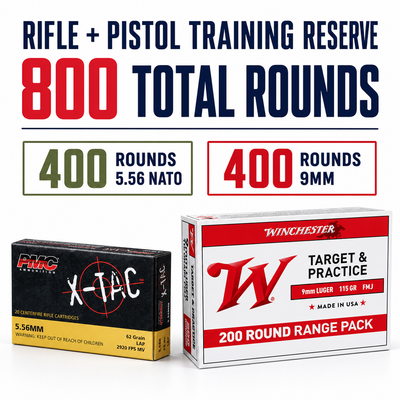
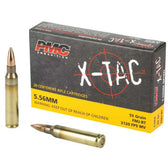
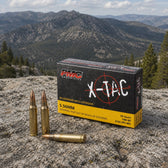
PMC X-Tac 5.56x45mm 55 Grain FMJ
$18.00
at Pro Armory
Prices accurate at time of writing
Shotgun Training: Three Popular Platforms
Shotgun classes introduce even more equipment variation because the firearms can use pump or semiautomatic operating systems, several shell lengths, different magazine capacities, and different ammunition types.
The Mossberg 590, Remington 870, and Beretta 1301 Tactical are all established platforms, but the model families contain many individual configurations.
That makes SKU-level verification especially important.
1. Mossberg 590

The Mossberg 590 is a long-running 12-gauge pump-action family offered in numerous configurations.
Depending on the specific model, barrel lengths commonly fall around 18.5 or 20 inches, while magazine capacity, sights, stocks, heat shields, safety arrangements, and accessory rails can vary.
Current Mossberg production has expanded the family further with 590S, 590R, and magazine-fed 590RM configurations alongside more traditional 590 and 590A1 models.
That makes the phrase Mossberg 590 much broader than one fixed specification.
The Traditional 590 Remains the Best Training Reference
For a basic shotgun-training comparison, a conventional stocked 590 with a tubular magazine is the cleanest reference point.
It provides the traditional pump-action operating system without requiring the discussion to revolve around newer detachable-magazine or specialized stock configurations.
Students should still verify what the class permits because a shotgun course may place requirements on barrel length, stock style, ammunition, or magazine capacity.
2. Remington 870

The Remington 870 is one of the most established pump-action shotgun designs in the American market.
The modern 870 family remains in current production, although the lineup has changed over time and current manufacturer ownership differs from earlier Remington eras.
Traditional tactical-style 870 configurations commonly use an approximately 18.5-inch 12-gauge barrel with an extended tubular magazine, but exact furniture, sights, capacity, and chamber configuration depend on the model.
That history means buyers need to pay particular attention when considering used rifles or shotguns labeled simply 870.
Used 870s Require Model and Condition Verification
A used 870 may come from a very different production period than a current firearm.
Parts, finish, furniture, internal condition, prior modifications, and maintenance history can all differ.
A training student should have any concerns addressed before the course rather than treating the 870 name itself as proof that an old shotgun is ready for several days of intensive use.
3. Beretta 1301 Tactical Mod. 2

The Beretta 1301 Tactical Mod. 2 represents the premium semiautomatic side of the comparison.
It uses Beretta's gas-operated system and a rotating-bolt arrangement rather than a manually operated pump.
Current models use an approximately 18.5-inch barrel and an extended tubular magazine. Beretta rates standard Tactical configurations at 7+1 with typical 2¾-inch shells and 6+1 with 3-inch ammunition.
Beretta also notes that some nominal 2¾-inch shells are physically long enough after loading to reduce magazine capacity by one round.
The 1301 Mod. 2 Is the Current Reference Version
The Mod. 2 incorporates updates including revised controls and an updated fore-end compared with earlier 1301 Tactical generations.
That matters when comparing accessories or reviews because a recommendation written around an older 1301 may not describe the current factory gun exactly.
Beretta does provide backward compatibility for some current parts, including the Mod. 2 fore-end, but buyers should verify individual components before ordering.
Shotgun Platform Comparison
| Platform | Operating System | Common Training-Oriented Barrel | Capacity | General Position |
|---|---|---|---|---|
| Mossberg 590 | Pump action | 18.5–20 in., model dependent | Model dependent | Established pump-action family |
| Remington 870 | Pump action | Approx. 18.5 in. in common tactical-style configurations | Model dependent | Long-established pump-action family |
| Beretta 1301 Tactical Mod. 2 | Gas-operated semiautomatic | Approx. 18.5 in. | 7+1 with typical 2¾-in. shells | Premium semiautomatic platform |
Pump Action vs. Semiautomatic for Training
Neither operating system is universally better.
A pump-action shotgun requires manual cycling between shots and places more of the operating sequence under direct shooter control.
A semiautomatic shotgun cycles using energy generated during firing and can provide a different recoil and handling experience.
Both require the student to understand the exact firearm.
Pump Action Does Not Automatically Mean More Reliable
The simple reputation of pump shotguns can become exaggerated.
A pump gun can still malfunction because of ammunition, mechanical condition, damaged parts, incorrect assembly, or user-induced cycling problems.
Reliability should be evaluated through the actual shotgun rather than assumed from the operating category.
Semiautomatic Does Not Automatically Mean Ammunition Sensitive
Modern semiautomatic shotguns such as the 1301 are designed to operate across a useful range of approved ammunition.
That still does not mean every shell from every manufacturer will behave identically.
Students should follow Beretta's ammunition guidance and the training provider's shell requirements.
Shotgun Ammunition Is Especially Course Specific
A shotgun course may use birdshot, buckshot, slugs, or a combination specified by the instructor.
Those loads are not interchangeable from the standpoint of recoil, pattern, target suitability, range rules, or price.
Students should buy the exact ammunition type requested rather than assuming that any 12-gauge shell is acceptable because it fits the chamber.
Shell Length and Chamber Length Need to Match
A shotgun's chamber marking and manufacturer instructions determine which shell lengths may be used.
Magazine capacity can also change with shell length and even with differences in the loaded overall length of shells bearing the same nominal designation.
This is one reason shotgun-capacity specifications should be treated more carefully than detachable-box-magazine capacity.
Shotgun Carry Equipment Is Less Standardized
Rifle magazines and pistol magazines naturally lend themselves to pouches.
Shotgun ammunition can be carried in belt caddies, cards, pouches, or other course-approved systems.
The correct arrangement depends heavily on what the instructor intends to teach.
Students should avoid buying specialized shell carriers until they understand the course's equipment rules.
Eye Protection Is Not Optional Equipment

Quality eye protection protects against brass, fragments, debris, dust, and other range hazards.
Many training providers specifically require impact-resistant or non-shattering lenses.
Wraparound coverage is commonly recommended because it provides more protection from the sides than small everyday eyeglasses.
Students who use prescription eyewear should verify whether additional protective glasses are required.
Hearing Protection Deserves Equal Attention

A full training day can involve hundreds of rounds fired by several students standing on the same range.
Hearing protection therefore needs to remain comfortable and effective for extended use.
Electronic earmuffs are popular because they can make it easier to hear instructor commands between shots while limiting damaging impulse noise.
Some students use plugs and earmuffs together when the environment is especially loud.
Do Not Arrive With Brand-New Ear Protection You Have Never Worn
A headset that feels comfortable for five minutes at home may create pressure points after six hours.
The same applies to safety glasses, hats, belts, and boots.
Comfort becomes a performance issue when equipment remains on the body for an entire training day.
Footwear Matters More Than Most Gun Accessories
Structured outdoor classes often keep students standing or moving on gravel, dirt, mud, concrete, or uneven surfaces for much of the day.
Stable closed-toe footwear with suitable traction is therefore more useful than many firearm accessories.
Students should also consider weather and terrain rather than wearing footwear chosen primarily for appearance.
Dress for the Entire Day, Not the Morning Forecast
An outdoor class can begin cool, become hot by midday, and finish in rain or wind.
Layers, rain protection, sun protection, and clothing that allows comfortable movement can make a substantial difference.
Long days become much less productive once the student is wet, sunburned, overheated, or cold.
Hydration Is Part of the Loadout
Water is not glamorous gear, but dehydration can affect concentration and physical performance long before someone feels dramatically ill.
Training schools regularly include hydration on their equipment lists for good reason.
Bring enough to support the expected environment and follow the provider's recommendations.
Food Matters Too
Multi-hour training can be physically and mentally demanding.
Some facilities provide food or have nearby options. Others expect students to bring their own.
The course information should identify the arrangement.
Planning ahead prevents unnecessary interruptions during limited training time.
Sun, Weather, and Basic Personal Gear
Sunscreen, a brimmed hat, insect repellent, rain gear, and seasonal clothing often provide more practical value than another accessory mounted to the firearm.
This is one of the recurring lessons of professional training equipment lists.
The gun may be the centerpiece of the class, but the student's ability to remain comfortable and attentive affects how much instruction is actually absorbed.
Do You Need Knee Pads?
Some classes strongly recommend or require them because the course uses kneeling or other positions on abrasive ground.
Other classes never ask the student to use them.
This is another syllabus-driven purchase.
Maintenance Equipment: Keep It Simple
Students do not need to bring an entire workbench to every class.
A small supply of manufacturer-approved lubricant, basic cleaning materials, the tools actually required by the firearm or optic, and any common user-serviceable spares identified by the manufacturer can be useful.
The goal is correcting minor routine issues, not rebuilding a firearm on the firing line.
Spare Firearms Can Be Useful in High-Round-Count Courses
Some experienced students bring a backup firearm when the training provider permits it.
A spare can save an expensive multi-day class if the primary firearm develops a mechanical problem that cannot be corrected quickly.
This is much less important for a beginner than having one dependable primary system and sufficient ammunition.
Optic Tools and Batteries Deserve a Small Place in the Bag
If the firearm uses an electronic optic, bring the battery type it requires.
If the mount requires a specific small tool for battery access or adjustment, bring that as well.
The student should not plan on making major mounting changes during class, but being able to replace a dead battery is sensible.
Do Not Change Major Equipment the Night Before Class
Installing a new trigger, optic, sling mount, stock, or other major component immediately before training creates unnecessary uncertainty.
If a modification is important enough to use during a class, it is important enough to verify beforehand.
The same principle applies to ammunition.
A student should know that the intended load functions properly in the firearm before arriving with several hundred rounds of it.
Budget for the Entire Class
The firearm is only one expense.
Tuition, ammunition, travel, lodging, meals, eye and ear protection, magazines, holster or sling, clothing, and future practice all contribute to the real cost of professional instruction.
A buyer choosing among a DDM4 V7, BCM RECCE-16, and Sport III should therefore consider more than rifle MSRP.
A $2,000 Rifle Is a Poor Deal If It Cancels the Training
A premium firearm can be an excellent long-term purchase.
It becomes poor value when buying it consumes the money intended for the course itself.
Instruction and practice are what develop skill. Equipment supports that process.
A Budget Rifle Is Not Automatically the Better Choice Either
Saving money has limits.
An unreliable firearm, damaged magazines, questionable optic, or poorly fitting holster can waste valuable class time.
The goal is not finding the cheapest possible loadout.
The goal is finding dependable equipment that leaves enough budget to use it.
Beginner Loadout vs. Advanced Loadout
A beginner generally benefits from simplicity.
One reliable firearm, required magazines, a compliant holster or sling, eye and hearing protection, suitable ammunition, and comfortable range clothing can be enough.
An advanced student may add specialized load-bearing equipment because the class specifically incorporates it.
The second setup is not inherently better. It serves a different training objective.
Common Mistake: Buying Accessories Before Choosing the Class
This is the fastest way to accumulate equipment that never gets used.
A shooter may buy a plate carrier only to discover that the introductory carbine class requires a basic belt and sling.
Another may purchase a particular handgun holster before learning that the instructor prohibits its retention system.
Course registration should come before specialized gear purchases whenever practical.
Common Mistake: Bringing an Unproven Firearm
A brand-new firearm can work perfectly, but the class should not be its first serious function check.
Mechanical problems consume training time and can prevent the student from participating in portions of the course.
Verify the firearm beforehand according to manufacturer instructions and normal range procedures.
Common Mistake: Using Unknown Magazines
Magazines are wear components and can create feeding problems independent of the firearm itself.
Bring magazines known to function with the firearm and mark them so a problematic unit can be identified.
There is little value in owning eight questionable magazines when the class requires three dependable ones.
Common Mistake: Assuming Every Course Allows the Same Ammunition
Steel-target restrictions alone can change the ammunition list dramatically.
A product perfectly acceptable at one range may be prohibited at another because of projectile construction or facility rules.
Always use the course provider's current ammunition requirements.
Common Mistake: Overpacking the Firearm
Lights, lasers, offset optics, magnifiers, bipods, foregrips, suppressors, electronic accessories, and other equipment can all have legitimate uses.
They also add weight, bulk, batteries, mounting hardware, and possible failure points.
If an accessory does not support the class objective or the student's actual firearm role, leaving it off may create a cleaner training system.
Common Mistake: Ignoring Personal Comfort
A badly fitted belt, uncomfortable boots, fogging glasses, or inadequate hydration can become a larger problem after several hours than the difference between two premium rifles.
The student is part of the equipment system.
Keeping that part functioning matters.
Which Handgun Makes the Most Sense?
The Glock 19 Gen5 makes the strongest case for someone wanting a compact pistol with enormous accessory and holster support.
The Walther PDP Full Size 4.5 makes sense for a shooter who prefers a larger grip and its factory ergonomic and trigger characteristics.
The M&P9 M2.0 Full Size offers another strong full-size option with an adaptable palmswell system and mature support market.
Personal fit should determine the final choice.
Which AR-15 Makes the Most Sense?
The DDM4 V7 and BCM RECCE-16 make strong arguments for buyers who want premium, manufacturer-supported rifles intended to serve as long-term training platforms.
The M&P15 Sport III is compelling for someone who wants to preserve substantially more budget for tuition, ammunition, and optics without starting with an older-style rifle layout.
The best purchase depends on the complete budget rather than the rifle alone.
Which Shotgun Makes the Most Sense?
The Mossberg 590 and Remington 870 are natural choices for someone who deliberately wants a pump-action platform.
The Beretta 1301 Tactical Mod. 2 makes a stronger case for a shooter who prefers a modern gas-operated semiautomatic and accepts the higher purchase price.
The class needs to permit the configuration, and the student needs to understand the firearm before training begins.
Recommended Decision Order
Choose the course first.
Read its prerequisites and equipment requirements.
Then determine which firearm platform fits the intended use beyond the class. After that, select the required holster, sling, magazines, optic, or ammunition carriers.
Finally, reserve enough budget for ammunition, protective equipment, travel, and future practice.
This order prevents most of the expensive mistakes associated with assembling a tactical loadout from appearance alone.
Final Thoughts
A typical tactical training loadout is much simpler than the phrase often suggests.
The core is a dependable firearm, compatible ammunition, appropriate eye and hearing protection, approved retention equipment, suitable clothing, hydration, and whatever additional gear the instructor specifically requires.
The firearm matters, but there is no single correct platform.
For handgun students, the Glock 19 Gen5, Walther PDP Full Size 4.5, and Smith & Wesson M&P9 M2.0 Full Size all provide established 9mm platforms backed by major manufacturers.
The Glock offers a compact format and exceptionally deep accessory ecosystem. The Walther provides a larger 18-round platform with strong factory ergonomics and optics support. The M&P offers a 17-round full-size configuration and a highly adaptable grip system.
For rifle classes, the DDM4 V7 and BCM RECCE-16 provide premium factory configurations, while the updated M&P15 Sport III makes a much stronger argument for the cost-conscious student than earlier Sport rifles did. Its free-float handguard and mid-length gas system give it a genuinely modern foundation without forcing the buyer into the premium price tier.
For shotgun classes, the Mossberg 590 and Remington 870 remain established pump-action choices. The Beretta 1301 Tactical Mod. 2 offers the contrasting semiautomatic option and represents the higher end of the factory market.
None of those firearms can compensate for equipment the student has never used or a class they were not prepared to attend.
The most valuable preparation is often boring: confirm the course requirements, verify the firearm, check magazine and ammunition compatibility, make sure the optic is functioning, test the holster or sling, wear comfortable footwear, and bring enough water.
That approach also prevents overspending.
A plate carrier is poor value when the class does not require one. A premium rifle is poor value when buying it means skipping the course. An inexpensive firearm is poor value when it repeatedly removes the student from instruction because of unresolved mechanical problems.
The best loadout is therefore not the one carrying the most equipment.
It is the one that disappears into the background once training begins.
Reliable equipment lets the student concentrate on instruction rather than gear.
That is exactly what a training loadout should do.
Frequently Asked Questions
What should I bring to my first tactical firearms class?
Start with the instructor's current equipment list. Common requirements include an approved firearm, approved ammunition, eye and hearing protection, suitable clothing, closed-toe footwear, and any required holster, sling, magazines, or ammunition carriers. Hydration and weather protection are also commonly recommended.
How many magazines do I need for a handgun class?
There is no universal number. Some professional programs require at least three magazines, while others require four or specify different quantities according to firearm type and course format. Follow the exact class syllabus.
What kind of handgun holster should I use?
Use a model-specific holster approved by the training provider. Many professional programs require complete trigger-guard coverage, secure belt attachment, enough structure to remain open when the pistol is removed, and safe one-handed access. Some retention mechanisms may be prohibited.
Is the Glock 19 good for training classes?
Yes. The Glock 19 Gen5 is a widely supported compact 9mm with a 4.02-inch barrel, 15-round standard magazine, and large holster and magazine ecosystem. Whether it is the best option depends on the student's hand fit and intended use.
Is the Walther PDP Full Size good for training?
Yes. The 4.5-inch PDP Full Size provides an 18-round grip in unrestricted form, interchangeable backstraps, factory optics capability, and Walther's Performance Duty Trigger. Its larger size may be comfortable for extended range instruction.
Is the M&P9 M2.0 good for training?
Yes. The full-size M&P9 M2.0 uses a 4.25-inch barrel, 17-round magazines in unrestricted configurations, and interchangeable palmswell inserts. Current versions are available with modern optics-ready features.
Do I need an expensive AR-15 for a carbine class?
No. The rifle needs to be dependable, compatible with the course, and properly configured. Premium rifles such as the DDM4 V7 and BCM RECCE-16 offer strong factory component packages, while the M&P15 Sport III provides a more accessible modern alternative.
Is the M&P15 Sport III suitable for training?
Yes. The current Sport III uses a 16-inch barrel, mid-length gas system, free-floating handguard, and 1:8-twist 5R rifling. Those features give it a significantly more contemporary layout than earlier Sport-series rifles.
Do I need a sling for an AR-15 class?
Many rifle classes require one, commonly a two-point sling, but not every course uses the same standard. Check the equipment list before purchasing.
Do I need a red dot or LPVO?
Not universally. The optic should match the class and the rifle's intended role. General carbine courses may accept several sighting systems, while specialized classes may have specific optic recommendations.
How many AR magazines should I bring?
Use the quantity specified by the training provider. Several professional courses require multiple magazines, but the exact number varies substantially with course design.
Do I need a plate carrier or chest rig?
Usually not for an introductory class unless the provider explicitly requires it. A simple belt-mounted magazine carrier may be sufficient. Advanced courses may incorporate specialized load-bearing equipment as part of the syllabus.
Is the Mossberg 590 good for shotgun training?
Yes. The 590 is an established pump-action family available in numerous configurations. Because barrel length, capacity, furniture, and sights vary, students should verify the exact model against the course requirements.
Is the Remington 870 still relevant for training?
Yes. The 870 remains an established pump-action platform and is still represented in current production. Used examples span many manufacturing eras, so mechanical condition and exact configuration deserve careful attention.
Is the Beretta 1301 Tactical good for classes?
Yes. The current 1301 Tactical Mod. 2 is a premium gas-operated 12-gauge semiautomatic platform. Standard capacity is generally 7+1 with typical 2¾-inch shells, although actual shell overall length can change usable tube capacity.
Is a pump-action shotgun better than a semiautomatic for training?
Neither is universally better. They use different operating systems and place different demands on the student. The appropriate choice depends on the course, firearm familiarity, ammunition compatibility, and personal preference.
What shotgun ammunition should I bring?
Bring exactly what the instructor specifies. A course may require birdshot, buckshot, slugs, or specific combinations, and range rules may prohibit certain projectiles.
Can I use any factory ammunition in a training class?
No. Training facilities can restrict tracer, incendiary, armor-piercing, steel-core, bi-metal, or other ammunition types. Some facilities also require frangible or lead-free ammunition in certain environments.
Should I bring spare optic batteries?
Yes, when the firearm relies on an electronic optic. Batteries are inexpensive, compact, and easy to carry. The optic should also be mounted and confirmed before class.
Should I install upgrades before class?
Avoid major last-minute equipment changes. Any new optic, trigger, sling mount, holster, magazine, or other important component should be verified before the course.
Do I need knee pads?
Only when the course recommends or requires them. Classes involving kneeling or positional work on rough surfaces may make them worthwhile.
What should I wear?
Wear clothing appropriate to the weather and range environment, supportive closed-toe footwear, and any protective equipment specified by the school. Plan for weather changes over the entire training day.
How important is hydration?
Very. Outdoor firearms training can involve hours of standing and physical activity. Many professional training providers specifically include hydration systems or water on their recommended equipment lists.
What is the most important part of a training loadout?
The most important part is compatibility with the class. A reliable firearm, approved ammunition, proper safety equipment, and correctly fitted carrying gear are more valuable than an elaborate collection of accessories that the course does not require.
About the Author
The ProArmory editorial team includes experienced hunters, competitive shooters, military veterans, firearms instructors, and firearms industry professionals committed to producing accurate, practical, and research-based content. Our articles draw on manufacturer specifications, current industry information, professional training requirements, and real-world shooting experience to help readers make informed decisions about firearms, ammunition, optics, and related equipment.
Disclaimer
This article is intended for educational and informational purposes only. Firearm specifications, magazine capacities, ammunition compatibility, product configurations, and training requirements may change by manufacturer, jurisdiction, facility, and course provider.
Always review the current written equipment requirements and prerequisites supplied by the training provider before attending a firearms course. Instructor rules and range policies take precedence over any generic equipment recommendations.
Use firearms and ammunition only according to manufacturer instructions, observe established firearm-safety practices, use appropriate eye and hearing protection, and comply with applicable federal, state, and local laws. Firearms training should be conducted under qualified supervision appropriate to the student's experience level.


