



Quick Answer
Factory match ammunition generally costs more than standard factory ammunition because manufacturers develop it around precision-oriented performance and consistency. Depending on the product, that can include specialized high-ballistic-coefficient bullets, carefully selected components, more tightly controlled dimensional specifications, match-oriented primers, specific propellant combinations, and additional attention to consistency in velocity and external ballistics.

What buyers should not assume is that every cartridge with the word “match” on the box will automatically shoot smaller groups than every less expensive load.
The Sporting Arms and Ammunition Manufacturers' Institute defines match ammunition as ammunition made specifically for match target shooting and produced with special controls intended to maximize uniformity of cartridge performance. That provides a useful industry definition, but it is not the same thing as a universal numeric certification requiring every match load to produce a particular group size, muzzle-velocity standard deviation, or dimensional tolerance.
Different manufacturers approach the category differently.
Federal Gold Medal Match, Hornady Match, and Berger factory ammunition provide good examples. Federal uses established match projectiles such as Sierra MatchKing and Berger bullets and emphasizes its Gold Medal match primers and strict specifications. Hornady Match commonly uses ELD Match bullets designed around aerodynamic consistency and high ballistic coefficients. Berger builds factory ammunition around projectile designs closely associated with long-range competition.
The additional cost can be worthwhile when small variations in ammunition performance become meaningful, particularly in precision rifle competition, long-range target shooting, ammunition testing, and evaluating a rifle's mechanical accuracy potential.
For routine recreational shooting at modest distance, general range practice, introductory training, or other applications where extreme precision is not the objective, reputable standard ammunition can provide much better value.
The smartest buying strategy is therefore not to ask whether match ammunition is universally better. It is to determine whether a particular match load produces a measurable improvement in the particular firearm and whether that improvement matters enough to justify the recurring cost.
Key Takeaways
- Match ammunition is developed specifically around match target shooting and increased uniformity, but there is no universal group-size or velocity-consistency number that every product labeled match grade must achieve.
- Match ammunition often uses specialized bullets, carefully selected components, and manufacturing specifications intended to improve consistency.
- Velocity consistency can matter substantially at long range because variations in muzzle velocity can contribute to vertical dispersion downrange.
- High ballistic coefficient alone does not make a cartridge match ammunition, and an expensive projectile does not guarantee that a particular rifle will prefer the load.
- Open-tip match bullets should not automatically be treated as expanding hunting hollow points. Projectile application needs to follow the manufacturer's design.
- Factory match ammunition can deliver competition-level performance without requiring the shooter to handload.
- Standard ammunition is not synonymous with low-quality ammunition. Reputable general-purpose loads are manufactured to defined specifications for their intended application.
- The best value comes from testing ammunition in the actual firearm and paying the match premium only when the performance difference serves a meaningful purpose.
What Is Factory Match Ammunition?
Factory match ammunition is commercially loaded ammunition developed primarily for target shooting, precision applications, and organized competition where consistency becomes especially important.
The important word is factory. The ammunition arrives as a complete commercial product rather than being assembled by an individual shooter from separately purchased cases, primers, powder, and bullets.
This gives shooters access to precision-oriented ammunition without taking on the additional equipment, component sourcing, technical knowledge, safety responsibility, and time commitment associated with handloading.
The category is most visible in centerfire rifle ammunition, where small differences in projectile design and muzzle velocity can become increasingly important as shooting distance grows.
Match ammunition also exists for handguns, rimfire firearms, and other sporting applications, but the features that matter most can differ considerably by discipline.
SAAMI Actually Defines Match Ammunition
One common explanation says that match ammunition has no industry definition at all. That goes slightly too far.
SAAMI defines match ammunition as ammunition made specifically for match target shooting and produced with special controls intended to assure maximum uniformity of cartridge performance.
That definition captures the basic idea extremely well.
Where buyers need more caution is the phrase “match grade.” There is not one universal numeric certification requiring every manufacturer to meet the same accuracy, velocity-spread, case-weight, concentricity, or group-size threshold before the terminology can appear on a product.
A manufacturer therefore needs to be evaluated according to what it actually says and does with a particular product.
There Is No Universal Match Group-Size Standard
A box being labeled match ammunition does not mean the cartridges are guaranteed to shoot 0.5 MOA, 0.75 MOA, or any other predetermined group size from every rifle.
It could not realistically mean that because ammunition does not operate independently from the firearm.
Barrel dimensions, chamber geometry, twist rate, throat, barrel condition, action consistency, optic, rest, weather, and shooter all contribute to the group eventually measured on the target.
Even two rifles of the same model can prefer different ammunition.
What Is Standard Factory Ammunition?
Standard factory ammunition is a broad descriptive category for commercial loads developed around applications such as recreational shooting, routine range practice, hunting, training, or general sporting use rather than narrowly focused precision competition.
Standard does not mean poorly manufactured.
Companies producing millions of commercial cartridges still need dimensional controls, pressure specifications, reliable primers, functioning cases, appropriate propellant charges, and inspection procedures.
The distinction is better understood as one of priorities.
A general-purpose 9mm FMJ load may emphasize dependable cycling and reasonable cost during high-volume range use. A hunting cartridge may prioritize controlled expansion and penetration. A match rifle load may place greater emphasis on consistency of flight and long-range precision.
Those products solve different problems.
Match vs. Standard Ammunition
| Characteristic | Factory Match Ammunition | Standard Factory Ammunition |
|---|---|---|
| Primary Design Goal | Precision and consistent target performance | General-purpose performance appropriate to the product |
| Projectile | Frequently specialized target or high-BC design | Varies widely by range, hunting, defensive, or sporting purpose |
| Component Selection | May use match-specific bullets, primers, cases, and propellant specifications | Selected according to the intended commercial application |
| Velocity Consistency | Frequently an important design priority | Still controlled, but precision-specific consistency may not be the primary selling point |
| Ballistic Coefficient | Often high in long-range rifle loads | Depends entirely on bullet purpose |
| Published Precision Information | More commonly emphasized | Often less central to product marketing |
| Production Volume | Can be comparatively specialized | Often much larger in common cartridges |
| Typical Price | Higher | Usually lower |
| Best Value | When precision benefits are measurable and useful | When specialized precision performance is unnecessary |
These are tendencies rather than absolute rules. Premium hunting ammunition can cost as much as or more than dedicated match ammunition, while some inexpensive loads shoot remarkably well from particular firearms.
What Are You Actually Paying For?
The easiest mistake is assuming that the additional money buys one specific improvement.
It does not.
The retail premium can reflect projectile cost, case specifications, primers, propellant selection, manufacturing controls, inspection procedures, production volume, packaging, distribution, brand positioning, and market demand.
The proportion attributable to each factor varies from product to product.
1. The Projectile Is Often the Most Obvious Difference

Match ammunition frequently uses more specialized bullets than inexpensive range ammunition.
These projectiles may incorporate carefully controlled jackets, long aerodynamic noses, boat tails, small or controlled meplats, polymer tips, or other design elements intended to improve ballistic consistency.
That does not mean the bullet is necessarily expensive because it uses exotic materials.
Often the value lies in how consistently ordinary materials have been formed.
Bullet Uniformity Matters
A projectile needs to leave the barrel and travel through the atmosphere consistently if the shooter expects repeated impacts in a small area at extended distance.
Differences in bullet weight, jacket thickness, base geometry, bearing surface, or nose shape can influence how the projectile accelerates, exits the barrel, and moves through the air.
Precision bullet manufacturers therefore devote substantial attention to dimensional consistency.
Sierra, for example, publishes tight jacket-concentricity and weight specifications for its MatchKing target bullets. Hornady emphasizes AMP jacket concentricity, swaged-core uniformity, and consistent tip geometry in its ELD Match design.
2. Ballistic Coefficient Becomes More Important at Distance

Ballistic coefficient, or BC, describes how effectively a projectile resists aerodynamic drag relative to a reference model.
A higher BC can help a bullet retain velocity and reduce wind deflection compared with a lower-BC projectile launched under otherwise comparable conditions.
This is one reason long, streamlined bullets with boat tails appear frequently in precision rifle ammunition.
BC is still not an accuracy rating.
A bullet can have an excellent advertised ballistic coefficient and still perform poorly from a particular rifle if the complete ammunition and firearm combination is inconsistent.
BC Consistency Can Matter as Much as the Published BC
Precision shooters are interested not only in the average aerodynamic performance of a bullet but in whether one projectile behaves like the next.
If the effective drag varies from shot to shot, long-range dispersion can increase even if the average BC looks impressive on a specification sheet.
This is why companies such as Hornady and Berger devote considerable engineering attention to meplat shape, jacket uniformity, ogive geometry, and other projectile details.
3. Velocity Consistency Is a Major Part of Match Performance

One of the most important differences in precision ammunition receives surprisingly little attention outside long-range shooting: shot-to-shot velocity consistency.
If several rounds leave the muzzle at meaningfully different velocities, they will not follow exactly the same trajectory.
At short distance, the resulting vertical difference may be small enough to disappear inside normal group variation.
At extended range, velocity variation can contribute increasingly noticeable vertical dispersion.
Extreme Spread and Standard Deviation
Chronograph users commonly evaluate ammunition using extreme spread and standard deviation.
Extreme spread is the difference between the fastest and slowest measured shot in the sample.
Standard deviation describes how velocities are distributed around the sample's average velocity.
Neither number is a complete accuracy measurement, but both can provide useful information about ammunition consistency.
A Low SD Does Not Automatically Mean Tiny Groups
Ammunition can produce extremely consistent muzzle velocities and still fail to group exceptionally well from a specific barrel.
Mechanical accuracy depends on additional relationships involving the bullet, bore, chamber, barrel harmonics, crown, seating geometry, and firearm.
Likewise, a load can produce excellent short-range groups without having the lowest velocity variation in a test.
Chronograph data and target results should therefore be evaluated together.
4. Primer Selection Can Be Part of the Match Package

Reliable and consistent ignition matters because the primer initiates the propellant burn.
Federal Gold Medal ammunition provides a clear example. Federal specifically markets its Gold Medal match primer as part of the complete precision-loading system.
This does not mean every factory match manufacturer uses a uniquely branded match primer, or that ordinary commercial primers are inconsistent.
It shows how one manufacturer approaches the category.
5. Propellant Selection and Charge Consistency Matter

The powder charge determines much of the pressure-and-velocity relationship after ignition.
Manufacturers developing precision ammunition can select propellants and charge specifications around the performance goals of the particular cartridge.
Federal specifically identifies specially formulated propellant in Gold Medal Berger ammunition.
Again, buyers should resist converting that product-specific information into an unsupported statement that every cartridge labeled match receives powder measured through one universal process.
6. Cartridge Cases Matter Too
The case contains the primer and propellant, holds the projectile, and expands against the chamber during firing.
Case dimensions, neck geometry, internal volume, and consistency can all interact with the complete load.
Some match-ammunition manufacturers explicitly emphasize premium or selected cases.
Others provide less detail about their case-production process.
The absence of a marketing paragraph about brass does not automatically mean the brass is poor, and the phrase match brass does not by itself establish a measurable advantage.
7. Dimensional Consistency Can Influence the Complete Cartridge
Overall length, bullet alignment, case dimensions, and seating consistency can all influence how a cartridge chambers and how the projectile begins its movement into the rifling.
Manufacturers of precision ammunition may control those variables closely within their product specifications.
Those internal manufacturing tolerances are not always published, so buyers should avoid inventing numbers that the manufacturer has not disclosed.
8. Quality Control Can Be Different, but Do Not Generalize Too Far
Match ammunition manufacturers frequently emphasize additional attention to consistency, but the precise inspection process is rarely identical from one company to another.
Federal publicly identifies some of its Gold Medal components and strict performance specifications. Berger speaks openly about exacting tolerances in its match-grade products. Hornady publishes detailed technical characteristics of its match bullets.
Other manufacturers may disclose much less.
The responsible conclusion is that match ammunition is produced with precision-oriented uniformity as a central design objective, not that every round from every brand is individually weighed, measured, or inspected by hand.
Standard Ammunition Has Quality Control Too
There is a tendency to describe match ammunition as carefully manufactured and ordinary ammunition as though it leaves the factory unchecked.
That is misleading.
Commercial ammunition still needs to operate within the manufacturer's specifications and applicable industry pressure and dimensional requirements.
Reputable range ammunition would have little value if primers regularly failed, cases would not chamber, or cartridges routinely exceeded their dimensional specifications.
The difference is emphasis, not the presence versus absence of quality control.
Open-Tip Match Bullets

Open-tip match bullets are among the most recognizable projectiles used in precision rifle ammunition.
The small opening at the nose can make them superficially resemble hollow-point hunting or defensive bullets.
That resemblance can be misleading.
The opening is associated with how many precision projectiles are manufactured and how the nose is formed. The primary design objective is precision and external ballistic performance rather than creating a large cavity specifically intended to initiate controlled expansion.
OTM Is Not the Same as a Conventional Expanding Hollow Point
Sierra's traditional MatchKing provides one of the clearest examples.
The company describes MatchKing bullets as target projectiles designed around accuracy, with very small meplats and tightly controlled jackets and weights.
Sierra also states that MatchKing and Tipped MatchKing bullets are not recommended for most hunting applications.
That should stop buyers from assuming a visible opening in the nose automatically establishes hunting-bullet terminal performance.
Match Bullets and Hunting Bullets Solve Different Problems
A hunting projectile needs to provide terminal performance appropriate to the game and conditions for which it was designed.
That may require controlled expansion, penetration, weight retention, or another specific performance envelope.
A target bullet can prioritize aerodynamic consistency instead.
Some manufacturers produce projectiles that deliberately bridge those categories, but that needs to come from the manufacturer's product design rather than assumption.
Polymer-Tipped Match Bullets

Hornady's ELD Match family demonstrates another approach.
Instead of leaving an open tip, Hornady uses its Heat Shield polymer tip to create a controlled nose profile.
The company combines that tip with a streamlined secant ogive, boat-tail geometry, AMP bullet jacket, and precision-swaged lead core.
Hornady also uses Doppler radar to establish the published ballistic coefficients.
A Polymer Tip Does Not Automatically Mean Match Ammunition
Hornady's own catalog demonstrates the point clearly.
ELD Match uses a polymer tip and is intended for target shooting.
ELD-X also uses a Heat Shield tip but is designed as an expanding hunting bullet.
The presence of the tip tells buyers almost nothing about intended terminal performance by itself.
Projectile construction and manufacturer application matter.
Full Metal Jacket Ammunition

FMJ bullets are extremely common in general-purpose range ammunition.
Their widespread use and efficient commercial production help manufacturers offer ammunition suitable for high-volume recreational shooting at prices below many dedicated precision loads.
FMJ should not be translated into inaccurate.
It simply describes projectile construction.
A well-made FMJ load can shoot extremely well from a particular firearm while still being designed around a different cost and performance target than premium long-range ammunition.
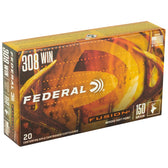
Federal Gold Medal Match

Federal Gold Medal is one of the best-known factory match ammunition families in the United States.
The line has historically used respected precision projectiles including Sierra MatchKing and Berger target bullets.
Federal identifies several differences within its Gold Medal products, including match primers, Federal brass, specialized propellant in certain loads, and strict specifications involving accuracy, velocity, and pressure.
This makes Gold Medal particularly useful as an example because the manufacturer provides more information than simply printing the word match on the package.
Gold Medal Sierra MatchKing

Federal has loaded Sierra MatchKing bullets in Gold Medal ammunition for decades.
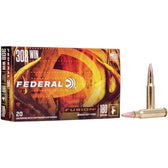
The combination has become a benchmark in cartridges such as .308 Winchester, where Gold Medal 168- and 175-grain MatchKing loads have long been associated with precision target shooting.
That reputation still does not mean one of those loads will be the best performer in every .308 rifle.
It means the ammunition has a well-established precision-oriented design and history.
Gold Medal Berger

Federal also offers Gold Medal loads using Berger bullets.
These products pair Berger's high-BC projectile designs with Federal's Gold Medal loading approach.
That combination shows how factory match ammunition can bring separately respected component manufacturers into one complete commercial cartridge.
Hornady Match

Hornady Match is another major reference point in factory precision rifle ammunition.
Many current loads use ELD Match projectiles, including well-known 6.5 Creedmoor and 6mm Creedmoor configurations.
The line remains active in serious competition. Factory-loaded 6.5 Creedmoor 140-grain Hornady Match ammunition has continued producing high-level NRL Hunter results during the 2026 season.
Factory Ammunition Can Be Competitive Without Handloading
That point matters.
There was a time when serious precision shooting was frequently assumed to require handloaded ammunition.
Modern factory match loads have made that conclusion much less universal.
A competitor who finds a factory load that performs exceptionally well can spend the time normally devoted to ammunition assembly practicing instead.
That convenience can itself have value.
Berger Factory Ammunition

Berger occupies an unusual position because the company is recognized both for precision bullets and for complete factory ammunition.
Its factory offerings have included Target, Tactical, and Hunting configurations across several long-range cartridges.
Target-oriented loads use projectile designs developed specifically around high ballistic efficiency and consistent precision.
Berger also makes an important distinction between its target-oriented bullets and hunting bullets, with different jacket designs selected for their respective applications.
Berger Shows Why “Premium” and “Match” Are Not the Same Thing
Berger produces extremely premium hunting ammunition as well as target products.
Both may be manufactured with extensive attention to consistency.
The hunting cartridge does not become match ammunition simply because it is expensive or precise.
Its bullet has a different terminal-performance objective.
Three General-Purpose Ammunition Families
The standard side of the market is much broader.
Federal American Eagle, Winchester USA, and CCI Blazer Brass are familiar examples of commercial ammunition families designed around common sporting and range applications.
These should not be treated as direct one-to-one competitors with a 6.5 Creedmoor long-range Match load because the examples span different cartridges and firearm types.
Their purpose here is to demonstrate how manufacturers position products for routine shooting rather than dedicated long-range precision.
Federal American Eagle

Federal American Eagle has long occupied the company's value and range-ammunition category.
The family includes handgun, rifle, and rimfire loads developed around recreational shooting and training.
Federal still emphasizes reliable components and useful target performance.
The distinction from Gold Medal is therefore not that one receives quality control and the other does not. Gold Medal is simply developed around a much more specialized precision objective.
Winchester USA

Winchester USA is another widely recognized general-purpose ammunition family.
Many shooters know it through conventional FMJ range loads in popular handgun and rifle cartridges.
Its appeal centers on common commercial applications and broad availability rather than specialized long-range bullet technology.
CCI Blazer Brass
Blazer Brass serves a particularly strong role in the handgun market.
It provides brass-cased commercial ammunition for common handgun cartridges and is widely used for recreational and training applications.
Comparing a box of Blazer Brass 9mm directly against a 6.5 Creedmoor match load would make little sense because the ammunition is solving an entirely different problem.
That difference helps illustrate why price comparisons need to remain within the same caliber and intended use.
Compare Match and Standard Ammunition Within the Same Caliber
The most useful comparison places two loads in the same firearm.
Comparing 9mm range ammunition with a premium 6.5 Creedmoor load tells the buyer almost nothing about how much the match designation costs.
A better experiment compares two .308 Winchester loads in the same rifle, or two 6.5 Creedmoor loads through the same barrel.
That keeps cartridge dimensions, firearm, optic, distance, and most environmental variables consistent enough to reveal whether the premium ammunition is actually doing something useful.
Does Match Ammunition Actually Shoot Smaller Groups?
It can.
That is, after all, the reason the category exists.
The answer becomes problematic only when can is changed to always.
A factory match load may provide dramatically smaller groups than inexpensive ammunition in one rifle and only a modest improvement in another.
Another rifle may unexpectedly shoot a relatively affordable commercial load extremely well.
Every Barrel Has Its Own Preferences
Barrels are manufactured within tolerances rather than being molecularly identical.
Chamber dimensions, throat geometry, bore dimensions, rifling, crown, barrel stiffness, bedding or receiver relationship, and wear can all influence how a particular load performs.
This is why ammunition testing remains valuable even after buying a highly regarded match product.
Two Rifles of the Same Model Can Prefer Different Loads
Buying the same rifle as another competitor does not guarantee that both barrels will produce the same group size with identical ammunition.
The same applies to production lots of ammunition.
Manufacturers work to control variation, but no physical manufacturing process produces perfectly identical components forever.
Lot-to-Lot Consistency Matters
Precision shooters frequently pay attention to lot numbers because ammunition is produced in batches.
A load that performs exceptionally well may motivate a competitor to acquire additional ammunition from the same lot when practical.
That does not mean another lot will suddenly be poor.
It reflects the fact that competitors seeking very small performance margins try to control as many variables as possible.
When Distance Increases, Small Differences Become Easier to See
At 25 or 50 yards, two competent rifle loads may appear nearly indistinguishable for recreational use.
At several hundred yards, differences in muzzle velocity, ballistic coefficient, wind response, and group consistency become easier to observe.
This is where factory match ammunition earns most of its reputation.
Its specialized characteristics are more valuable when the target and distance are demanding enough to expose them.
Match Ammunition Cannot Fix a Poor Rifle
Premium ammunition does not repair a damaged crown, loose optic mount, worn barrel, defective chamber, unstable shooting position, or inconsistent shooter technique.
It can help reveal the accuracy potential of a properly functioning firearm.
That is an important difference.
Match Ammunition Cannot Replace Fundamentals
A competitor still needs good positional technique, consistent trigger control, reliable data, and an understanding of wind.
Expensive ammunition can reduce one source of variation.
It cannot eliminate the others.
Factory Accuracy Claims Need Context
Manufacturers may publish group sizes, accuracy guarantees, velocity figures, ballistic coefficients, or competition results.
Those numbers need to be read under the conditions in which they were produced.
A velocity measured from a 24-inch test barrel cannot automatically be expected from a 20-inch rifle.
A group produced using a carefully controlled test fixture cannot automatically be reproduced from an improvised field position.
Advertised Velocity Is a Reference Point
Factory velocity specifications are useful for comparing products and building initial ballistic data.
The actual velocity from an individual firearm can differ.
Barrel length, bore dimensions, chamber, temperature, ammunition lot, and chronograph conditions can all contribute to the result.
Precision shooters commonly confirm actual muzzle velocity from their own rifle rather than treating the box number as permanent ballistic truth.
Ballistic Coefficients Also Need Context
BC is useful, but buyers should identify which drag model is being used.
G1 and G7 values are not directly interchangeable numbers.
Long, boat-tail precision rifle bullets are often modeled more appropriately using G7 values than the older G1 reference, although manufacturers may publish both.
The number should therefore always be used with the correct ballistic model.
Match Ammunition vs. Hunting Ammunition
Match and hunting ammunition can both be expensive and extremely precise.
The difference is primarily mission.
A dedicated match projectile is optimized around target performance and external ballistic consistency.
A hunting bullet also needs terminal behavior appropriate to its intended game and impact conditions.
A Hunting Load Can Be Match Accurate Without Being Match Ammunition
Many premium hunting loads produce excellent groups.
Hornady ELD-X, Berger Elite Hunter, and numerous other premium projectiles are designed to combine aerodynamic performance with terminal behavior.
That does not turn them into pure target bullets.
Product purpose matters more than the group size printed in an advertisement.
Do Not Hunt With a Match Bullet Just Because It Is Accurate
A bullet grouping exceptionally well does not automatically establish that it provides the desired terminal performance on game.
Hunters should use projectiles the manufacturer identifies as appropriate for the intended application and comply with applicable hunting regulations.
This is especially important with traditional target bullets whose design priorities differ substantially from controlled-expansion hunting projectiles.
Match Ammunition vs. Defensive Ammunition
The same principle applies to defensive handgun ammunition.
A dedicated defensive load may prioritize reliable feeding, controlled expansion, penetration, barrier performance, or other terminal characteristics.
A match handgun load may be optimized around competition accuracy, power factor, recoil characteristics, or another sporting requirement.
The categories should not be assumed interchangeable simply because both can be premium products.
Handgun Match Ammunition Is a Different Market
The phrase match ammunition can mean something very different to an action-pistol competitor than it does to a long-range rifle shooter.
A long-range rifle competitor may be extremely concerned with ballistic coefficient and velocity standard deviation.
An action-pistol competitor may care more about reliable feeding, power factor, manageable recoil behavior, and consistent function across high round counts.
The word match therefore needs application context.
Rimfire Match Ammunition Is Different Again
.22 LR precision shooting creates another category entirely.
Rimfire ammunition cannot be handloaded in the conventional sense, making factory ammunition selection particularly important.
Serious rimfire competitors frequently test several loads or lots because individual barrels can show dramatic preferences.
A .22 LR rifle that groups exceptionally well with one match product can be considerably less impressive with another premium load.
This reinforces the same principle seen in centerfire rifles: price and reputation cannot replace testing in the actual firearm.
Factory Match Ammunition vs. Handloaded Ammunition
Factory and handloaded ammunition are different ownership approaches rather than automatic performance rankings.
A highly skilled handloader can tailor ammunition closely to a particular rifle and control component choices according to their own requirements.
That flexibility can be valuable to serious competitors.
It also requires specialized equipment, components, technical knowledge, careful documentation, and strict adherence to established reloading safety data.
Handloads Are Not Automatically Better
Poorly assembled ammunition does not become precise simply because it was made by hand.
Modern factory match ammunition can provide outstanding accuracy and velocity consistency while removing much of the labor involved in producing a season's supply.
For many shooters, that tradeoff is worthwhile.
Factory Match Can Save Time
A competitor using a factory load that performs well can purchase ammunition, confirm its performance, record ballistic data, and spend more time practicing.
That time has real value.
Someone who enjoys handloading may view ammunition development as part of the sport. Someone who does not may value the ability to obtain competition-ready ammunition directly from a manufacturer.
The Price Premium Adds Up Quickly
A relatively small per-round difference becomes substantial when multiplied across an entire shooting season.
Consider a hypothetical comparison between two loads in the same cartridge.
| Quantity | Standard at $1.00/Round | Match at $1.75/Round | Additional Match Cost |
|---|---|---|---|
| 20 rounds | $20 | $35 | $15 |
| 100 rounds | $100 | $175 | $75 |
| 500 rounds | $500 | $875 | $375 |
| 1,000 rounds | $1,000 | $1,750 | $750 |
Those prices are intentionally hypothetical and should not be interpreted as current retail figures.
The table illustrates why the question matters. An extra 75 cents looks insignificant when examining one cartridge. Across 1,000 rounds, it becomes enough money to purchase substantial additional equipment, match fees, or practice ammunition.
The Right Answer May Be Using Both
Shooters do not necessarily need to choose one ammunition category forever.
A precision-rifle owner might use more affordable ammunition for positional practice at shorter distance and reserve the preferred match load for long-range data confirmation and competition.
Whether that strategy works depends on how similarly the loads behave and whether changing ammunition creates enough point-of-impact or ballistic difference to become inconvenient.
The concept is simply to spend premium-ammunition money where the premium matters.
Training Ammunition Should Still Be Relevant to the Training
Very inexpensive ammunition that produces completely different recoil, point of impact, feeding behavior, or external ballistics may provide less useful practice for a competitor.
Cost savings need to be balanced against what the practice session is supposed to accomplish.
There is little value in saving money if the alternative ammunition prevents the shooter from collecting meaningful data or training the intended skill.
When Is Match Ammunition Worth It?
Factory match ammunition makes the strongest argument when accuracy and repeatability are central to the activity.
Precision rifle competition is the clearest example.
Long-range recreational shooting is another, particularly when small vertical and wind dispersion matter.
It can also be useful when evaluating a new rifle, optic, barrel, or complete precision setup because high-quality ammunition can remove one obvious source of uncertainty.
Match Ammunition Can Help Evaluate a Rifle
If a rifle groups poorly with inexpensive ammunition, it may be difficult to determine whether the limitation comes from the rifle, ammunition, or both.
Testing several established precision loads can provide a better picture of the rifle's potential.
That still does not mean one box is enough to diagnose every accuracy problem.
It simply gives the shooter better reference ammunition.
When Is Match Ammunition Probably Unnecessary?
A shooter firing large reactive targets at relatively short range may gain little from a high-BC precision projectile.
The same can be true for introductory training where the primary goals involve safety, firearm manipulation, and basic marksmanship rather than extracting the smallest possible group.
Spending more on ammunition does not automatically make the training more productive.
Recreational Shooters Should Measure the Benefit
If standard ammunition consistently produces groups much smaller than the targets being shot, additional precision may have little practical value.
For that shooter, buying more ammunition rather than more expensive ammunition may create a better overall experience.
How to Compare Match and Standard Ammunition Fairly
The comparison should use the same firearm, same optic, same distance, same support method, and similar environmental conditions.
One excellent group from one load and one poor group from another can be misleading because small samples contain substantial random variation.
Several groups provide more useful information than one impressive target.
If a chronograph is available, velocity data adds another dimension to the comparison.
Group Size and Chronograph Data Answer Different Questions
The target shows where the shots landed.
The chronograph shows how consistently the ammunition produced muzzle velocity.
Both matter in long-range applications.
An ideal precision load provides useful consistency in both areas from the specific firearm.
Do Not Chase One Tiny Group
A single unusually small group can occur through favorable random dispersion.
A load that repeatedly produces strong results is more meaningful than one spectacular photograph surrounded by mediocre groups.
Consistency is the entire point of the match-ammunition discussion.
Point of Impact Can Change Between Loads
Two loads in the same caliber can strike in different places even when the rifle and optic remain unchanged.
Projectile weight, velocity, barrel harmonics, and other variables can shift point of impact.
That means switching from inexpensive training ammunition to match ammunition before a competition may require confirming zero rather than assuming both loads hit the same place.
Twist Rate and Bullet Stability Matter
Many match rifle bullets are relatively long for their caliber because aerodynamic designs frequently use long ogives and boat tails.
The barrel needs an appropriate twist rate to stabilize the projectile under the conditions in which it will be used.
Buyers should therefore confirm ammunition and firearm compatibility rather than selecting the heaviest or highest-BC bullet simply because its specification sheet looks impressive.
More Bullet Weight Is Not Automatically Better
A heavier projectile can provide a higher ballistic coefficient in some bullet families, but weight alone does not determine aerodynamic performance.
Shape, diameter, length, velocity, and drag characteristics all matter.
The heaviest available load may also produce different recoil and trajectory characteristics than the rifle owner wants.
Availability Is Part of Ammunition Performance
A match load cannot help a competitor if it cannot be sourced consistently enough to train and complete a season.
This becomes particularly relevant with specialized competition cartridges.
Mainstream chamberings such as .308 Winchester and 6.5 Creedmoor generally provide a much broader factory-ammunition ecosystem than niche cartridges.
That logistical advantage deserves consideration alongside ballistic performance.
Buying Enough of a Proven Load Can Reduce Variables
Once a shooter identifies factory ammunition that performs well, maintaining a reasonable supply can simplify future practice and data collection.
Changing among several loads constantly means reconfirming velocity, point of impact, and ballistic data.
Consistency in equipment can make learning easier.
Match Ammunition Does Not Last Longer in Storage Just Because It Is Match
The word match does not provide a special storage-life advantage.
Longevity depends on manufacturing quality, packaging, environmental exposure, temperature, humidity, contamination, and storage conditions.
Standard and match ammunition should both be stored according to manufacturer guidance and inspected if there is any concern about damage or deterioration.
Premium Packaging Is Not Performance
Match ammunition frequently arrives in polished packaging because it occupies a premium market segment.
The box does not affect what happens after the cartridge enters the chamber.
Buyers should separate presentation from the technical features of the actual load.
Price Is Not a Ballistic Specification
An expensive cartridge may justify its price through premium components, specialized production, smaller production volume, or excellent performance.
It can also simply be expensive because the market will support the price.
Retail cost should therefore never be used as a substitute for group testing, chronograph data, or manufacturer specifications.
What Should Precision Rifle Shooters Prioritize?
Start with reliable function and correct chambering.
Then evaluate group consistency, actual muzzle velocity, velocity variation, ballistic coefficient, ammunition availability, and cost.
For competition, it is also useful to consider whether the ammunition can be purchased consistently enough to practice with the same load that will be used at matches.
What Should Recreational Shooters Prioritize?
Reliable function, compatibility, reasonable accuracy, and cost usually deserve more attention than match terminology.
If a less expensive load already performs better than the shooter's needs require, the additional match premium may accomplish very little.
What Should Hunters Prioritize?
Use ammunition designed and approved for the game and application.
Accuracy remains important because precise shot placement matters, but projectile terminal design is equally important.
A tiny target group does not transform a target bullet into an appropriate hunting bullet.
What Should Competitive Handgun Shooters Prioritize?
Reliable feeding, consistent function, division requirements, recoil characteristics, accuracy, and any applicable power-factor requirements can be more important than long-range ballistic coefficient.
The definition of useful ammunition consistency changes with the sport.
Factory Match Ammunition Is Better Than It Used to Be
Commercial precision ammunition has evolved considerably.
Modern bullet design, improved manufacturing equipment, Doppler-radar ballistic development, sophisticated quality-control systems, and a larger long-range shooting market have given factory-ammunition buyers options that were once far more dependent on handloading.
The current success of factory ammunition in PRS, NRL Hunter, F-Class, and other precision disciplines demonstrates how capable commercial loads have become.
That Does Not Make Handloading Obsolete
Competitive shooters still use handloads because customization has value.
The ability to select an exact projectile, control velocity, tune seating configuration, and manage component lots can be useful at advanced levels.
The important change is that factory ammunition is now a legitimate competitive solution rather than merely a compromise for someone unwilling to reload.
Common Mistake: Assuming Match Means Guaranteed Accuracy
Match describes the ammunition's intended category and manufacturing emphasis.
It does not guarantee a particular group size from the shooter's firearm.
Testing remains necessary.
Common Mistake: Assuming Standard Means Inaccurate
Some rifles shoot relatively inexpensive loads remarkably well.
If the ammunition is reliable, consistent enough for the application, and produces the required accuracy, there is no rule demanding replacement with a more expensive box.
Common Mistake: Buying the Highest-BC Bullet Available
A high BC is valuable only when the bullet is appropriate for the firearm, twist rate, intended use, and shooting distance.
Ballistic efficiency cannot compensate for unstable flight or poor grouping.
Common Mistake: Comparing Different Ammunition Categories by Price Alone
A 9mm FMJ range cartridge and a 6.5 Creedmoor match cartridge have almost nothing in common from a cost-analysis standpoint.
They use different amounts of material, different bullets, different cases, different manufacturing equipment, and serve completely different applications.
Compare products within the same chambering whenever possible.
Common Mistake: Ignoring the Cost of Practice
A shooter can become so focused on purchasing the most precise ammunition possible that the resulting cost reduces training volume substantially.
That tradeoff can be counterproductive.
A slightly less precise load fired regularly may contribute more to practical improvement than premium ammunition the owner hesitates to shoot.
Common Mistake: Changing Loads Constantly
Trying every new ammunition release can become entertaining, but constant switching makes it harder to build reliable ballistic data.
Once a load consistently meets the requirement, familiarity has value.
So, What Are You Really Paying For?
In a well-developed factory match load, the premium is paying for a manufacturer to make consistency and precision central objectives of the complete cartridge.
That can include the bullet, primer, case, propellant, dimensional control, velocity specifications, inspection procedures, ballistic development, and production scale.
Different companies emphasize different parts of that equation.
The customer is also paying for convenience. The ammunition arrives ready to use without requiring the shooter to develop and assemble a precision load personally.
The Real Value Is Reduced Uncertainty
That may be the best way to understand factory match ammunition.
A premium precision load is intended to reduce ammunition-related variables so the shooter can focus on the rifle, position, data, environment, and execution.
It cannot eliminate every variable.
It can make the ammunition itself less likely to be the limiting factor.
When the Premium Is Worth Paying
If a $1.75 hypothetical match load repeatedly produces meaningfully better groups and more consistent long-range results than a $1.00 load, the additional cost may be completely rational for competition.
If both loads produce results well inside the requirements of recreational shooting, spending 75 percent more may provide little practical benefit.
The target and chronograph should settle that question more effectively than the packaging.
Final Thoughts
Factory match ammunition costs more because precision and consistency are part of the product's fundamental purpose.
SAAMI's definition captures the idea well: match ammunition is made specifically for match target shooting using special controls intended to maximize uniformity of cartridge performance.
That definition does not create one universal match-grade accuracy threshold.
Federal, Hornady, Berger, and other ammunition companies therefore approach the category through their own projectile designs, component choices, ballistic development, and production methods.
Federal Gold Medal demonstrates one approach through Sierra MatchKing and Berger projectiles, Gold Medal primers, Federal cases, specialized propellants in certain loads, and strict accuracy, pressure, and velocity specifications.
Hornady Match approaches the same objective through products such as ELD Match, where aerodynamic consistency, Heat Shield tip geometry, concentric jackets, swaged cores, and Doppler-verified ballistic data form the center of the design.
Berger brings another competition-focused philosophy built around bullets and factory ammunition developed specifically for precision shooting.
Those differences are real.
What buyers should avoid is assuming they create an automatic hierarchy in which match ammunition always wins and standard ammunition always loses.
Standard factory ammunition serves an enormous range of legitimate shooting needs. Federal American Eagle, Winchester USA, CCI Blazer Brass, and similar products can provide exactly the combination of reliability, availability, and cost required for high-volume recreational use.
The shooting application determines whether the match premium matters.
At relatively short distance on ordinary recreational targets, an expensive high-BC projectile may provide no meaningful advantage.
At long range, differences in bullet consistency, aerodynamic behavior, muzzle velocity, and velocity spread become progressively more important.
This is where match ammunition begins earning its price.
The rifle still gets a vote.
A famous match load may produce exceptional groups from one barrel and merely good groups from another. A less expensive load can occasionally surprise the shooter by matching or outperforming a premium alternative.
That is why ammunition testing matters more than reputation alone.
For precision shooters, the best approach is to compare several appropriate loads in the actual rifle, examine repeated group performance, confirm muzzle velocity when possible, and consider availability and long-term cost.
Once a load provides the required performance consistently, there is little value in paying more simply because another box carries a more prestigious label.
Factory match ammunition is worth the money when the additional consistency produces a result the shooter can actually measure and use.
If it does not, reputable standard ammunition may be the better ammunition for the job and the better value.
Frequently Asked Questions
What is factory match ammunition?
Factory match ammunition is commercially manufactured ammunition developed specifically for match target shooting or other precision-oriented applications. SAAMI defines match ammunition as ammunition made for match target shooting using special controls intended to maximize uniformity of cartridge performance.
Is match grade an official accuracy certification?
No universal numeric match-grade certification requires every product to meet the same group-size, velocity-standard-deviation, or dimensional-tolerance threshold. Individual manufacturers establish and document their own product specifications.
Is match ammunition always more accurate?
No. Match ammunition is designed around precision-oriented consistency, but actual accuracy depends on how the specific load interacts with the firearm. A less expensive load can occasionally outperform a premium match load in a particular barrel.
Why does match ammunition cost more?
The additional price can reflect specialized bullets, component selection, precision-oriented loading specifications, primers, propellant selection, quality-control procedures, smaller production volumes, ballistic development, and brand positioning. The exact reasons vary by product.
Does match ammunition use better bullets?
Match ammunition often uses specialized target bullets designed around consistent geometry and external ballistic performance. Better should still be understood according to purpose. A premium hunting bullet may be more appropriate for hunting even if a match bullet has a higher ballistic coefficient.
What is an open-tip match bullet?
An OTM projectile has a small opening at the nose associated with its construction and precision-oriented design. It should not automatically be treated as equivalent to an expanding hunting or defensive hollow-point bullet.
Is Sierra MatchKing an expanding hollow point?
Sierra classifies MatchKing as a target bullet and states that traditional MatchKing and Tipped MatchKing bullets are not recommended for most hunting applications. The small hollow-point-style opening is part of the target projectile's design rather than proof of conventional controlled-expansion behavior.
What is Hornady ELD Match?
ELD Match is Hornady's precision target-bullet family using a Heat Shield polymer tip, streamlined ogive and boat-tail geometry, AMP jackets, and precision-swaged cores. Hornady establishes its published ballistic coefficients using Doppler radar.
Is Gold Medal Match still relevant?
Yes. Federal Gold Medal remains an established factory precision ammunition family using bullets such as Sierra MatchKing and Berger designs along with Gold Medal match primers and precision-oriented loading specifications.
Does match ammunition have better primers?
Some products use primers specifically marketed for match applications. Federal Gold Medal is a clear example. Buyers should not assume every match load uses a special primer unless the manufacturer says so.
Does factory match ammunition have lower velocity variation?
Velocity consistency is commonly important in precision ammunition, but the actual extreme spread and standard deviation need to be measured from the specific load and firearm. A match label alone does not guarantee a particular SD.
Why does muzzle-velocity consistency matter?
Different muzzle velocities produce slightly different trajectories. At long range, enough variation can contribute to vertical dispersion. This makes velocity consistency especially important in precision rifle competition and long-range shooting.
What is extreme spread?
Extreme spread is the difference between the fastest and slowest measured muzzle velocity within a sample of shots.
What is standard deviation in ammunition testing?
Standard deviation describes the distribution of measured velocities around their average. Precision shooters often use it alongside extreme spread and group size when evaluating ammunition consistency.
Does a low velocity SD guarantee accuracy?
No. Velocity consistency is only one part of ammunition performance. Bullet design, chamber interaction, barrel characteristics, crown, harmonics, firearm condition, and shooter technique also influence group size.
Is a higher ballistic coefficient always better?
Not automatically. High BC can improve downrange velocity retention and wind performance, but the bullet still needs to be appropriate for the cartridge, twist rate, firearm, and intended use. Consistent performance matters more than simply selecting the highest number.
Is standard ammunition low quality?
No. Reputable standard factory ammunition is still manufactured to product specifications and quality-control requirements. It simply prioritizes different applications such as range use, hunting, or general recreational shooting.
Can ordinary range ammunition be very accurate?
Yes. Some firearms show a strong preference for relatively inexpensive commercial loads. The only reliable way to determine whether the difference matters is to test suitable ammunition in the actual firearm.
Should I use match ammunition for hunting?
Only when the specific projectile is identified by the manufacturer as appropriate for that hunting application and its use complies with applicable regulations. A target bullet's excellent accuracy does not automatically make it an appropriate hunting projectile.
Is factory match ammunition good enough for competition?
Yes. Modern factory match ammunition is used successfully in serious precision rifle competition, including current PRS- and NRL-style events. Whether a particular load is competitive depends on the rifle, cartridge, shooter, and match requirements.
Do precision shooters still handload?
Many do because handloading provides extensive control over components and load development. It is not mandatory. High-quality factory match ammunition can provide excellent performance while eliminating the time and equipment required to assemble ammunition individually.
Should I practice with standard ammo and compete with match ammo?
That can be practical if the two loads behave similarly enough for the type of practice being performed. Different ammunition can produce different velocity, recoil, point of impact, and trajectory, so competition zero and ballistic data should be confirmed with the actual match load.
Does match ammunition have a longer shelf life?
Not inherently. Storage life depends on manufacturing quality, packaging, environmental conditions, and proper storage rather than whether the ammunition is marketed as match grade.
How should I decide whether match ammunition is worth buying?
Compare appropriate loads in the same firearm. Consider repeated group performance, actual muzzle velocity and consistency when relevant, ammunition availability, intended shooting distance, and total cost. Pay the premium when the measurable improvement matters to the activity.
About the Author
The ProArmory editorial team includes experienced hunters, competitive shooters, military veterans, firearms instructors, and firearms industry professionals committed to producing accurate, practical, and research-based content. Our articles draw on manufacturer specifications, current industry information, and real-world shooting experience to help readers make informed decisions about firearms, ammunition, optics, and related equipment.
Disclaimer
This article is intended for educational and informational purposes only. Ammunition specifications, availability, pricing, bullet construction, ballistic data, and manufacturer product offerings may change.
Published velocity, ballistic coefficient, accuracy, and consistency claims are generally based on manufacturer testing under specified conditions and should not be interpreted as guarantees that every firearm will produce identical results.
Always use ammunition matching the exact cartridge designation and specifications approved by the firearm manufacturer. Follow manufacturer instructions, established firearm-safety practices, range rules, competition rules, and applicable federal, state, and local laws.


