


Quick Answer
+P stands for additional pressure. It identifies ammunition loaded to a higher maximum average pressure than the standard version of the same cartridge under a separately established industry specification. For example, SAAMI lists standard 9mm Luger ammunition at a maximum average pressure of 35,000 psi and 9mm Luger +P at 38,500 psi, which represents a 10% increase in the permitted pressure ceiling.
Higher pressure can produce greater bullet velocity, but the actual difference varies by ammunition design. It does not guarantee greater accuracy, reliability, or superior results. Only use +P ammunition when the firearm manufacturer explicitly approves it for the specific model, because a handgun chambered for standard-pressure ammunition is not automatically approved for +P.
Key Takeaways
- +P is a pressure designation, not a bullet type or a separate caliber.
- SAAMI recognizes +P specifications for certain handgun cartridges, including 9mm Luger, .38 Special, and .45 Automatic.
- Standard 9mm Luger has a maximum average pressure of 35,000 psi; 9mm Luger +P is rated at 38,500 psi.
- +P ammunition may produce higher velocity and more noticeable recoil, depending on the load and firearm.
- Higher pressure does not automatically mean better accuracy or reliability.
- +P and +P+ are not interchangeable designations.
- SAAMI does not establish a standardized +P+ pressure category.
- Firearm compatibility must be confirmed through the manufacturer's current guidance.
- Standard-pressure ammunition remains a practical choice for many owners.
Ammunition boxes often display more than a cartridge designation and bullet weight. Labels such as 9mm +P, .38 Special +P, and .45 ACP +P identify a pressure category that can affect ammunition characteristics and firearm compatibility, yet many buyers encounter these markings without a clear explanation of what they actually mean.
The confusion is understandable. Higher pressure is often associated with greater velocity or stronger performance, but those relationships are not automatic. The +P designation has a specific technical meaning for certain standardized cartridges, and it should not be treated as a universal performance upgrade.
Understanding the difference between standard-pressure ammunition, +P, and +P+ is important for making informed purchasing decisions. This guide examines the recognized pressure specifications, explains the practical differences, and outlines why firearm manufacturer approval remains essential.
What Does +P Mean on an Ammunition Box?
The letter P refers to pressure, and the plus sign indicates a higher-pressure version of a cartridge. When ammunition is fired, expanding gases create pressure inside the cartridge case and firearm chamber, and ammunition manufacturers must account for that pressure when designing and testing cartridges.
In the United States, the Sporting Arms and Ammunition Manufacturers' Institute, commonly known as SAAMI, publishes voluntary industry standards covering ammunition and chamber dimensions, pressure limits, and related performance requirements. For certain handgun cartridges, SAAMI recognizes both a standard-pressure version and a separate +P version.
A box labeled 9mm Luger +P therefore identifies ammunition manufactured to the higher-pressure 9mm Luger +P specification. It does not mean the cartridge is a different caliber, nor does it indicate a particular bullet construction.
This distinction matters because ammunition labels often contain several independent specifications. A box might identify a cartridge as 9mm Luger +P, list a bullet weight of 124 grains, and describe the bullet as a jacketed hollow point. The caliber identifies the cartridge, +P identifies its pressure category, the grain measurement identifies bullet weight, and the bullet description identifies its construction.
Standard Pressure vs. +P Ammunition
The difference between standard-pressure and +P ammunition is easiest to understand by comparing the industry pressure limits. SAAMI establishes a maximum average pressure, or MAP, for standardized cartridges. This represents a defined testing limit, not a promise that every individual cartridge operates at exactly that pressure.
A +P specification allows a higher maximum average pressure than the corresponding standard-pressure cartridge.
SAAMI Pressure Comparison
| Cartridge | Standard Maximum Average Pressure | +P Maximum Average Pressure | Difference |
|---|---|---|---|
| 9mm Luger | 35,000 psi | 38,500 psi | 10% higher |
| .38 Special | 17,000 psi | 20,000 psi | Approximately 17.6% higher |
| .45 Automatic / .45 ACP | 21,000 psi | 23,000 psi | Approximately 9.5% higher |
Figures are SAAMI maximum average pressure specifications, not measurements of individual commercial loads. Percentages compare the published pressure ceilings.
These figures demonstrate why +P should not be interpreted as a universal percentage increase. The difference depends on the particular cartridge. Maximum average pressure is also not the same as bullet velocity or muzzle energy, because pressure is only one part of the cartridge's internal ballistic behavior.
The official SAAMI centerfire pistol and revolver standard provides the technical foundation for these distinctions.
Which Calibers Have Recognized +P Ammunition?
Not every cartridge has an officially standardized +P version. SAAMI's recognized handgun cartridge designations include 9mm Luger +P, .38 Special +P, .45 Automatic +P, and .38 Super Automatic +P.
These names matter because the presence of a +P marking on an ammunition box does not automatically establish that the cartridge conforms to a recognized SAAMI +P specification.
9mm Luger +P

9mm Luger +P is one of the most recognizable higher-pressure ammunition categories. It is commonly encountered in premium handgun ammunition lines, particularly those marketed for personal protection.
The standard 9mm Luger pressure ceiling is 35,000 psi, while the +P ceiling is 38,500 psi. A buyer comparing standard 9mm and 9mm +P ammunition should remember that the pressure designation does not establish a universal velocity increase, since two loads using different bullet designs or weights may produce different results even when both carry the same pressure classification.
Firearm compatibility remains essential. A pistol chambered in 9mm Luger should not automatically be assumed to support 9mm +P.
.38 Special +P

.38 Special +P is particularly familiar to revolver owners. SAAMI lists standard .38 Special at 17,000 psi and .38 Special +P at 20,000 psi.
The distinction is especially important because numerous older revolvers were manufactured before modern +P specifications became commonplace. Age, design, condition, and manufacturer approval all matter, which means an older revolver should never be assumed compatible with +P ammunition simply because it is chambered for .38 Special.
.45 ACP +P

The .45 Automatic cartridge, commonly called .45 ACP, also has a recognized +P specification. SAAMI lists the standard cartridge at 21,000 psi and the +P version at 23,000 psi.
As with 9mm, the +P designation establishes a higher pressure category rather than a guaranteed level of accuracy or performance. Some modern .45 ACP firearms are approved for +P ammunition, while others may have restrictions, so buyers should consult the instructions for their exact firearm rather than relying on general claims about the caliber.
What About .38 Super +P?

.38 Super Automatic +P is also a SAAMI-recognized cartridge designation. It is important not to confuse .38 Super Automatic +P with .38 Automatic, an older cartridge with different pressure specifications. The similar names do not make them interchangeable.
SAAMI's recognized naming convention for .38 Super includes the +P designation. Buyers should follow the firearm manufacturer's chambering and ammunition guidance rather than drawing conclusions from the shared .38 designation.
What About .380 ACP +P, 10mm +P, and .45 Colt +P?
These labels require particular caution. A commercially advertised +P designation does not necessarily mean that SAAMI has established a corresponding pressure specification. For cartridges without a recognized +P standard, the label may reflect a manufacturer's own product classification rather than an industry-defined pressure category.
For example, SAAMI does not establish a standardized .380 Automatic +P or .45 Colt +P cartridge category in its centerfire pistol and revolver standard. That means the label alone does not communicate a universally recognized maximum average pressure comparable to 9mm Luger +P.
Buyers should not assume that a commercially available +P label establishes compatibility with their firearm. When a cartridge lacks a recognized +P standard, explicit approval from the firearm manufacturer becomes especially important.
What Is the Difference Between +P and +P+ Ammunition?

The difference between +P and +P+ is one of the most important points in ammunition education. +P ammunition has a defined SAAMI pressure specification for certain cartridges, while +P+ does not have a standardized SAAMI maximum average pressure.
That does not mean every product labeled +P+ operates at the same pressure. Different manufacturers may use the designation differently, so the marking provides less standardized information than a recognized +P designation.
Standard Pressure vs. +P vs. +P+
| Feature | Standard Pressure | +P | +P+ |
|---|---|---|---|
| SAAMI pressure specification | Yes, for standardized cartridges | Yes, for designated cartridges | No separate SAAMI +P+ standard |
| Pressure relative to standard | Within standard limit | Higher defined limit | Manufacturer-dependent |
| Bullet type | Varies | Varies | Varies |
| Firearm compatibility | Requires correct chambering and manufacturer guidance | Requires explicit manufacturer approval | Requires explicit approval for the specific ammunition |
| Universal performance advantage | No | No | No |
| Primary buyer concern | Correct cartridge and firearm compatibility | Higher-pressure compatibility | Lack of a standardized +P+ pressure ceiling |
A firearm approved for +P ammunition should not automatically be considered approved for +P+ ammunition. The safest interpretation is straightforward: when the pressure designation is not clearly supported by the firearm manufacturer's documentation, do not assume compatibility.
Does +P Ammunition Have More Velocity?
Higher operating pressure can allow ammunition manufacturers to achieve greater bullet velocity, but +P ammunition does not produce one fixed increase in speed. Velocity depends on bullet weight, cartridge design, propellant characteristics, barrel length, and other factors.
Two 9mm loads with the same bullet weight may have different published velocities even when both are standard-pressure ammunition. Likewise, a +P load may show a relatively modest increase over a particular standard-pressure alternative.
Manufacturers commonly publish velocity figures for their ammunition, but those figures should be interpreted carefully. Test-barrel length, testing conditions, and measurement methods can influence published results, so a velocity figure from one manufacturer's test setup may not be directly comparable with another company's figure.
Buyers should therefore avoid assuming that the +P designation alone tells them exactly how much faster a cartridge will be.
Does +P Ammunition Have More Recoil?
+P ammunition can produce more noticeable recoil than comparable standard-pressure ammunition, although the difference depends on the particular load and firearm. Recoil is influenced by projectile mass, velocity, propellant gases, firearm weight, and the firearm's mechanical characteristics.
A lightweight handgun may feel different when firing higher-pressure ammunition than a heavier firearm of the same caliber. However, perceived recoil is subjective, and grip design, ergonomics, and individual experience can influence how noticeable the difference feels.
This is one reason higher pressure should not be treated as an automatic improvement. An ammunition choice that produces greater velocity may also introduce handling characteristics that an owner does not prefer.
Is +P Ammunition More Accurate?
No. The +P designation does not establish an accuracy advantage. Accuracy depends on the complete interaction between ammunition, firearm design, barrel quality, sights, and the shooter.
A particular firearm may produce excellent results with one standard-pressure load and different results with a +P alternative, while another firearm may show the opposite pattern. Higher pressure does not automatically produce tighter groups or greater consistency.
Buyers should evaluate manufacturer specifications and reputable independent testing rather than assuming the more expensive or higher-pressure cartridge will be more accurate.
Does +P Ammunition Improve Defensive Performance?

This is one of the most common reasons buyers consider +P ammunition, but the relationship between pressure and terminal performance is more complicated than the label suggests. Higher pressure can contribute to greater velocity, and velocity can influence how a particular projectile behaves, but bullet construction and the ammunition's overall design are also important.
A well-designed standard-pressure defensive cartridge may perform differently from a +P cartridge using another projectile design. Pressure designation alone does not establish which ammunition will provide more consistent expansion, penetration, or other characteristics.
Published independent ammunition evaluations can provide useful context, but test conditions and results should be considered carefully. The most important point is that higher pressure is not a substitute for firearm compatibility, ammunition quality, or manufacturer guidance.
Buyers should be skeptical of claims that +P ammunition is automatically superior simply because it operates at a higher pressure.
Can Every 9mm Handgun Use +P Ammunition?
No. A handgun chambered for 9mm Luger is not automatically approved for 9mm Luger +P. Compatibility depends on the firearm's design, manufacturer specifications, and sometimes the particular model or generation.
Some manufacturers explicitly permit +P ammunition in certain models, while others provide restrictions, warnings, or recommendations concerning higher-pressure ammunition. A firearm's age and mechanical condition can also be relevant, since older firearms may have been designed around different ammunition expectations and worn or damaged components introduce additional concerns.
The appropriate reference is the firearm manufacturer's current documentation for the exact model. If compatibility cannot be confirmed, buyers should not assume that +P ammunition is acceptable merely because it physically fits the chamber.
Can +P Ammunition Cause Additional Wear?
Higher-pressure ammunition can place different stresses on firearm components than comparable standard-pressure loads. Depending on the firearm's design and the ammunition involved, this may affect component wear or service life, although the degree of any effect varies.
Manufacturers account for operating pressures when designing and evaluating firearms. Some models are explicitly approved for higher-pressure ammunition, while others are not, so owners should follow manufacturer guidance regarding ammunition compatibility, inspection, and maintenance intervals.
A firearm that has been damaged, altered, or is in questionable mechanical condition should be evaluated by a qualified professional rather than tested with higher-pressure ammunition.
Is +P Ammunition Safe in Older Firearms?
Older revolvers and semiautomatic pistols require particular caution because some were manufactured before current +P pressure specifications became established. A firearm's original design limits may not align with modern higher-pressure ammunition, even when the cartridge designation appears familiar.
Mechanical condition is another important consideration. Corrosion, wear, previous modifications, and uncertain maintenance history can complicate the assessment of an older firearm. The caliber marking alone does not establish that +P ammunition is appropriate.
Owners should consult the original manufacturer when possible or seek guidance from a qualified gunsmith. If compatibility cannot be confirmed, higher-pressure ammunition should not be assumed safe.
How to Identify +P Ammunition
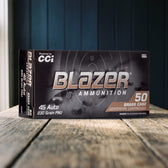
Commercial +P ammunition is generally identified through its product labeling and cartridge markings. A manufacturer may include +P in the cartridge designation on the box, such as 9mm Luger +P or .38 Special +P, and SAAMI also identifies the +P marking on the cartridge headstamp as part of its recognized designation.
Buyers should verify that the packaging and ammunition correspond to the intended cartridge and pressure category. Ammunition should remain in its original packaging whenever practical because factory boxes provide important information about cartridge designation, bullet weight, manufacturer, and product identification.
Loose or unidentified cartridges create unnecessary uncertainty. If the exact cartridge or pressure designation cannot be established, it should not be used.
Is +P Ammunition More Expensive?
+P ammunition may cost more than standard-pressure alternatives, but the price difference is not necessarily caused by the pressure designation alone. Many +P products are marketed as premium ammunition and may incorporate specialized bullet designs, different manufacturing processes, or additional quality-control features.
A standard-pressure premium load may also cost substantially more than inexpensive range ammunition, which is why buyers should compare the complete product rather than focusing only on the +P marking.
Bullet construction, manufacturer reputation, intended application, package quantity, and current retail pricing all influence value. For many recreational shooting purposes, standard-pressure factory ammunition offers a practical and widely available option without the additional compatibility considerations associated with +P.
Final Thoughts
+P ammunition is a higher-pressure version of certain standardized cartridges, not a separate caliber or an automatic performance upgrade. For recognized cartridges such as 9mm Luger, .38 Special, and .45 Automatic, SAAMI establishes distinct maximum average pressure limits that define the difference between standard-pressure and +P ammunition.
Higher pressure can contribute to increased velocity and different recoil characteristics, but it does not guarantee better accuracy, reliability, or overall performance. The distinction between +P and +P+ is especially important because +P+ does not have a separate standardized SAAMI maximum average pressure specification.
For ammunition buyers, the priority should be understanding the exact cartridge designation and confirming that the firearm manufacturer approves the relevant pressure category. Standard-pressure ammunition remains appropriate for many applications, and choosing higher-pressure ammunition should be based on verified compatibility and the complete product specifications rather than the +P marking alone.
Understanding +P ammunition means recognizing that higher chamber pressure is a technical specification rather than a universal measure of quality. While certain +P loads may offer increased velocity, that doesn't automatically make them more accurate, more reliable, or better suited to every firearm. Standard-pressure ammunition remains an important option for both regular practice and specialized applications. Readers interested in comparing specific ammunition types can explore our guide to popular 9mm range and defensive ammunition for additional perspective on bullet weights, construction, and intended uses.

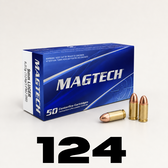
Magtech 9mm 124gr Range Can Offer
$249.00 (500 rounds)
at Pro Armory
Prices accurate at time of writing
Frequently Asked Questions
What Does +P Stand For in Ammunition?
+P indicates a higher-pressure ammunition category. For certain cartridges, SAAMI publishes a separate maximum average pressure specification above the standard-pressure limit.
Is 9mm +P the Same as Regular 9mm?
Both use the 9mm Luger cartridge designation, but 9mm +P has a higher standardized maximum average pressure. A firearm chambered in 9mm Luger is not automatically approved for +P ammunition.
How Much More Pressure Does 9mm +P Have?
SAAMI lists standard 9mm Luger at 35,000 psi and 9mm Luger +P at 38,500 psi, a 10% increase in the maximum average pressure limit.
Can +P Ammunition Damage a Firearm?
Using higher-pressure ammunition in a firearm not approved for it can cause damage or injury. Compatibility should always be confirmed through the firearm manufacturer.
Is +P Ammunition More Powerful?
It operates under a higher permitted pressure ceiling and may produce greater velocity. However, the designation alone does not guarantee a specific increase in velocity, energy, or practical performance.
What Is +P+ Ammunition?
+P+ is a designation used by some ammunition manufacturers for higher-pressure products. SAAMI does not publish a separate standardized +P+ maximum average pressure.
Is .38 Special +P Safe in Every .38 Special Revolver?
No. Some revolvers are not approved for +P ammunition, particularly certain older designs. Consult the firearm manufacturer's documentation for the exact model.
Is .380 ACP +P a SAAMI-Recognized Cartridge?
No. SAAMI does not establish a separate standardized .380 Automatic +P cartridge category. Buyers should not assume that commercially labeled .380 +P ammunition is compatible with a standard .380 firearm.
Is .45 ACP +P a Real Ammunition Standard?
Yes. SAAMI recognizes .45 Automatic +P with a maximum average pressure of 23,000 psi, compared with 21,000 psi for standard .45 Automatic.
About the Author
The ProArmory Editorial Team creates practical, research-informed content for firearm owners, ammunition shoppers, hunters, and shooting enthusiasts. Our articles focus on product education, firearm specifications, buying considerations, safety, and responsible ownership.
Our goal is to help readers understand their equipment options and make informed purchasing decisions without exaggerated performance claims or unnecessary hype.
Disclaimer
This article is intended for general educational and informational purposes only. Ammunition pressure specifications, product labeling, and firearm compatibility requirements may vary by cartridge, manufacturer, and model. The information presented does not replace official ammunition standards or firearm manufacturer instructions.
Always use ammunition explicitly approved for your firearm, follow established firearm safety procedures, and maintain appropriate secure storage. Never assume that a firearm is compatible with +P or +P+ ammunition based solely on its caliber, age, appearance, or construction material.
Consult the firearm manufacturer or a qualified gunsmith when compatibility is uncertain. Firearm and ammunition purchases, transportation, possession, and use are subject to applicable federal, state, and local laws.
ProArmory does not guarantee the performance, safety, reliability, or suitability of any ammunition or firearm discussed in this article.


