








Quick Answer
A $600 red dot sight does not necessarily produce a clearer aiming point or better shooting results than a $150 optic. The biggest differences often involve durability, electronics, environmental protection, quality control, and the manufacturer's testing standards.
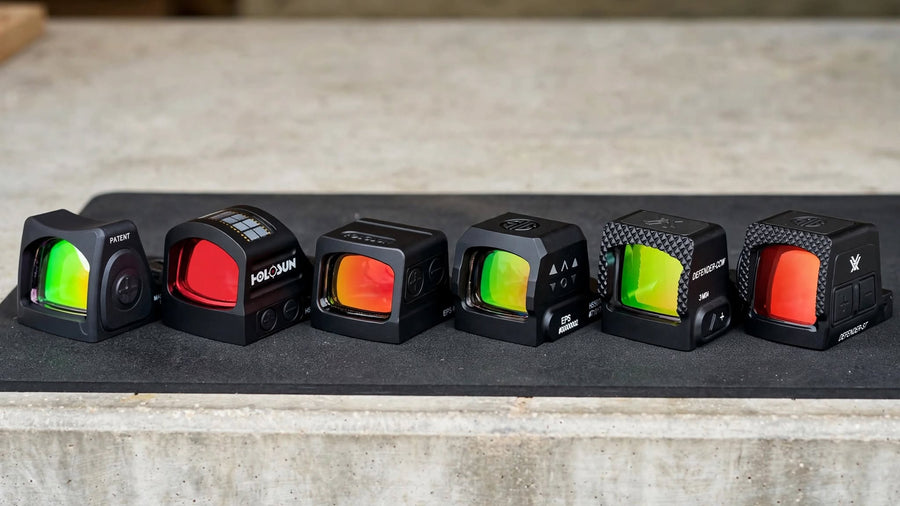
Budget red dots can provide excellent value for recreational shooting, particularly when used in relatively controlled conditions. Many offer adjustable brightness, respectable battery life, aluminum housings, and dependable basic functionality.
Premium optics generally justify their higher prices through more demanding construction requirements, specialized electronic components, extensive durability testing, and support intended for demanding applications.
However, price alone cannot establish reliability.
Some moderately priced optics include features traditionally associated with premium products, while certain expensive models prioritize durability and simplicity over additional technology.
The better question is not whether a $600 optic is automatically better than a $150 alternative. It's whether the additional features, construction quality, and manufacturer support are worth paying for based on how the optic will actually be used.
Key Takeaways
- Higher red dot prices often reflect durability engineering, electronics, testing, manufacturing requirements, and warranty support rather than improvements in basic aiming capability.
- Budget red dots can be suitable for recreational shooting, provided they are compatible with the firearm and perform consistently.
- Premium optics may offer greater resistance to impacts, moisture, vibration, and demanding environmental conditions, but these characteristics must be evaluated by model.
- Battery-life ratings, waterproof claims, lens quality, and mounting compatibility deserve closer attention than marketing terminology.
- The best value comes from matching the optic's verified capabilities to its intended application, not automatically choosing the cheapest or most expensive model.
What Changes Between a $150 and $600 Red Dot?
A red dot sight is relatively straightforward in concept. An illuminated aiming reference is reflected through an optical system, allowing the shooter to see the aiming point while looking toward the target.
That basic capability exists across a wide range of prices.
The differences become more apparent when manufacturers determine how the optic should perform under repeated use, environmental exposure, and mechanical stress.
A budget optic may emphasize affordability and essential features.
A premium optic may be engineered around demanding durability requirements, more extensive testing, and a particular professional or specialized application.
Those priorities affect both manufacturing costs and the final retail price.
Red Dot Price Tiers at a Glance
| Price Range | Common Characteristics | Primary Considerations |
|---|---|---|
| Around $150 | Basic LED illumination, adjustable brightness, conventional housing materials | Compatibility, warranty, verified durability |
| Around $250-$350 | Broader feature selection, potentially improved electronics, battery access, and environmental ratings | Feature quality, mounting support, manufacturer testing |
| Around $400-$500 | Some premium construction options, specialized designs, and more demanding durability claims | Whether the specific features justify the price |
| Around $600 and above | Selected professional-grade designs, extensive testing claims, specialized construction, or premium support | Documented performance, application, total ownership cost |
These ranges are illustrative, not fixed industry classifications. Prices change, and individual products frequently overlap categories.
An optic costing $250 may outperform a more expensive competitor in one category while falling behind in another.
Housing Construction: Where Durability Starts

One of the most visible differences between red dots is the housing.
Manufacturers use various aluminum alloys, manufacturing methods, protective finishes, and structural designs.
These decisions influence weight, strength, resistance to deformation, and production costs.
However, material specifications alone do not establish the durability of the finished optic.
Aluminum Grade Is Only Part of the Equation
Many red dots use aluminum housings.
Common material designations include 6061 and 7075 aluminum alloys.
7075-T6 aluminum generally offers higher strength than 6061-T6, although the finished housing's performance also depends on its geometry, thickness, manufacturing quality, and design.
A well-engineered optic made from one material may survive conditions that damage a poorly designed optic made from another.
Holosun, for example, specifies 7075 aluminum for its HS407C X2.
This demonstrates why buyers should avoid assuming that a particular aluminum grade is exclusive to expensive optics.
The more useful questions involve the complete housing design and the manufacturer's documented testing.
Premium Designs May Protect Vulnerable Components
Some manufacturers engineer the housing to redirect or absorb mechanical stress.
The Trijicon RMR provides a recognizable example.
Trijicon describes its patented housing shape as a way to divert impact forces away from the lens, reducing the likelihood of damage.
Trijicon describes durability and environmental testing as important elements of its RMR product development and evaluation. These manufacturer-reported testing practices provide useful context, but they should not be interpreted as proof that every RMR configuration outperforms every competing optic. Direct comparisons require consistent testing methods and clearly identified product versions.
That does not mean every less expensive optic is fragile.
It means the premium product has identifiable design features and testing priorities that buyers can evaluate rather than relying on its price alone.
For a recreational optic used under ordinary range conditions, extensive impact protection may provide little noticeable day-to-day benefit.
For an optic expected to encounter more demanding conditions, documented structural durability can become more important.
Why Electronics Matter More Than Extra Features
Red dot electronics control illumination, brightness settings, power management, and the stability of the aiming reference.
Manufacturers must account for battery connections, internal circuitry, switches, and the effects of repeated vibration.
These components can be difficult for buyers to evaluate from a specification sheet.
Two optics may advertise similar battery life and brightness settings while using different internal designs.
Battery Contact Design Deserves Attention
A red dot depends on a consistent electrical connection.
Mechanical movement, vibration, and impacts can challenge that connection if the internal components are not adequately secured.
Trijicon identifies reinforced battery contacts and upgraded electronics as features of its RMR Type 2 design.
Those changes were intended to improve performance under demanding use.
The important takeaway is that premium pricing can reflect engineering work that is largely invisible when examining the optic on a store shelf.
A buyer cannot determine the quality of internal electrical connections simply by comparing exterior appearance.
Manufacturer documentation, relevant testing, and established product history provide more useful evidence.
More Technology Does Not Automatically Mean Better Reliability
Some moderately priced optics offer motion-activated illumination, automatic brightness adjustment, solar-assisted operation, and multiple reticle options.
Some moderately priced optics offer features such as motion-activated illumination, automatic brightness adjustment, solar-assisted operation, or multiple reticle options, depending on the model.
For example, Holosun's HS407C X2 includes Shake Awake technology and a 2 MOA dot, with an advertised battery life of up to 50,000 hours under specified conditions. Other Holosun models, including the HS507C X2, incorporate Solar Failsafe technology.
These features demonstrate how moderately priced optics can offer sophisticated electronics, although the number of features does not automatically establish greater durability or reliability.
Its published specifications also include a 2 MOA dot and an advertised battery life of up to 50,000 hours under specified conditions.
These are meaningful features, but their presence does not automatically establish greater durability than an optic with simpler electronics.
A premium sight may deliberately use a more straightforward control system because its manufacturer prioritizes other performance characteristics.
Buyers should separate feature quantity from feature quality.
An optic with fewer features can still be the better purchase if its documented capabilities align more closely with the intended use.
Battery Life: Why Advertised Hours Can Be Misleading
Battery life is one of the most frequently advertised red dot specifications.
Manufacturers sometimes promote figures exceeding 50,000 hours, which sounds impressive compared with products advertising substantially shorter operating periods.
However, these numbers require context.
Battery life depends on illumination settings, battery type, operating conditions, and the manufacturer's measurement assumptions.
A rating measured at a moderate brightness setting does not necessarily describe performance at maximum brightness.
Compare Testing Conditions, Not Just Numbers
Holosun advertises up to 50,000 hours for its HS407C X2.
Trijicon provides model-specific battery-life information for the RMR Type 2, with published estimates varying according to the particular version and operating conditions.
Those figures should not be treated as directly comparable unless the test conditions are understood.
An optic operating continuously at one brightness setting may consume power differently from an optic using motion activation or automatic brightness management.
Temperature also affects battery performance.
Therefore, the longest advertised runtime is not automatically evidence of the best electrical system.
Battery Access Can Affect Ownership Convenience
Battery replacement is another consideration.
Some red dots use a side-mounted battery tray, allowing the battery to be replaced without removing the optic from its mount.
Other designs require removing the optic to access the battery compartment.
The latter arrangement may require additional mounting work and confirmation of zero after reinstallation.
Neither configuration automatically determines the optic's overall quality.
However, battery access can affect maintenance convenience and long-term ownership costs.
Buyers comparing similarly priced optics should check the exact battery arrangement rather than assuming all modern designs use the same system.
Glass Quality: What Buyers Actually Notice

Red dot sights use optical surfaces and coatings to produce a visible aiming reference.
Differences in lens design, coatings, optical distortion, and tint can affect the viewing experience.
However, premium pricing does not guarantee that every shooter will prefer the appearance of a more expensive optic.
Lens Tint Is Not a Simple Quality Rating
Some reflex sights have a noticeable blue, green, or amber tint.
Optical coatings are used to manage light transmission and reflection at different wavelengths.
The visible appearance of those coatings varies by design.
A darker tint is not automatically evidence of poor quality, just as a nearly colorless lens is not automatically superior.
The important question is whether the optic provides an acceptable sight picture under the lighting conditions in which it will be used.
Dot Appearance Varies Between Shooters
A red dot that looks sharp to one person may appear distorted, star-shaped, or blurred to another.
Astigmatism and other vision characteristics can affect the perceived shape of an illuminated aiming point.
Increasing brightness can also make the dot appear larger or less defined.
These effects should not automatically be attributed to defective glass or low manufacturing quality.
For buyers who experience significant dot distortion, evaluating several reticle designs and consulting an eye-care professional when appropriate can be more useful than simply spending more money.
A $600 optic cannot guarantee a perfectly round aiming point for every person.
Waterproof Ratings and Environmental Protection

Environmental protection is another area where product specifications require careful interpretation.
Manufacturers may advertise waterproof construction, immersion resistance, or formal ingress-protection ratings.
These claims are not interchangeable.
An optic advertised as water-resistant may have different limitations from one tested for temporary immersion.
Even among products with published immersion ratings, the stated depths and durations can vary.
IP Ratings Provide Useful Context
An IP rating describes protection against the ingress of solid particles and water under defined test conditions.
An IP67 rating indicates protection against dust ingress and temporary water immersion under the conditions established by the applicable IEC 60529 test standard. The first digit describes protection against solid particles, while the second addresses water ingress. An IP67 rating does not establish unlimited waterproofing, resistance to high-pressure water jets, or performance under every temperature and environmental condition. Buyers should review the manufacturer's complete specifications rather than interpreting the rating as a universal durability guarantee.
It does not establish unlimited waterproof performance under every circumstance.
Holosun identifies IP67 protection for selected pistol optics.
Trijicon describes the RMR Type 2 as designed to be waterproof to 20 meters.
Those statements reflect different published specifications and should not be reduced to a simple claim that one optic is universally better protected.
Buyers should consider the exact model's documentation and the environmental conditions relevant to their intended use.
Temperature and Condensation Also Matter
Waterproofing is not the only environmental consideration.
Rapid temperature changes can produce condensation on exposed optical surfaces.
Extreme temperatures may also affect batteries and electronics.
Premium manufacturers sometimes publish operating-temperature limits or describe environmental testing.
Those details can provide additional information about the optic's intended operating conditions.
For ordinary range use, extensive environmental qualifications may not be necessary.
For frequent outdoor exposure, documented resistance to moisture and temperature variation can justify additional expense.
Mounting Compatibility Can Make an Affordable Optic Expensive

A red dot's advertised price is only part of its total cost.
Depending on the firearm and optic, installation may require a compatible mounting plate, screws, or a separate mount. Some optics attach directly to a compatible factory-cut slide, while others require an adapter.
Mounting footprints are not universal. Common pistol-optic patterns include the Trijicon RMR, Shield RMSc, and Docter/Noblex families, but products advertised within the same general footprint category may still have differences in dimensions, screw requirements, or recoil-lug compatibility.
Buyers should verify compatibility using the firearm and optic manufacturers' current documentation.
An inexpensive optic requiring additional mounting hardware may ultimately cost more than a slightly more expensive model that fits the existing mounting system.
Mount Quality Matters as Much as Optic Quality
Even a well-manufactured red dot depends on a secure, compatible mounting arrangement.
Poorly fitting hardware, incorrect fasteners, or an unsuitable adapter can undermine the benefits of an expensive optic.
That makes the complete mounting system part of the purchasing decision.
Before buying, confirm that the intended firearm supports the optic and identify any additional components required by the manufacturers.
Open vs. Enclosed Emitters: Where the Money Goes

Open-emitter reflex sights leave part of the emitter system exposed to the surrounding environment. Enclosed-emitter designs protect the emitter within a sealed optical housing.
Neither design is automatically superior for every application.
Open-emitter sights are often compact and lightweight, making them attractive when size and weight matter.
Enclosed-emitter optics offer additional protection against debris, precipitation, and other material interfering with the emitter.
That protection can increase housing size, weight, complexity, or price.
However, enclosed designs are available across multiple price ranges, so the construction style alone does not establish premium quality.
Buyers should evaluate environmental protection, dimensions, mounting compatibility, and manufacturer testing rather than assuming every enclosed optic is more durable than every open design.
Warranty Coverage and Long-Term Support
A red dot is an electronic product, and long-term ownership involves more than its initial performance.
Warranty coverage can influence the total value of a purchase, particularly when repair or replacement costs would otherwise approach the original price.
Manufacturers differ in how they cover optical components, electronics, accidental damage, and normal wear.
Some warranty terms also distinguish between original purchasers and subsequent owners.
A generous warranty is valuable, but it should not be mistaken for proof that a product is more reliable.
Likewise, a shorter warranty does not necessarily mean an optic is poorly constructed.
Before purchasing, review the current warranty terms for the exact model, including exclusions and the procedure for obtaining service.
Where Spending More Actually Makes Sense
A higher-priced optic becomes easier to justify when its additional capabilities address a specific requirement.
Buyers should consider whether they need documented resistance to demanding environmental conditions, specialized mounting compatibility, a particular housing design, or manufacturer support beyond what a lower-priced alternative provides.
For recreational shooting under ordinary conditions, a properly selected budget optic may provide everything necessary.
For more demanding applications, construction details, testing history, and support may deserve greater weight.
A Practical Red Dot Buying Checklist
| Buying Priority | What to Verify |
|---|---|
| Compatibility | Exact optic footprint and required mounting hardware |
| Durability | Housing design, materials, and documented testing |
| Battery performance | Runtime conditions, battery type, and replacement access |
| Optical quality | Reticle visibility, tint, distortion, and brightness range |
| Environmental protection | Published water, dust, and temperature specifications |
| Warranty | Electronics coverage, exclusions, and service availability |
| Total cost | Optic, mount or adapter, and required accessories |
A buyer who evaluates these details is more likely to identify meaningful value than someone comparing price tags alone.
Final Thoughts
The difference between a $150 red dot and a $600 red dot is rarely explained by a single feature.
Higher prices may reflect more demanding construction, specialized electronics, environmental protection, extensive testing, and manufacturer support.
However, many affordable optics now offer useful features that were once associated primarily with expensive products.
The right purchase depends on how the optic will be used, its compatibility with the firearm, and whether the manufacturer provides credible information supporting its performance claims.
A premium red dot should justify its price through measurable benefits, not simply a recognizable name or a longer feature list.
Choosing between a $150 and $600 red dot should begin with the optic's intended application rather than its price alone. A recreational range rifle may not require the same environmental resistance, testing standards, or long-term durability expectations as equipment intended for extensive professional use.
At the same time, an inexpensive optic that cannot consistently maintain zero is not a good value regardless of its features. Understanding why budget optics have improved so much helps explain why buyers now have more credible options without assuming that every inexpensive model performs like a premium alternative.
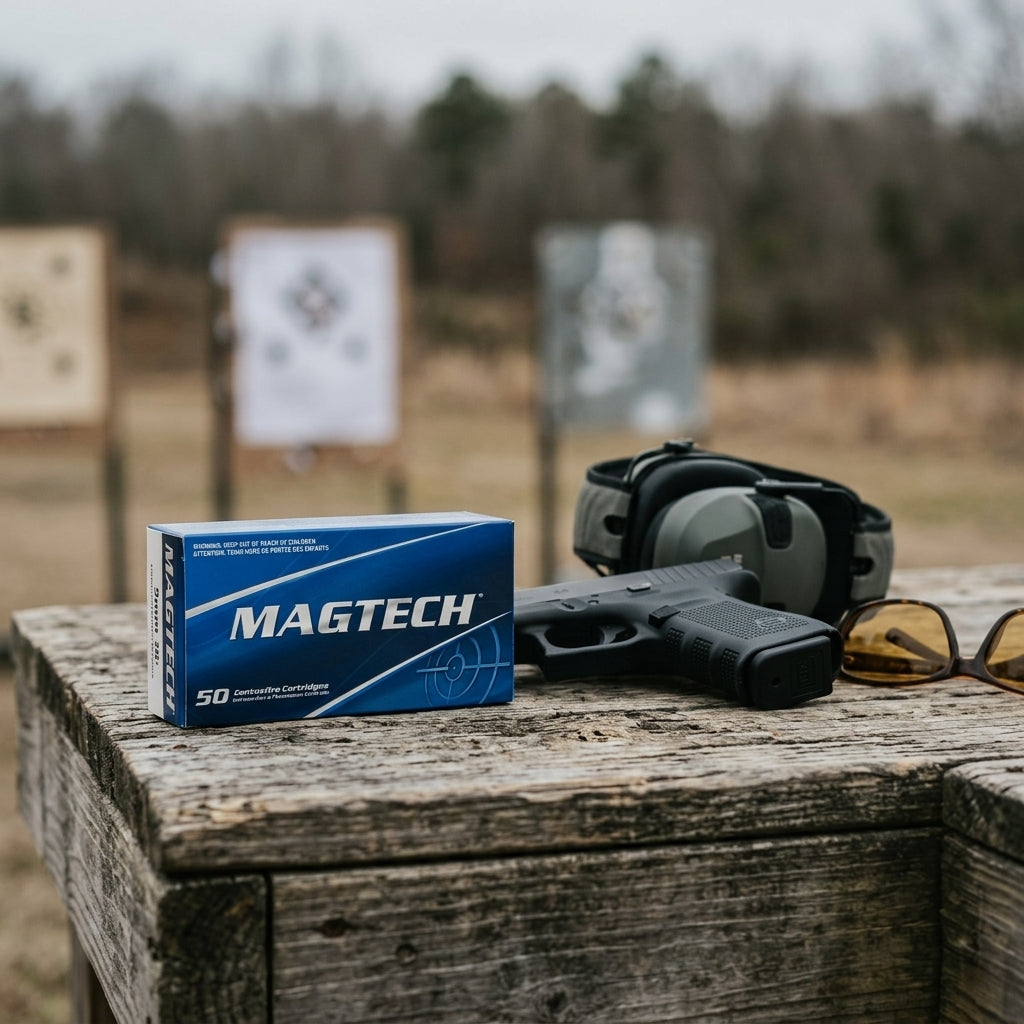
Magtech 9mm 115gr FMJ
$20.00
at Pro Armory
Prices accurate at time of writing
Frequently Asked Questions
Is a $600 red dot more accurate than a $150 red dot?
Not automatically. A more expensive optic does not inherently improve the firearm's mechanical accuracy. Reticle visibility, adjustment consistency, mounting stability, and the shooter's ability to use the optic can affect practical results.
How long should a red dot optic last?
There is no universal service-life figure. Longevity depends on design, manufacturing quality, operating conditions, maintenance, and the durability of its electronic components.
Are budget red dots reliable?
Some are suitable for routine recreational use, but reliability varies considerably between models. Manufacturer specifications, warranty coverage, and credible independent testing are more informative than price alone.
Is an enclosed-emitter red dot worth the extra money?
It may be worthwhile when protection from moisture and debris is important. For many recreational applications, an open-emitter optic can remain a practical and economical choice.
What matters most when buying a red dot?
Start with firearm compatibility, mounting requirements, reticle visibility, documented durability, battery performance, and warranty support. Then compare the complete cost against the intended use.
About the Author
The ProArmory editorial team includes experienced hunters, competitive shooters, military veterans, firearms instructors, and firearms industry professionals committed to producing accurate, practical, and research-based content. Our articles draw on manufacturer specifications, current industry information, and real-world shooting experience to help readers make informed decisions about firearms, ammunition, optics, and related equipment.
Disclaimer
This article is for educational purposes only. Optic specifications, compatibility, and warranty terms vary by manufacturer and model. Consult current manufacturer documentation, follow applicable firearm safety practices, and use qualified professional assistance when appropriate.


