






Quick Answer
The purchase price of a firearm rarely represents the full cost of ownership. Secure storage, ammunition, range access, professional training, protective equipment, and routine maintenance all contribute to the amount an owner may spend during the first year and beyond. Depending on the firearm's intended use, those additional expenses can eventually exceed the original purchase price.
A handgun advertised for $500, for example, might appear affordable until the buyer accounts for a suitable storage device, ammunition, hearing and eye protection, and several range visits. Someone purchasing a hunting rifle may face an entirely different set of expenses, including optics, mounting hardware, transportation equipment, and seasonal range access. Neither buyer necessarily needs every accessory available, but both benefit from understanding the costs before making a purchase.
The challenge is distinguishing necessary ownership expenses from optional purchases. Secure storage and appropriate safety equipment deserve early consideration, while accessories and upgrades should be evaluated according to actual needs. A realistic budget makes firearm ownership more manageable and helps prevent unnecessary spending.
Key Takeaways
- The true cost of firearm ownership extends beyond the initial purchase and includes both one-time and recurring expenses.
- Secure storage, appropriate training, and protective equipment should take priority over cosmetic upgrades or unnecessary accessories.
- Ammunition and range fees can become the largest recurring expenses for owners who shoot regularly.
- Maintenance supplies, professional services, transportation equipment, and replacement components contribute to long-term costs.
- A realistic ownership budget should reflect the firearm's intended purpose, expected frequency of use, and equipment the buyer already owns.
The $500 Firearm That Turns Into a $1,000 Purchase
One of the easiest mistakes a first-time buyer can make is budgeting for the firearm without considering what happens after leaving the store. The firearm itself may be the most expensive individual purchase, but it is rarely the only expense required to begin ownership responsibly.
Consider someone purchasing a $500 handgun for recreational shooting. They may need a lockbox or other suitable storage device, ammunition, eye and hearing protection, and access to a shooting range. If they have limited experience, professional instruction is another sensible expense. None of these purchases necessarily changes the firearm itself, but each contributes to the owner's ability to store, maintain, and use it appropriately.
The combined cost can be surprising because many expenses are relatively modest when considered individually. A $40 maintenance kit or $25 range admission may not seem significant beside a $500 firearm. When several expenses occur within the same month, however, the overall financial commitment becomes much more noticeable.
An Illustrative First-Year Ownership Budget
The following figures are hypothetical planning allowances, not current retail-price estimates or national averages. Actual expenses vary considerably by location, equipment selection, and frequency of use.
| Expense | Illustrative Budget |
|---|---|
| Firearm purchase | $500 |
| Secure storage | $150 |
| Eye and hearing protection | $60 |
| Initial ammunition | $120 |
| Range access | $150 |
| Introductory training | $150 |
| Basic maintenance supplies | $40 |
| Illustrative first-year total | $1,170 |
In this example, the firearm accounts for approximately 43 percent of the total first-year budget. The remaining expenses are not necessarily excessive or unusual; they represent categories that buyers should consider when planning ownership. Someone who already has appropriate storage and protective equipment may spend considerably less, while an owner who practices frequently or purchases specialized accessories may spend substantially more.
The important lesson is that the advertised firearm price should be treated as the starting point of a budget rather than the final number.
Taxes, Transfer Fees, and the Actual Checkout Price
The advertised price of a firearm may not be the amount a buyer ultimately pays. Applicable sales taxes, shipping charges, and dealer transfer fees can increase the initial expense, particularly when a firearm is purchased online and transferred through a licensed dealer.
Transfer fees vary by dealer, and not every transaction involves the same additional charges. Buyers should confirm the total purchase and transfer cost before placing an order rather than comparing advertised firearm prices alone.
Some jurisdictions also impose additional requirements or fees associated with firearm purchases. These costs depend on location and circumstances, making it important to review applicable laws and the dealer's policies before completing a transaction.
Secure Storage Should Be Part of the Original Purchase Budget

Secure firearm storage is one of the most important ownership considerations, yet it can become an afterthought when buyers focus primarily on the firearm they want. A suitable storage solution should be selected with the household, firearm type, and risk of unauthorized access in mind.
Storage products vary considerably in construction and purpose. A compact lockbox may accommodate a single handgun, while a locking cabinet or larger safe may be more practical for long guns or multiple firearms. Locking mechanisms, resistance to unauthorized access, capacity, and installation requirements can all influence cost. A product that is adequate for one household may be inappropriate for another.
The Bureau of Alcohol, Tobacco, Firearms and Explosives recognizes several categories of secure gun storage or safety devices, but those categories should not be interpreted as equivalent levels of protection. A basic locking device and a substantial firearm safe serve different purposes, even when both qualify under a particular definition.
Project ChildSafe emphasizes secure firearm storage as an important measure for preventing unauthorized access and recommends storing ammunition separately in a locked location. The appropriate storage arrangement depends on the household, the firearms involved, and applicable legal requirements. Owners should choose storage equipment that effectively prevents unauthorized access rather than assuming every locking device provides the same level of protection.
Why the Cheapest Storage Option May Cost More Later
Storage needs often change as ownership continues. Someone who purchases a small lockbox for one handgun may eventually acquire a second firearm, additional magazines, or other equipment requiring secure storage. A device that initially seemed adequate can become too small, leading to another purchase.
Larger safes introduce additional considerations beyond the advertised price. Delivery charges, installation, floor-loading limitations, and the difficulty of moving heavy equipment may affect the total expense. Buyers should also distinguish between marketing descriptions and independently documented security ratings when comparing products.
This does not mean everyone should purchase the largest safe they can afford. Overspending on storage that is poorly suited to the household makes little sense. The better approach is to select an appropriate solution that addresses current security needs while allowing reasonable room for future changes.
Ammunition Becomes a Recurring Expense Almost Immediately

Unlike the firearm, ammunition is consumed during use. Every live-fire range session creates another expense, making ammunition one of the most predictable long-term costs associated with recreational shooting.
The annual total depends primarily on how frequently the owner shoots, the quantity used during each visit, and the price of compatible ammunition. Someone who visits a range a few times per year will have a very different budget from a regular competitor or an enthusiast who practices several times per month.
Even relatively small differences in ammunition prices become meaningful over time. At a hypothetical price of $0.25 per round, 1,000 rounds cost $250. At $0.35 per round, the same quantity costs $350. The difference is $100, and it grows as annual consumption increases.
Those figures are examples rather than market-price claims, but they demonstrate why cost per round is a useful budgeting measurement. Comparing only the price of a box can obscure differences in package quantities, while comparing cost per round provides a more consistent basis for evaluating expenses.
Bulk Discounts Do Not Automatically Mean Better Value
Larger ammunition packages sometimes offer lower per-round prices, but purchasing more ammunition still requires a larger upfront payment. A bulk purchase is financially useful only when the ammunition is suitable for the firearm, the quantity is genuinely needed, and the buyer can store it appropriately.
Manufacturing quality and compatibility should remain more important than obtaining the lowest possible price. Ammunition that does not meet the firearm manufacturer's specifications is not a bargain, regardless of the discount.
Buyers should also remember that ammunition storage has its own requirements. Following manufacturer recommendations and maintaining appropriate storage conditions helps protect the investment without relying on unnecessary accessories or elaborate storage systems.
Range Fees Can Change the Economics of Regular Practice

Ammunition is only part of the expense of visiting a shooting range. Many commercial facilities charge hourly lane fees, daily admission, membership dues, or a combination of these costs. Depending on the facility, additional charges may apply for targets, equipment rentals, or other services.
These expenses can become significant for someone who practices regularly. A range charging $25 per visit would cost $300 for twelve visits before ammunition or other purchases are considered. An owner who visits twice per month would spend $600 annually at the same hypothetical rate.
Memberships can reduce costs for frequent visitors, but they are not automatically the better choice. A $300 annual membership, for example, equals twelve $25 admissions before accounting for additional benefits or fees. Someone who expects only six visits may be better served by paying individually, while a regular visitor may find membership more economical.
The details matter because range policies differ. Some memberships include additional benefits, while others have restrictions, guest fees, or separate charges for certain facilities. Buyers should review the complete terms and estimate realistic attendance rather than assuming a membership always saves money.
Convenience Has Financial Value Too
The nearest range is not necessarily the least expensive, but travel time and transportation costs can influence the overall decision. A facility with slightly higher admission fees may be more practical if it is substantially closer to home.
Conversely, a lower-cost facility may offer better value for someone who visits frequently and is comfortable with the additional travel. Scheduling availability, range rules, and the types of activities permitted also affect whether a particular facility meets the owner's needs.
A realistic range budget therefore includes more than admission fees. It should reflect how often the owner expects to visit and the practical cost of getting there.
Training Is an Investment That Equipment Cannot Replace

Buying a firearm does not automatically provide the knowledge required to handle, store, and maintain it responsibly. Professional instruction can help new owners understand safety principles, manufacturer-specific operating procedures, range expectations, and the responsibilities associated with ownership.
Training expenses vary widely according to course length, instructor qualifications, location, and included materials. An introductory safety course may be relatively affordable, while specialized programs involving additional instruction or facility time can cost considerably more.
The advertised course price also may not represent the full expense. Some providers include range access and equipment, while others require participants to pay separately for ammunition, targets, rental firearms, or protective gear. Travel costs and time away from work can add further expense.
Before enrolling, buyers should review the course description carefully and confirm which materials and services are included. This makes it easier to compare programs based on actual value rather than headline price alone.
More Expensive Training Is Not Automatically Better
A higher course fee does not guarantee better instruction. Instructor qualifications, curriculum quality, appropriate safety practices, and the relevance of the material are more meaningful considerations.
A new owner may benefit more from a well-organized introductory course than from an expensive specialized program designed for experienced participants. As interests develop, additional instruction may become worthwhile for hunting, competition, or other lawful activities.
Training should be treated as an ongoing educational opportunity rather than an accessory purchased simply to complete an equipment list. The objective is to develop knowledge and responsible habits, not to accumulate course certificates.
Eye and Hearing Protection Have Ongoing Replacement Costs

Appropriate eye and hearing protection are basic considerations for range participation. Many facilities require both, and buyers should select equipment suited to the shooting environment and applicable safety standards.
Hearing protection includes disposable earplugs, reusable plugs, passive earmuffs, and electronic earmuffs. Eye protection varies in lens material, coverage, fit, and protective ratings. The most expensive option is not necessarily required, but fit, suitability, and consistent use matter.
Protective equipment also requires periodic inspection and replacement. Earmuff cushions and headbands can deteriorate, potentially affecting the seal needed for effective noise reduction.
Electronic hearing protection may require replacement batteries or other manufacturer-approved maintenance, while protective eyewear should be replaced when damage compromises its protective function or visibility. Equipment that no longer fits properly or performs as intended should not remain in service simply to avoid replacement costs.
Reusable earplugs may need replacement according to the manufacturer's instructions.
These expenses are usually smaller than ammunition or range fees, but they should not be ignored. Equipment that no longer fits or functions as intended may need to be replaced rather than kept in service simply to avoid another purchase.
Maintenance Costs Depend on the Firearm, Not the Marketing

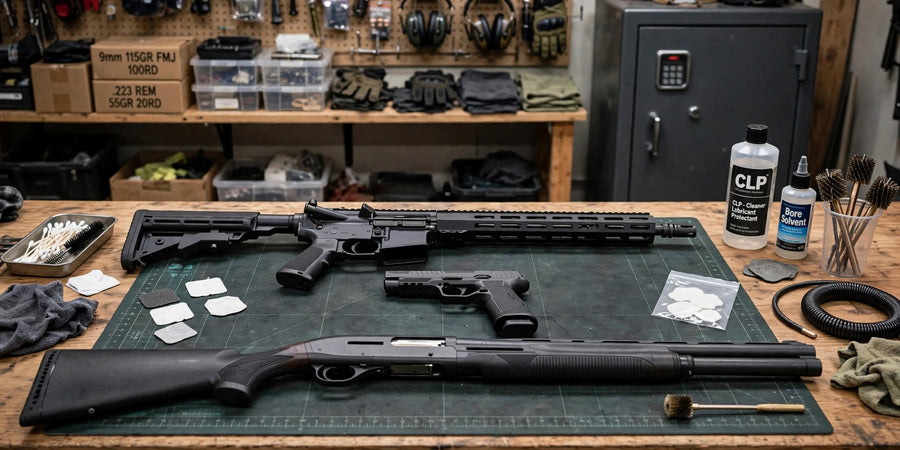
Every firearm has maintenance requirements established by its manufacturer. The necessary supplies may include compatible cleaning products, lubricants, brushes, patches, and other basic equipment. The appropriate selection depends on the firearm's materials, operating system, and maintenance instructions.
It is easy to overspend in this category because firearm maintenance products are frequently marketed as specialized solutions. A new owner may encounter numerous cleaners, oils, protective coatings, and elaborate tool kits before determining what the firearm actually requires.
More products do not necessarily produce better maintenance. Using unsuitable chemicals or tools can damage finishes and components, while unnecessary disassembly may introduce avoidable problems. Following the manufacturer's instructions is generally more useful than purchasing every product advertised for firearm care.
Professional Service Is a Different Expense
Routine owner maintenance and professional gunsmithing should not be treated as interchangeable. Some concerns require specialized inspection, manufacturer service, or replacement components.
The cost of professional work depends on the firearm, the issue involved, and the service provider. Labor charges, parts, shipping, and other expenses may apply. Warranty coverage can help in qualifying circumstances, but exclusions and service procedures vary by manufacturer.
An owner should not assume that every mechanical problem is covered indefinitely or that every replacement component will remain readily available. Reviewing warranty terms and understanding the manufacturer's service options can help prevent unexpected expenses.
Accessories Can Quietly Become the Most Expensive Part of Ownership

One of the easiest ways to exceed a firearm budget is through accessories. Many buyers begin with a relatively simple purchase and gradually add optics, mounting hardware, cases, additional magazines, replacement grips, or other equipment. Each purchase may seem reasonable individually, but the combined expense can become substantial.
Accessories are not inherently unnecessary. A suitable carrying case may protect equipment during transportation, while an optic may provide features that align with the owner's intended recreational or sporting activities. The problem arises when buyers purchase accessories before determining whether they actually need them.
Compatibility is another financial consideration. An optic may require a separate mount or adapter, and a replacement accessory may not fit every version of a particular firearm. Buyers should confirm manufacturer specifications before purchasing rather than assuming that products advertised for the same general platform are interchangeable.
Transportation and Travel Add Expenses Beyond Range Fees

Transporting firearms responsibly may require additional equipment depending on the firearm, destination, and applicable laws. Suitable cases, locks, and protective materials can add to the original purchase budget, particularly for owners who travel regularly.
Requirements vary by jurisdiction and transportation method. Airline travel can introduce additional expenses and regulatory requirements. Under applicable TSA procedures, firearms transported in checked baggage must be unloaded, secured in an appropriate locked hard-sided container, and declared to the airline.
Ammunition is subject to separate packaging requirements and airline restrictions. Travelers should confirm current TSA rules, airline policies, and applicable laws before departure because compliance may require purchasing suitable equipment or paying additional baggage fees.
Owners should verify current requirements with the airline, the Transportation Security Administration, and applicable authorities before traveling.
A case suitable for ordinary transportation is not automatically approved for every form of travel. Likewise, a product marketed as airline-friendly does not eliminate the need to comply with current carrier and regulatory requirements.
Transportation costs may also include baggage charges, shipping arrangements where legally permitted, and replacement equipment when an existing case does not meet the requirements of a particular trip.
Insurance and Liability Deserve a Place in the Budget
Firearm owners may also encounter expenses related to insurance and financial protection. Homeowners and renters insurance policies may provide some coverage for firearms, but limits and exclusions can vary by insurer and type of loss.
Theft-related coverage may be subject to specific sublimits, while valuable collections may require additional scheduled-property coverage. Owners should review the actual policy language and distinguish protection for damaged or stolen property from liability coverage, which addresses a different category of financial risk.
Coverage varies by insurer and policy. Some owners may consider additional scheduled-property coverage or specialized policies for valuable collections.
It is important to distinguish property insurance from liability-related coverage. These products address different risks, and policy exclusions can be significant.
Buyers should review actual policy language rather than assuming that firearm-related losses or incidents are automatically covered. An insurance professional can help explain available coverage and applicable limitations.
Not every owner needs a separate policy, but understanding existing coverage can prevent unpleasant surprises.
The Long-Term Cost of Ownership Changes Over Time
Firearm ownership expenses are not evenly distributed. The first year may involve several major purchases, while later years may consist primarily of ammunition, range access, and occasional maintenance.
Costs can also increase when an owner's interests change. Someone who begins with occasional recreational shooting may later participate in competitions, pursue hunting, or purchase additional equipment.
A useful ownership budget therefore separates initial expenses from recurring and occasional costs.
| Expense Category | Typical Timing |
|---|---|
| Firearm purchase | Initial |
| Secure storage | Initial, with possible future upgrades |
| Eye and hearing protection | Initial and periodic replacement |
| Ammunition | Recurring |
| Range access | Recurring |
| Training | Initial and optional continuing education |
| Maintenance supplies | Periodic |
| Professional service | As needed |
| Accessories | Optional |
| Insurance | Potentially recurring |
This approach makes it easier to understand which expenses are predictable and which require a financial reserve.
For example, someone who regularly visits a commercial range can estimate annual admission expenses using expected attendance. Ammunition spending can be estimated separately based on realistic purchasing habits. Occasional expenses, such as replacing protective equipment or obtaining professional service, can be accounted for without assuming they will occur every year.
The objective is not to calculate a universal lifetime ownership cost. No single figure would accurately represent the differences between a recreational handgun owner, a hunter, and a competitive shooter.
Instead, buyers should establish a budget that reflects how they actually expect to use and maintain their equipment.
Final Thoughts
The hidden costs of firearm ownership are not necessarily unexpected or unreasonable. Most arise from the practical responsibilities and activities that accompany owning a firearm.
Secure storage, protective equipment, training, ammunition, range access, and maintenance all deserve consideration before the initial purchase. Optional accessories and upgrades can increase spending further, particularly when buyers make decisions without identifying a specific need.
The most effective way to control ownership costs is to distinguish essential expenses from optional purchases and plan for recurring costs rather than focusing exclusively on the firearm's advertised price.
A well-considered ownership budget allows buyers to prioritize safety, appropriate equipment, and education while avoiding unnecessary spending.
Understanding the true cost of firearm ownership means looking beyond the initial purchase and accounting for expenses that continue over time. Ammunition, training, cleaning supplies, replacement parts, and secure storage all contribute to the overall investment.
While some expenses depend heavily on how frequently a firearm is used, safe storage should be considered from the beginning. Readers comparing different storage methods can explore our guide to biometric gun safes for additional information on features, security considerations, and electronic access systems.
Frequently Asked Questions
How much does it cost to own a firearm beyond the purchase price?
Additional costs depend on storage requirements, ammunition use, range access, training, maintenance, and accessories. There is no universal amount, and expenses vary considerably between owners.
What is the biggest recurring expense for firearm owners?
For people who shoot regularly, ammunition and range access are often among the largest recurring expenses. The exact amount depends on frequency of use and local pricing.
Do new firearm owners need to buy expensive accessories?
No. Buyers should prioritize appropriate storage, safety equipment, and education before purchasing optional accessories. Additional equipment should address a genuine need.
Is firearm training a one-time expense?
Not necessarily. Introductory instruction provides useful foundations, while additional education may be appropriate as an owner's interests and experience develop.
Does homeowners insurance cover firearms?
Some policies provide coverage, but limits, exclusions, and conditions vary. Owners should review their specific policies and ask their insurance provider about coverage for theft, loss, and other relevant risks.
About the Author
The ProArmory editorial team includes experienced hunters, competitive shooters, military veterans, firearms instructors, and firearms industry professionals committed to producing accurate, practical, and research-based content. Our articles draw on manufacturer specifications, current industry information, and real-world shooting experience to help readers make informed decisions about firearms, ammunition, optics, and related equipment.
Disclaimer
This article is for educational purposes only. Firearm ownership costs, storage requirements, transportation rules, insurance coverage, and other legal obligations vary by location and circumstance. Follow current manufacturer instructions, established firearm safety practices, and applicable local, state, and federal laws.


