


Quick Answer
Many expensive firearm problems begin with ordinary ownership decisions rather than major mechanical failures. Improper cleaning, neglected corrosion, incompatible replacement parts, questionable ammunition, and attempts to repair unfamiliar mechanisms can create problems that would have been easier to prevent.
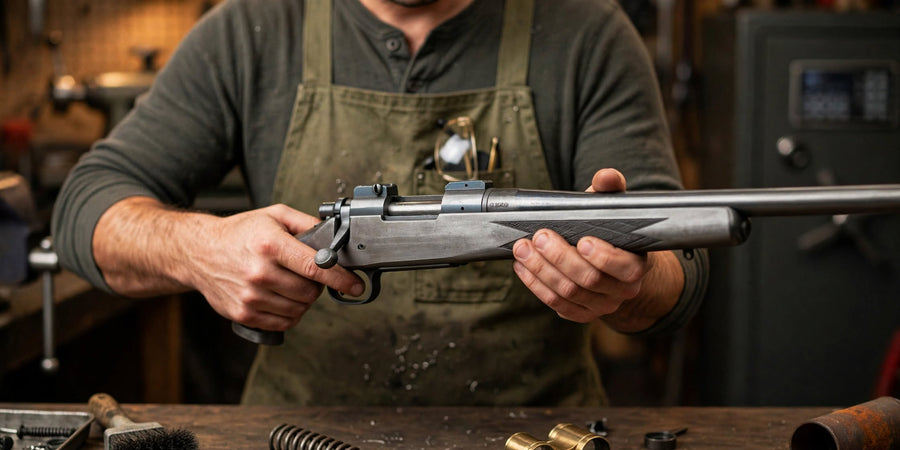
One of the most valuable things a firearm owner can learn is the difference between routine maintenance and work that requires professional attention. Cleaning and inspection within the manufacturer's instructions are normal ownership responsibilities. Diagnosing an unexplained malfunction, altering internal components, or attempting to correct a suspected safety problem is another matter entirely.
A qualified gunsmith can help identify mechanical concerns, evaluate worn components, and perform authorized repairs. However, owners can avoid many unnecessary service expenses by following the manufacturer's maintenance schedule, using appropriate supplies, and recognizing when something is wrong.
This article examines the ownership habits that matter most, the warning signs that should never be dismissed, and the reasons seemingly minor decisions can affect a firearm's safety, reliability, and long-term value.
Key Takeaways
- Following the firearm's actual owner's manual is more dependable than applying generic maintenance advice to every model.
- Excessive cleaning, unsuitable chemicals, and unauthorized disassembly can create problems rather than prevent them.
- Changes in operation, unusual sounds, visible damage, or repeated malfunctions deserve attention instead of continued use.
- Aftermarket parts and modifications can introduce compatibility concerns and may affect manufacturer warranty coverage.
- Knowing when to stop and consult a qualified professional is an important part of responsible firearm ownership.
Your Firearm's Owner's Manual Is More Valuable Than Most Accessories
Firearm owners have access to an enormous amount of maintenance advice. Online discussions, instructional videos, product advertisements, and recommendations from other shooters can all influence how someone cares for a firearm. The difficulty is that advice appropriate for one model may be unsuitable for another.
Different firearms use different materials, operating systems, finishes, and internal components. Their manufacturers may specify particular lubrication points, inspection intervals, cleaning procedures, or limitations on disassembly. Applying a familiar procedure from one firearm to a different design can create unnecessary wear or introduce a safety concern.
The owner's manual provides the most relevant starting point because it addresses the firearm's actual configuration.
Smith & Wesson's owner documentation illustrates why firearm-specific maintenance instructions matter. Its manuals identify the procedures intended for owners and direct certain repairs or internal mechanical work to qualified service personnel.
Owners should consult the documentation for their exact model rather than assuming the same disassembly and maintenance procedures apply across an entire manufacturer's product line.
The company also directs owners to qualified professionals for service beyond the permitted maintenance procedures.
This distinction matters because familiarity with firearms in general does not automatically translate into familiarity with every mechanical design. An experienced owner may be comfortable performing routine maintenance on several models while still encountering a firearm that requires a different approach.
Why Manufacturer Instructions Sometimes Change
Owners should also remember that printed manuals are not necessarily the final word on a product forever. Manufacturers may publish updated instructions, safety notices, recalls, or service information after a firearm enters the market.
A used firearm may arrive without its original documentation, and a manual found online may describe an earlier production version. Owners should confirm that the instructions apply to the exact model and, where relevant, its production configuration.
This is particularly important when purchasing a discontinued firearm or one that has changed hands several times. Previous ownership does not guarantee that the firearm has been maintained correctly, and the presence of aftermarket components can make its history more difficult to evaluate.
A few minutes spent confirming the correct documentation can prevent confusion and help an owner determine which tasks are appropriate to perform independently.
More Cleaning Does Not Always Mean Better Maintenance

Cleaning is an essential part of firearm care, but the idea that every firearm needs an extensive cleaning after every brief outing is too simplistic. Appropriate maintenance depends on the manufacturer's recommendations, operating conditions, ammunition, and how the firearm has been used.
A firearm exposed to rain, dust, mud, or significant moisture may require prompt attention even if very few rounds were fired. Another firearm used under relatively clean conditions may have different maintenance requirements. The owner's manual should establish the baseline, with environmental exposure and inspection findings informing when additional attention is necessary.
Problems can arise when owners treat cleaning as an opportunity to dismantle components that were not intended for routine removal. Repeatedly disturbing unfamiliar mechanisms increases the possibility of lost parts, incorrect reassembly, damaged surfaces, or changes in operation.
There is also a difference between removing ordinary fouling and aggressively attempting to eliminate every visible mark. Some finish wear is cosmetic, and certain surfaces naturally show signs of contact during normal use. Scrubbing harder is not necessarily an appropriate response.
Cleaning Products Are Not Universally Compatible
Modern firearms may contain combinations of steel, aluminum, polymer, protective coatings, and other materials. A product suitable for one surface may not be recommended for another, particularly when aggressive solvents or abrasive materials are involved.
The same principle applies to lubricants. More lubricant is not automatically better, and different firearm designs may have different requirements. Excess product can attract debris or migrate into areas where the manufacturer does not recommend it.
Instead of building a collection of specialty chemicals based on advertising claims, owners should select products compatible with their firearm and follow the relevant instructions. A straightforward maintenance routine performed correctly is generally more useful than an elaborate routine based on guesswork.
Rust Is Often a Storage Problem Before It Becomes a Gunsmithing Problem

Corrosion can affect firearms that are rarely used, including equipment stored indoors. Humidity, condensation, moisture trapped against metal surfaces, and inadequate inspection can contribute to deterioration over time.
This is especially relevant to hunters who put away a rifle or shotgun after the season and do not handle it again for several months. Equipment that appears dry externally may have been exposed to rain, condensation, or temperature changes during transportation and storage.
Smith & Wesson specifically cautions against storing firearms in materials that can retain moisture, including leather or heavy cloth. The manufacturer also recommends appropriate protective treatment for extended storage, consistent with its maintenance guidance.
The broader lesson is that storage conditions deserve as much attention as cleaning frequency. A firearm does not have to be fired regularly to require periodic inspection.
Cosmetic Corrosion and Mechanical Damage Are Different Concerns
Surface discoloration does not always indicate serious mechanical damage, but the appearance of corrosion alone cannot establish whether a firearm remains safe to use.
Rust may develop in areas that are difficult to inspect, and corrosion affecting the barrel, chamber, locking components, or other critical surfaces deserves particular attention. When the extent of corrosion is uncertain, owners should discontinue use and seek qualified inspection rather than attempting aggressive cleaning or assuming the problem is cosmetic.
Rust can develop in locations that are not immediately visible, and corrosion affecting critical components requires professional evaluation.
Aggressive attempts to remove rust can also damage the original finish or reduce a collectible firearm's value. On older firearms, preserving original surfaces may be particularly important, and refinishing should not be treated as an automatic improvement.
When corrosion is extensive, appears in a critical area, or raises questions about the firearm's condition, professional inspection is more appropriate than experimenting with increasingly aggressive cleaning methods.
The Small Warning Signs Owners Should Never Ignore
A firearm does not always announce a mechanical problem through an obvious broken component. Sometimes the first indication is a change in how it operates, an unfamiliar sound, or a malfunction that begins occurring more frequently.
Not every irregularity indicates a serious defect. Ammunition, magazines, environmental conditions, and maintenance can all influence operation. However, repeated malfunctions should not be dismissed as normal without identifying their cause.
The safest response to unexplained changes is to stop using the firearm, maintain safe handling practices, and seek appropriate inspection. Continuing to fire a firearm that may have a mechanical or ammunition-related problem can turn a manageable concern into a dangerous situation.
When a Firearm Sounds or Feels Different
An unusually weak report, unexpected recoil sensation, or other significant change during firing may indicate an ammunition or mechanical problem. One particularly dangerous possibility is a projectile that has failed to exit the barrel, leaving an obstruction.
If a barrel obstruction or other unsafe condition is suspected, firing must stop immediately. The firearm should not be used again until its condition has been established according to the manufacturer's safety instructions or evaluated by a qualified professional.
One possible concern is a projectile that has failed to exit the barrel, creating an obstruction.
An obstructed barrel can cause severe damage or injury if another round is fired. SAAMI specifically identifies the importance of ensuring the barrel is clear of obstructions as a fundamental firearm safety rule.
Owners should stop firing whenever an obstruction or other unsafe condition is suspected and follow the manufacturer's safety instructions. A qualified professional should inspect the firearm when its condition cannot be established safely.
A Repeated Malfunction Is Information, Not an Invitation to Experiment
Occasional ammunition or feeding problems can occur for different reasons, but a recurring malfunction warrants investigation. The cause should not be assumed from appearance alone, particularly when several components interact during operation.
Replacing parts at random may increase the expense without addressing the underlying problem. It can also make professional diagnosis more difficult if the firearm arrives with several recent, undocumented changes.
An owner who encounters a recurring issue should document the symptoms, relevant ammunition information, and circumstances in which the problem occurred. That information can help a qualified gunsmith or manufacturer service department evaluate the concern without relying on speculation.
Aftermarket Parts Can Create Problems That the Original Firearm Never Had

The firearms accessory market offers an enormous selection of replacement components. Some products are intended to improve comfort or accommodate a particular sporting preference, while others change aspects of a firearm's operation.
The existence of a compatible-looking aftermarket part does not establish that it is appropriate for every version of a firearm. Small differences between production generations, model variants, or internal specifications may affect whether a component can be used safely.
The consequences of an unsuitable replacement part can extend beyond inconvenience. Changes to internal mechanisms may affect reliability or safety, and unauthorized work can complicate warranty service.
Manufacturer warranty coverage may be affected when unauthorized modifications or replacement components cause or contribute to a mechanical problem. However, installing an aftermarket part does not necessarily eliminate every warranty protection. Coverage depends on the manufacturer's terms, the circumstances of the failure, and applicable consumer-protection laws. Owners should review the warranty for their specific firearm before authorizing modifications or outside repair work.
Other manufacturers have their own policies, so owners should review the terms applicable to their firearm rather than assuming every company handles modifications the same way.
The Original Parts Have Value
Owners sometimes discard original components after installing replacements, particularly when the removed parts appear inexpensive or unimportant. That can be a mistake.
Original components may be relevant to warranty service, future professional evaluation, or the resale and collector value of the firearm. A buyer considering a used firearm may also appreciate knowing which components remain original and which have been changed.
For collectible or discontinued models, original configuration can be especially significant. An alteration that appears desirable to one owner may reduce interest among buyers who prioritize factory condition.
Any replacement or modification should therefore be evaluated for its purpose, compatibility, safety implications, and potential effect on long-term value. Internal work should be left to qualified professionals and performed only where appropriate and lawful.
Ammunition Problems Are Not Always Firearm Problems

When a firearm malfunctions, it is natural to suspect a mechanical issue. However, ammunition can also contribute to feeding difficulties, ignition failures, and other irregularities.
The correct ammunition designation matters more than whether a cartridge appears to fit. SAAMI emphasizes that a cartridge fitting into a chamber does not establish that it is safe to fire in that firearm. Owners should follow the firearm manufacturer's ammunition requirements and verify the cartridge designation rather than relying on visual similarity.
Ammunition condition matters as well. SAAMI advises against using cartridges showing significant physical damage or corrosion, and it warns that repeatedly chambering the same cartridge can cause damage or bullet setback in some circumstances.
These considerations are especially relevant when evaluating an unexplained malfunction. An owner should not automatically conclude that the firearm needs replacement parts simply because it did not operate as expected with a particular batch of ammunition.
Keep Useful Information About Problem Ammunition
If a malfunction appears associated with a particular ammunition product, the manufacturer, cartridge designation, and lot number may be useful information for customer service or professional evaluation.
Lot numbers can also help owners determine whether ammunition is included in a manufacturer recall or safety notice. Packaging should not be discarded prematurely when a product-related concern is suspected.
Damaged or questionable ammunition should not be fired to see whether the problem repeats. Follow manufacturer guidance and applicable procedures for handling and disposal instead.
A Used Firearm Can Come With Problems You Cannot See

Buying a used firearm can offer substantial value, especially when considering discontinued models or firearms that have seen relatively little use. However, a clean exterior does not necessarily reveal the condition of internal components, the quality of previous maintenance, or whether unauthorized alterations have been made.
A firearm may have been stored improperly, repaired with incompatible parts, or modified by someone without the necessary qualifications. These issues are not always obvious during a casual examination, and a seller's description cannot substitute for a professional assessment when the firearm's condition is uncertain.
This is particularly important for older firearms with limited replacement-part availability. A model that initially appears inexpensive may become costly if it requires specialized service or components that are no longer manufactured.
Why a Professional Inspection Can Be Worth the Expense
A qualified gunsmith can evaluate concerns that may not be apparent to an inexperienced buyer. Depending on the firearm and the requested service, an inspection may address its mechanical condition, signs of unusual wear, previous alterations, and whether further evaluation is necessary.
The scope of an inspection should be discussed beforehand. Not every inspection includes the same procedures, and no examination can guarantee that a firearm will never develop a problem.
For buyers considering an expensive collectible or unfamiliar used model, the inspection fee may be a reasonable expense compared with the potential cost of discovering a significant issue after purchase.
When to Stop Troubleshooting and Call a Gunsmith
One of the most important ownership decisions is recognizing when a problem has moved beyond routine maintenance. An owner may be familiar with cleaning and inspecting a firearm according to the manufacturer's instructions without being qualified to diagnose internal mechanical defects.
Unexplained changes in operation, visible damage, suspected barrel obstructions, and repeated malfunctions should be treated as reasons to discontinue use until the firearm's condition can be evaluated.
The same applies when a firearm has been exposed to circumstances that may have affected its mechanical integrity, such as significant impact, fire, flooding, or severe corrosion.
A qualified professional can determine whether inspection, repair, or manufacturer service is appropriate. Attempting increasingly complicated repairs without the necessary knowledge may create additional damage and make the original problem harder to identify.
Choosing a Qualified Gunsmith Matters More Than Finding the Lowest Price
Not every gunsmith specializes in the same work. Some focus on general repairs and maintenance, while others concentrate on particular firearm types, restoration, refinishing, or specialized sporting applications.
Before selecting a service provider, owners should ask whether the business has experience with the specific firearm and the type of work required. A professional who regularly services modern semiautomatic pistols may not necessarily specialize in restoring antique revolvers, and the reverse is equally true.
Licensing and legal requirements also deserve attention. In the United States, businesses performing gunsmithing activities may require the appropriate federal firearms license, depending on the nature of their operations. Owners should verify that a service provider operates in compliance with applicable requirements rather than assuming every person advertising repair services is equally qualified.
Ask About Estimates, Parts, and Warranty Terms
A professional repair can involve more than the initial labor charge. Replacement components, diagnostic work, shipping, and additional service may affect the final invoice.
Before authorizing work, owners should ask how estimates are prepared, whether approval is required before additional charges are incurred, and what happens if necessary parts are unavailable.
It is also reasonable to ask whether the business provides a warranty on its work and how any concerns after service are handled.
Clear communication is valuable because firearm repairs are not always predictable. An initial symptom may have several possible causes, and a professional may need to inspect the firearm before determining the appropriate course of action.
Sometimes the Manufacturer Is the Better First Call
A local gunsmith is not always the most appropriate starting point. When a firearm may be affected by a recall, warranty issue, or manufacturer-specific safety concern, contacting the manufacturer can provide important guidance.
Manufacturers may have access to proprietary replacement parts, technical documentation, and service procedures that are not available to independent repair businesses.
Owners should check current recall and safety notices when a product-related problem is suspected. The firearm's model and serial number may be relevant to determining whether a particular notice applies.
A firearm subject to a safety recall should not be used contrary to the manufacturer's instructions while the issue remains unresolved.
Warranty coverage also varies by company and product. Some manufacturers offer extensive service support, while others impose limitations related to the original purchaser, modifications, normal wear, or other circumstances.
Understanding these policies before authorizing outside repairs can help owners avoid unnecessary expenses or complications.
Repair Costs and the Question of Whether a Firearm Is Worth Fixing
Not every firearm repair makes financial sense. The decision becomes particularly complicated when the firearm is inexpensive, discontinued, heavily worn, or difficult to service.
For example, a repair estimate may approach the market value of an older firearm. In that situation, the owner must consider whether the firearm has sentimental, historical, or collector significance beyond its resale value.
A family heirloom may justify professional restoration expenses that would make little sense for an ordinary recreational firearm. Conversely, an owner may reasonably decide not to invest heavily in a common model when replacement parts and service costs are disproportionate to its value.
Safety must remain the deciding factor. A firearm should never be returned to use simply because the cost of proper repair appears inconvenient.
Restoration Is Not the Same as Repair
Repair generally focuses on addressing a functional or mechanical concern. Restoration may involve preserving or returning aspects of a firearm's original appearance or condition.
These objectives can conflict, particularly with collectible firearms. Replacing original components or refinishing surfaces may change a firearm's collector value, even when the work improves its appearance.
Owners of historically significant firearms should consider consulting a qualified specialist before authorizing restoration. The goal should be to understand the consequences of the work rather than assuming that a newer-looking finish automatically increases value.
Final Thoughts
Many firearm problems are easier to prevent than to repair. Improper maintenance, neglected corrosion, incompatible components, questionable ammunition, and ignored warning signs can all contribute to unnecessary expense or safety concerns.
The most useful habits are often straightforward: read the correct owner's manual, follow the manufacturer's maintenance recommendations, store equipment appropriately, and pay attention when something changes.
A qualified gunsmith provides expertise that routine ownership experience cannot always replace. Knowing when to seek that expertise is not a limitation; it is part of understanding the responsibilities that accompany firearm ownership.
Ultimately, taking care of a firearm is less about buying specialized products or performing complicated work and more about making consistent, informed decisions throughout its service life.
Frequently Asked Questions
How often should a firearm be inspected by a gunsmith?
There is no universal inspection interval appropriate for every firearm. The manufacturer's recommendations, firearm condition, frequency of use, and any unusual symptoms should guide the decision. Suspected mechanical or safety problems warrant professional attention before further use.
Can improper cleaning damage a firearm?
Yes. Unsuitable chemicals, abrasive materials, unauthorized disassembly, and incorrect maintenance procedures can damage finishes or components. Owners should follow the instructions for their specific firearm.
Should a used firearm be inspected before purchase?
A professional inspection is particularly valuable when the firearm's condition, maintenance history, or mechanical integrity is uncertain. It can also be worthwhile for older, collectible, or unfamiliar models.
Can aftermarket parts void a firearm warranty?
They may affect warranty coverage, depending on the manufacturer's terms and whether the modification caused or contributed to the problem. Owners should review the applicable warranty and relevant consumer-protection laws rather than assuming every modification automatically voids all coverage.
Is it better to use a local gunsmith or the firearm manufacturer?
The appropriate choice depends on the problem. Manufacturer service may be preferable for recalls, warranty concerns, or proprietary components, while a qualified local gunsmith may be suitable for other authorized inspections and repairs.
About the Author
The ProArmory editorial team includes experienced hunters, competitive shooters, military veterans, firearms instructors, and firearms industry professionals committed to producing accurate, practical, and research-based content. Our articles draw on manufacturer specifications, current industry information, and real-world shooting experience to help readers make informed decisions about firearms, ammunition, optics, and related equipment.
Disclaimer
This article is for educational purposes only and does not replace manufacturer instructions or professional firearm inspection. Do not use a firearm suspected of being damaged or unsafe. Follow established firearm safety practices and applicable local, state, and federal laws. Repairs, modifications, and mechanical evaluations should be performed by appropriately qualified professionals.


