










Quick Answer
Ruger suspended production of the GP100 effective October 13, 2026, as part of its Ruger 2030 product portfolio strategy. The company cited changing consumer demand, evolving market preferences, manufacturing complexity, and long-term profitability as factors in its broader decision to reduce and modernize its product lineup.
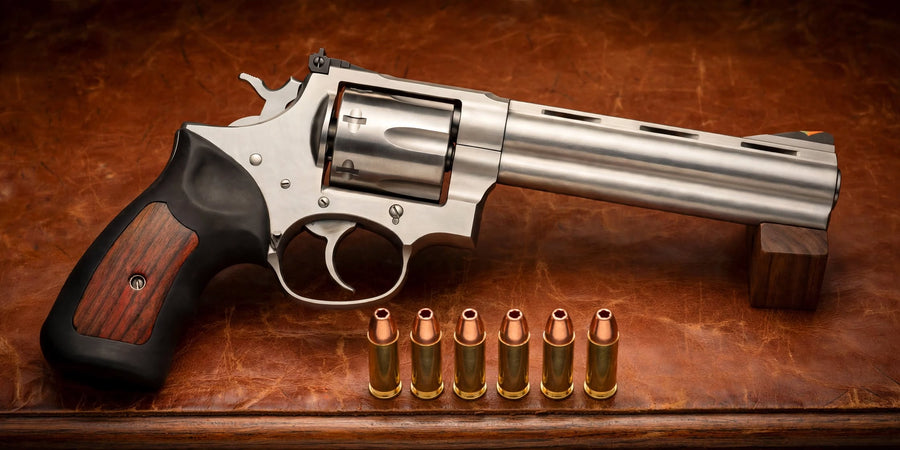
The GP100 was one of four revolver families placed under immediate production suspension. Ruger also announced final planned production runs for 15 additional product families through the remainder of 2026.
However, Ruger has not confirmed that the GP100 is permanently discontinued. Company representatives have stated that some suspended models could return with redesigned features or updated manufacturing methods. As of November 19, 2026, Ruger has not publicly announced a specific GP100 replacement, relaunch date, or production restart.
Key Takeaways
- Ruger announced the immediate suspension of GP100 production on October 13, 2026.
- The SP101, LCR, and Bearcat revolver families were also suspended immediately.
- The decision is part of Ruger's broader Ruger 2030 business and manufacturing strategy.
- Ruger cited consumer demand, market preferences, manufacturing complexity, and profitability as factors in its portfolio review.
- The company has not declared the GP100 permanently discontinued.
- Existing dealer inventory may remain available, but availability will depend on individual sellers and distributors.
- Ruger has not announced a GP100 replacement or confirmed a return date.
- The Wrangler and Super Wrangler revolver families are expected to continue in production.
- Current owners should not assume that production suspension automatically ends manufacturer support.
- Claims that every GP100 will immediately become collectible or increase in value are speculative.
For decades, the Ruger GP100 has been a familiar name among American revolver enthusiasts. Its substantial construction, traditional double-action design, and long production history helped establish it as one of Ruger's recognizable handgun families, which makes the company's decision to suspend production particularly significant.
On October 13, 2026, Ruger notified distributors that production of the GP100, SP101, LCR, and Bearcat revolvers was being suspended immediately. Fifteen additional firearm families were scheduled to complete their final planned production runs before the end of the year, marking a substantial restructuring of Ruger's existing catalog.
The announcement raised understandable questions about the GP100's future. Has Ruger permanently discontinued the revolver? What prompted the decision, and what does it mean for current owners and remaining inventory? The answers require distinguishing what Ruger has officially confirmed from what remains speculation.
Is Ruger Really Discontinuing the GP100?
Yes, Ruger has stopped current-generation GP100 production, but the company's terminology matters. On October 13, 2026, Ruger informed its distributors that production of the GP100, SP101, LCR, and Bearcat revolver families would be suspended effective immediately. The distributor notification also indicated that open orders for those suspended families would be canceled.
This was not simply a decision to eliminate a few unpopular barrel lengths, finishes, or individual stock-keeping units. The announcement applied to the current-generation GP100 product family.
However, Ruger has consistently described the action as a production suspension rather than an unconditional declaration that the GP100 name will never return. In comments reported by American Rifleman, Ruger spokesperson Abbey Clary explained that the changes do not necessarily mean the affected firearm families are permanently discontinued.
That distinction leaves open the possibility of a future GP100, although it does not guarantee one. For buyers and current owners, the practical situation is clear: new production of the existing GP100 family has been suspended, and no official restart date has been announced.
What Did Ruger Announce in October 2026?

The GP100 decision was part of a substantial reduction in Ruger's existing product catalog. Rather than announcing the end of one revolver, Ruger identified multiple product families for immediate suspension or final planned production runs.
The company divided affected firearms into two categories.
Ruger Models Suspended Immediately
Four revolver families were affected by the immediate production suspension.
| Firearm Family | Type | Announced Production Status |
|---|---|---|
| Ruger GP100 | Double-action revolver | Suspended immediately |
| Ruger SP101 | Compact double-action revolver | Suspended immediately |
| Ruger LCR | Lightweight compact revolver | Suspended immediately |
| Ruger Bearcat | Single-action rimfire revolver | Suspended immediately |
The inclusion of all four models attracted attention because they represent different segments of Ruger's revolver lineup. The GP100 is a substantial double-action revolver, while the SP101 and LCR serve different size and weight preferences. The Bearcat is a traditional single-action rimfire design.
This suggests that Ruger's decision was not limited to one caliber, frame size, or particular revolver configuration.
Other Ruger Models Scheduled for Final 2026 Production Runs
Ruger also announced that 15 additional product families would complete planned final production runs during the remainder of 2026.
These included the SR1911, LC Carbine, PC Charger, PC Carbine, LC Charger, Redhawk, Super Redhawk, Blackhawk, Super Blackhawk, Single-Series revolvers, Vaquero, No. 1, 77-Series rifles, Hawkeye, and Ruger Precision Rifle.
Unlike the four revolver families suspended immediately, these products were scheduled to continue through their remaining planned 2026 production runs. The distinction matters because it affects how remaining inventory enters the distribution system, since products scheduled for final production may still receive additional factory shipments before those runs are completed.
The breadth of the changes also makes one thing clear: the GP100 suspension is part of a company-wide portfolio decision, not an isolated announcement about one revolver.
Why Is Ruger Suspending GP100 Production?

Ruger has identified several factors behind its decision, including consumer demand, changing market preferences, manufacturing complexity, and long-term profitability. These factors help explain the company's broader strategy, although Ruger has not publicly released a detailed GP100-specific financial breakdown establishing exactly how much each factor contributed.
That distinction is important. We know the reasons Ruger cited for the portfolio changes, but we should not pretend to know the GP100's internal sales figures, production costs, or profit margins.
1. Changing Consumer Demand
Firearm manufacturers regularly adjust their product catalogs in response to customer demand. A firearm can have an excellent reputation and a loyal following without generating enough sales volume to justify continued production under a manufacturer's current business priorities.
The GP100 has been available for decades, but a long production history does not necessarily mean demand remains consistent from year to year. Modern buyers also have more handgun options than ever, including polymer-framed semiautomatic pistols, compact models, and increasingly specialized factory configurations.
Ruger has not said that revolver buyers have disappeared or that the GP100 is no longer valued. Instead, the company has described its decision as part of a broader review of current demand and evolving customer preferences.
2. Manufacturing Complexity
Traditional revolvers involve a different manufacturing process from many modern semiautomatic pistols. A double-action revolver contains a cylinder, crane assembly, ejector system, lockwork, and multiple interacting components that must function together within the manufacturer's design specifications.
Manufacturing these components requires machining, inspection, assembly, and quality-control processes, although the exact labor and equipment requirements vary by model and production system. The GP100's substantial metal construction is part of its identity, but established designs may also present opportunities for manufacturing modernization.
Ruger specifically identified manufacturing complexity as one factor in its portfolio review. That does not establish that the GP100 was too expensive to manufacture profitably on its own, but it does suggest that the company is evaluating how production resources are allocated across its broader catalog.
3. Long-Term Profitability
Manufacturers must consider more than the number of firearms sold. Production scheduling, equipment utilization, inventory, supplier relationships, labor requirements, and manufacturing capacity all affect whether a product family fits a company's long-term strategy.
A model can remain popular with enthusiasts while contributing less to overall profitability than newer or higher-volume products. Ruger cited long-term profitability among the factors influencing its decisions.
However, the company has not publicly disclosed a GP100-specific profitability figure that would allow outside observers to identify an exact financial threshold behind the suspension. It would therefore be misleading to claim that Ruger discontinued the GP100 because the revolver was losing money.
4. Making Room for Future Products
Another major component of Ruger's explanation involves manufacturing modernization and future product development. A large product catalog can create competing demands on production capacity, engineering resources, and inventory management.
Suspending established product families may allow a manufacturer to focus resources on products with stronger current demand or greater opportunities for redesign. This appears consistent with Ruger's stated Ruger 2030 direction.
However, no official announcement establishes that GP100 production capacity has been assigned to one particular replacement model. The company has described a broader modernization effort, not a confirmed one-for-one substitution.
What Is Ruger 2030?
Ruger 2030 is the company's strategic initiative focused on product development, manufacturing modernization, operational improvements, and long-term business performance. The October 2026 production changes are one component of that strategy.
In its financial reporting, Ruger has described efforts to strengthen operational responsiveness, improve its product portfolio, and support sustainable long-term growth. The company has also highlighted newer product families as part of its ongoing business development.
The GP100 announcement should be understood within that context. Ruger is reviewing which existing products remain aligned with its future manufacturing and market priorities.
This does not mean Ruger is abandoning its history. Company representatives have specifically acknowledged the importance of established firearm families and the possibility of bringing some of them back with updated designs. Still, a future redesign is only a possibility until Ruger announces a specific product.
Why the GP100 Decision Is Such a Big Deal

The GP100 is not an obscure revolver that disappeared after a short production run. Introduced in the mid-1980s, the GP100 became an established part of Ruger's double-action revolver lineup and appeared over the years in different barrel lengths, finishes, sight configurations, and chamberings.
The revolver developed a following among recreational shooters, handgun hunters, collectors, and firearm owners who appreciate traditional double-action designs. Its substantial frame and recognizable construction also made it a familiar alternative to competing revolvers from manufacturers such as Smith & Wesson and Colt.
For many enthusiasts, the GP100 represents a particular approach to revolver design: substantial construction, relatively straightforward ownership, and a long-established mechanical platform. That history explains why the production suspension has generated more attention than the removal of a newer or less established firearm.
The news affects not only potential buyers but also current owners who have invested in the platform over many years.
Is Ruger Getting Out of the Revolver Business?
No. Ruger has not announced that it is abandoning revolver manufacturing entirely. Although several established revolver families are affected by the 2026 changes, the company has indicated that its Wrangler and Super Wrangler revolvers will continue.
These models occupy a different segment of the market from the GP100. The Wrangler and Super Wrangler are rimfire single-action revolvers, generally positioned as accessible options for recreational shooting and traditional revolver enthusiasts.
Their continuation shows that Ruger still intends to maintain a presence in the revolver category. However, the company's announced 2027 lineup represents a significant change from the broad revolver selection Ruger previously offered.
The immediate suspension of the GP100, SP101, and LCR, combined with planned final runs for other established revolver families, marks a substantial reduction in Ruger's traditional centerfire revolver offerings. Whether that lineup expands again will depend on future company announcements.
Could Ruger Bring Back the GP100?
Yes, a future return is possible, but it has not been confirmed. Ruger has explicitly stated that some affected product families may return in updated forms, and the company has discussed opportunities involving redesigned features, modern manufacturing methods, and future product development.
There is also historical precedent for firearm manufacturers temporarily suspending products and later introducing revised versions. Ruger itself has previously paused certain product families or introduced major generational changes to established designs.
However, those examples do not establish that the GP100 will return. As of November 19, 2026, Ruger has not announced a new GP100 generation, replacement model, or production restart date.
It would be premature to describe a hypothetical GP100 Gen 2 as an upcoming firearm or to speculate about specific features such as new materials, redesigned lockwork, or changes in capacity. Until Ruger releases official information, those possibilities remain unconfirmed.
What Happens to Existing GP100 Inventory?

A production suspension does not mean every GP100 disappears from the retail market immediately. Firearms already manufactured and distributed may remain available through dealers and other lawful sales channels.
The amount of remaining inventory will vary by model, configuration, retailer, and distributor. Some popular configurations may become difficult to locate sooner than others, while less common variants may remain available for different periods depending on existing stock and customer demand.
However, no publicly verified inventory count establishes how many GP100 revolvers remain in the retail distribution system. Buyers should therefore be cautious about claims that a particular listing represents the last GP100 available or that every remaining example is automatically rare.
The practical distinction is between new factory production, which has been suspended, and previously manufactured inventory, which may continue to circulate.
Will GP100 Prices Increase?
The production suspension could influence the GP100's market value, but an immediate price increase is not guaranteed. When a manufacturer stops producing a well-known firearm, some buyers may become more interested in acquiring an example while existing inventory remains available.
At the same time, actual prices depend on supply, demand, configuration, condition, and the number of firearms already in circulation. The GP100 has been produced for decades, so the platform is not inherently rare simply because current production has stopped.
Certain uncommon configurations or well-preserved examples may attract collector interest, but that is different from claiming that every standard GP100 will appreciate in value. Buyers should avoid paying a substantial premium based only on predictions about future collectibility.
A production suspension is a relevant market development, not a guarantee of investment returns.
What Does This Mean for Current GP100 Owners?
Ruger's production suspension does not make existing GP100 revolvers obsolete. Owners can continue maintaining and using their firearms in accordance with manufacturer instructions, and the announcement does not automatically establish that factory service or replacement parts are being discontinued.
Long-term support is a separate consideration from manufacturing. Parts availability, repair eligibility, and factory service policies may change over time, particularly if a product family remains out of production. However, Ruger has not announced that existing GP100 owners will immediately lose manufacturer support as a result of the October 2026 decision.
Aftermarket grips, holsters, and other accessories may also remain available because the GP100 has been produced for decades. Compatibility can vary by configuration, so owners should verify that accessories are appropriate for their specific model.
For repairs, replacement components, and current service policies, Ruger customer service remains the appropriate source of information. There is no reason to assume that every existing GP100 will suddenly become difficult to maintain simply because current-generation production has been suspended.
Final Thoughts
Ruger's decision to suspend GP100 production marks a significant change for one of its longest-running double-action revolver families. Effective October 13, 2026, the company halted current-generation GP100 production alongside the SP101, LCR, and Bearcat as part of a broader review of its product portfolio under the Ruger 2030 strategy.
The decision reflects company-wide considerations involving consumer demand, manufacturing complexity, evolving market preferences, and long-term profitability. However, Ruger has not identified a specific GP100 design defect or publicly established that the revolver was individually unprofitable. The company has also left open the possibility that some suspended product families could return in redesigned forms.
For current owners, the announcement does not make existing GP100 revolvers obsolete or automatically end manufacturer support. For prospective buyers, remaining inventory and future availability deserve consideration, but predictions about rarity, price increases, or a replacement model remain speculative.
Until Ruger provides further information, the most accurate conclusion is that current-generation GP100 production has been suspended and the platform's future remains uncertain.
Ruger's decision to suspend production across much of its revolver lineup marks a significant shift for a manufacturer closely associated with traditional wheelguns. From the GP100 and SP101 to the larger Redhawk and Super Redhawk, these models have served different segments of the handgun market for decades.
Their absence from regular production may encourage enthusiasts to explore competing manufacturers, remaining dealer inventory, and other large-caliber handgun platforms. Readers interested in understanding the broader selection can explore our guide to the most powerful handguns available for additional context.

Sellier & Bellot .357 MAG 158gr
$35.99
at Pro Armory
Prices accurate at time of writing
Frequently Asked Questions
Is Ruger Discontinuing the GP100 in 2026?
Ruger suspended production of the current-generation GP100 effective October 13, 2026. The company has not confirmed that the product family is permanently discontinued.
Why Did Ruger Stop Making the GP100?
Ruger cited changing consumer demand, evolving market preferences, manufacturing complexity, and long-term profitability as factors behind its broader Ruger 2030 portfolio changes. It has not published a detailed GP100-specific financial explanation.
Will Ruger Bring Back the GP100?
Possibly, but no return has been confirmed. Ruger has said some affected firearm families may return in redesigned forms, without announcing specific GP100 plans or a timeline.
What Other Ruger Revolvers Were Discontinued?
The SP101, LCR, and Bearcat joined the GP100 in the immediate October 2026 production suspension. Other revolver families, including the Redhawk and Blackhawk, were scheduled for final planned production runs through the remainder of 2026.
Is Ruger Going Out of the Revolver Business?
No. Ruger has indicated that the Wrangler and Super Wrangler revolvers will remain in production.
Can You Still Find a New Ruger GP100?
Previously manufactured GP100 revolvers may remain available through lawful retail channels. Availability depends on existing dealer and distributor inventory.
Will Ruger GP100 Prices Go Up?
Prices may change as inventory and demand evolve, but increases are not guaranteed. The production suspension alone does not make every GP100 rare or collectible.
Will Ruger Still Repair the GP100?
Ruger has not announced that the production suspension automatically ends GP100 service support. Owners should contact Ruger directly for current repair and parts information.
About the Author
The ProArmory Editorial Team creates practical, research-informed content for firearm owners, ammunition shoppers, hunters, and shooting enthusiasts. Our articles focus on product education, firearm specifications, industry developments, buying considerations, safety, and responsible ownership.
Our goal is to help readers understand their equipment options and make informed purchasing decisions without exaggerated performance claims, unnecessary hype, or unsupported speculation.
Disclaimer
This article is intended for general educational and informational purposes only. Information about Ruger's production plans reflects publicly available reporting and company statements as of November 19, 2026. Manufacturing decisions, product availability, service policies, and future model announcements may change.
ProArmory is not affiliated with Sturm, Ruger & Company, Inc. unless otherwise expressly stated. References to Ruger products do not constitute manufacturer endorsement or confirmation of future production plans.
Always follow manufacturer instructions, practice established firearm safety procedures, maintain appropriate secure storage, and comply with applicable federal, state, and local laws. Contact Ruger directly for current information about product availability, service eligibility, replacement parts, and official announcements.


