



Quick Answer
Soft point and polymer tip hunting ammunition are two popular categories of centerfire rifle ammunition. Both can be designed for hunting, but they differ in bullet construction, aerodynamic characteristics, and the ways manufacturers engineer terminal performance.
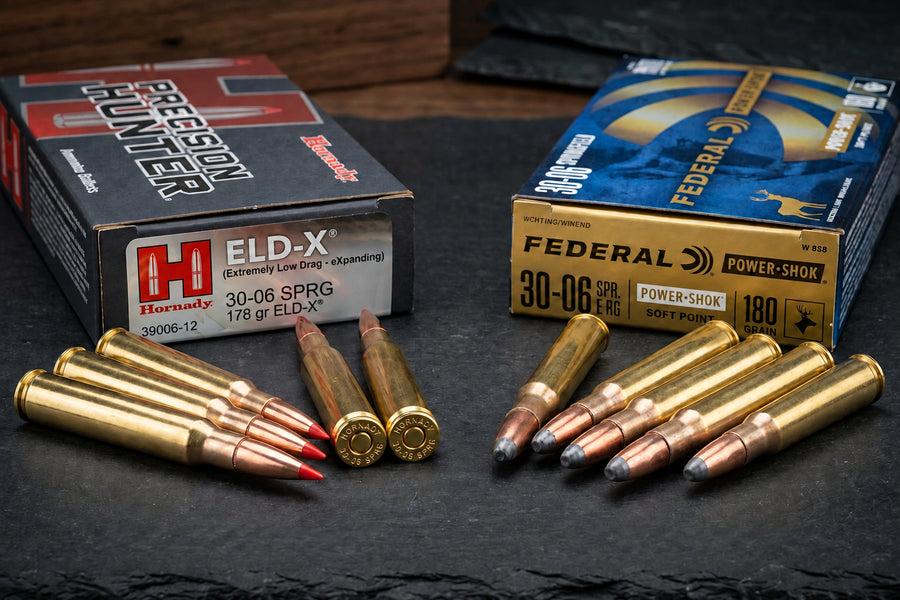
A soft point bullet typically features an exposed lead tip surrounded by a metal jacket. This traditional design has been used in hunting ammunition for generations and remains common in factory cartridges such as .30-30 Winchester, .270 Winchester, .308 Winchester, and .30-06 Springfield.
A polymer tip bullet features a synthetic tip at the front of the projectile. Depending on the design, this tip may contribute to aerodynamic efficiency, help initiate expansion, or serve other manufacturer-specific functions. Polymer tip bullets are available in both hunting and non-hunting ammunition, so the presence of a tip does not automatically establish suitability for big game.
Neither design is universally superior. The better choice depends on the exact bullet construction, intended game species, factory ammunition specifications, and the manufacturer's recommendations.
Key Takeaways
- Soft point hunting bullets generally have an exposed lead tip and a surrounding metal jacket, making them a longstanding option for factory hunting ammunition.
- Polymer tip bullets use a synthetic tip, but their internal construction and intended applications vary significantly between products.
- Polymer tips can contribute to aerodynamic performance, although actual ballistic advantages depend on the complete bullet design.
- Bullet construction matters more than appearance when evaluating expansion, weight retention, and suitability for a particular game species.
- Hunters should compare manufacturer specifications and use factory ammunition specifically recommended for their intended hunting application.
What Is Soft Point Hunting Ammo?
Soft point ammunition uses a bullet with an exposed lead tip, typically surrounded by a copper-alloy jacket.
The exposed lead portion distinguishes a conventional soft point from a full metal jacket bullet, which generally has jacket material covering the nose.
Traditional soft point bullets are designed to deform under appropriate impact conditions. However, the extent and consistency of expansion depend on the particular bullet's construction and operating conditions.
Soft point bullets remain widely available because manufacturers have developed numerous hunting-oriented designs across common rifle chamberings.
How Soft Point Bullets Are Constructed
A conventional soft point bullet typically includes a lead core and an external metal jacket.
The jacket provides structural support, while the exposed lead tip is a characteristic feature of the design.
Not all soft point bullets are identical. Differences in jacket thickness, core bonding, bullet shape, and manufacturing methods can affect their intended performance.
Some soft point designs use a bonded core, while others use conventional cup-and-core construction.
These distinctions are important because two bullets labeled "soft point" may behave differently despite having similar external appearances.
Common Types of Soft Point Hunting Bullets
Several variations appear in factory hunting ammunition.
Traditional cup-and-core soft points use a lead core enclosed by a metal jacket, with an exposed lead nose.
Bonded soft points incorporate manufacturing methods intended to improve the connection between the core and jacket.
Round-nose soft points feature a rounded profile and are associated with certain traditional hunting cartridges.
Pointed soft points use a more streamlined nose shape, although their aerodynamic characteristics vary by model.
These categories overlap. For example, a bonded hunting bullet may also have a pointed soft point profile.
What Is Polymer Tip Hunting Ammo?
Polymer tip ammunition uses a bullet with a synthetic tip positioned at the nose.
The tip is a visible feature, but the bullet's internal construction determines much of its intended performance.
Some polymer tip hunting bullets use conventional lead cores. Others incorporate bonded cores, controlled-expansion designs, or lead-free construction.
Polymer tips are also found on bullets intended for target shooting and varmint applications.
For that reason, buyers should not assume that every polymer tip bullet is appropriate for deer, elk, or other big-game hunting.
Why Manufacturers Use Polymer Tips
Manufacturers use polymer tips for several design purposes.
One is to create a consistent, streamlined bullet profile. Depending on the complete projectile design, this can contribute to favorable aerodynamic characteristics.
Some hunting bullets also use the tip as part of an engineered expansion system.
In certain expanding hunting-bullet designs, the polymer tip helps transmit impact forces into the bullet's nose cavity, contributing to the manufacturer's intended expansion characteristics. Other polymer-tipped projectiles use different internal structures or are designed for entirely different applications. The tip's presence alone does not reveal how quickly a bullet expands, how much weight it retains, or whether it is appropriate for a particular game species.
Other designs use specialized tip materials or geometries for different performance objectives.
The presence of a polymer tip does not establish a specific expansion rate, penetration capability, or ballistic coefficient.
Those characteristics must be evaluated using the manufacturer's specifications for the exact bullet.
Soft Point vs. Polymer Tip: Comparison Table
| Feature | Soft Point | Polymer Tip |
|---|---|---|
| Nose construction | Exposed lead | Synthetic tip |
| Typical core construction | Often lead core | Lead core, bonded core, or lead-free designs |
| Hunting ammunition availability | Extensive | Extensive |
| Aerodynamic characteristics | Vary by bullet profile | Vary; some designs emphasize efficiency |
| Expansion characteristics | Depend on construction | Depend on construction and tip design |
| Bonded options | Available | Available |
| Lead-free options | Not typical of conventional exposed-lead soft points | Available in selected designs |
| Big-game suitability | Product-dependent | Product-dependent |
| Common factory applications | Traditional hunting loads | Hunting, varmint, and target loads |
Neither category guarantees a particular level of accuracy or terminal performance.
Soft Point vs. Polymer Tip Ballistics
Ballistic performance is often one of the main reasons shoppers compare these bullet categories.
However, a bullet's nose material alone does not determine its trajectory.
Ballistic coefficient, muzzle velocity, bullet weight, and projectile geometry all influence published ballistic data.
Some polymer tip designs emphasize aerodynamic efficiency, but a streamlined soft point bullet may also offer favorable ballistic characteristics.
The most meaningful comparison is between specific factory loads in the same chambering rather than between broad bullet categories.
Ballistic Coefficient
Ballistic coefficient, commonly abbreviated BC, describes how effectively a projectile overcomes aerodynamic drag relative to a defined reference model.
A higher published BC generally indicates better resistance to drag under comparable conditions, although the reference model and measurement methodology matter.
Polymer tip bullets are often designed with consistent, streamlined profiles that support favorable BC values.
However, not every polymer tip bullet has a higher BC than every soft point bullet.
Manufacturers publish ballistic coefficient information for many factory ammunition products, allowing buyers to compare actual designs.
Muzzle Velocity
Muzzle velocity depends on the complete factory load, including cartridge, projectile weight, and ammunition specifications.
A polymer tip bullet does not inherently leave the muzzle faster than a soft point bullet.
For example, two factory .308 Winchester loads with different bullet designs may have different published velocities because of their overall ammunition specifications.
Hunters should compare manufacturer-provided data rather than assume that the bullet tip determines velocity.
Trajectory
Trajectory depends on several interacting factors, including initial velocity, ballistic coefficient, and environmental conditions.
Some polymer tip hunting bullets are engineered to retain velocity efficiently, but the advantage varies by product.
A conventional soft point can also offer suitable ballistic characteristics for its intended sporting application.
For a meaningful comparison, buyers should examine the manufacturer's published ballistic tables for the exact ammunition under consideration.
Soft Point vs. Polymer Tip Expansion

Expansion is another important distinction, although neither bullet category has a universal performance profile.
Conventional soft point hunting bullets generally use an exposed lead nose that can deform under suitable impact conditions, allowing the surrounding bullet structure to expand according to its design. Jacket thickness, core construction, bonding methods, and impact conditions all influence the resulting behavior. Polymer-tipped hunting bullets may use the synthetic tip as part of an engineered expansion system, but their terminal characteristics still depend on the complete projectile rather than the tip alone.
Polymer tip hunting bullets may incorporate tip designs intended to help initiate expansion, but the mechanism and intended operating conditions vary.
Both categories include products designed for different hunting applications.
Why Bullet Construction Matters
Two bullets of similar weight and external appearance can have substantially different internal designs.
Jacket thickness, bonding methods, core material, and structural features can all influence how a hunting bullet is intended to perform. A bonded soft point and a conventional cup-and-core soft point should not be treated as identical simply because both have exposed lead tips.
Similarly, a polymer tip varmint bullet and a polymer tip big-game hunting bullet may have very different design objectives. The manufacturer's stated application is a more reliable starting point than the bullet's appearance.
Bonding is a separate construction characteristic from bullet-tip design. A bonded hunting bullet uses manufacturing methods intended to strengthen the connection between the core and jacket, helping the projectile maintain its designed structural behavior under specified conditions. Both exposed-lead soft points and polymer-tipped hunting bullets can incorporate bonded construction. As a result, comparing a bonded polymer-tipped bullet with a conventional nonbonded soft point is not simply a comparison of tip materials.
Weight Retention: Is One Design Better?
Weight retention refers to the amount of a projectile's original mass that remains after impact under particular test conditions.
Some hunting bullets are designed to retain a substantial portion of their weight. Others emphasize different performance characteristics.
Neither soft point nor polymer tip construction guarantees a particular weight-retention percentage.
Bonded-core and other controlled-expansion designs exist in both broad categories.
Published weight-retention claims should be interpreted in the context of the manufacturer's test conditions and intended application.
Popular Factory Soft Point Hunting Ammunition

Several established ammunition product families illustrate the continued popularity of conventional soft point designs.
Federal Power-Shok
Federal Power-Shok includes traditional hunting ammunition offerings in numerous common rifle chamberings.
Selected loads use conventional soft point bullets and are marketed for sporting and hunting applications.
Specifications vary by cartridge and bullet weight, so buyers should check the exact product designation.
Hornady American Whitetail
Hornady American Whitetail includes factory hunting loads using InterLock bullets in selected configurations.
The InterLock design incorporates construction features intended to support controlled expansion and core retention.
The product family is relevant to hunters comparing traditional lead-core hunting ammunition.
Remington Core-Lokt
Remington Core-Lokt is another longstanding name in hunting ammunition.
Traditional Core-Lokt soft point loads use a jacket-and-core design intended for controlled expansion.
The broader Core-Lokt product family includes different bullet configurations, so buyers should distinguish traditional soft point offerings from other versions.
Popular Factory Polymer Tip Hunting Ammunition

Polymer tip hunting ammunition is available from numerous major manufacturers.
These products illustrate why the category should be evaluated by individual bullet design rather than tip appearance alone.
Hornady Precision Hunter
Hornady Precision Hunter commonly features ELD-X hunting bullets.
The ELD-X design combines a polymer tip with additional construction features intended for hunting applications.
Its published ballistic characteristics are part of the product's appeal, but actual specifications vary by cartridge and bullet weight.
Federal Premium Terminal Ascent
Federal Terminal Ascent ammunition incorporates a polymer-tipped, bonded hunting bullet design.
It is an example of a modern hunting projectile that combines multiple construction features rather than relying on the tip alone.
Buyers should consult the manufacturer for cartridge-specific specifications and intended applications.
Nosler Ballistic Tip Hunting
Nosler Ballistic Tip Hunting ammunition uses polymer-tipped bullets designed for specified hunting applications.
Nosler also produces polymer-tipped bullets for other purposes, including varmint shooting.
The distinction reinforces an important point: ammunition buyers should verify the exact product family and intended use rather than rely on the phrase "ballistic tip" alone.
Soft Point vs. Polymer Tip for Deer Hunting
Both soft point and polymer tip hunting ammunition are widely represented in factory loads marketed for deer hunting.
Traditional soft points remain popular because of their long history, broad cartridge availability, and familiar construction.
Polymer tip hunting bullets offer additional options, including designs that emphasize aerodynamic efficiency or specific expansion characteristics.
However, no general rule establishes that one category is always better for deer.
Hunters should compare ammunition specifically designated for their intended game species and chambering.
The manufacturer's application guidance is particularly important because polymer-tipped ammunition includes products not designed for big-game hunting.
Soft Point vs. Polymer Tip for Larger Game
For larger game species, bullet construction becomes especially important.
Both broad categories include hunting products engineered for different applications, including bonded and other controlled-expansion designs.
A conventional soft point should not automatically be considered unsuitable, nor should a polymer tip bullet automatically be considered appropriate.
The specific projectile's construction, manufacturer recommendations, and applicable hunting regulations are the relevant factors.
Hunters should avoid making decisions based solely on bullet weight or external appearance.
Does Polymer Tip Ammo Cost More?
Polymer tip hunting ammunition is often associated with premium product lines, but price depends on more than the tip.
Manufacturing methods, bonding processes, bullet materials, cartridge selection, and product positioning all influence retail pricing.
Traditional soft point ammunition is widely represented in value-oriented hunting lines, although premium soft point products also exist.
Likewise, polymer tip ammunition spans multiple price categories.
Buyers should compare current prices for equivalent cartridge offerings rather than assume that every polymer tip load is more expensive.
How to Choose Between Soft Point and Polymer Tip Hunting Ammo
Choosing hunting ammunition requires more than comparing bullet tips. Two factory loads may share the same cartridge and bullet weight while using substantially different projectile designs.
The most useful starting point is the manufacturer's stated application. Ammunition marketed for deer hunting, for example, should be evaluated differently from ammunition intended for varmint shooting or target use.
After confirming the intended application, buyers can compare construction, published ballistic characteristics, availability, and cost.
Consider the Intended Game Species
Hunting ammunition is often developed with particular categories of game in mind.
A traditional soft point load may be marketed for deer hunting, while a different soft point design may incorporate bonded construction for other applications.
Likewise, polymer tip ammunition includes both big-game hunting products and bullets designed for smaller animals.
A polymer tip does not make a projectile universally suitable for hunting. The complete bullet design and manufacturer's recommendations determine its intended use.
Compare Bullet Construction, Not Just Bullet Weight
Bullet weight is commonly listed on ammunition packaging, but it does not describe the projectile's complete construction.
Two 150-grain hunting bullets may use different jackets, cores, bonding methods, and nose designs.
Those differences can influence the manufacturer's intended performance characteristics.
Buyers should compare the exact product specifications rather than assume that equal bullet weights produce identical results.
Check Factory Ammunition Availability
Both soft point and polymer tip hunting loads are widely available in popular centerfire rifle cartridges.
However, product selection varies by chambering.
Traditional soft points remain common in established hunting cartridges such as .30-30 Winchester and .30-06 Springfield.
Polymer tip hunting loads are also widely represented in cartridges such as .243 Winchester, .270 Winchester, .308 Winchester, and 6.5 Creedmoor.
Actual availability depends on the manufacturer, retailer, and specific product line.
Soft Point vs. Polymer Tip: Practical Buying Comparison
| Buying Consideration | Soft Point Hunting Ammo | Polymer Tip Hunting Ammo |
|---|---|---|
| Traditional hunting designs | Extensive selection | Available, but more associated with modern designs |
| Premium bonded bullets | Available | Available |
| Streamlined bullet profiles | Available in selected designs | Common in selected product families |
| Budget-oriented factory loads | Widely represented | Product-dependent |
| Deer-hunting ammunition | Extensive selection | Extensive selection |
| Lead-free hunting options | Not typical of conventional exposed-lead designs | Available in selected products |
| Best way to compare | Exact bullet construction and manufacturer guidance | Exact bullet construction and manufacturer guidance |
The table describes general product categories rather than guaranteeing performance from any individual load.
Soft Point vs. Polymer Tip in Traditional Hunting Cartridges

Cartridge selection can influence which bullet designs are commonly available.
.30-30 Winchester
Traditional soft point ammunition has a particularly strong association with the .30-30 Winchester.
Many conventional .30-30 hunting rifles use tubular magazines, which introduce specific ammunition compatibility considerations.
Certain modern ammunition designs are engineered for particular tubular-magazine applications, but buyers must follow the firearm and ammunition manufacturers' instructions.
A polymer tip should never be assumed compatible with a tubular magazine simply because the tip is made from synthetic material.
.308 Winchester
The .308 Winchester is available with a wide variety of soft point and polymer tip hunting loads.
This broad selection makes it a useful example of a cartridge where buyers can compare traditional hunting bullets with newer designs.
Because individual products differ in construction and published ballistics, comparisons should use specific factory loads.
.30-06 Springfield
The .30-06 Springfield also offers extensive hunting ammunition variety.
Traditional soft point loads remain common, alongside polymer tip products featuring different bullet constructions and intended applications.
For hunters comparing ammunition in this chambering, the manufacturer's recommended game applications and product specifications provide a better basis for selection than tip design alone.
Common Buying Mistakes to Avoid
Choosing by tip appearance alone: A synthetic tip or exposed lead nose does not reveal all the bullet's construction details.
Assuming every polymer tip is a big-game bullet: Some polymer-tipped ammunition is intended for varmint or target applications.
Ignoring ammunition compatibility: The exact cartridge designation and manufacturer instructions must match the firearm. Magazine design can also introduce ammunition restrictions.
Comparing different loads as though they are identical: Bullet weight, velocity, construction, and ballistic coefficient can vary even within the same cartridge.
Assuming premium pricing guarantees better results: A higher price may reflect additional manufacturing features, but it does not establish universal superiority for every hunting application.
Soft Point vs. Polymer Tip: Which Should You Buy?
For hunters seeking traditional, widely available factory ammunition, soft point hunting loads are a practical starting point. They are offered in numerous popular rifle cartridges and include both conventional and premium bullet constructions.
Polymer tip hunting ammunition is worth considering when a specific product offers desirable construction features or published ballistic characteristics. However, not every polymer tip bullet is intended for big-game hunting.
| Buyer Priority | Worth Considering |
|---|---|
| Traditional hunting ammunition | Soft point |
| Budget-oriented hunting loads | Conventional soft point |
| Streamlined bullet designs | Selected polymer tip loads |
| Bonded hunting bullets | Either |
| Deer hunting | Either, with suitable factory ammunition |
| Lead-free hunting ammunition | Selected purpose-built designs |
Before purchasing, confirm the exact cartridge designation, manufacturer-recommended application, bullet construction, and firearm compatibility.
Final Thoughts
Soft point and polymer tip hunting ammunition both remain relevant choices for modern hunters.
Soft points offer established construction methods, extensive cartridge availability, and options ranging from conventional cup-and-core bullets to premium bonded designs.
Polymer tip bullets provide additional design possibilities, including streamlined profiles and specialized expansion systems. Their performance characteristics vary substantially between products.
The most important distinction is not the tip material but the complete bullet design. Compare specific factory loads, follow manufacturer recommendations, and choose ammunition appropriate for the intended hunting application.
Soft-point and polymer-tipped hunting bullets both have established roles in the field, and neither design should be judged solely by the appearance of its tip. Bullet construction, appropriate expansion characteristics, penetration, ammunition consistency, and suitability for the intended game all matter. Just as importantly, hunters should consider the rifle and cartridge supporting that ammunition. Our comparison of modern hunting rifle platforms and calibers provides additional perspective on selecting a complete hunting setup rather than focusing on bullet design alone.

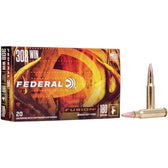
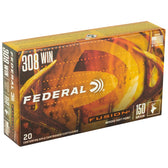
Federal Fusion .308 Winchester 180 Grain Bonded SP
$34.00
at Pro Armory
Prices accurate at time of writing
Frequently Asked Questions
Is polymer tip ammo better than soft point for deer hunting?
Not universally. Both categories include factory ammunition designed for deer hunting. Suitability depends on the exact bullet construction and manufacturer's recommendations.
Do polymer tip bullets expand more than soft points?
Not necessarily. Expansion characteristics depend on the complete projectile design and operating conditions. Tip material alone does not establish expansion performance.
Is soft point ammunition less accurate than polymer tip ammunition?
No inherent accuracy difference applies to every product. Accuracy depends on the individual firearm, ammunition design, and manufacturing consistency.
Can polymer tip ammo be used in a tubular magazine?
Only when the ammunition and firearm manufacturers specifically approve that combination. Polymer tip designs vary, and synthetic tip material alone does not establish tubular-magazine compatibility.
Is polymer tip hunting ammunition more expensive?
Some polymer tip hunting loads are positioned as premium products, but prices vary. Conventional soft point ammunition is widely available in budget-oriented product lines, while premium options exist in both categories.
About the Author
The ProArmory editorial team includes experienced hunters, competitive shooters, military veterans, firearms instructors, and firearms industry professionals committed to producing accurate, practical, and research-based content. Our articles draw on manufacturer specifications, current industry information, and real-world shooting experience to help readers make informed decisions about firearms, ammunition, optics, and related equipment.
Disclaimer
This article is for educational purposes only. Verify current manufacturer specifications, firearm and ammunition compatibility, and intended hunting applications. Follow established firearm-safety practices and comply with applicable federal, state, and local firearm and hunting regulations.


