


Quick Answer
The sub-$400 pistol market isn't what it used to be.
A budget handgun once typically meant accepting obvious compromises in sights, ergonomics, capacity, optics compatibility, or overall refinement. In 2026, that assumption is increasingly outdated.
Today's value-oriented buyer can find pistols offering optics-ready slides, strong magazine capacity, interchangeable grip components, accessory rails, improved factory sights, and even modular fire-control systems at or around the $400 street-price level.
The Ruger RXM is a particularly strong example. Ruger and Magpul built it around a removable stainless-steel Fire Control Insert, interchangeable grip module, direct mounting for several popular optic footprints, steel co-witness sights with a tritium front, and broad compatibility with Gen 3-pattern components.
At the same time, established designs such as the CZ P-10 C demonstrate another side of the trend: pistols originally positioned considerably above the bargain category can become exceptional values as market pricing changes.
The result is a new class of handgun that could reasonably be called the high-end budget pistol.
These aren't necessarily premium pistols sold for bargain prices. Rather, they're affordable handguns offering enough features and capability that the old distinction between “budget” and “serious” pistols has become much harder to define.
Street prices fluctuate constantly, so the $400 figure should be treated as a market benchmark rather than a permanent ceiling for every model or configuration discussed here.
Key Takeaways
- Around $400 buys considerably more handgun than it once did. Optics readiness, good capacity, interchangeable ergonomics, and accessory rails are increasingly available without moving into premium pricing.
- Some great budget pistols were designed around value, while others are established models whose street prices have fallen substantially.
- The Ruger RXM demonstrates how far the category has progressed by combining a removable fire-control insert with direct optic mounting and a large compatible-parts ecosystem.
- Price alone doesn't determine quality, but inexpensive pistols can still differ from premium models in sights, finishes, included equipment, quality-control consistency, aftermarket support, and overall refinement.
- The smartest question isn't simply “What's the best pistol under $400?” It's whether spending another $200–$300 actually provides features or characteristics that matter to the individual buyer.
What Is a “High-End Budget Pistol”?
The phrase sounds contradictory.
That's intentional.
A high-end budget pistol isn't necessarily a high-end firearm in the traditional sense. You're unlikely to get extensive hand fitting, expensive materials, elaborate machining, or competition-level components at this price.
Instead, we're talking about feature compression.
Features that once helped justify higher prices have moved down-market.
Consider what buyers increasingly expect from a modern polymer-framed 9mm:
- 15+ round capacity in compact and full-size formats
- Accessory rail
- Front and rear slide serrations
- Improved grip texture
- Replaceable or adjustable grip components
- Optics compatibility
- Better factory sights
- Usable striker-fired triggers
None of those features individually guarantees that a pistol is good.
But when several appear on a handgun selling around $300–$400, the traditional definition of an “entry-level pistol” starts falling apart.
Why $400 Buys More Than It Used To
Several factors have pushed the market in this direction.
Polymer-framed, striker-fired handguns are mature technology. Manufacturers have had decades to refine production methods, simplify manufacturing, and determine which features buyers actually value.
Competition is equally important.
The buyer isn't choosing between two or three major duty-pistol families anymore. American, European, and Turkish manufacturers compete alongside aggressively priced domestic brands and pistols built around familiar aftermarket ecosystems.
That puts pressure on everyone.
If one manufacturer provides an optics-ready slide for $400, another manufacturer has difficulty charging substantially more merely because its slide also accepts an optic.
The same thing happened with interchangeable backstraps and accessory rails.
What begins as an upgrade eventually becomes expected equipment.
Optics Changed the Definition of “Budget”
Red-dot compatibility may be the clearest example.
Not long ago, an optics-ready slide could help distinguish an upgraded pistol from the manufacturer's basic configuration.
Now buyers increasingly expect an optic solution even on relatively inexpensive handguns.
The Ruger RXM demonstrates how far this has gone. Ruger designed its slide to directly accommodate RMR, DeltaPoint Pro, and RMSc-pattern optics while also providing co-witness-height steel sights with a tritium front.
That is not an old-school budget-pistol feature package.
And once buyers see that level of equipment around this price category, competitors are forced to respond.
CZ P-10 C: When a Formerly Mid-Priced Pistol Becomes a Budget Star

The CZ P-10 C illustrates an important distinction in the affordable-handgun market.
Not every inexpensive pistol was originally engineered to occupy the lowest possible price tier.
CZ's earlier U.S. pricing placed the optics-ready P-10 C well above today's bargain category. Current factory specifications still describe a 4-inch, 15-round striker-fired compact weighing roughly 26 ounces, reinforcing the point that aggressive market pricing has not fundamentally changed the underlying pistol.
The market has since seen P-10 pistols offered at much more aggressive street prices.
That's important because price erosion doesn't necessarily mean the underlying pistol was redesigned as a cheaper product.
Instead, buyers can sometimes benefit from a mature platform moving into a highly competitive pricing environment.
The P-10 C therefore represents one of the most attractive types of budget purchase: an established service-size design that has become inexpensive rather than a firearm designed from day one primarily to be inexpensive.
That doesn't automatically make it better than every newer budget competitor.
But it does demonstrate why buyers should shop beyond MSRP and brand positioning.
A $350 pistol today may have competed in a very different price bracket earlier in its life cycle.
Ruger RXM: Modularity Moves Down-Market

The Ruger RXM may be an even better example of where affordable pistols are headed.
Developed with Magpul, the RXM uses a removable stainless-steel Fire Control Insert housed inside an interchangeable Magpul Enhanced Handgun Grip.
That architecture means the serialized fire-control component isn't permanently tied to one conventional polymer frame.
Ruger and Magpul also designed the pistol around a broader customization ecosystem. Ruger says most major components were designed around Glock Gen 3 compatibility, providing access to a large existing market of compatible parts, magazines, holsters, and accessories, although buyers should still verify fit for any specific component.
The pistol ships with two Magpul GL9 magazines in either 15- or 10-round configurations, depending on model.
Then there is the optic system.
Instead of giving an affordable pistol a basic slide and leaving upgrades to the owner, Ruger includes direct mounting for several major compact optic patterns.
That makes the RXM significant beyond its own sales.
Modularity itself is becoming a value-market feature.
A removable fire-control unit once sounded like something that should command a substantial premium. The RXM demonstrates that manufacturers can now use that concept as a competitive advantage in an aggressively priced polymer pistol.
Beretta APX A1: Established-Brand Value

The Beretta APX A1 approaches the value question differently.
This isn't a pistol from an unknown manufacturer attempting to gain attention entirely through low pricing. It's Beretta competing in one of the most crowded portions of the handgun market.
The full-size APX A1 is a striker-fired 9mm using a fiberglass-reinforced polymer frame and stainless-steel chassis.
Beretta specifies a 4.25-inch barrel, 17-round magazine, approximately 28.9-ounce unloaded weight with empty magazine, and 7.56-inch overall length.
That chassis architecture also allows grip-frame replacement and reconfiguration, giving the APX A1 a degree of modularity that fits surprisingly well with the broader theme of premium-style features moving down-market.
Those are conventional full-size service-pistol dimensions rather than those of a stripped-down economy handgun.
And that's precisely why pistols like the APX matter to this discussion.
When major manufacturers compete aggressively on price, the value category stops being isolated from the rest of the market.
A buyer with roughly $400 isn't necessarily restricted to a handful of dedicated economy brands anymore.
They may be cross-shopping established duty-style platforms from companies that previously occupied substantially more expensive territory.
The Budget Market Is No Longer a Separate Market
That's the bigger story behind all these pistols.
The affordable handgun used to feel like its own category.
You bought a budget pistol because you couldn't, or didn't want to, spend enough for the mainstream option.
In 2026, the boundaries are much less obvious.
A buyer might encounter an established pistol discounted into budget territory, a newer model engineered from the start around aggressive pricing, or a highly configurable platform using compatibility with existing components to create value.
All three can end up sitting within $50 of each other at the counter.
And that means price alone tells us less about the pistol than it used to.
Canik METE MC9: Feature Density at a Budget Price

The Canik METE MC9 represents a different side of the high-end budget market.
Rather than relying mainly on discounted pricing from an older platform, Canik has built much of its reputation around giving buyers a long feature list at an aggressive price.
The METE MC9 is a micro-compact 9mm built around a 3.18-inch barrel and approximately 1.16-inch width.
Canik lists the standard MC9 around a 12-round base magazine format, with 15-round capacity also supported depending on magazine and configuration, interchangeable backstraps, ambidextrous slide release, reversible magazine release, accessory rail, and compatibility with several micro-red-dot optics.
Those specifications matter because they demonstrate how much buyer expectations have shifted.
An optics-capable micro-compact with adjustable grip fit, bilateral controls, and an accessory rail no longer automatically lives in a premium price tier.
Canik also puts significant emphasis on what comes with the pistol. Depending on the exact configuration, the brand has traditionally included considerably more supporting equipment than buyers might expect at the price point.
That introduces another way of thinking about value:
The purchase price of the pistol isn't necessarily the complete cost of getting it range-ready.
A handgun that includes useful magazines, grip components, tools, and optic support may offer better overall value than a slightly cheaper pistol that requires several immediate purchases.
The important caution is to verify the exact package before buying. Canik itself notes that box contents can vary according to model configuration.
Best For: Buyers who want a compact optics-capable pistol with a substantial factory feature set without moving into premium pricing.
PSA Dagger Compact: Budget Pricing Meets an Established Ecosystem

The Palmetto State Armory Dagger Compact attacks the budget-pistol problem from another direction.
Instead of developing an entirely unfamiliar architecture, PSA built the Dagger around a format with extensive compatibility and aftermarket familiarity.
That gives the Dagger something many inexpensive pistols struggle to develop:
An ecosystem.
Depending on configuration, Dagger slides are available with different optic cuts, and PSA supports a broad selection of compatible optics and accessories.
Its current Dagger optics catalog includes RMR, Docter/Noblex, and Shield/RMSc categories, illustrating the variety of configurations available across the family.
The Dagger's appeal is therefore larger than its initial purchase price.
Affordable replacement components, magazine choices, sights, holsters, and a large surrounding market can matter significantly over years of ownership.
That's a lesson budget shoppers sometimes overlook.
A $300 handgun with strong parts and holster availability may be a better long-term value than a slightly cheaper pistol whose proprietary magazines or replacement components are difficult to obtain.
The Dagger also illustrates how the line between factory pistol and enthusiast platform is blurring.
A buyer can purchase a relatively straightforward Dagger and leave it alone, or choose among increasingly specialized slide, barrel, frame, and optics configurations.
That's the same modularity story we've seen at higher price points, only now it's happening deep inside the budget market.
Best For: Value-focused buyers who care about aftermarket support and configuration choices as much as the lowest initial price.
Five High-End Budget Pistols Compared
| Pistol | Capacity* | Optics Capability | Primary Strength | Why It Stands Out |
|---|---|---|---|---|
| CZ P-10 C | 15+1 | Available by configuration | Mature service-pistol design | Established pistol at aggressive street pricing |
| Ruger RXM | 15+1 | Direct-mount system | Modularity | Removable fire-control insert and broad compatibility |
| Canik METE MC9 | 12+1 / 15+1 depending on magazine | Yes | Feature density | Compact package with adjustable ergonomics and optics support |
| Beretta APX A1 | 17+1 | Optics-ready configurations available | Full-size value | Established manufacturer and duty-style format |
| PSA Dagger Compact | 15+1 | Multiple cuts available | Ecosystem/value | Affordable platform with broad accessory support |
*Magazine capacity and availability vary by exact configuration and jurisdiction.
A Note on Average Street Pricing
The $400 threshold in this article is intentionally approximate.
Current pricing varies by configuration, retailer, rebates, and inventory.
In 2026, examples such as the PSA Dagger Compact routinely appear well below $400, the Beretta APX A1 and Canik METE MC9 commonly sit around the upper end of the range, and the Ruger RXM can move above or below the line depending on the specific offer.
The point is therefore not that every pistol discussed here is always available for $399 or less.
It's that the feature set once associated with significantly more expensive handguns has moved into roughly this part of the market.
This comparison also shows why the phrase “budget pistol” has become increasingly inadequate.
None of these guns relies on the exact same value proposition.
The CZ is compelling partly because market pricing has fallen around an established design.
The RXM brings modularity to a price class where it once would have seemed unusual.
Canik emphasizes features and included value.
Beretta places an established full-size pistol into a fiercely competitive price bracket.
PSA combines low entry cost with an unusually broad customization ecosystem.
That gives buyers several different ways to spend $400 rather than simply choosing whichever pistol is cheapest.
Why Are Good Pistols Getting So Cheap?
The obvious question is how manufacturers can offer this much equipment without moving prices upward.
There isn't one reason.
The Striker-Fired Pistol Is Mature Technology
Polymer-frame striker-fired pistols aren't experimental anymore.
Manufacturers understand how to build them at scale, and buyers have very clear expectations for how they should function and what features they should include.
That maturity allows companies to concentrate less on reinventing the basic operating system and more on manufacturing efficiency and feature competition.
Competition Is Brutal
There may be no more crowded handgun category than the polymer-frame 9mm.
A company trying to sell a basic pistol with ordinary sights, no optic cut, and limited capacity at $500 is now competing against firearms that may offer considerably more for less money.
That forces manufacturers either to lower prices or increase equipment.
Buyers benefit from both.
Optics Cuts Became Normal
Once enough manufacturers began offering optics-ready pistols at reasonable prices, an optic cut stopped being a premium differentiator.
It's increasingly becoming expected equipment.
That same process already happened with accessory rails, interchangeable backstraps, and front slide serrations.
Today's premium feature often becomes tomorrow's baseline.
Existing Designs Have Already Absorbed Development Costs
The CZ P-10 C demonstrates another path toward exceptional value.
An established firearm can become substantially cheaper in the marketplace without suddenly becoming a worse firearm.
Once the market has matured and manufacturers compete for shelf space, older designs can be heavily discounted to remain attractive against newer releases.
That creates unusual opportunities for buyers who care more about capability than having the newest model.
Cheaply Priced Is Not the Same as Cheaply Built
This distinction should guide the entire buying decision.
A pistol can be inexpensive because:
- Production is highly efficient
- The design has matured
- Competition forced the price down
- The manufacturer uses an existing parts ecosystem
- Retailers are discounting older inventory
- The manufacturer deliberately competes aggressively on retail pricing
None of those things necessarily means poor construction.
At the same time, a low price shouldn't automatically be interpreted as evidence of exceptional value.
Some affordable firearms may cut costs in places buyers notice over time.
That's why specifications alone aren't enough.
Where Budget Pistols Can Still Give Something Up
The performance gap has narrowed, but the ownership experience isn't identical across every price point.
Factory Sights
Some inexpensive pistols still ship with relatively basic sights.
That may not matter if you plan to install a red dot, but replacing sights immediately adds to the actual purchase cost.
Included Magazines
Magazine count varies significantly.
A slightly more expensive package including multiple magazines can sometimes represent better overall value than the least-expensive pistol on the shelf.
Finish and Cosmetic Refinement
Premium pistols may receive more elaborate machining, coatings, grip treatments, or small-component finishing.
Those differences don't always translate directly into better practical performance, but they're part of what buyers may be paying for.
Trigger Characteristics
Modern affordable pistols can have very usable triggers.
That does not mean every $350 trigger feels identical to the trigger in a more expensive performance-oriented handgun.
Buyers with strong trigger preferences should handle or appropriately test the specific pistol rather than assuming all striker-fired systems feel alike.
Aftermarket and Replacement Parts
This varies enormously.
The PSA Dagger has an ecosystem advantage precisely because it sits near an established design standard.
Other affordable pistols may have fewer holsters, sights, magazines, and internal components available.
That may not matter initially.
Five years later, it can matter a great deal.
Should You Spend $400 or $700?
This may be the most useful question in the entire article.
For many buyers, spending $700 simply because the more expensive handgun must be “better” no longer makes much sense.
A sub-$400 pistol can provide everything required for recreational shooting, training, home use where appropriate, or concealed carry where lawful, provided the individual firearm fits the shooter and proves dependable with the ammunition intended for it.
But spending more can still make sense.
A higher-priced pistol may provide:
- A particular trigger system you prefer
- Better factory sights
- More refined controls
- A more sophisticated optic interface
- Premium barrel or slide treatment
- A different warranty or manufacturer-support package
- A better-developed accessory ecosystem
- Features aimed at competition or specialized use
- Ergonomics unavailable on cheaper alternatives
The question is whether you will actually benefit from those differences.
If a $375 pistol already has the grip, trigger, capacity, optic interface, and support you want, spending several hundred dollars more may accomplish very little.
If the $700 pistol solves a specific problem the cheaper gun doesn't, the additional expense can be perfectly reasonable.
That's how the high-end budget market should be viewed.
Not as proof that expensive pistols are pointless, but as evidence that buyers now need a much better reason to spend more.
Final Thoughts: $400 Doesn't Mean What It Used To
The rise of the high-end budget pistol is less about manufacturers suddenly producing premium handguns for bargain prices and more about how quickly once-premium features have become mainstream.
Optics-ready slides, strong magazine capacity, interchangeable ergonomics, accessory rails, and increasingly sophisticated modularity are no longer reserved for expensive pistols.
The CZ P-10 C shows what happens when an established service-style pistol falls into budget territory.
The Ruger RXM brings modular construction and broad compatibility to the category.
The Canik METE MC9 emphasizes features and included value, while the Beretta APX A1 demonstrates how aggressively an established manufacturer can compete on price.
The PSA Dagger Compact adds another dimension through its affordable entry point and extensive surrounding ecosystem.
That doesn't mean a $350 pistol makes every $700 or $1,000 handgun unnecessary.
More expensive pistols can still justify their prices through better materials, specialized triggers, refined controls, advanced optics systems, premium finishes, competition-oriented components, or simply ergonomics that suit a particular shooter better.
What has changed is the burden of proof.
Buyers no longer necessarily need to spend well above $400 simply to get a modern, feature-rich handgun.
Spending more increasingly needs to deliver something specific that the buyer actually values.
That's ultimately why the current budget-pistol market is so competitive.
The question is no longer:
“Can I get a decent pistol for $400?”
It's:
“How much more do I actually gain by spending beyond $400?”
For many buyers in 2026, the answer may be less than they expect.
The biggest change in the budget handgun market isn't simply that inexpensive pistols have gotten better. It's that many now arrive with features shooters once expected to add later or pay considerably more to get from the factory.
Optics-ready slides, improved triggers, interchangeable backstraps, higher-capacity magazines, better sights, and more refined ergonomics are increasingly appearing farther down the price ladder.
That makes price alone a poor way to judge what a modern pistol offers. If value is your priority, our guide to the best affordable handguns takes a broader look at pistols competing on capability rather than prestige.
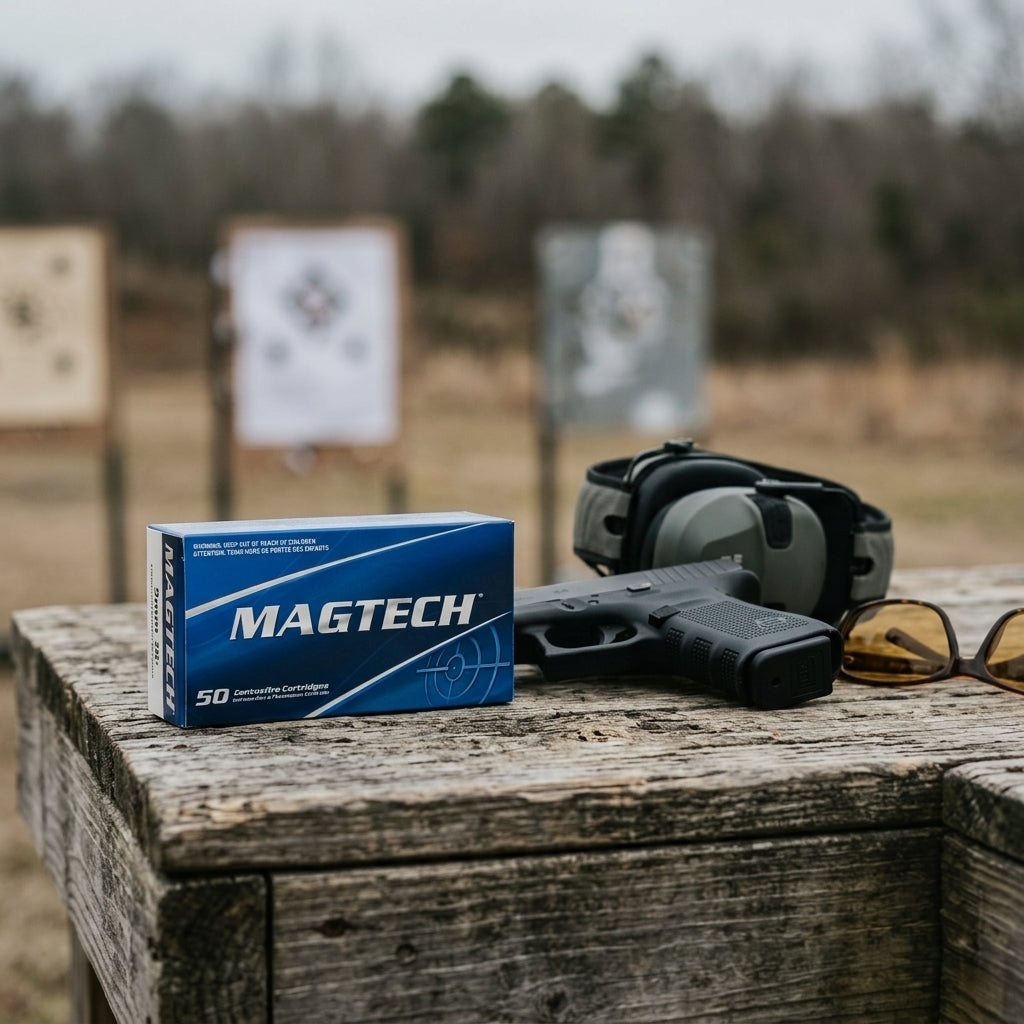
Magtech 9mm 115gr FMJ
$20.00
at Pro Armory
Prices accurate at time of writing
Frequently Asked Questions
Can you get a good 9mm pistol for under $400?
Yes. Current market pricing puts several established and feature-rich 9mm pistols around or below $400.
Price alone, however, shouldn't determine the purchase. Buyers should consider reliability history, ergonomics, magazine availability, optics compatibility, manufacturer support, and intended use.
Are budget pistols as good as expensive pistols?
Not necessarily.
The feature gap has narrowed considerably, but premium pistols may still offer more refined triggers, controls, finishes, materials, sights, manufacturing details, or specialized capabilities.
The important question is whether those differences matter enough to justify the additional cost for your intended use.
Is an optics-ready pistol worth buying if I don't currently use a red dot?
It can be.
An optics-ready configuration provides more flexibility if you decide to add a compatible optic later.
However, buyers shouldn't pay substantially more for that capability if they're confident they will only use iron sights.
What should I check before buying an inexpensive pistol?
Look beyond the purchase price.
Check hand fit, controls, factory sights, magazine cost and availability, holster support, optic compatibility if relevant, replacement-parts availability, warranty support, and the manufacturer's current reputation.
For defensive use, owners should also establish confidence in their individual firearm through appropriate practice and maintenance.
Should I buy a $400 pistol or save for a more expensive model?
Buy according to requirements rather than price category.
If an affordable pistol provides the ergonomics, features, support, and configuration you need, spending more isn't automatically beneficial.
A more expensive handgun makes sense when it provides specific advantages you genuinely value rather than simply carrying a higher price.
About the Author
The ProArmory editorial team includes experienced hunters, competitive shooters, military veterans, firearms instructors, and firearms industry professionals committed to producing accurate, practical, and research-based content.
Our articles draw on manufacturer specifications, current industry information, and real-world shooting experience to help readers make informed decisions about firearms, ammunition, optics, and related equipment.
Disclaimer
This article is intended for informational and educational purposes only. Firearm prices, specifications, configurations, magazine capacities, and availability can change significantly by retailer and over time. Verify current information for the exact firearm before purchasing.
Firearm ownership, purchase, possession, transportation, storage, and carry are subject to applicable federal, state, and local laws. Check current requirements in your jurisdiction and always follow manufacturer instructions and established firearm-safety practices.


