


Quick Answer
For many farm and ranch owners, the ideal shotgun is a durable, uncomplicated 12- or 20-gauge that is easy to carry and versatile enough for multiple legitimate field uses. Pump actions remain attractive for their simplicity and value, while modern semi-automatics offer softer recoil and faster operation. Rather than choosing the most specialized shotgun available, rural owners are generally better served by a dependable field gun suited to their property, local wildlife, hunting needs, and shooting activities.
Why a Shotgun Makes Sense on Rural Property
Few firearms offer the same breadth of sporting and field utility as a shotgun.
Depending on gauge, ammunition, choke, and applicable regulations, one shotgun can potentially serve for:
- Bird hunting
- Turkey hunting
- Small-game hunting
- Clay shooting
- Appropriate pest and predator control
- Recreational shooting
- General rural utility
That versatility is especially valuable on farms and ranches, where the firearm that gets used most isn't always the one with the most specialized capabilities.
A good rural shotgun should be something the owner is comfortable carrying, maintaining, and actually using.
What Makes a Good Farm or Ranch Shotgun?
The priorities are somewhat different from those of a dedicated competition or waterfowl shotgun.
Reliability Comes First
Farm equipment gets dirty.
Dust, mud, rain, humidity, vegetation, and repeated transportation can be hard on firearms. A rural utility shotgun should tolerate regular field use without demanding excessive attention.
That doesn't eliminate the need for cleaning and maintenance, but elaborate finishes and highly specialized features usually matter less than dependable operation.
Manageable Size
Long barrels have advantages for certain sporting applications, but a farm or ranch shotgun may spend considerable time being carried around buildings, through woods, or across uneven terrain.
A reasonably compact field configuration can be easier to handle without turning the firearm into an overly specialized platform.
Corrosion Resistance
Synthetic stocks and durable metal finishes make considerable sense for a working shotgun.
Wood remains an excellent stock material, but a firearm regularly exposed to wet weather, dusty vehicles, barns, or changing temperatures benefits from finishes designed for hard use.
Ammunition and Choke Versatility
One of the shotgun's greatest advantages is its adaptability.
Interchangeable choke tubes and a broad ammunition market allow a single shotgun to serve very different sporting purposes. Owners should always use ammunition compatible with their firearm and select loads appropriate for the intended application.
12 Gauge vs. 20 Gauge
The first major decision for most buyers is gauge.
| Feature | 12 Gauge | 20 Gauge |
|---|---|---|
| Ammunition Selection | Excellent | Excellent |
| Typical Recoil | Varies by firearm and load | Often lower with comparable firearms and loads |
| Shotgun Weight | Varies | Often Lighter |
| Hunting Versatility | Excellent | Excellent |
| New/Smaller Shooters | Can be demanding | Often easier to manage |
| General Farm/Ranch Use | Excellent | Excellent |
Why Choose a 12 Gauge?
The 12 gauge remains the broadest all-around choice. Ammunition availability is extensive, shotgun selection is enormous, and the gauge can accommodate applications ranging from clays and upland birds to turkey and waterfowl hunting with suitable loads and configurations.
Best For: Owners wanting maximum ammunition and firearm selection from one shotgun.
Why Choose a 20 Gauge?
A 20 gauge shouldn't be dismissed as simply a beginner's shotgun.
Modern 20-gauge firearms and ammunition make the gauge highly capable for numerous hunting and sporting applications while often providing a lighter firearm and more manageable recoil.
For someone carrying a shotgun frequently around acreage, those advantages can be meaningful.
Best For: Owners prioritizing lower weight, manageable recoil, and general field versatility.
Pump Action or Semi-Automatic?
Both make excellent rural shotguns, but they appeal to different buyers.
Pump-Action Shotguns
Pump actions remain popular because they are straightforward, widely available, and typically affordable.
Advantages include:
- Simple operation
- Broad ammunition compatibility
- Excellent availability
- Large aftermarket for established platforms
- Generally lower purchase price
Their straightforward design makes them particularly attractive for a shotgun expected to see regular field use.
Semi-Automatic Shotguns
Modern semi-automatics offer their own advantages, particularly for owners who also hunt or shoot clays regularly.
Depending on operating system, benefits can include:
- Reduced perceived recoil
- Fast follow-up shots
- Excellent sporting versatility
- Comfortable high-volume shooting
They generally cost more and may have different maintenance requirements, but a quality semi-auto can serve equally well as a working rural shotgun and serious hunting firearm.
What About Over/Unders and Single-Shots?
They still have a place.
An over/under can be an outstanding choice for an owner whose rural firearm use revolves primarily around upland hunting and clay shooting. However, its higher cost and sporting emphasis may make it less appealing as a general working gun.
A single-shot shotgun, meanwhile, offers exceptional simplicity and affordability. It lacks the capacity and speed of repeating designs but remains useful for certain hunting, recreational, and property applications.
The ideal farm or ranch shotgun doesn't need to be the most sophisticated option available. It needs to reliably handle the jobs the owner actually encounters.
Shotguns That Fit Farm and Ranch Life
A working rural shotgun does not need to be expensive or covered in specialized accessories. For most property owners, proven designs with durable finishes, interchangeable chokes, and strong parts support make more sense.
Rather than concentrating only on the same hunting shotguns that appear on every "best shotgun" list, these models represent several different approaches to rural use.
Winchester SXP Defender

The Winchester SXP Defender is a straightforward pump-action option with a compact profile. The SXP action is known for its fast cycling characteristics, while the synthetic furniture is well suited to a firearm that may see regular outdoor use.
Depending on the specific configuration, SXP models are available with different barrel lengths and features, so buyers should verify specifications carefully.
The SXP's appeal as a working shotgun comes largely from its straightforward design and handling. Winchester uses an inertia-assisted rotary-bolt action that helps the forend begin moving rearward after firing, contributing to the fast cycling characteristics for which the SXP is known. For a rural owner, the Defender's relatively compact dimensions can be useful when carrying the shotgun around buildings, equipment, or wooded property.
The tradeoff is specialization: compared with a conventional field-barreled SXP, the Defender is less naturally suited to wingshooting and clay sports. Buyers primarily interested in hunting should therefore consider whether a field-oriented SXP configuration would provide greater overall versatility.
Why It Fits: Affordable, compact, and uncomplicated.
Best For: Property owners wanting a straightforward utility-oriented pump shotgun.
Stoeger P3000

The Stoeger P3000 takes a no-frills approach to the pump-action shotgun. It is available in several field-oriented configurations and provides a relatively affordable entry point for owners who want a working shotgun without paying for premium features.
The P3000 is particularly appealing when the shotgun will also see hunting duty, since field models are available with longer barrels and interchangeable choke systems.
The P3000 makes a particularly strong case as a working shotgun because its basic configuration prioritizes utility over elaborate features. Current field versions use a 3-inch chamber, synthetic or walnut furniture depending on model, and a straightforward pump action built around an anodized aluminum receiver.
A 28-inch field barrel gives the shotgun more natural handling for birds and clays than a short utility barrel, while its relatively modest price makes owners less likely to worry about exposing it to the bumps, scratches, and weather associated with regular property use. The P3000 is not intended to compete with premium sporting shotguns for refinement, but that simplicity is part of what makes it appealing as an everyday rural firearm.
Why It Fits: Simple construction and strong value.
Best For: General field use, hunting, and owners who prioritize affordability.
Franchi Affinity 3

For property owners who want a shotgun capable of pulling double duty as a serious hunting gun, the Franchi Affinity 3 deserves consideration.
Its inertia-driven semi-automatic system keeps the design relatively straightforward, while available synthetic-stock configurations are well suited to hard field use. The Affinity family also includes both 12- and 20-gauge options.
The Affinity 3 becomes especially compelling for owners whose property shotgun will spend substantial time hunting. Its Inertia Driven operating system keeps combustion gases and fouling largely out of the action, while the relatively lightweight design makes the shotgun comfortable to carry during long days in the field.
Franchi has also continued developing the platform rather than allowing it to stagnate. The current generation incorporates updated ergonomics, easier loading, improved controls, and adjustable fit features, while the expanded lineup includes field, compact, sporting, upland, and waterfowl-oriented configurations. That breadth allows a buyer to choose an Affinity 3 around the type of rural shooting they actually do rather than adapting one generic configuration to every task.
Why It Fits: Combines a practical field design with the advantages of a modern semi-auto.
Best For: Rural owners who also spend significant time hunting birds, turkey, or waterfowl.
Weatherby Element

The Weatherby Element is another inertia-operated semi-automatic that offers an interesting alternative to more commonly discussed shotgun platforms.
Available in multiple gauges and configurations, it provides the versatility needed for hunting and recreational shooting without moving into the price range of many premium semi-autos.
For farm and ranch owners, the Element's strongest argument is that it provides the clean-running simplicity of an inertia-operated action while remaining positioned as an approachable field shotgun rather than a high-end specialty gun.
Weatherby offers the Element platform in both 12- and 20-gauge chamberings, allowing buyers to choose between the broader ammunition selection of the 12 gauge and the lighter handling commonly associated with 20-gauge field guns. Its conventional sporting layout also makes the Element better suited to birds, clays, and general hunting than a compact utility shotgun, giving it considerable appeal to owners who expect their working firearm to double as their primary hunting shotgun.
Why It Fits: Versatile semi-automatic operation at a relatively approachable price point.
Best For: Owners wanting one shotgun for property use and sporting applications.
CZ 1012 G2

The CZ 1012 G2 is a modern inertia-operated semi-automatic designed around field and sporting use. Current configurations include synthetic-stock options that make particular sense for wet, muddy, or dusty environments.
For someone who wants a rural shotgun that can also spend weekends hunting or breaking clays, the 1012 G2 provides considerably more sporting versatility than a dedicated utility shotgun.
The 1012 G2 is particularly interesting for rural use because CZ offers configurations ranging from traditional walnut field guns to synthetic and weather-resistant models. The inertia-operated action keeps the design relatively simple, while interchangeable chokes preserve the adaptability expected from a multipurpose field shotgun.
For a firearm likely to encounter rain, mud, vegetation, and repeated transportation, an All-Terrain or synthetic configuration can make more practical sense than a highly finished sporting model. The 1012 G2 therefore sits in a useful middle ground: refined enough for regular hunting and recreational shooting, but available in configurations durable enough to serve as a genuine working field gun.
Why It Fits: Durable field configurations with broad sporting usefulness.
Best For: Hunting, clays, and general rural ownership.
Stevens 301

Not every farm or ranch shotgun needs a repeating action.
The Stevens 301 is a simple break-action single-shot available in multiple gauges. Its light weight, straightforward operation, and relatively low purchase price make it an interesting choice for owners who need a basic field shotgun rather than a high-volume sporting firearm.
Its single-shot design naturally limits versatility compared with a pump or semi-auto, but simplicity is precisely the attraction.
The 301 also illustrates that capacity and sophistication are not requirements for every rural firearm role. A lightweight break-action shotgun can be convenient to carry for long periods, mechanically straightforward to inspect and maintain, and inexpensive enough to serve as a basic field gun without requiring a major investment.
The action also makes its loaded or unloaded condition easy to verify visually when opened. Its obvious limitation is the single-round capacity, which makes it less adaptable than a repeating shotgun for high-volume sporting use or situations requiring rapid follow-up shots. For occasional hunting and basic field use, however, that tradeoff may be entirely acceptable.
Why It Fits: Lightweight, inexpensive, and extremely straightforward.
Best For: Buyers who value simplicity over capacity.
Comparing Farm and Ranch Shotgun Options
| Shotgun | Action | Common Gauge Options | Primary Strength | Best For |
|---|---|---|---|---|
| Winchester SXP Defender | Pump | 12, 20* | Compact utility | General property use |
| Stoeger P3000 | Pump | 12 | Value and simplicity | Field and hunting use |
| Franchi Affinity 3 | Semi-Auto | 12, 20 | Lightweight sporting versatility | Hunting-heavy rural use |
| Weatherby Element | Semi-Auto | Multiple options* | Versatility and value | Hunting and recreation |
| CZ 1012 G2 | Semi-Auto | 12 | Field/sporting crossover | Hunting and clays |
| Stevens 301 | Break Action | Multiple options | Simplicity | Basic field use |
*Availability and configurations vary by current production model. Always verify the exact manufacturer's specifications before purchasing.
Which Type Makes the Most Sense?
For a shotgun that will genuinely be treated as a working firearm, a synthetic-stock pump action remains difficult to beat. It provides simplicity, reasonable cost, and enough versatility for many rural applications.
Owners who hunt frequently may get considerably more value from a field-oriented semi-automatic. The additional cost can be justified by reduced perceived recoil, comfortable high-volume shooting, and better crossover into bird hunting and clay shooting.
And for someone who simply wants an uncomplicated shotgun for occasional lawful field use, the humble single-shot remains relevant. A farm gun does not need twenty features to be useful—it needs to match the jobs encountered on that particular property.
How to Choose the Right Farm or Ranch Shotgun
The best shotgun for rural property use should match the jobs you actually encounter. A cattle ranch, small hobby farm, wooded homestead, and large agricultural property can have very different requirements.
Rather than buying around a single specialized task, most owners will benefit from prioritizing reliability, manageable weight, weather resistance, and ammunition versatility.
Match the Shotgun to Your Needs
| Primary Use | Practical Choice |
|---|---|
| General Farm Utility | Durable pump-action |
| Frequent Hunting | Field-oriented semi-auto |
| Bird & Waterfowl Hunting | Semi-auto or pump field gun |
| Turkey Hunting | Pump or semi-auto with appropriate choke |
| Clays & Recreation | Semi-auto or over/under |
| Occasional Field Use | Pump or single-shot |
| Lower-Recoil Preference | 20-gauge field gun |
For someone wanting only one shotgun, a 12- or 20-gauge field model with interchangeable chokes generally offers considerably more versatility than a highly specialized configuration.
Barrel Length: Don't Go Too Short Without a Reason
Compact shotguns can be convenient around rural property, but shorter isn't automatically better.
A longer field barrel generally provides:
- Smoother swing on moving targets
- Better balance for wingshooting
- Greater usefulness for clays
- More traditional handling for hunting
A shorter configuration provides:
- Easier handling around buildings and vehicles
- Reduced overall length
- Greater portability
For an all-around rural shotgun that will also be used for hunting, a conventional field barrel often makes more sense than choosing the shortest configuration available.
Remember that federal and state laws regulate minimum shotgun barrel and overall lengths. Always verify that a firearm's configuration complies with current law.
Synthetic vs. Wood Stocks
There is nothing wrong with a traditional wood-stocked shotgun, but synthetic furniture has practical advantages for a working farm or ranch gun.
Synthetic stocks generally tolerate:
- Rain and snow
- Mud
- Humidity
- Scratches
- Repeated transportation
- Temperature changes
Wood provides classic appearance and can offer excellent handling, but owners may be less enthusiastic about exposing a high-grade walnut stock to the abuse that comes with everyday rural work.
For a shotgun expected to spend significant time outdoors, synthetic is usually the more practical choice.
Interchangeable Chokes Add Real Versatility
A shotgun with interchangeable choke tubes gives the owner considerably more flexibility than a fixed-choke utility gun.
Depending on the firearm, ammunition, game, and application, different choke options allow the same shotgun to transition between sporting and hunting roles.
That versatility is especially valuable if the goal is to own one shotgun rather than several specialized shotguns.
Always verify that the selected choke is compatible with the ammunition being used, particularly when using specialized hunting loads.
Ammunition Selection Matters
One reason shotguns work so well on rural properties is the enormous variety of ammunition available.
The correct load depends on the intended application, and owners should avoid treating shotgun ammunition as interchangeable simply because it shares the same gauge.
Before selecting ammunition, consider:
- Intended game or sporting use
- Shot size and material
- Chamber length
- Choke compatibility
- Recoil
- Manufacturer recommendations
- Current hunting regulations
Non-toxic shot requirements may apply to certain hunting activities or locations, so hunters should verify current regulations before heading afield.
Don't Turn a Field Gun Into an Accessory Platform
A working shotgun usually benefits from simplicity.
Modern shotguns can accept optics, lights, shell carriers, enlarged controls, rails, and numerous other accessories. Some of these additions can be useful for specialized applications, but they also add weight and complexity.
For a general farm or ranch shotgun, the essentials may be nothing more than:
- Durable shotgun
- Appropriate sights
- Sling when useful
- Correct choke
- Suitable ammunition
An optic can make sense for specialized hunting applications such as turkey hunting, but it doesn't automatically improve a shotgun intended primarily for general field and wingshooting use.
Common Farm Shotgun Mistakes
Choosing a Dedicated Defensive Shotgun for Everything
A compact defensive configuration may be useful for a specific role, but it generally isn't as versatile for bird hunting, clays, or other sporting applications as a conventional field shotgun.
If you're buying only one shotgun, consider the entire range of activities it needs to cover.
Assuming 12 Gauge Is Always Better
The 12 gauge offers outstanding versatility, but a 20 gauge may be easier to carry and more comfortable to shoot while remaining highly capable for many sporting and hunting applications.
The best gauge is the one that provides sufficient capability and that you can shoot confidently and consistently.
Leaving a Shotgun in a Barn or Vehicle
A "farm gun" shouldn't mean an unsecured firearm permanently stored behind a truck seat, inside a tractor, or in an unlocked outbuilding.
Vehicles, barns, workshops, and equipment sheds can be vulnerable to theft and unauthorized access. Secure storage remains important even on private rural property.
Final Thoughts
The ideal farm or ranch shotgun isn't necessarily the newest, most expensive, or most heavily equipped model. For most rural owners, the better choice is a dependable 12- or 20-gauge with durable construction, practical handling, and enough ammunition and choke versatility to cover multiple roles.
A pump action remains an excellent choice when simplicity and value are priorities. A field-oriented semi-auto becomes particularly attractive for owners who hunt frequently or spend significant time shooting clays. Even a basic single-shot can still make sense when affordability and simplicity matter most.
Buy around the property and the activities you actually participate in—not an imaginary list of situations.
A straightforward shotgun that fits properly, functions reliably, and gets used regularly will provide considerably more value than a highly specialized firearm that spends most of its life in the safe.
The best ranch shotgun isn't necessarily the most specialized model. For many rural owners, versatility, reliability, ammunition compatibility, and the ability to adapt the gun to different uses matter more than specialized features. A good pump or semi-auto can cover an impressive amount of ground, but it may still be only one component of a broader rural firearm lineup. For a deeper look at that bigger picture, explore our guide to building a complete rural firearm setup and see where shotguns fit alongside rimfires, centerfire rifles, and handguns.
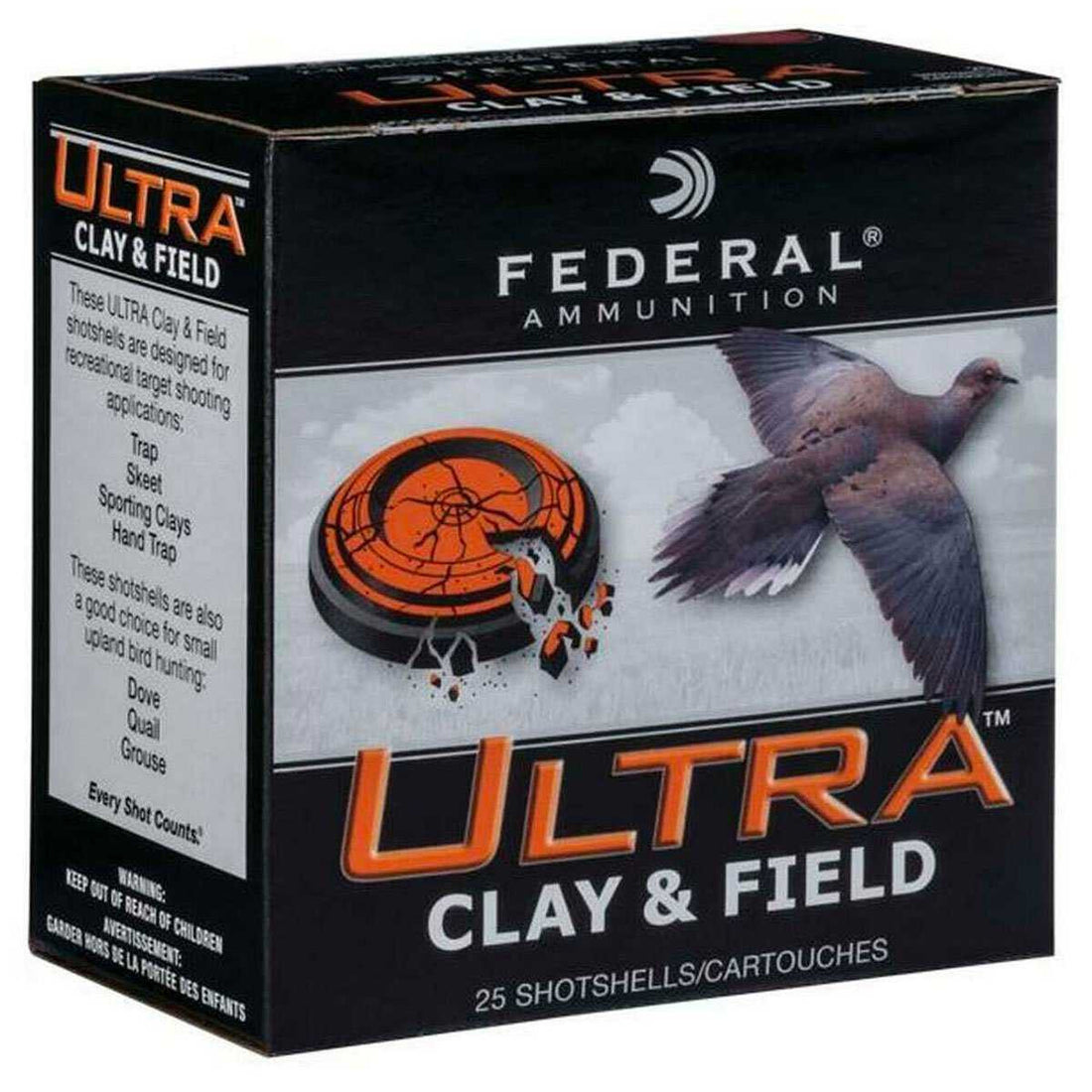
Federal 12 Gauge Ultra Clay & Field 2-3/4" 1 Oz. #8
$10.75
at Pro Armory
Prices accurate at time of writing
Frequently Asked Questions
What is the best gauge for farm use?
For maximum versatility, 12 gauge remains difficult to beat because of its broad firearm and ammunition selection. A 20 gauge is an excellent alternative for owners prioritizing lighter weight and generally more manageable recoil.
Is a pump or semi-auto better for ranch use?
A pump action offers simplicity and affordability, while a semi-auto can provide reduced perceived recoil and greater comfort during hunting and high-volume recreational shooting. Both can make excellent rural shotguns.
What barrel length should I choose?
For a multipurpose shotgun that will also be used for hunting and clays, a conventional field barrel is generally the most versatile choice. More compact configurations make sense when maneuverability is a higher priority than wingshooting characteristics.
Should a farm shotgun have an optic?
Usually not for general-purpose use. Traditional sights work well for many shotgun applications. Red dots and other optics can be valuable for specialized applications, particularly certain turkey-hunting setups.
Should I buy an expensive shotgun for farm use?
Not necessarily. Reliability, fit, durability, and parts availability matter more than price. A reasonably priced shotgun that functions dependably and fits the shooter can be a better working tool than a premium sporting gun that rarely leaves the safe.
About the Author
The ProArmory editorial team includes experienced hunters, competitive shooters, military veterans, firearms instructors, and firearms industry professionals committed to producing accurate, practical, and research-based content. Our articles draw on manufacturer specifications, current industry information, and real-world shooting and hunting experience to help readers make informed decisions about firearms, ammunition, optics, hunting gear, and related equipment.
Disclaimer
This article is intended for informational and educational purposes only. Firearm possession, transportation, discharge, hunting, ammunition, and storage laws vary by jurisdiction. Verify current federal, state, and local requirements and applicable hunting regulations. Always follow established firearm-safety practices and ensure a safe target and backstop before firing.


