




Quick Answer
Electronic and passive hearing protection both help reduce exposure to hazardous noise at shooting ranges, but they work differently and offer distinct advantages.
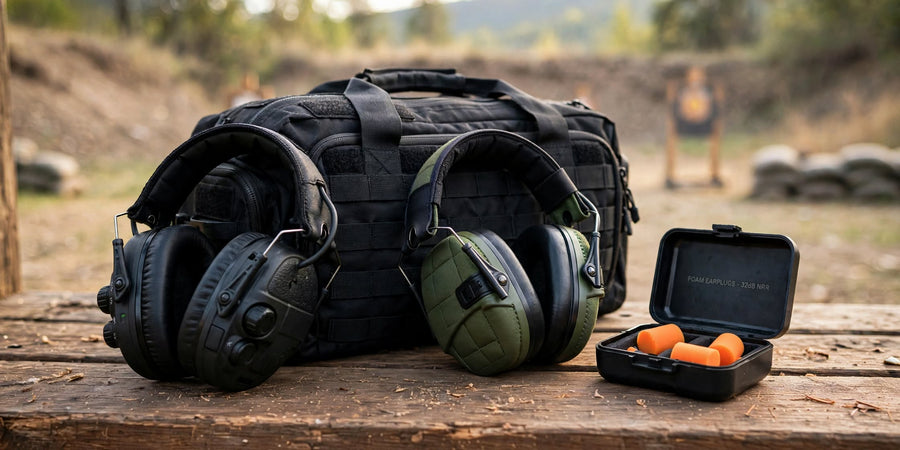
Passive hearing protection uses physical materials such as foam, acoustic insulation, and sealed earcups to reduce sound reaching the ears. It does not require batteries or electronic components. Foam earplugs and conventional shooting earmuffs are the most common examples.
Electronic hearing protection combines physical sound attenuation with microphones, speakers, and electronic circuitry. Many electronic shooting earmuffs allow users to hear conversations and environmental sounds at comfortable levels while limiting the amplification of loud noises.
For shooters who want simple, affordable protection, passive earmuffs and earplugs are practical choices. For those who value communication and situational awareness at the range, electronic earmuffs offer additional convenience.
Neither type is automatically safer. The most important factors are the product's verified noise reduction rating, proper fit, consistent use, and the noise environment.
Because firearm noise can reach levels capable of causing immediate hearing damage, shooters should use appropriate hearing protection every time they visit a range. Combining properly fitted earplugs and earmuffs is especially worth considering in high-noise environments.
Key Takeaways
- Passive hearing protection reduces noise through physical barriers and insulation, while electronic hearing protection adds microphones and circuitry for controlled sound reproduction.
- Electronic earmuffs can improve communication and awareness of ordinary sounds, but their microphones and speakers do not eliminate the need for effective physical noise attenuation.
- Noise Reduction Rating (NRR) is useful for comparing products, although actual protection depends heavily on fit, use, and environmental conditions.
- Foam earplugs, passive earmuffs, and electronic earmuffs each have advantages; combining earplugs with earmuffs can provide additional protection.
- Shooters should prioritize certified protection, comfort, reliable fit, and consistent use rather than choosing hearing protection based on price or electronic features alone.
Why Hearing Protection Matters at the Shooting Range
Firearm discharge produces intense impulse noise. Unlike continuous background noise, impulse noise occurs in short, high-intensity bursts.
Exposure to sufficiently loud impulse noise can cause permanent hearing damage, including noise-induced hearing loss and tinnitus.
The risk varies with the firearm, ammunition, surrounding environment, and other conditions. Indoor shooting ranges can present particular challenges because hard surfaces reflect sound.
Even occasional exposure can be harmful. Hearing damage is cumulative, and a single intense exposure may cause injury.
Hearing protection is therefore essential safety equipment rather than an optional range accessory.
Why Firearm Noise Is Different From Everyday Noise
Most everyday sounds are relatively continuous or fluctuate gradually. Firearm noise involves a rapid pressure change and a brief, intense acoustic impulse.
This distinction matters because hearing protection must be appropriate for high-level impulse noise, not merely ordinary workplace or household sound.
A product that makes conversation quieter is not necessarily suitable for shooting.
Shooters should look for hearing protection specifically intended for noisy environments and evaluate the manufacturer's published specifications.
Indoor vs. Outdoor Shooting Ranges
Indoor ranges often have reflective walls, ceilings, and floors. These surfaces can increase the complexity of the acoustic environment.
Outdoor ranges may allow sound to disperse more freely, but firearm noise remains hazardous.
Nearby shooters, covered firing lines, and range structures can also influence noise exposure.
For these reasons, both indoor and outdoor shooting require hearing protection. Double protection—properly fitted earplugs worn beneath earmuffs—is particularly prudent for indoor ranges and other high-noise settings.
What Is Passive Hearing Protection?

Passive hearing protection reduces sound through physical materials without relying on batteries or powered circuitry.
The two most common forms used at shooting ranges are earplugs and earmuffs.
Earplugs fit inside or cover the entrance to the ear canal, depending on the design. Earmuffs use padded earcups to create a seal around the ears.
Both approaches can provide substantial noise reduction when properly selected and worn.
Passive Shooting Earmuffs
Passive earmuffs contain sound-attenuating materials within their earcups.
Their effectiveness depends on the design, the quality of the ear cushions, and the seal formed around the ears.
Because they do not contain microphones or amplification circuitry, passive earmuffs typically have straightforward operation and relatively few electronic components that can fail.
They are commonly available at accessible prices, making them popular among occasional range visitors and first-time shooters.
However, earmuffs can interfere with certain eyewear, headwear, or other equipment if those items disrupt the earcup seal.
Foam Earplugs
Disposable foam earplugs are among the most common forms of hearing protection.
They are lightweight, inexpensive, and easy to carry in a range bag.
Many properly fitted foam earplugs have relatively high published NRR values compared with common shooting earmuffs.
However, their effectiveness depends heavily on correct insertion and fit.
Improperly fitted earplugs may provide substantially less protection than their packaging suggests.
Shooters should follow the manufacturer's instructions and replace disposable plugs as directed.
Reusable Earplugs
Reusable earplugs are typically made from flexible materials designed for repeated use.
Some incorporate flanges or other features intended to improve fit.
Their advantages can include convenience, reduced disposable waste, and compact storage.
However, reusable earplugs vary in shape, size, and noise reduction characteristics.
They should be cleaned and maintained according to manufacturer instructions.
What Is Electronic Hearing Protection?

Electronic hearing protection incorporates powered components into a hearing protector.
Electronic shooting earmuffs commonly include external microphones, internal speakers, volume controls, and circuitry designed to manage amplified sound.
These features allow users to hear certain ordinary sounds more clearly while the physical earmuff structure continues to provide noise attenuation.
Many models are marketed as electronic shooting earmuffs, electronic ear defenders, or electronic hearing protection.
How Electronic Shooting Earmuffs Work
Electronic earmuffs use microphones to pick up environmental sounds.
The circuitry processes those signals and reproduces them through speakers inside the earcups.
Depending on the model, electronic circuitry may limit speaker output, compress amplified sounds, or temporarily reduce amplification when loud noises are detected. These functions control the sound reproduced through the earmuff's speakers; they do not eliminate the acoustic energy reaching the outside of the earcups. Protection from gunshot impulse noise still depends heavily on the earmuff's physical attenuation, the quality of its seal, and the complete product's protective design.
These systems vary considerably between manufacturers and product lines.
Importantly, the electronics do not make the earmuffs physically soundproof. The earcups and cushions still provide the passive attenuation that protects the wearer when the electronics are turned off.
Buyers should not assume that all electronic earmuffs provide identical protection simply because they use microphones.
Why Electronic Earmuffs Are Popular
One of the most noticeable advantages of electronic hearing protection is the ability to hear ordinary sounds without removing the earmuffs.
This can make communication with range personnel and other participants more convenient.
Electronic amplification may also help users hear certain environmental sounds that passive protection would otherwise reduce.
However, electronic hearing protection does not guarantee full situational awareness. Wind noise, microphone placement, speaker quality, and electronic processing can affect what the wearer hears.
Range safety instructions should always take priority over convenience features.
Electronic vs. Passive Hearing Protection: Comparison Table
| Feature | Electronic Earmuffs | Passive Earmuffs | Foam Earplugs |
|---|---|---|---|
| Primary protection | Physical earcup attenuation | Physical earcup attenuation | Ear canal attenuation |
| Batteries required | Usually | No | No |
| Environmental sound amplification | Often available | No | No |
| Conversation convenience | Often better with electronics enabled | Reduced by attenuation | Reduced by attenuation |
| Noise reduction rating | Model-dependent | Model-dependent | Model-dependent |
| Fit considerations | Earcup seal | Earcup seal | Proper insertion |
| Typical price category | Moderate to premium | Budget to moderate | Low |
| Maintenance | Cushions, batteries, electronics | Cushions and headband | Replacement as directed |
| Double protection compatibility | Can be worn over earplugs | Can be worn over earplugs | Can be worn beneath earmuffs |
Actual protection and features depend on the specific product and its fit.
Understanding Noise Reduction Rating (NRR)
Noise Reduction Rating, or NRR, is one of the most important specifications shoppers encounter when comparing hearing protection.
In the United States, NRR is a laboratory-derived rating expressed in decibels.
NRR is a standardized laboratory-derived measure of hearing protector attenuation under specified testing conditions. It is useful for comparing products, but it does not directly predict the protection an individual will receive from every gunshot impulse. Actual attenuation depends on factors including fit, frequency, the condition of the protector, and the characteristics of the noise exposure. A published NRR should therefore be treated as a comparison tool rather than a guarantee of safety at a shooting range.
However, the number printed on the packaging is not a guarantee of the exact protection an individual will receive.
Real-world attenuation can be substantially lower because of fit, movement, eyewear, and other factors.
Is a Higher NRR Always Better?
A higher NRR generally indicates greater laboratory-measured attenuation under the applicable testing method.
However, a properly fitted product with a lower rating may provide better actual protection than a poorly fitted product with a higher rating.
Comfort also matters because uncomfortable hearing protection is more likely to be adjusted or removed.
For shooting applications, shoppers should evaluate the rating alongside fit, product quality, and the intended environment.
Why You Cannot Simply Subtract NRR From Gunshot Noise
A common misunderstanding is that a hearing protector rated NRR 30 automatically reduces every sound by exactly 30 decibels.
NRR does not work that way.
The rating is based on standardized testing and does not directly predict attenuation for every impulse-noise exposure.
Actual protection varies with frequency, fit, and environmental conditions.
Consumers should avoid using simple subtraction to declare that a particular hearing protector makes firearm noise safe.
What Happens When You Double Up Hearing Protection?
Double protection means wearing earplugs beneath earmuffs.
This approach can provide additional attenuation, especially when properly fitted.
However, the NRR values of the two products cannot simply be added together.
For example, an earplug rated NRR 33 and an earmuff rated NRR 25 do not automatically provide 58 decibels of protection.
The combined attenuation depends on the individual protectors, their fit, the frequency characteristics of the noise, and the testing conditions. Sound can also reach the inner ear through pathways other than the ear canal, including transmission through the surrounding tissues and skull. Consequently, adding a second hearing protector does not produce an improvement equal to its full published NRR. Properly fitted earplugs beneath earmuffs can provide valuable additional protection, but the ratings should never be added together to calculate a guaranteed safe exposure level.
For high-noise shooting environments, double protection is a prudent precaution, but it should not be treated as a guarantee against hearing damage.
Electronic Hearing Protection: Advantages and Limitations

Electronic earmuffs provide features that conventional passive earmuffs do not.
Their greatest advantage is convenience rather than a universal increase in hearing protection.
Advantages of Electronic Earmuffs
Electronic models can make ordinary conversation more accessible while the wearer keeps the earmuffs in place.
Some offer adjustable amplification, allowing users to control the level of reproduced environmental sound.
Other models incorporate features such as audio inputs, Bluetooth connectivity, or rechargeable power systems.
These conveniences may be valuable for frequent range visitors, instructors, and people who spend extended periods in noisy environments.
Limitations of Electronic Earmuffs
Electronic earmuffs generally cost more than basic passive models.
They may also require battery replacement or charging.
Microphones and electronic components can be affected by moisture, impacts, or ordinary wear, depending on the product's construction.
Most importantly, electronic features do not compensate for an inadequate earcup seal.
A poorly fitted electronic earmuff may provide less effective protection than a properly fitted passive alternative.
Passive Hearing Protection: Advantages and Limitations

Passive hearing protection remains popular because it is simple, widely available, and effective when properly fitted.
Advantages of Passive Protection
Passive earmuffs do not require batteries and are generally straightforward to operate.
Foam earplugs are inexpensive and compact, making them convenient as backup protection.
Some passive products offer high published NRR values without the additional cost of electronic features.
For shoppers focused primarily on noise attenuation, passive hearing protection deserves serious consideration.
Limitations of Passive Protection
Passive earmuffs and earplugs reduce ordinary sounds along with hazardous noise.
This can make conversation and communication less convenient.
Earmuff cushions may lose their seal when interfered with by eyewear or other equipment.
Earplugs can also be uncomfortable or ineffective if they do not fit the user's ear canals properly.
These limitations emphasize the importance of choosing equipment that can be worn correctly and consistently.
Does Electronic Hearing Protection Offer Better Safety?
Not automatically.
A quality electronic earmuff may offer excellent protection, but its electronics do not establish a universal safety advantage over passive earmuffs.
Both types depend on their physical noise-attenuating design and proper fit.
A passive earmuff with a higher laboratory rating and a reliable seal may provide more attenuation than a particular electronic model.
Conversely, an electronic earmuff that fits properly may be more convenient for someone who needs to hear range instructions without repeatedly adjusting their protection.
The best choice is the one that provides appropriate attenuation, fits reliably, and remains comfortable enough for consistent use.
Comfort and Fit: The Overlooked Buying Factors
Hearing protection is only effective when worn properly.
A product may have excellent published specifications but perform poorly if it does not fit the user.
Earcup Seal and Shooting Glasses
Earmuffs rely on a seal around the ears.
Thick eyewear temples can create gaps between the cushions and the wearer's head, reducing attenuation.
Head shape, hair, hats, and cushion condition may also affect the seal.
Buyers should evaluate earmuff fit while wearing their normal shooting safety glasses.
Headband Pressure and Long-Term Comfort
Earmuffs must apply enough pressure to maintain an effective seal.
However, excessive pressure can cause discomfort during extended wear.
Headband design, earcup dimensions, cushion materials, and overall weight all contribute to comfort.
A comfortable fit is particularly important for shooters who spend several hours at the range.
Low-Profile Earcups
Some shooting earmuffs use relatively slim earcups.
Low-profile designs may appeal to users who prefer less bulky equipment.
However, slim construction does not automatically indicate better or worse protection.
Published ratings and proper fit remain more important than external dimensions alone.
Battery Life and Reliability in Electronic Earmuffs
Electronic hearing protection introduces power-related considerations that passive models do not have.
Battery life varies by product, amplification settings, and additional features.
Some models use replaceable batteries, while others incorporate rechargeable systems.
Buyers should review the manufacturer's stated battery life and maintenance requirements.
A well-designed electronic earmuff should continue providing its specified passive attenuation when the electronics are off, provided it is properly fitted and maintained. Users should verify the manufacturer's specifications rather than assume that every model behaves identically.
Popular Electronic and Passive Hearing Protection Options

Several established manufacturers offer hearing protection designed for shooting ranges. Comparing representative products helps illustrate the differences between electronic earmuffs, passive earmuffs, and earplugs.
Specifications vary by model, and buyers should verify current manufacturer information before purchasing.
Howard Leight Impact Sport Electronic Earmuffs
The Howard Leight Impact Sport is a recognizable electronic earmuff commonly used for recreational shooting.
It combines low-profile earcups with microphones and electronic sound amplification.
The commonly sold Impact Sport model has a published NRR of 22 dB, although buyers should verify the exact version and regional rating.
Its main appeal is the convenience of hearing ordinary conversation while maintaining the physical attenuation provided by the earmuffs.
The Impact Sport illustrates an important tradeoff: electronic features may improve communication without necessarily providing the highest available NRR.
Walker's Razor Slim Electronic Earmuffs
Walker's Razor Slim electronic earmuffs are another popular option among recreational shooters.
Common Razor Slim electronic models feature compact earcups, adjustable sound amplification, and a published NRR of 23 dB.
The relatively slim profile may appeal to buyers who prefer less bulky earmuffs.
However, fit and earcup seal remain critical. Buyers should not assume that a low-profile design automatically provides adequate protection in every shooting environment.
PELTOR Optime 105 Passive Earmuffs
The PELTOR Optime 105 is an example of a passive earmuff designed for high-noise environments.
Common U.S. configurations have a published NRR of 30 dB.
Unlike electronic shooting earmuffs, the Optime 105 does not amplify conversation or require batteries.
Its appeal is straightforward physical sound attenuation.
The tradeoffs include bulkier earcups and reduced ability to hear ordinary sounds.
E-A-R Classic Foam Earplugs
E-A-R Classic foam earplugs are an established example of disposable passive hearing protection.
Common U.S. versions have a published NRR of 29 dB.
They are compact, inexpensive, and suitable for use beneath compatible earmuffs when properly fitted.
However, correct insertion is essential. Improperly fitted foam earplugs may deliver substantially less attenuation than their laboratory rating suggests.
Hearing Protection Product Comparison
| Product | Type | Common Published NRR | Main Consideration |
|---|---|---|---|
| Howard Leight Impact Sport | Electronic earmuff | 22 dB | Conversation amplification |
| Walker's Razor Slim Electronic | Electronic earmuff | 23 dB | Low-profile design |
| 【entity-3M¦canonical_name=3M】 PELTOR Optime 105 | Passive earmuff | 30 dB | Higher-rated passive attenuation |
| 3M E-A-R Classic | Foam earplug | 29 dB | Compact, inexpensive protection |
Ratings refer to representative U.S. product versions and should not be interpreted as guaranteed real-world attenuation. Product variants may differ.
Choosing Hearing Protection for Different Range Environments
Indoor Shooting Ranges
Indoor ranges present challenging noise conditions because sound reflects from surrounding surfaces.
For these environments, properly fitted earplugs worn beneath appropriately rated earmuffs are a prudent choice.
Electronic earmuffs can still be useful because their amplification features may improve communication.
However, electronic convenience should never replace effective noise attenuation.
Outdoor Shooting Ranges
Outdoor ranges may have fewer reflective surfaces, but firearm impulse noise remains hazardous.
Both passive and electronic hearing protection can be appropriate when properly selected and worn.
Electronic earmuffs may appeal to shooters who want to hear ordinary conversation without removing their protection.
Passive earmuffs remain a practical option for buyers who prefer simplicity and do not need electronic features.
First-Time Range Visitors
For a first-time shooter, reliable fit and straightforward operation are particularly important.
Passive earmuffs are easy to understand and do not require battery management.
Foam earplugs are also useful, although proper fitting instructions are essential.
A first-time visitor may benefit from having both earplugs and earmuffs available, particularly at an indoor range.
Frequent Range Visitors
People who visit shooting ranges regularly may place greater value on comfort, replaceable cushions, and communication features.
Electronic earmuffs can provide convenience during longer range sessions.
However, frequent users should regularly inspect cushions, headbands, and other components for wear.
A product that no longer maintains an effective seal should be serviced or replaced according to the manufacturer's recommendations.
Electronic vs. Passive Hearing Protection: Final Buyer's Guide
| Buyer Priority | Recommended Category |
|---|---|
| Lowest initial cost | Foam earplugs |
| Simple operation without batteries | Passive earmuffs |
| Easier conversation at the range | Electronic earmuffs |
| High-noise indoor environments | Properly fitted earplugs plus earmuffs |
| Compact backup protection | Foam or reusable earplugs |
| Frequent range use | Comfortable, durable earmuffs with suitable attenuation |
| Minimal electronic maintenance | Passive hearing protection |
Final Thoughts
Electronic and passive hearing protection both have important roles in shooting safety.
Electronic earmuffs are especially useful for communication and convenience. Their microphones and speakers can make ordinary sounds easier to hear without removing the protection.
Passive earmuffs and earplugs offer straightforward noise attenuation without electronic components. Many products provide strong published noise reduction ratings at accessible prices.
Neither category is universally safer. Proper fit, verified attenuation, and consistent use are more important than electronic features alone.
For many shooters, the most practical setup includes appropriately rated earmuffs and a supply of properly fitted earplugs. Using both together is especially prudent in high-noise environments.
Hearing damage can be permanent. Protecting your hearing should remain a priority during every range visit.
Both electronic and passive hearing protection can serve an important role in protecting shooters from hazardous noise exposure. Passive designs remain attractive for their simplicity, affordability, and lack of battery requirements, while electronic models offer useful communication and situational-awareness features.
The right choice depends on the shooting environment, noise exposure, comfort, and individual preferences. Readers considering an electronic model can explore our comparison of electronic ear protection for the range for a closer look at available features and design differences.
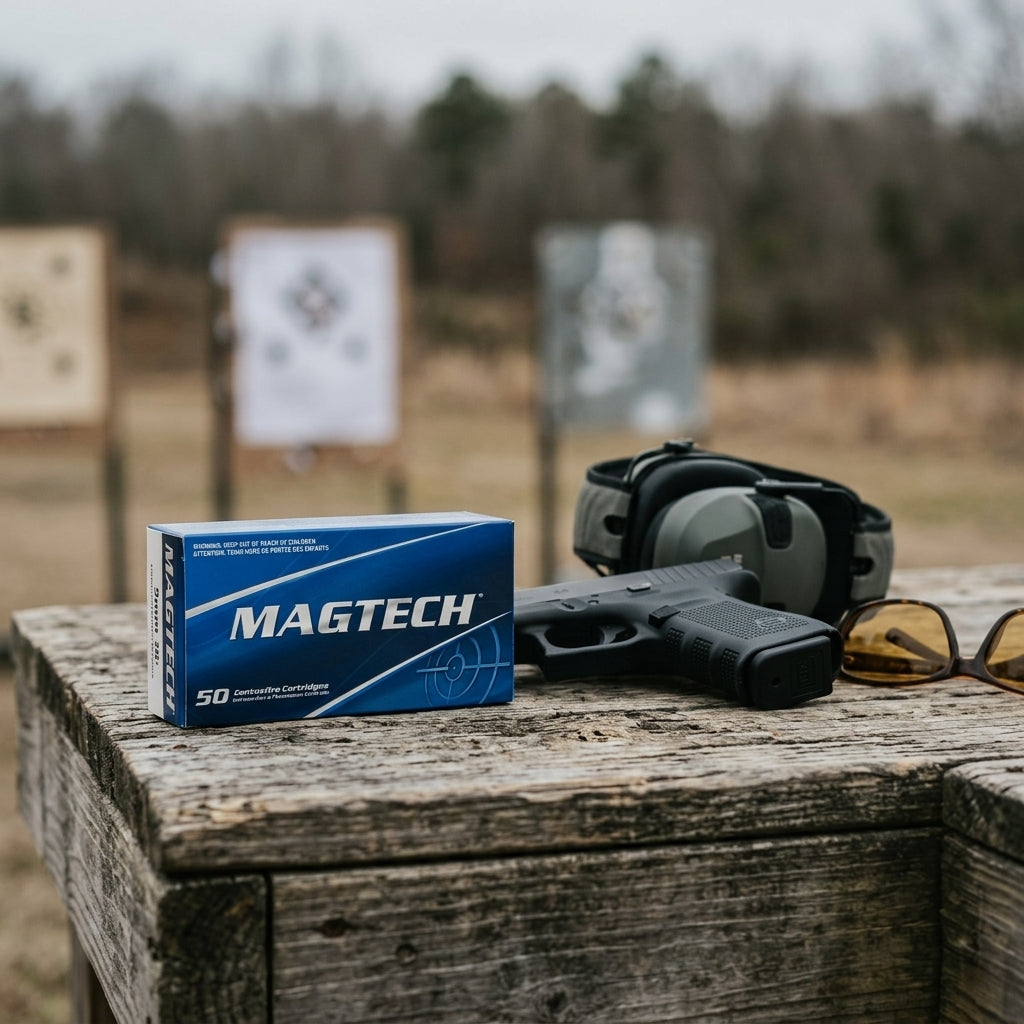
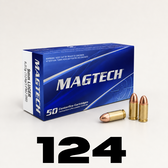
Magtech 9mm 115gr FMJ
$20.00
at Pro Armory
Prices accurate at time of writing
Frequently Asked Questions
Are electronic earmuffs better than passive earmuffs for shooting?
Not necessarily. Electronic earmuffs offer communication and sound-amplification features, but passive earmuffs may provide equal or greater attenuation depending on the product. Fit and published protection ratings matter most.
Do electronic shooting earmuffs work when the batteries die?
Many electronic earmuffs continue providing passive attenuation when powered off because their earcups physically reduce noise. However, buyers should verify the manufacturer's specifications for their exact model.
What NRR should shooting hearing protection have?
There is no single NRR that guarantees safety for every shooting environment. Choose appropriately rated protection, ensure a proper fit, and consider combining earplugs with earmuffs in high-noise settings.
Should you wear earplugs under electronic earmuffs?
Wearing properly fitted earplugs beneath electronic earmuffs can provide additional protection. This is particularly worth considering at indoor ranges. The two NRR values should not be added together.
Can shooting glasses reduce the effectiveness of earmuffs?
Yes. Thick eyewear temples can create gaps in the earcup seal, reducing attenuation. Choose compatible safety glasses and verify that the earmuffs maintain a reliable seal.
About the Author
The ProArmory editorial team includes experienced hunters, competitive shooters, military veterans, firearms instructors, and firearms industry professionals committed to producing accurate, practical, and research-based content. Our articles draw on manufacturer specifications, current industry information, and real-world shooting experience to help readers make informed decisions about firearms, ammunition, optics, and related equipment.
Disclaimer
This article is intended for educational purposes only. Hearing protection cannot guarantee prevention of hearing damage. Verify current manufacturer specifications and noise reduction ratings, follow product fitting instructions and established firearm-safety practices, and comply with applicable range rules and federal, state, and local laws.


